The Guardian
· collected 2026-10-06 · by Natricia Duncan Caribbean correspondent
Journalists in Trinidad and Tobago are protesting against the Special Operations Bill 2026, which was passed by the government on September 24 to enhance police powers amid high crime rates. The bill allows for increased search and seizure activities that journalists fear could impede press freedom; specifically, they want exemptions to prevent searches of their devices and materials containing confidential information. MATT’s president Prior Beharry calls for explicit recognition of journalism as a protected trade under the law and safeguards against police seizures. Journalists argue these measures threaten their ability to protect sources and conduct investigative reporting freely.
Written locally by qwen2.5:14b on 2026-10-06,
using this article's own text rather than the other coverage of the
same event (that is the story summary below).
Why this leaning score
The model judged this article politically coded and scored it -0.65, but all 4 of its quote(s) are attributed speech - words the article quotes from someone, not the article's own narration, so the score is not published.
Written under an earlier scoring contract, which gave a paragraph
rather than checkable quotes. Re-analysing this article replaces it.
Leaning score withheld for article 60647: attributed speech only · logged 2026-10-06
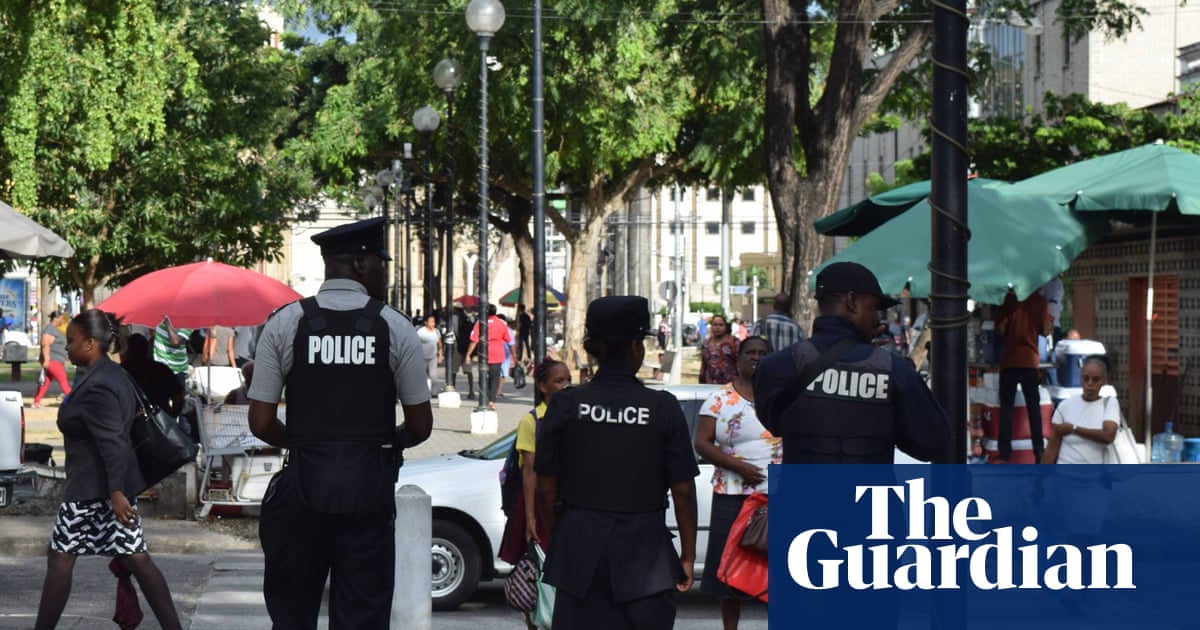
Journalists in Trinidad and Tobago have called for an urgent amendment to a sweeping new bill that boosts police powers of search and seizure, which they argue threatens the country’s much-vaunted freedom of the press.
asserted
they → call → press
The government says the Special Operations Bill 2026, passed on 24 September, is designed to tackle alarmingly high crime and murder rates in the Caribbean nation.
asserted
Bill → say → nation
The country has spent more than a year in an almost perpetual state of emergency, with police empowered to bypass normal constitutional rights around arrest, detention and search and seizure.
asserted
police → spend → arrest
But journalists in Trinidad and Tobago have called for explicit exemptions in the new legislation to prevent police from searching and seizing their notebooks, phones and laptops.
asserted
journalists → call → notebooks
In the past, journalists have been forced to challenge warrants empowering police to raid their homes and offices.
asserted
journalists → force → homes
Although the country prides itself in honouring freedom of speech, ranking 19 out of 180 countries in the 2025 Reporters Without Borders press freedom index, this year it fell 13 places to 32, and journalists say they are deeply concerned about whether they can protect whistleblowers and vulnerable sources who share information on the understanding that they will be protected.
asserted
they → pride → understanding
The president of the Media Association of Trinidad and Tobago (MATT), Prior Beharry, said the organisation had called for clause 15 of the bill to be urgently amended “to explicitly shield our devices and materials … and confidential source information from standard police seizure”.
asserted
clause → say → seizure
Clause 15 prevents police from seizing “a tool of a lawful trade or business” or material protected by legal professional privilege.
asserted
Clause → prevent → privilege
But MATT says journalism is not explicitly recognised as a protected trade, nor does the bill establish a procedure for handling confidential journalistic material discovered during searches.
asserted
bill → say → searches
It wants the clause changed to “expressly name journalism as a protected lawful trade and safeguard journalists’ devices, materials and confidential sources”.
asserted
clause → want → devices
Beharry said the bill’s search‑and‑seizure powers were particularly worrying in a digital era where “the tools of a journalist is … usually [a] cell phone”.
asserted
tools → say → journalist
Though he said journalists had not been directly threatened under recent states of emergency, he warned that other restrictions were worsening.
asserted
restrictions → say → emergency
“One of the issues we are having is the access to the government, the executive, including the prime minister, who has not had an official press conference for more than a year,” he said.
asserted
he → have → year
“Ministries use state resources and we are not invited, but state media is invited.”
asserted
media → use → resources
The independent journalist Pearce Robinson said the combination of surveillance capability, expanded search powers – without explicit protection for journalistic practice – and declining access to government ministers created a “concrete” threat to press freedom, with a particularly significant impact on investigative reporting.
“If your phone, your laptop and your notes can be searched or seized without explicit protection for journalistic material, that raises serious constitutional concerns,” he said.
asserted
he → say → concerns
“Investigative journalism depends on people being able to speak confidentially.”
asserted
people → depend → ?
He also raised concerns about phone tapping and surveillance, pointing to an investigation by the Trinidad and Tobago Guardian which said that “judges approved 314 warrants to intercept communications in Trinidad and Tobago between 2020 and May 2026”.
uncertain
judges → raise → 2020
“My concern is not that press freedom has disappeared,” he said.
asserted
he → disappear → ?
“It is that several of these pressures … are accumulating at the same time.”
asserted
several → accumulate → time
Pedro Cárdenas of press freedom and human rights organisation Article 19 expressed concern about the clause in the new bill.
asserted
Cárdenas → express → bill
“It empowers law enforcement officers to seize any vehicle, article or document deemed likely to be of substantial value.
asserted
It → empower → value
We find this clause particularly problematic because it is vague and opens up to discussion what is substantial value or not,” he said.
asserted
he → find → discussion
He added that it “might directly counter” existing international human rights laws.
uncertain
it → add → laws
The office of the prime minister did not respond to a request for comment.
asserted
office → respond → comment
Stuart Young, Trinidad and Tobago’s former prime minister, branded the bill “unconstitutional and very dangerous”, adding that it “breaches fundamental and entrenched constitutional rights” and was passed “without a required constitutional majority in highly questionable circumstances”.
asserted
it → brand → circumstances
He warned that the government’s past use of emergency powers — including detaining citizens without charge — showed “the real likelihood of abuse” under the new legislation.
asserted
use → warn → legislation
 The Aporia