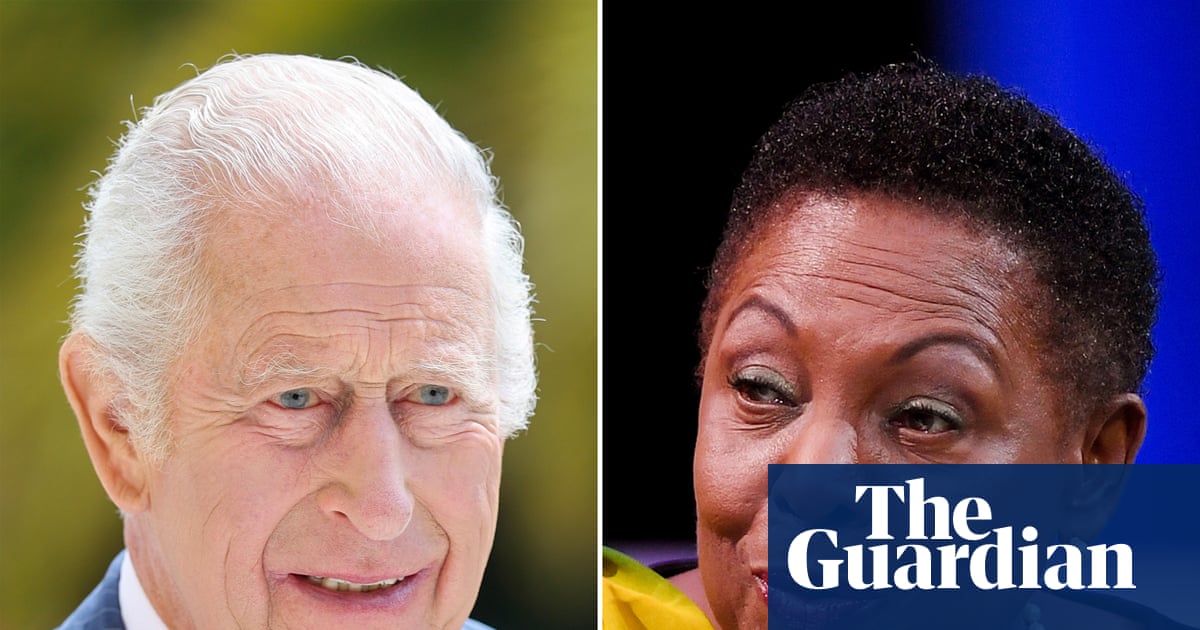
Jamaican politician: Why not seek reparations if UK paid slave debt until 2015?

The Standard · collected 2026-09-06 · by Ted Hennessey
Read the original at The Standard ↗

Summary

A Jamaican politician, Ms Grange, is questioning why her country shouldn't seek reparations from Britain for its historical treatment of enslaved people in Jamaica. The British government paid £20 million to slave owners in compensation when slavery was abolished in 1833, which took over a century and a half to pay off. Ms Grange says that if the UK was still paying off debt linked to slave-owner compensation as recently as 2015, then it's reasonable to ask for some form of remedy today. The Jamaican government is seeking an advisory opinion from the Privy Council on whether Britain has a legal duty to provide redress for the enslavement of Africans in Jamaica.
Written by the local model on 2026-09-06, using this article's own text rather than the other coverage of the same event (that is the story summary below).

Signals How these are calculated →

Claims extracted
23
claim-shaped sentences
Uncertain
4%
1 of 23 hedged
Leaning
withheld
no quote in the article backed the model's score
Publisher trust
96.4
red-flag proxy, not a credibility rating
Outlets on this story
7
Politics
Narrative spread
1
articles carrying this framing
Analyzed 2026-09-06 · how these are computed

AI analysis (generated at analysis time, not now)

Story summary

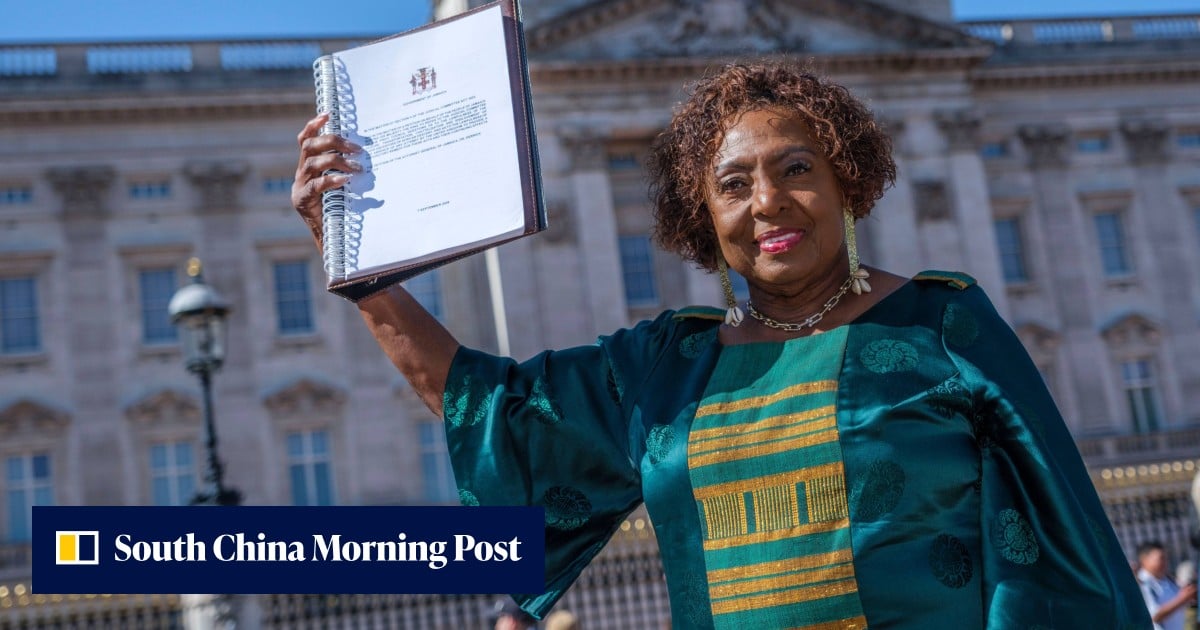
Jamaica's culture minister, Olivia Grange, is leading a delegation to London to file a petition with King Charles III, asking him to refer three questions about the transatlantic slave trade to the Judicial Committee of the Privy Council, Jamaica's highest court of appeal. The petition is part of Jamaica's push for reparations for the African ancestors who suffered under hundreds of years of enslavement. Grange said that up to 2015, Britain was paying off debt linked to slave-owner compensation, and if they were still paying back slave masters for their "property" (i.e., people), then it's only fair that they consider providing some remedy at this time.

The three questions in the petition are: whether the enslavement of Africans in Jamaica was legal under English law; whether it broke international law; and whether Britain now has a legal duty to provide redress. This is a landmark case, as it's the first time a Commonwealth country has used this legal route to pursue reparations.

The Jamaican delegation will also meet with British Museum officials to discuss the repatriation of cultural artifacts taken from Jamaica during the colonial era. The petition does not demand payment but rather seeks answers and guidance on the matter.

Written for “Jamaica's Slavery Reparations Petition” on 2026-09-07, grounded in this article and the 6 other(s) covering the same event.
Why this leaning score
The model judged this article politically coded and scored it +0.65, but every quote it verified points left, so the score is not published.
Written under an earlier scoring contract, which gave a paragraph rather than checkable quotes. Re-analysing this article replaces it.
Leaning score withheld for article 5762: score contradicts its own evidence · logged 2026-09-06

Story

📰 Jamaica's Slavery Reparations Petition
Politics · 7 article(s) covering the same event.

How this is being covered How these are calculated →

Article leaning vs. publisher reliability
Source leaning vs. consistency

Compared with similar articles

This article reads unscored and hedges 4% of its claims. Each row says how that neighbour differs.
News | Mail Online · 0.86 cosine similarity
⚖️ Leans strongly left 🔴 13% hedged 2 of 15 📰 publisher trust 58
“Both articles describe a single campaign for reparations by Jamaica for slavery, with a government delegation in London on September 6, 2026, including lobbying King Charles and presenting a petition.”
News | Mail Online
⚖️ Leans left 🔴 0% hedged 0 of 18 📰 publisher trust 58
“Article A describes a formal announcement and plan to file a petition, while Article B is a quote from a politician discussing the idea of seeking reparations”
World news | The Guardian
⚖️ Leans strongly left 🔴 7% hedged 2 of 29 📰 publisher trust 93
“Both articles report on Jamaican politician Olivia Grange's statement about seeking slavery reparations from the UK”
BBC News
⚖️ Leans strongly left 🔴 11% hedged 2 of 18 📰 publisher trust 96
“Both articles report on the same politician, Olivia Grange, announcing a petition for slavery reparations in Jamaica to be presented to King Charles, on the same day and date.”
News - South China Morning Post
⚖️ Leans left 🔴 0% hedged 0 of 7 📰 publisher trust 94
“Both articles report on Jamaican Culture Minister Olivia Grange filing a petition to King Charles in London for slavery reparations during her country's delegation visit.”
Al Jazeera – Breaking News, World News and Video from Al Jazeera
⚖️ Leans left 🔴 6% hedged 1 of 16 📰 publisher trust 96
“Both articles report on the Jamaican delegation's visit to the UK and their intention to file a petition for slavery reparations, mentioning Minister Olivia Grange leading the delegation”

Publisher

The Standard · 176 article(s) · 0 correction(s) detected
SignalValueWeight
Correction rate 0.000 0.4
Uncertainty density 0.071 0.25
Assertive mismatch rate 0.000 0.35
No corrections detected for this publisher. That may mean careful reporting, or simply that nothing has been checked.

Who wrote this

Ted Hennessey
5 article(s) here · 1 carrying a prediction
🔮 He told Laura Kuenssberg’s show on the BBC: “A company the size of JLR, which is a huge British success story, at various times in its business cycle, the number of, directly, people it employs will change.
🔮 Ms Grange said there may be Britons who felt differently, but that the majority “may consider that answers are required”.
🔮 He told Laura Kuenssberg’s show on the BBC: “A company the size of JLR, which is a huge British success story, at various times in its business cycle, the number of, directly, people it employs will change.
🔮 To achieve this, we must further simplify our organisation, improve efficiency and build greater resilience.” The company confirmed it had informed colleagues and trade union partners of the voluntary redundancy programme, adding it would “share further information with our colleagues first”.
Also by Ted Hennessey
Nothing else under this byline is closely related to this article, so these are simply their most recent.

Topics

Britain British Jamaica Jamaican the Privy Council

Subjects

Jamaica GPE · 5× Britain GPE · 4× Grange PERSON · 4× Jamaican NORP · 4× British NORP · 3× Africans NORP · 2× Charles PERSON · 2× the Privy Council ORG · 2× Britons NORP · 1× Treasury ORG · 1×

Narrative

She added: “We would wish to have repatriation of those artefacts. “For years, we have tried, I think we’re making some inroads now in terms of the dialogue, and we have been invited to send three curators for them to go through to see what artefacts are in the possession of the museum, and for us to engage in discussions.”
framing: assertive · carried by 1 article(s) · first seen 2026-09-06
🔮 Ms Grange said there may be Britons who felt differently, but that the majority “may consider that answers are required”.

Claims (23 extracted, 1 hedged)

A Jamaican politician has asked why her country should not seek slavery reparations when Britain was still paying off debt linked to slave-owner compensation just 11 years ago. asserted
Britain → ask → compensation
Asked if British people today should inherit a financial obligation for what happened in the past, Ms Grange said: “Up to 2015, Britain was paying the slave masters, because we were being considered property. asserted
we → ask → masters
“The question really should be: if in modern times we’re still paying back the slave masters for the property that was our people, our ancestors, for property that was because of the abolition of slavery, then why shouldn’t we be pursuing some remedy at this time?” asserted
we → pay → time
Ms Grange said there may be Britons who felt differently, but that the majority “may consider that answers are required”. uncertain
answers → say → ?
The British government paid £20 million to slave owners in compensation when slavery was abolished across most of the empire in 1833, which at the time amounted to 40% of the Treasury’s annual income. asserted
which → pay → income
It had to take out massive loans to be able to raise the cash, with the debts finally being paid off in 2015. asserted
debts → have → 2015
The petition asks Charles, as Jamaica’s head of state, to put to the Privy Council: whether the enslavement of Africans in Jamaica was legal under English law, whether it broke international law, and whether Britain now has a legal duty to provide redress. asserted
Britain → ask → redress
Read More But Ms Grange would not be drawn into whether Jamaica was asking Britain to pay reparations, saying it first wanted the legal questions answered. asserted
questions → read → reparations
She said: “I’m not going to anticipate, pre-empt, or guess. asserted
I → say → ?
“We want the answers. asserted
We → want → answers
“Once we get the answers, or once we get a response to those questions, then the next steps will be determined.” asserted
steps → get → questions
The British monarch has authority under the Judicial Committee Act of 1833 to refer legal matters to the London-based Judicial Committee of the Privy Council for an advisory opinion. asserted
monarch → have → opinion
The King has no personal say over whether the petition is referred to the Privy Council and would act entirely on the advice of the relevant authorities. asserted
petition → have → authorities
A palace spokesman said: “We understand the Jamaican government is seeking a petition to be heard before the Judicial Committee of the Privy Council. asserted
government → say → Council
“The process for seeking a petition is to lodge it with the Judicial Committee so that referral under section four of the 1833 Act can be considered. asserted
referral → seek → Act
“We also understand the Jamaican representatives will be received by the Foreign, Commonwealth and Development Office for bilateral discussions. asserted
representatives → understand → discussions
The palace also said that Charles “has on many occasions expressed his personal and wholehearted commitment to promoting greater understanding around the issue of slavery and finding ways to address historic wrongs for the benefit of communities today”. asserted
Charles → say → communities
In recent years, the UK has said it will not pay to make amends for slavery, while Caribbean leaders have called for a formal apology and various measures including debt cancellations. asserted
leaders → say → cancellations
An estimated 12.5 million Africans were forcibly taken by European nations from the 16th to the 19th century, and those who survived the trip across the Atlantic Ocean were enslaved on plantations in the Caribbean and elsewhere. asserted
who → estimate → Caribbean
The Jamaican delegation will also hold talks with the British Museum over the return of artefacts from the island. asserted
delegation → hold → island
Ms Grange said Jamaica was particularly seeking the return of three Taino objects linked to the island’s indigenous people. asserted
Jamaica → say → people
She said Jamaica had previously tried to secure the pieces for an exhibition but was told they were unavailable and was sent replicas instead. asserted
they → say → replicas
She added: “We would wish to have repatriation of those artefacts. “For years, we have tried, I think we’re making some inroads now in terms of the dialogue, and we have been invited to send three curators for them to go through to see what artefacts are in the possession of the museum, and for us to engage in discussions.” asserted
us → add → discussions

💬 Give feedback
🕘 History 🎫 Support