The forgotten, mysterious threat of an insider agent aboard Air Force One on 9/11

New York Post · collected 2026-09-06 · by Caroline Howe
Read the original at New York Post ↗

Summary

Richard Clarke, a member of the National Security Council, warned Secretary of State Condoleezza Rice about the risk of an imminent major terrorist attack in June 2001, but she expressed skepticism and accused him of sensationalizing Osama bin Laden. Little more than a month later, on 9/11, Rice informed President Bush that the World Trade Center had been hit by hijacked airliners, prompting Bush to leave the Emma E. Booker Elementary School in Sarasota, Florida, and board Air Force One. The plane was then targeted by terrorists, according to investigative journalist Jeffrey Robinson's book "Ash and Honor: The Untold 368 Minutes of 9/11". The article does not report on the specifics of what happened next, but notes that the situation worsened when word arrived that the plane carrying Bush was also a target.
Written by the local model on 2026-09-06, using this article's own text rather than the other coverage of the same event (that is the story summary below).

Signals How these are calculated →

Claims extracted
79
claim-shaped sentences
Uncertain
9%
7 of 79 hedged
Leaning
Leans left
of the writing, not the subject
Publisher trust
57.9
red-flag proxy, not a credibility rating
Outlets on this story
25
World
Narrative spread
1
articles carrying this framing
Analyzed 2026-09-06 · how these are computed

AI analysis (generated at analysis time, not now)

Story summary

Here's a summary of the news articles related to the 25th anniversary of the 9/11 attacks:

The Legacy of 9/11

The Impact on Communities

The Impact on Journalism

The Legacy of Islamophobia

The Importance of Remembering

Written for “25th Anniversary of 9/11” on 2026-09-07, grounded in this article and the 24 other(s) covering the same event.
Why this leaning score
The article's own words the score was based on. Each is quoted verbatim and was checked against the article text before being stored, so you can find it in the original.
Score -0.35 Confidence medium 1 quote(s) discarded as not found in the article
Leaning score -0.35 for article 5724 (medium confidence, 1 verified quote) · logged 2026-09-06

Story

📰 25th Anniversary of 9/11
World · 25 article(s) covering the same event.

How this is being covered How these are calculated →

Article leaning vs. publisher reliability
Source leaning vs. consistency

Compared with similar articles

This article reads leans left and hedges 9% of its claims. Each row says how that neighbour differs.
New York Post
⚖️ Leans right further right than this 🔴 0% hedged 0 of 17 📰 publisher trust 58
“The articles describe two unrelated events, one about a mayor signing executive orders and another about a memo warning of an imminent terrorist attack in 2001”
The Globe and Mail
⚖️ Leans left 🔴 4% hedged 3 of 75 📰 publisher trust 42
“Article A describes journalists covering 9/11 and rushing to Ground Zero, while Article B discusses a potential insider threat on Air Force One, which is unrelated to the events described in Article A”
Just In
⚖️ Leans left 🔴 5% hedged 8 of 171 📰 publisher trust 96
“Article B is describing a pre-9/11 warning by Richard Clarke about an insider agent aboard Air Force One, while Article A is discussing the September 11 terror attacks themselves”
Home - CBSNews.com
⚖️ leaning not scored 🔴 0% hedged 0 of 3 📰 publisher trust 60
“Both articles describe the events of September 11, 2001, specifically mentioning President George W. Bush's visit to Emma E. Booker Elementary School in Sarasota, Florida.”
Zeteo
⚖️ Leans left 🔴 0% hedged 0 of 6
“Article B is a general commemoration of the 9/11 attacks, while Article A describes a specific incident involving Richard Clarke's warning about an insider threat on Air Force One”
The Straits Times World News
⚖️ Leans right further right than this 🔴 11% hedged 3 of 27 📰 publisher trust 94
“Article A describes a meeting between Richard Clarke and Condoleezza Rice in June 2001 to discuss a potential terrorist attack, while Article B mentions the 9/11 attacks as a whole, without focusing on any specific event or incident”

Publisher

New York Post · 198 article(s) · 2 correction(s) detected
SignalValueWeight
Correction rate 0.010 0.4
Uncertainty density 0.088 0.25
Assertive mismatch rate 1.000 0.35
Running correction rate · 2 correction(s)
2026-09-06
Long Island inmates in jail on drug charges use photo program to get clean
2026-09-06
‘Landman’ Season 3 Release Date Update: When Does ‘Landman’ Return With New Episodes?

Who wrote this

Caroline Howe
1 article(s) here · 1 carrying a prediction
🔮 At some point in these conversations Clarke even presciently predicted that such an attack could include an unthinkable horror: the hijacking and weaponization of passenger-filled commercial airliners.
The only article under this byline in the corpus.

Topics

CIA State al-Qaeda the National Security Council the White House

Subjects

Rice PERSON · 5× Clarke PERSON · 4× Angel PERSON · 3× Bush PERSON · 3× the White House ORG · 3× Darling PERSON · 2× Robinson PERSON · 2× Secret Service ORG · 2× Richard Clarke PERSON · 1× the National Security Council ORG · 1×

Narrative

When the nation came under attack, the president was in Sarasota, Fla., visiting the Emma E. Booker Elementary School for what the author calls “a media stunt before sixteen second graders, designed to highlight a new education initiative.” By the time Rice’s ominous call came through, Eddie Marinzel and Dave Wilkinson, the two men leading Bush’s Presidential Protective Division that day, had already decided to get Bush on Air Force One and off the ground.
framing: assertive · carried by 1 article(s) · first seen 2026-09-06
🔮 At some point in these conversations Clarke even presciently predicted that such an attack could include an unthinkable horror: the hijacking and weaponization of passenger-filled commercial airliners.

Claims (79 extracted, 7 hedged)

In 2001, Richard Clarke was perhaps the most experienced person working in the White House. asserted
Clarke → work → House
A member of the National Security Council, Clarke had spent 23 years in the executive branch and repeatedly warned about the risk of an attack on US soil by Osama bin Laden’s al-Qaeda. asserted
Clarke → spend → Qaeda
In June of that year, Clarke sent a memo to Secretary of State Condoleezza Rice on the subject. asserted
Clarke → send → subject
He warned her of the very strong possibility of an imminent major terrorist attack and of serious gaps in the nation’s emergency protocols. asserted
He → warn → protocols
In July, they met in person to discuss the threat further. asserted
they → meet → threat
That day, he expressed his worry about the continuity of government in the wake of such an attack and presidential succession. asserted
he → express → attack
At some point in these conversations Clarke even presciently predicted that such an attack could include an unthinkable horror: the hijacking and weaponization of passenger-filled commercial airliners. uncertain
attack → predict → airliners
But as the investigative journalist Jeffrey Robinson describes in his revelatory “Ash and Honor: The Untold 368 Minutes of 9/11 (St. Martin’s Press), Rice expressed skepticism and “accused the CIA and Clarke of sensationalizing Osama bin Laden, just trying to scare everybody.” asserted
Rice → describe → everybody
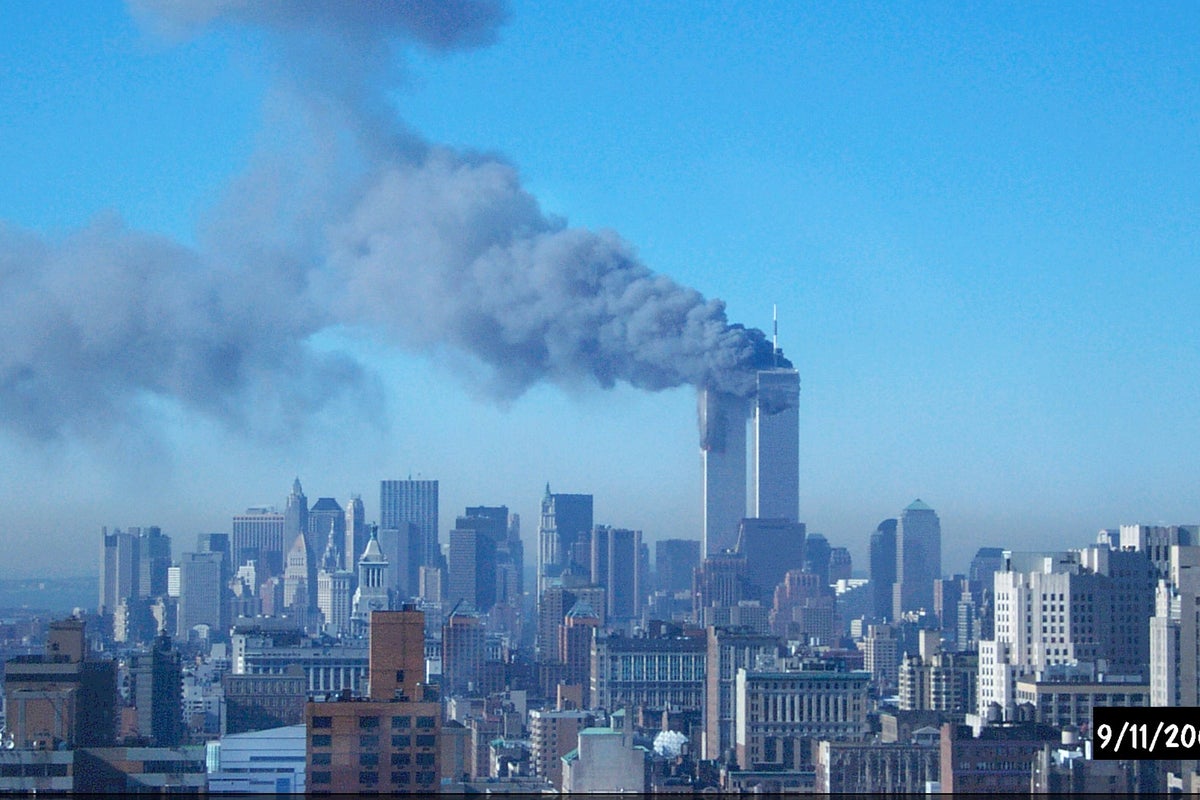
Little more than a month later, Rice used a secure phone to tell the president that the World Trade Center had just been hit by the first of four hijacked airliners on a kamikaze mission, the worst attack on America since Pearl Harbor. asserted
Center → use → Harbor
In “Ash and Honor,” Robinson skillfully weaves together underreported stories of that day from around the world. asserted
Robinson → weave → world
He reviewed scores of documents (and some reports he believes are still classified) and interviewed over 65 eyewitnesses to the day’s events. asserted
he → review → events
Pilots, soldiers, civilians, spies — all their recollections come together to create a new portrait of the chaos and the brave souls who weathered it. asserted
who → come → it
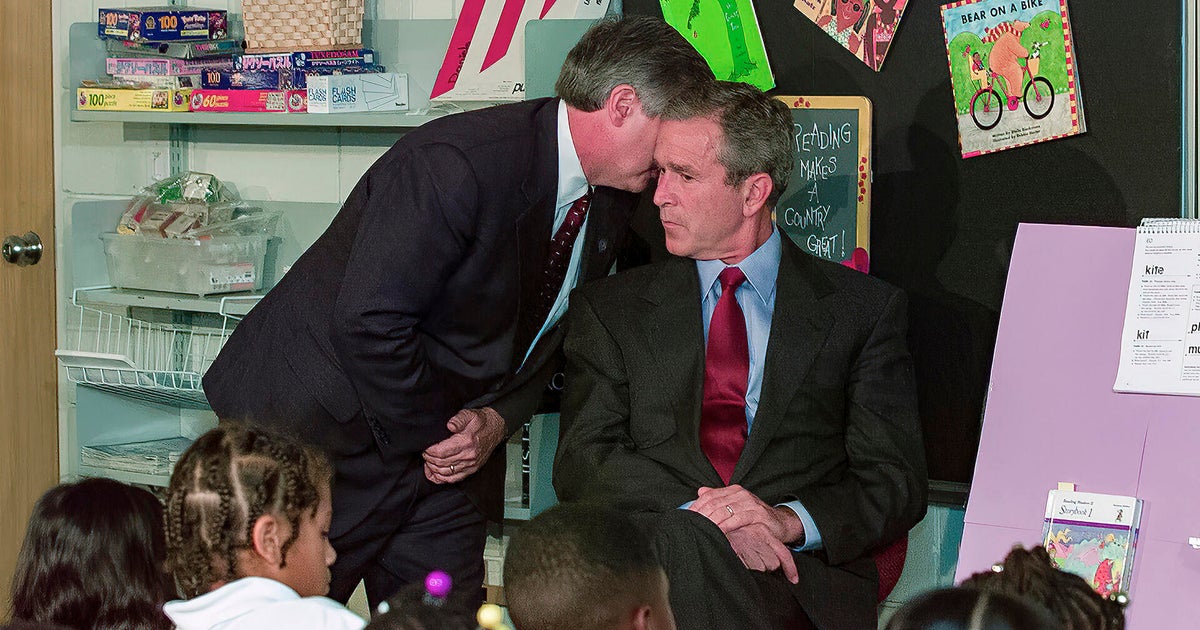
When the nation came under attack, the president was in Sarasota, Fla., visiting the Emma E. Booker Elementary School for what the author calls “a media stunt before sixteen second graders, designed to highlight a new education initiative.” By the time Rice’s ominous call came through, Eddie Marinzel and Dave Wilkinson, the two men leading Bush’s Presidential Protective Division that day, had already decided to get Bush on Air Force One and off the ground. asserted
Marinzel → come → ground
Bush demanded to be taken back to Washington, DC, eager to reassure the nation that he was in control. asserted
he → demand → control
But returning to 1600 Pennsylvania Ave. was not an option. asserted
returning → return → .
Then things got worse: Word arrived that the plane carrying the commander in chief was itself a bull’s-eye on the terrorists’ list of targets, writes Robinson. asserted
Robinson → get → targets
That became clear at 10:22 a.m. asserted
That → become → ?
A phone rang in the Presidential Emergency Operations Center (PEOC), a concrete bunker located five stories beneath the East Wing of the White House. asserted
phone → ring → House
Marine Corps Maj. Bob Darling answered. asserted
Darling → answer → ?
On the other end of the line was a Secret Service agent calling from the Situation Room. asserted
agent → call → Room
The agent “said that a reliable source had called the White House with a warning.” “Angel is next.” Shocked, Darling looked across the table to Rice and repeated what he just heard. asserted
he → say → what
“Who the hell is Angel?” Rice asked. asserted
Rice → ask → ?
“Air Force One,” Darling responded. asserted
Darling → respond → ?
News of the threat “freaked out everyone.” asserted
News → freak → everyone
That someone had made a threat against the president was not surprising. asserted
made → make → president
But this one was different, because whoever made it knew about the codename Angel — “the classified code for Air Force One.” asserted
made → make → One
The threat could be coming from someone either inside the security bubble that surrounded the president or close enough to that bubble to know how to get inside.” uncertain
that → come → bubble
Marinzel and Wilkinson “assumed the worst”: that the threat might have come from someone aboard Angel itself. uncertain
threat → assume → Angel
They considered whether it could be a “rogue Secret Service agent,” a steward, a guest, or a member of the press corps. uncertain
it → consider → corps
“No one could be trusted,” writes Robinson. uncertain
Robinson → trust → ?
Col. Mark Tillman, the pilot, decided to make Air Force One invisible. asserted
One → decide → ?
“He called down to the FAA and ordered total radio silence. asserted
He → call → silence
The plane still did not have fighter escorts, despite having called for them multiple times since takeoff. asserted
plane → have → takeoff
So spooked were Marinzel and Wilkinson that they locked down the plane. asserted
locked → lock → plane
Everyone onboard was ordered to remain in their assigned seats. asserted
Everyone → order → seats
Agents stood at the front of every cabin, eyeing everyone for suspicious activity. asserted
Agents → stand → activity
All cellphones were confiscated. asserted
cellphones → confiscate → ?
No one was allowed to come forward without authorization. asserted
one → allow → authorization
While Marinzel’s team searched the plane for bombs and drugs, the words ” ‘Angel is next’ continued to echo in everyone’s mind.” asserted
Angel → search → mind
Locked away in a secure cabin, Bush was trying to get a hold of his family. asserted
Bush → lock → family
…and 39 more, not listed.

💬 Give feedback
🕘 History 🎫 Support