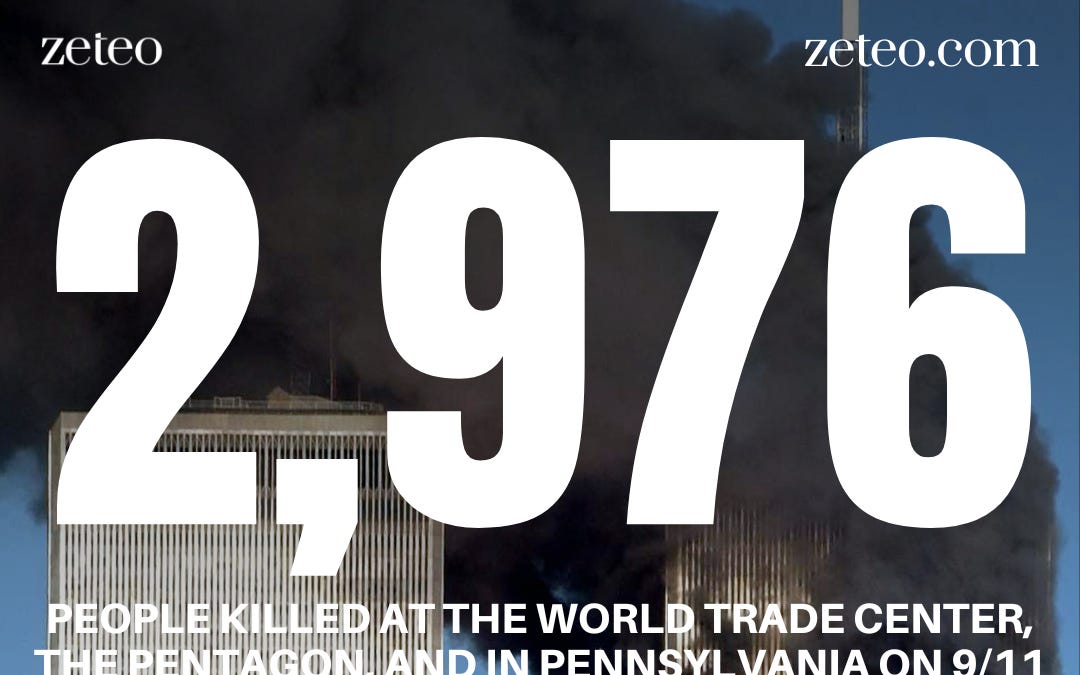
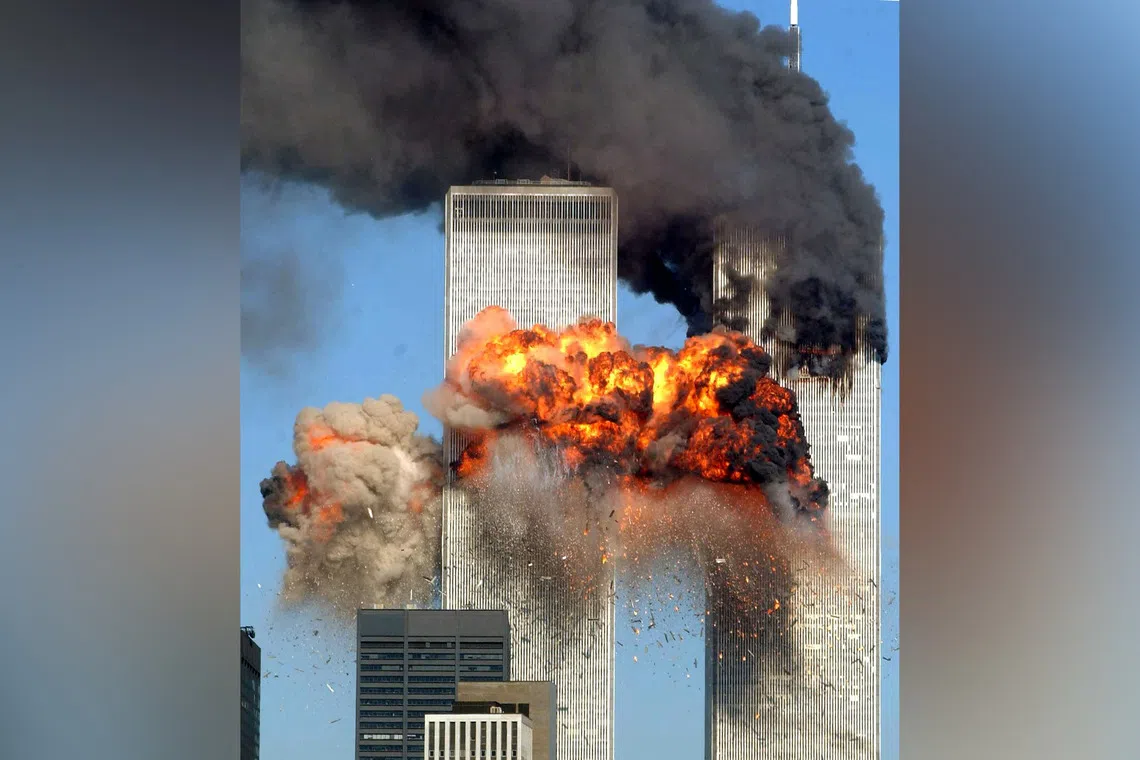
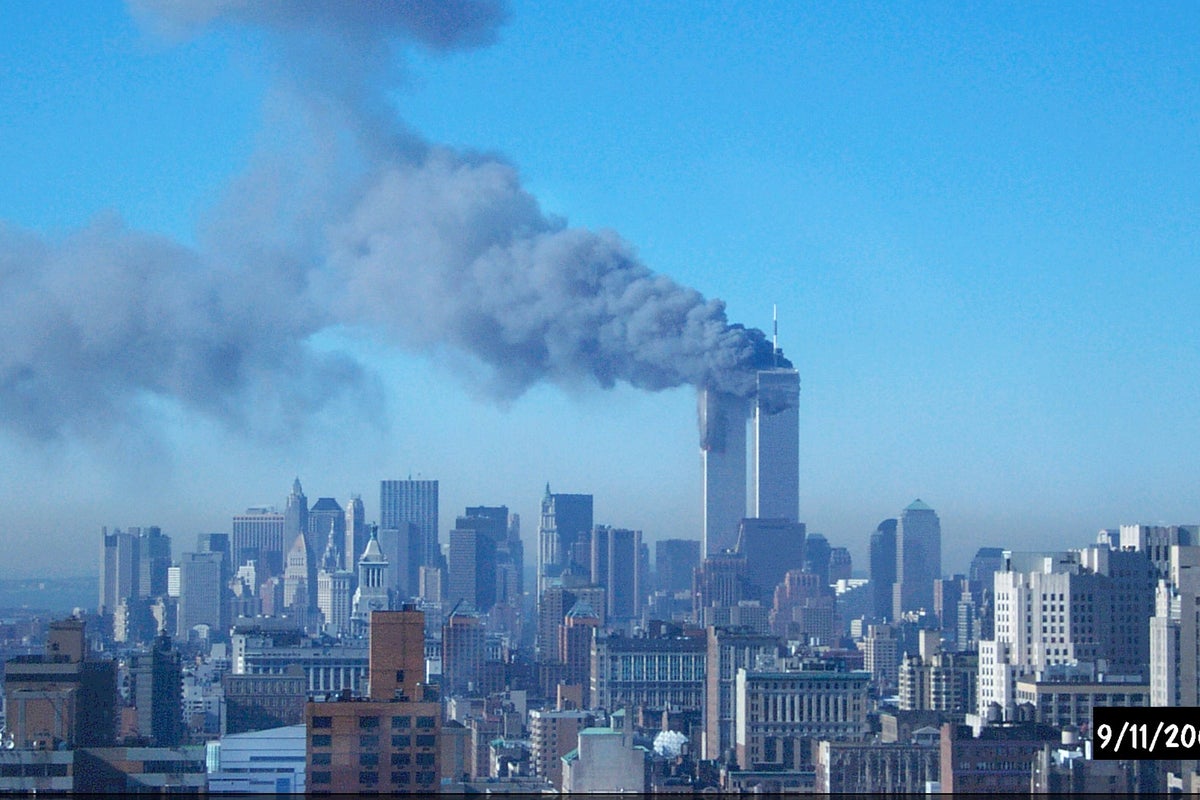
It’s been 25 years since 19 terrorists hijacked four airplanes and smashed into two skyscrapers in New York City as well as the Pentagon, and caused the fourth plane to plunge into a Pennsylvania field after brave passengers fought back against the hijackers, who likely intended to hit the White House.
asserted
who → hijack → House
I remember well September 11, 2001.
asserted
I → remember → September
I was living in Victoria and was the B.C. director for the Canadian Taxpayers Federation.
asserted
I → live → Federation
In the early hours, a producer from a Vancouver radio station, where I was scheduled for an interview later that morning, left a cryptic phone message: “Given what’s happened this morning, we obviously need to cancel this interview.
asserted
we → schedule → interview
Recommended Videos
Mystified, I turned on the television to see repeating video footage of planes crashing into the World Trade Center and the Pentagon.
asserted
planes → turn → Center
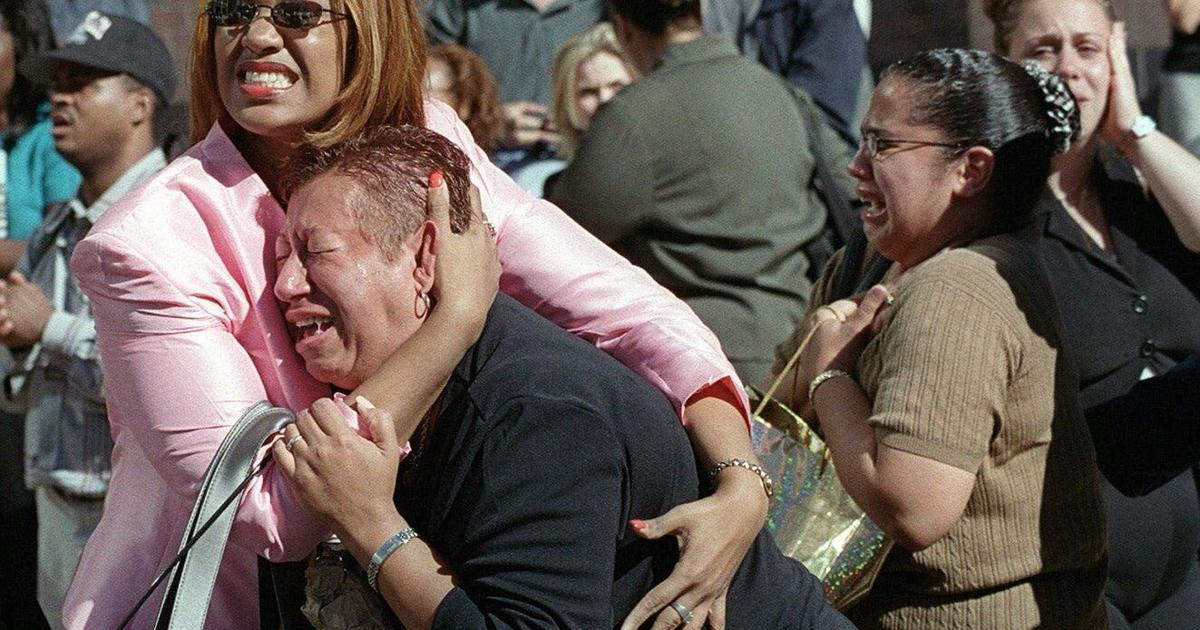
Anyone old enough to recall 9/11 will remember the horrific images: People jumping from the Trade Center towers to escape the flames; people fleeing lower Manhattan to escape the two towers before and after their collapse; firefighters, police, and a Franciscan friar who perished, carried away by those who survived.
asserted
who → recall → those
9/11 marked a definitive end to the 20th-century belief that only economic battles mattered — the postwar idea contest between free enterprisers and Marxists about which economic system could best deliver the goods.
uncertain
system → mark → goods
What 9/11 did was dramatically end the assumption that every outcome has a material cause, i.e., that poverty is always the cause for terrorism and that if only people were prosperous, revolutionary discontent might be muted.
uncertain
discontent → end → terrorism
This belief was most famously articulated by Francis Fukuyama, a political scientist, who wrote of the “end of history,” in a famous 1989 essay and later in a 1992 book.
asserted
who → articulate → book
Fukuyama’s claim was not that conflict would cease in the future, but that significant challengers to western liberalism, democracy and market economies seemed to be mostly absent with the collapse of communism.
uncertain
challengers → cease → communism
Fukuyama theorized that because western liberalism addressed the need for “recognition,” meaning participatory democracy for the individual, and because free markets were the best engine for prosperity, new challengers to liberalism and capitalism were unlikely to arise in the West or anywhere else.
asserted
challengers → theorize → West
“Moreover, the logic of modern natural science would seem to dictate a universal evolution in the direction of capitalism,” wrote Fukuyama in his 1992 book.
asserted
Fukuyama → seem → book
In that book, Fukuyama cited radical Islam as one potential counter to the West, but quickly moved on to other thoughts about the world we lived in.
asserted
we → cite → world
In short, even though there were early warning signs — including the 1979 Islamic Revolution in Iran, terror attacks albeit mostly outside of the West, and the first (1993) attack on the World Trade Center — significant challenges to western civilization seemed few, and most of us were blissfully unaware.
asserted
most → be → us
Then 9/11 happened and the 19 men who attacked the symbols of the West were deeply committed fundamentalist Islamic radicals who possessed a worldview distinctly different than that which developed in the West.
asserted
which → happen → West
Many came from Saudi Arabia, a mostly prosperous nation; the chief architect behind 9/11 was Osama bin Laden, who himself came from a wealthy Saudi family.
asserted
who → come → family
And it didn’t matter that Americans had even funded Islamic Mujahideen resistance to Soviet communists in Afghanistan in the 1980s (of which bin Laden might have been a beneficiary).
uncertain
Laden → matter → which
Bin Laden had a grudge against the West for his own reasons and his own ends.
asserted
Laden → have → reasons
In other words, we naïve Westerners encountered people who could not be bought off by material progress or even by our early alliance against Soviet Marxists.
uncertain
who → encounter → Marxists
The 9/11 terrorists and others before and since have their own unique grievances which were not economic in origin.
asserted
which → have → origin
They possessed a distinct view of how the world should be ordered.
asserted
world → possess → view
It was and is a civilizational challenge traceable even back to early Islamic conquests starting in the seventh century.
asserted
It → start → century
In the decades since 9/11, much analysis of terrorism has occurred and with significant contributions from Canadian political scientists, two of whom are senior fellows at the Aristotle Foundation.
asserted
two → occur → Foundation
Waller Newell, professor emeritus at Carleton University, wrote an insightful 2016 book, Tyrants: A History of Power, Injustice and Terror.
asserted
Newell → write → Power
Newell guided the reader on a three-millennium ride through history’s Caesars, emperors, Kaisers, dictators, tyrants and terrorists to help properly understand the modern adversaries we face, and deal with them effectively to preserve our freedom.
asserted
we → guide → freedom
One type of tyrant/terrorist to watch out for: the millenarian, whose ambition is to effect the wholesale transformation of society — the revolutionary utopian.
asserted
ambition → watch → society
In the 19th century such terrorists were anarchists and nationalists; in the 20th century they were Marxists and Nazis (before and after taking power in Germany).
asserted
they → take → Germany
Newell pointed out that while today’s terrorists and tyrants may claim to represent a pure form of Islam, they in fact undermine their own faith because, similar to the other two Abrahamic faiths, all three faiths assume “human beings are servants of God and powerless to do good without him.”
uncertain
beings → point → him
Put differently, the crude revolutionary project of Islamists attempts to create heaven on Earth.
asserted
project → Put → Earth
But that, as Newell wrote, is an assertion of “man’s absolute control over his own destiny.”
asserted
Newell → write → destiny
That’s akin to challenging God’s authority, the elevation of man’s politics and power above divine power – blasphemy.
asserted
That → ’ → power
Another Canadian political scientist who has also spent time and intellectual effort understanding terrorism is University of Calgary political science professor Barry Cooper.
asserted
who → spend → Calgary
In his 2004 book, New Political Religions, or an Analysis of Modern Terrorism, Cooper argued that there was a “spiritual motivation” that was central to the actions of terrorists today.
asserted
that → argue → terrorists
By “spiritual,” Cooper did not mean that in narrow religious terms but in opposition to material explanations for terror, as in assuming poverty is a “root cause” for terrorism.
While such dynamics sometimes exist, Cooper wrote that “a more conceptually adequate approach is provided by (political scientist) Eric Voegelin’s term “pneumopathology” — a disease of the spirit.
asserted
approach → mean → spirit
Cooper then made a further distinction: “While terrorism has been used throughout the ages as a weapon in political struggles, there is an essential difference between groups who use these tactics for more or less rational political goals and those seeking more apocalyptic ends.
asserted
who → make → ends
As the publisher’s summary of New Political Religions described it, “Cooper argues that today’s terrorists have a spiritual perversity that causes them to place greater significance on killing than on exploiting political grievances.”
asserted
them → describe → grievances
Cooper gave two examples, Aum Shinrikyo, the terrorist organization that poisoned thousands of Tokyo subway riders in 1995, and al-Qaida, the group that launched the 9/11 terror attacks.
asserted
that → give → attacks
Cooper points out that this “spiritual perversity enables a human being, imagining himself empowered by God, to go on a campaign of mass destruction.”
asserted
himself → point → destruction
As evidence that Cooper was on to something, his book, New Political Religions was later found in Osama bin Laden’s library when U.S. special forces raided his lair and killed him in 2011.
asserted
forces → find → 2011
As Cooper has written in National Post previously, “It is certainly true that most Muslims are not terrorists,” but the issue for Muslims and everyone else is that many “terrorists today not only claim to be Muslims, but to be ‘original’ Muslims, Salafis, genuine, true, ‘pure’ Muslims.
uncertain
terrorists → write → Muslims
…and 7 more, not listed.
 The Aporia