Airline execs recall how they navigated 9/11 and plunge in air travel demand after the attacks

The Globe and Mail · collected 2026-09-08 · by Christopher Reynolds
Read the original at The Globe and Mail ↗

Summary

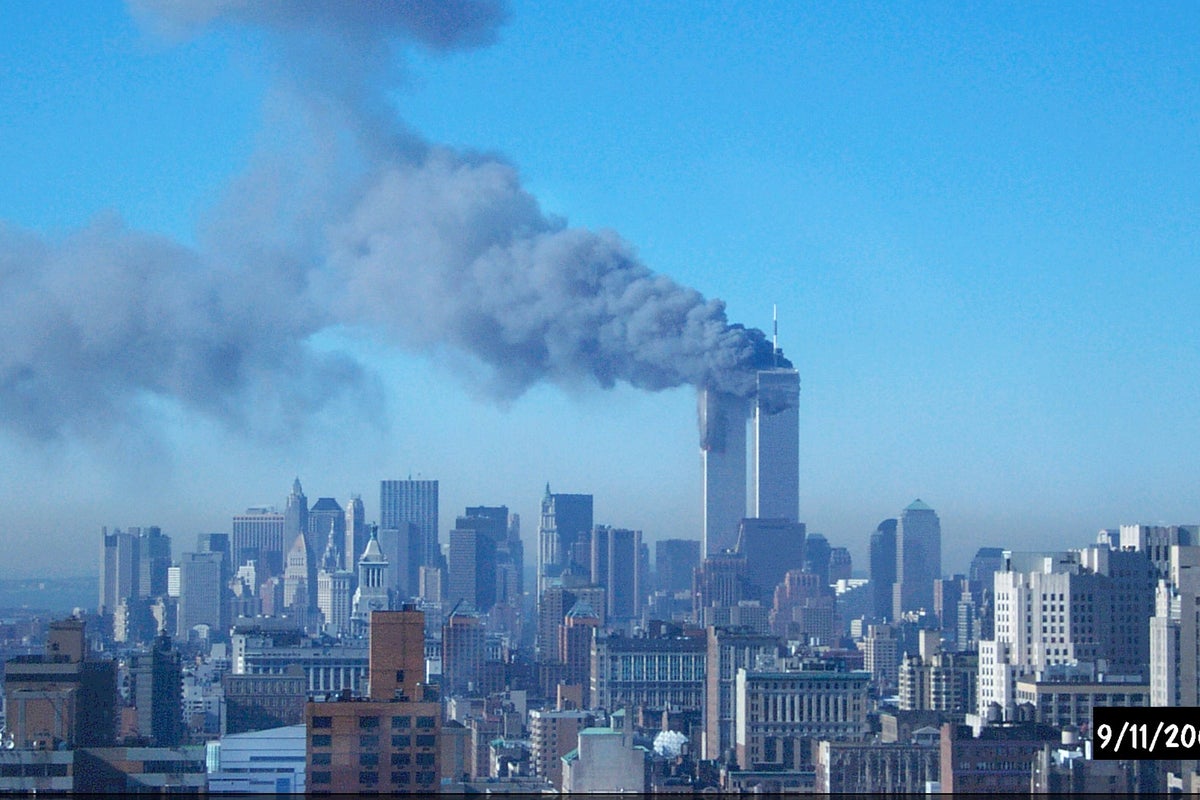
Airline executives including Calin Rovinescu and Robert Milton recall their experiences navigating the aftermath of the 9/11 attacks, which led to a significant plunge in air travel demand. Rovinescu was on vacation when he received news of the attacks and had to find a quiet place to dial into an emergency meeting with Air Canada executives. The airline's 300-plus planes were grounded as Canadian airspace was closed for the first time in history following special clearance from governments. In total, 494 flights carrying 33,000 passengers were diverted or turned back after the closure of airspace.
Written by the local model on 2026-09-08, using this article's own text rather than the other coverage of the same event (that is the story summary below).

Signals How these are calculated →

Claims extracted
49
claim-shaped sentences
Uncertain
2%
1 of 49 hedged
Leaning
not political
takes no side on a contested political question
Publisher trust
40.8
red-flag proxy, not a credibility rating
Outlets on this story
38
World
Narrative spread
1
articles carrying this framing
Analyzed 2026-09-08 · how these are computed

AI analysis (generated at analysis time, not now)

Story summary

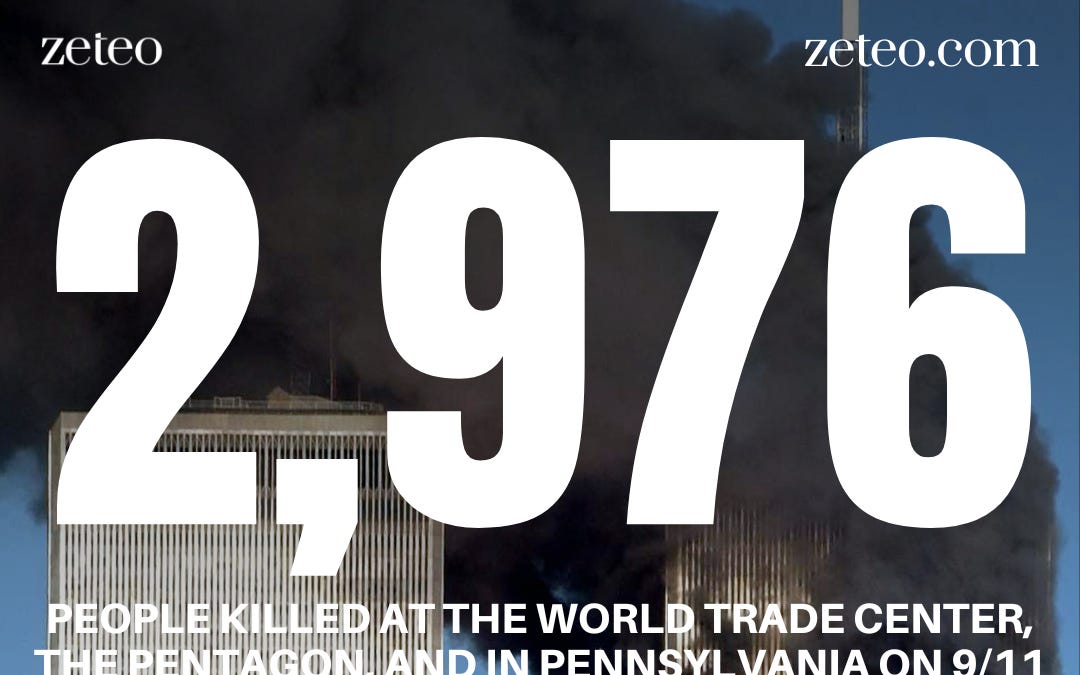
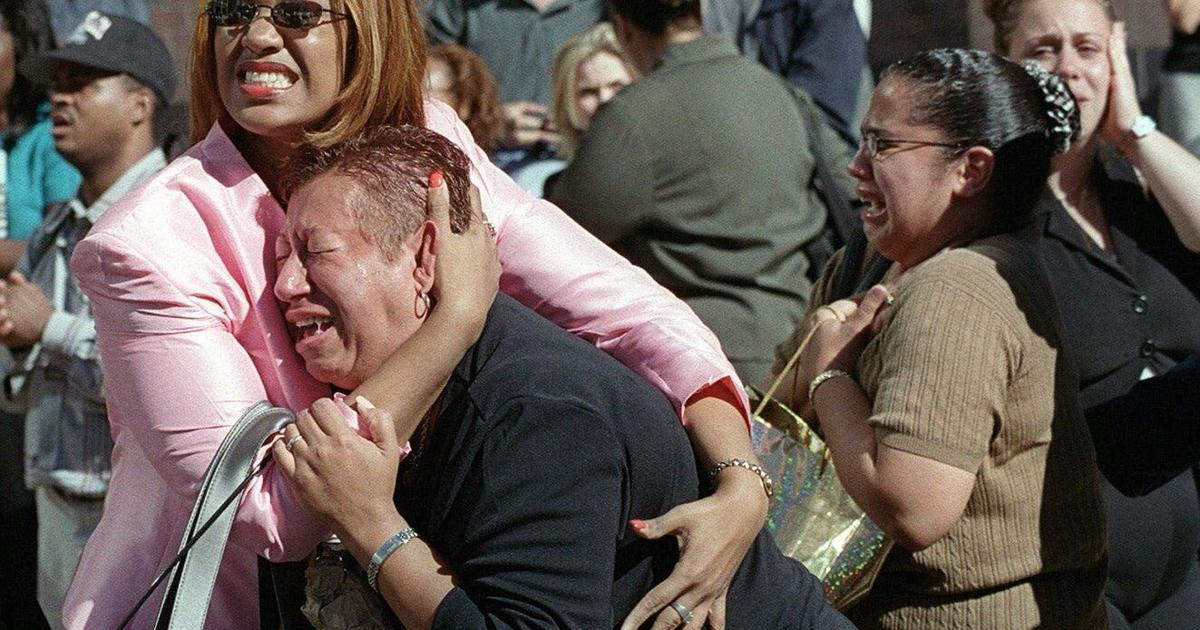
Twenty-five years have passed since the 9/11 terrorist attacks, which resulted in 2,977 people killed, including 79 workers and 91 guests at Windows on the World restaurant in the North Tower of the World Trade Center. The attacks also caused widespread destruction and changed the world forever.

Many Americans are still affected by the trauma of that day, as seen in the lives of individuals like Colin McShane, who lost his father in the attacks when he was just 4½ years old. McShane's experience is not unique, as many others have been impacted by the loss of loved ones or personal experiences on 9/11.

In addition to the human toll, the attacks also had significant global implications, including a shift in international relations and a new era of terrorism. In response to the attacks, the United States launched the "war on terror," which has continued under various administrations.

However, the impact of 9/11 extends beyond geopolitics. The attacks also led to a surge in Islamophobia and anti-Muslim sentiment in the US, with many Muslim Americans facing harassment, discrimination, and even violence. This phenomenon continues today, as seen in the treatment of Abdul El-Sayed, a Democratic Senate nominee who has been called a terrorist and a radical Islamist.

In the years following 9/11, many first responders have fallen ill or died from related health issues due to their work at ground zero. The World Trade Center Health Program was established to provide care for these individuals, but funding has not kept up with the number of people getting sick.

As the US approaches the 25th anniversary of 9/11, many Americans are reflecting on how the country has changed since that day. With a new generation growing up without memories of the pre-9/11 America, there is a growing concern about the need for continued remembrance and understanding of this pivotal moment in history.

Written for “Anniversary of September 11 Attacks” on 2026-09-08, grounded in this article and the 37 other(s) covering the same event.
Why this leaning score
This article does not take a side on a contested political question, so it has no leaning score. That is an answer rather than a gap: a match report or a rescue can be warmly or critically written without being left or right, and scoring it anyway is how approval of a subject gets recorded as a political position.
No political leaning scored for article 7100 · logged 2026-09-08

Story

📰 Anniversary of September 11 Attacks
World · 38 article(s) covering the same event.

How this is being covered How these are calculated →

Article leaning vs. publisher reliability
Source leaning vs. consistency

Compared with similar articles

This article reads unscored and hedges 2% of its claims. Each row says how that neighbour differs.
How 9/11 Shaped My Life same event · 100%
TIME
⚖️ leaning not scored 🔴 7% hedged 25 of 358 📰 publisher trust 95
“Both articles discuss the 9/11 terrorist attacks on September 11, from different personal perspectives.”
The Globe and Mail
⚖️ Leans left 🔴 4% hedged 3 of 75 📰 publisher trust 41
“Both articles describe the aftermath of the September 11, 2001 terrorist attacks in New York City, specifically the reactions and actions of individuals on that day.”
ABC News (AU)
⚖️ Leans left 🔴 5% hedged 8 of 171 📰 publisher trust 60
“Both articles describe the September 11 terror attacks in detail, referencing the hijackers, the twin towers, and the aftermath, indicating they are discussing the same specific incident.”
CBS News
⚖️ Leans left 🔴 0% hedged 0 of 1 📰 publisher trust 60
“Both articles describe the September 11 terrorist attacks on the twin towers in New York City, occurring at the same time and place”
Zeteo
⚖️ Leans left 🔴 0% hedged 0 of 7
“Both articles describe the 9/11 attacks on September 11, 2001”
The Straits Times
⚖️ Leans right 🔴 11% hedged 3 of 27 📰 publisher trust 94
“Both articles refer to the September 11, 2001 attacks on the World Trade Center towers in New York City.”
The Independent
⚖️ Leans left 🔴 8% hedged 4 of 48 📰 publisher trust 59
“Both articles describe the same occurrence of the 9/11 attacks on September 11, 2001”
CBC News
⚖️ leaning not scored 🔴 0% hedged 0 of 2 📰 publisher trust 95
“Both articles describe the exact same occurrence: the events surrounding the September 11, 2001 terrorist attacks on the World Trade Center in New York City”
Toronto Star
⚖️ Leans left 🔴 4% hedged 2 of 53 📰 publisher trust 62
“Both articles describe the Sept. 11 attacks in 2001, specifically mentioning the planes hitting the twin towers in New York City.”
The Guardian
⚖️ leaning not scored 🔴 3% hedged 5 of 164 📰 publisher trust 59
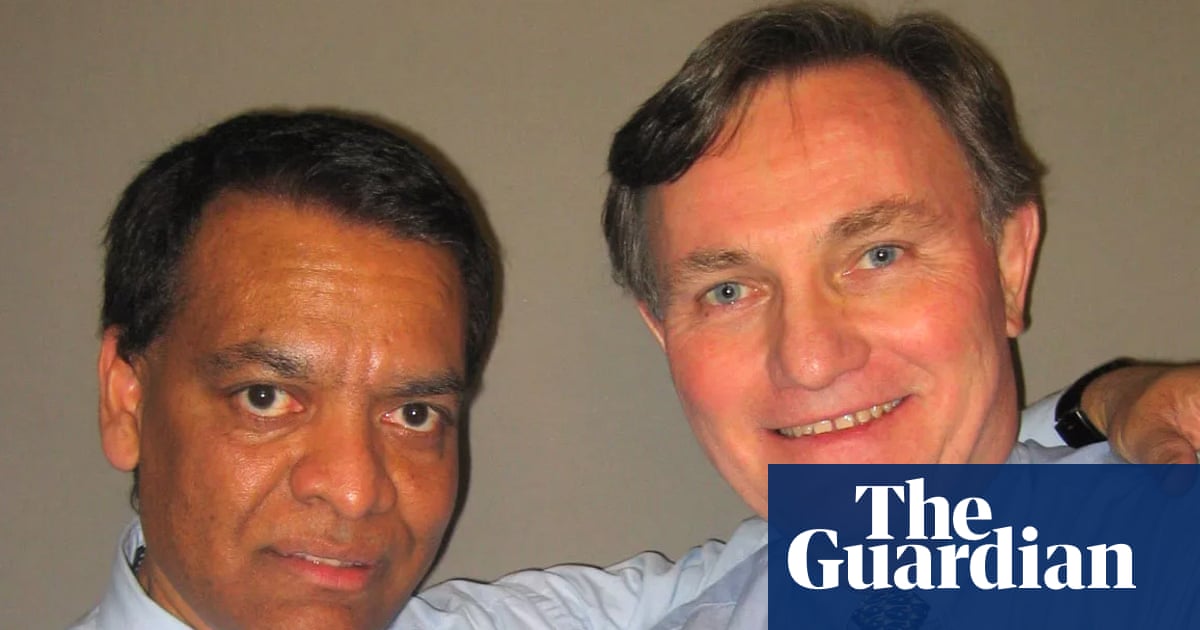
“Both articles describe events that occurred on September 11, 2001, specifically referencing the World Trade Center attacks and individual personal experiences of two people who survived.”

Publisher

The Globe and Mail · 129 article(s) · 10 correction(s) detected
Running correction rate · 10 correction(s)
2026-09-08
Morning Update: Say hello to Canadian countertariffs
2026-09-07
Morning Update: Tumbler Ridge survivors file new lawsuits
2026-09-06
Morning Update: Made-in-Canada trains
2026-08-31
Ontario plan to stop mandatory inquests for inmate deaths a mistake, advocates say
2026-08-31
Morning Update: Mapping new points of resistance
2026-08-28
Morning Update: Lake Ontario forever
2026-08-27
Morning Update: Rethinking resources as a trade weapon
2026-08-26
Morning Update: Ottawa bites back
2026-08-25
Morning Update: A new trade deal remains in the cards
2026-08-24
Morning Update: ‘You are at war when you get attacked’

Who wrote this

Christopher Reynolds
3 article(s) here · 1 carrying a prediction
🔮 Rovinescu, who would go on to become CEO, remembers scrambling to find a quiet place to dial into an emergency meeting of Air Canada executives, rushing into the street and through the doors of a café.
🔮 “We talked about an Air Canada that would be further transforming itself into a global airline – not just a Canadian airline, a true global airline – and be focusing on further building its long-haul network,” Galardo said in a phone interview.
More on this subject from Christopher Reynolds
How then-Air Canada CEO navigated 9/11
2026-09-08 · The Globe and Mail · 74% similar
All 3 articles by Christopher Reynolds →

Topics

Air Canada Air Canada’s Canada London Montreal

Subjects

Canada GPE · 3× Rovinescu PERSON · 3× Air Canada ORG · 2× Air Canada’s ORG · 2× Canadian NORP · 2× Collenette PERSON · 2× London GPE · 2× Milton PERSON · 2× Montreal GPE · 2× Robert Milton PERSON · 2×

Narrative

The attacks and the plunge in air travel that followed forced a frenzy of tough choices among aviation and government leaders in the days and weeks afterward, as Sept. 11 pushed some airlines to the brink and beyond, reshaping Canada’s aviation landscape. Leading the call with Rovinescu was then-chief executive Robert Milton, who had just woken up from a nap in London after catching a redeye flight from Montreal.
framing: assertive · carried by 1 article(s) · first seen 2026-09-08
🔮 Rovinescu, who would go on to become CEO, remembers scrambling to find a quiet place to dial into an emergency meeting of Air Canada executives, rushing into the street and through the doors of a café.

Claims (49 extracted, 1 hedged)

Calin Rovinescu was strolling through an art museum in Barcelona on a wedding anniversary getaway when he heard the news. asserted
he → stroll → news
In a pair of phone calls, his assistant told him planes had just struck the twin towers in New York City. “I was looking at Picasso’s unique, surrealistic art … as I was hearing a surrealistic story,” Air Canada’s then-executive vice-president recalled. asserted
president → tell → story
Rovinescu, who would go on to become CEO, remembers scrambling to find a quiet place to dial into an emergency meeting of Air Canada executives, rushing into the street and through the doors of a café. asserted
who → go → café
“The world was changing before my eyes, and the people around me had no clue what was about to happen,” he said. asserted
he → change → clue
The attacks and the plunge in air travel that followed forced a frenzy of tough choices among aviation and government leaders in the days and weeks afterward, as Sept. 11 pushed some airlines to the brink and beyond, reshaping Canada’s aviation landscape. Leading the call with Rovinescu was then-chief executive Robert Milton, who had just woken up from a nap in London after catching a redeye flight from Montreal. asserted
who → follow → Montreal
Receiving special clearance from the Canadian, U.S. and U.K. governments, Milton managed to fly back to Canada the day after the tragedy alongside Rovinescu, who’d hopped over to London from Spain. asserted
who → receive → Spain
European airspace remained open. asserted
airspace → remain → ?
“I remember being on the flight deck with the crew,” Milton said of the voyage, taken in a Bombardier Challenger business jet loaned last-minute by that company’s CEO. asserted
Milton → remember → CEO
Air Canada’s 300-plus planes were grounded. asserted
planes → ground → ?
“It was truly eerie because there was no radio communication at all, whereas normally there’d be an armada of aircraft crossing the Atlantic in both directions. asserted
It → be → directions
Then-Air Canada CEO Robert Milton recalls the surreal sense of uncertainty he and his colleagues faced that day, as well as the financial fallout. asserted
he → recall → day
Marie-Hélène Lévesque, special assistant to transport minister David Collenette at the time, drove back to Ottawa from Montreal the morning of Sept. 11 with her boss. asserted
Lévesque → drive → boss
They had ducked out of an airport conference, where his speech was interrupted by the jangle of cellphones in the audience as executives got word of the unfolding disaster. asserted
executives → duck → disaster
“In that minivan, all the major decisions were taken,” said Lévesque, now director general of the Public Health Agency of Canada. asserted
Lévesque → take → Canada
Following the lead of American authorities, Collenette greenlit the closure of Canada’s airspace minutes after a Boeing 757 crashed into the U.S. Pentagon at 9:37 a.m. asserted
Boeing → follow → a.m.
It marked the first time ever that either country had taken such a step. asserted
country → mark → step
“This was the third plane, and we didn’t know how many more there were,” said then-deputy minister Margaret Bloodworth. asserted
Bloodworth → know → ?
Before the battery died on his cell, Collenette instructed Nav Canada to order 270 planes over the Atlantic Ocean to turn around and fly back to Europe. asserted
planes → die → Europe
He also oversaw the landing of 224 other diverted flights carrying 33,000 passengers to 17 Canadian airports in a matter of hours, the most extensive aircraft grounding in the country’s history. asserted
He → oversee → history
In Gander, N.L., the airport took on 38 planes carrying 6,500 people. asserted
airport → take → people
The hardiness and hospitality of the town’s 9,000-plus residents became known to the world via the Broadway hit musical Come From Away, which chronicled their experience hosting the stranded travellers. asserted
which → know → travellers
“Some of them sat for 24 hours because we weren’t ready to let them off the planes until we had enough customs and immigration people there to screen them. asserted
we → sit → them
We didn’t know who was on them,” said Bloodworth. asserted
Bloodworth → know → them
“They didn’t know until they landed what had happened because it was not the days where you could have the internet from planes,” she added. uncertain
she → know → planes
“And the pilots by and large did not tell passengers until they landed, because there’s no point in panicking people. asserted
they → tell → people
In the weeks and months that followed, politicians and bureaucrats allocated billions of dollars for new security measures and the creation of the Canadian Air Transport Security Authority, which took charge of passenger screening processes that until then had been in the hands of individual airlines. asserted
that → follow → airlines
An eventual gauntlet of checkpoints and protocols – shoes off, laptops out, liquids limited to 100 millilitres – signalled a permanent shift in how travellers fly. asserted
travellers → limit → shift
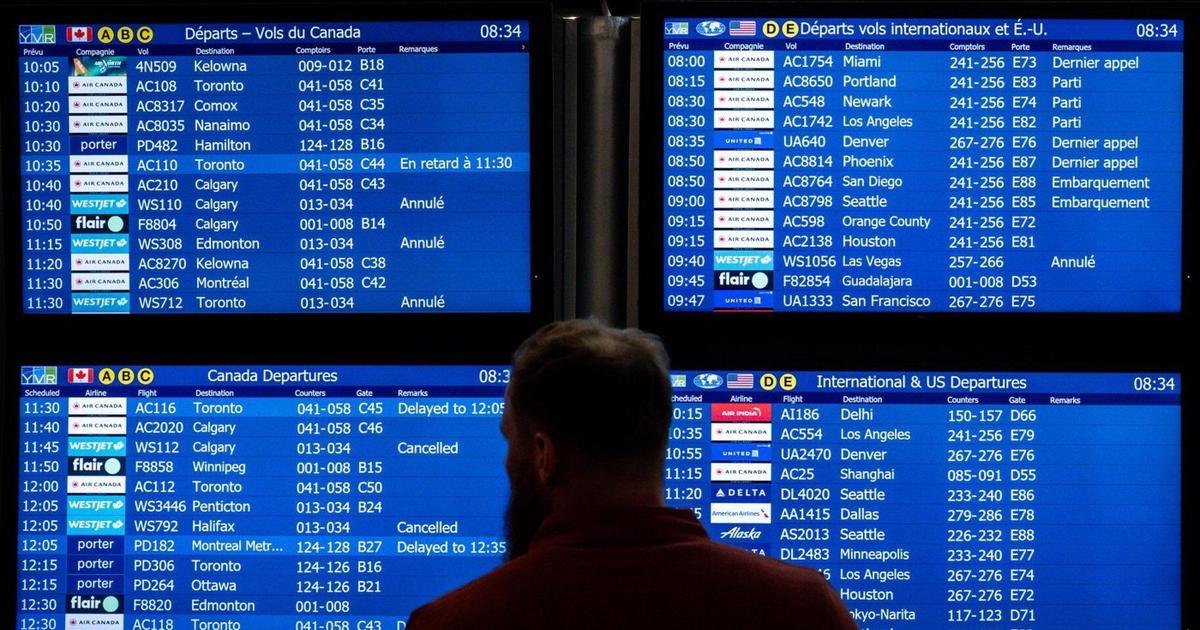
Meanwhile, airlines struggled to absorb the blow of plummeting demand. asserted
airlines → struggle → demand
A majority of Air Canada revenues stemmed from flights to and from the United States, including routes where Canada was a layover point for overseas trips, Milton said. asserted
Milton → stem → trips
The plunge in air travel demand in the post-9/11 months severely dented earnings. asserted
plunge → dent → earnings
Air Canada cut 6,600 workers and posted a $1.25-billion loss in 2001 after losing hundreds of millions of dollars in sales in the fourth quarter alone. asserted
Canada → cut → quarter
The US$15-billion in grants and loan guarantees that American rivals received didn’t help, as Canadian carriers received relatively little in financial aid – about C$160-million. asserted
carriers → receive → aid
“When so much of your revenues are generated in the U.S market and your competition receives so much subsidization, you’re going to be destabilized. asserted
you → generate → subsidization
And we were destabilized,” Milton said. asserted
Milton → destabilize → ?
The country’s second-largest airline, discount carrier Canada 3000, soon folded. asserted
airline → fold → ?
It was placed in bankruptcy in November, 2001. asserted
It → place → November
Numerous airlines across the globe met a similar fate, ranging from Ansett Australia to Swiss Air. asserted
airlines → meet → Air
Others restructured under bankruptcy protection in the decade that followed, including almost every U.S. legacy carrier and, in 2003, Air Canada. asserted
that → restructure → 2003
“It led to a big, big restructuring. asserted
It → lead → restructuring
It highlighted the fragility of the cost structure,” said Rovinescu. asserted
Rovinescu → highlight → structure
…and 9 more, not listed.

💬 Give feedback
🕘 History 🎫 Support