Banning data centers would blow up the U.S. economy

Noahpinion · collected 2026-09-04 · by Noah Smith commentary
Read the original at Noahpinion ↗

Summary

Francesca Hong, a Wisconsin gubernatorial candidate, is advocating for a pause on data center construction, which has become a consensus issue. According to recent polls, 71% of Americans oppose data center construction in their area, with only 21% supporting it, and 55% strongly opposed. This opposition is bipartisan, with both Republicans and Democrats opposing data centers, and several states including New York and Texas have already implemented moratoriums on construction. The article argues that a national pause on data centers would not hinder the development of artificial intelligence, which can thrive regardless of physical location.
Written by the local model on 2026-09-05, using this article's own text rather than the other coverage of the same event (that is the story summary below).

Signals How these are calculated →

Claims extracted
67
claim-shaped sentences
Uncertain
6%
4 of 67 hedged
Leaning
Leans left
expected in commentary, which argues a position
Publisher trust
not scored
Commentary is not rated for newsroom trust
Outlets on this story
1
Politics
Narrative spread
1
articles carrying this framing
Analyzed 2026-09-05 · how these are computed

AI analysis (generated at analysis time, not now)

Story summary

In recent polls, 71% of Americans oppose the construction of data centers in their area, with 21% supporting it and 55% strongly opposing. This shift is significant, as a previous August 2025 survey found that 43% of Americans supported data center construction near them. The issue has become increasingly divisive, with supporters of Wisconsin gubernatorial candidate Francesca Hong trying to downplay her cultural stances in favor of discussing her proposal for a pause on data center construction.

Written for “Cloud Computing Impact” on 2026-09-05, grounded in this article and the 0 other(s) covering the same event.
Why this leaning score
The article's own words the score was based on. Each is quoted verbatim and was checked against the article text before being stored, so you can find it in the original.
Score -0.35 Confidence high
Leaning score -0.35 for article 4345 (high confidence, 3 verified quotes) · logged 2026-09-05

Story

📰 Cloud Computing Impact
Politics · 1 article(s) covering the same event. This is the one the site leads with.

How this is being covered How these are calculated →

Article leaning vs. publisher reliability
Source leaning vs. consistency

Compared with similar articles

This article reads leans left and hedges 6% of its claims. Each row says how that neighbour differs.
The Dispatch
⚖️ leaning not scored 🔴 33% hedged 1 of 3 📰 publisher trust 96
“Article A discusses polling results from August 2025, while Article B references 'poll after poll' without specifying a date or time”
Data Centers Are Not the Problem different event · 100%
Reason Magazine
⚖️ Leans strongly right further right than this 🔴 0% hedged 0 of 2 📰 publisher trust 86
“Article B discusses a different topic and doesn't mention Article A's title, implying they cover separate topics”
News - South China Morning Post
⚖️ Leans left 🔴 27% hedged 3 of 11 📰 publisher trust 94
“Article A reports on Thailand suspending building of 49 data centres, while Article B mentions a pause on data centre construction in a general sense, without specifying any particular country or details”
Why does everyone hate data centers? different event · 100%
Silver Bulletin
⚖️ Leans left 🔴 4% hedged 26 of 608
“The articles mention data centers, but they discuss different topics related to them and do not describe a single occurrence.”
NPR Topics: News
⚖️ Leans left 🔴 9% hedged 4 of 45 📰 publisher trust 58
“Article A discusses data center construction as an issue in a gubernatorial election, while Article B reports on campaign ads mentioning data centers in various races”
The Bulwark
⚖️ leaning not scored 🔴 0% hedged 0 of 8
“Article B discusses a pause on data center construction as a consensus issue stance, whereas Article A is an interview with Nathaniel Rich about his views on data centers and climate change, without mentioning any specific event or action”
The Standard
⚖️ Leans strongly left further left than this 🔴 0% hedged 0 of 27 📰 publisher trust 96
“Article A is focused on a protest against a specific AI data centre in Larbert, Scotland, while Article B mentions a more general issue of opposing data center construction in the US, with no mention of a specific event or location”
Trump Hands Dems Their Best Gift Yet different event · 80%
The Bulwark
⚖️ Leans strongly right further right than this 🔴 6% hedged 3 of 49
“The text of article A refers to a tweet from Donald Trump, while article B discusses a broader issue with data center construction and mentions it in relation to Wisconsin gubernatorial candidate Francesca Hong”
Washington Examiner
⚖️ Leans strongly right further right than this 🔴 3% hedged 1 of 31 📰 publisher trust 96
“Article A discusses a Gallup survey finding, while Article B mentions polls but doesn't specifically reference a recent survey, indicating they might be discussing different data points or events”
National Post
⚖️ Leans left 🔴 6% hedged 3 of 52 📰 publisher trust 96
“The articles mention different countries (USA vs Canada), different political figures (Francesca Hong vs Mark Carney), and different regions, suggesting they report on related but distinct events”

Publisher

Noahpinion · 20 article(s) · 0 correction(s) detected

Commentary. The three signals behind a trust score all measure a newsroom's record with its own reporting, so they are not computed for this source. How trust is scored.

No corrections detected for this publisher. That may mean careful reporting, or simply that nothing has been checked.

Who wrote this

Noah Smith
18 article(s) here · 1 carrying a prediction
🔮 Cyberwarfare so far hasn’t been decisive in military conflicts, but AI’s incredible cybersecurity prowess could change that.
2026-09-05 · mixed framing · America is still beating China in the AI race
🔮 You’d think a lot of these would be foreign, but international investors mostly avoided the boom (except for a few who bet big on Korean memory stocks).
2026-09-05 · assertive framing · Why did South Korean stocks just crash?
🔮 Would you like to see an example of a badly conceived policy?
2026-09-05 · assertive framing · Slopulism is taking over America
🔮 I remember using a hand calculator and seeing if my uncle could get it right without a tool faster than I could; more often than not, he could.
2026-09-05 · assertive framing · The end of the age of heroes
🔮 Some people thought Donald Trump’s approval rating would have a floor around 40%.
2026-09-04 · assertive framing · Are the Democrats going to save us this time?
🔮 It’s pretty amazing that a pause on data center construction has become such a consensus, middle-of-the-road issue stance that it’s the thing Hong’s supporters would rather talk about!
2026-09-04 · assertive framing · Banning data centers would blow up the U.S. economy
🔮 But I suppose there’s one reason it might be interesting, which is that over the past decade or so, a fairly large portion of the left-leaning intellectual class in America has become fairly-to-very resentful of the American tech industry, and has spent an enormous amount of intellectual effort on criticizing that industry.
2026-09-04 · assertive framing · The poverty of anti-tech thought
🔮 I’ve long predicted that MAGA is a wave that would ultimately break and recede.
2026-09-04 · assertive framing · Roundup #86: Unintended consequences
🔮 None of them made any attempt to say “Hey, what we’re doing could be harmful” and alert humanity to what was going on.
2026-09-03 · assertive framing · Roundup #87: Technology BAD!!
🔮 If we had flying cars, we’d enjoy the thrill for a few weeks, and then we’d be back to tweeting on our phones and wondering when the trip would be over.
2026-09-03 · assertive framing · Why you won’t get a flying car
Also by Noah Smith
Why did South Korean stocks just crash?
2026-09-05 · Noahpinion
Slopulism is taking over America
2026-09-05 · Noahpinion
The end of the age of heroes
2026-09-05 · Noahpinion
Nothing else under this byline is closely related to this article, so these are simply their most recent.
All 18 articles by Noah Smith →

Topics

Americans Embold Research New York Texas Wisconsin

Subjects

Americans NORP · 6× Texas GPE · 4× U.S. GPE · 3× Hong PERSON · 2× New York GPE · 2× Embold Research ORG · 1× Francesca Hong PERSON · 1× Gallup ORG · 1× Heatmap News ORG · 1× Wisconsin GPE · 1×

Narrative

Why data center limitations make sense in the long run A couple of years ago, I wrote that no matter how good AI gets, comparative advantage will still mean humans are paid to do something: [A]s AI gets better and better, and gets used for more and more different tasks, the limited global supply of compute will eventually force us to make hard choices about where to allocate AI’s awesome power…
framing: assertive · carried by 1 article(s) · first seen 2026-09-05
🔮 It’s pretty amazing that a pause on data center construction has become such a consensus, middle-of-the-road issue stance that it’s the thing Hong’s supporters would rather talk about!
2026-09-05 · Noahpinion
Banning data centers would blow up the U.S. economy · assertive framing

Claims (67 extracted, 4 hedged)

My last post mentioned some of the more extreme cultural stances of Wisconsin gubernatorial candidate Francesca Hong. asserted
post → mention → Hong
Hong’s defenders complained that the cultural issues were getting far too much exposure, and that pundits should instead be focusing on her main issue: a pause on data center construction. asserted
pundits → complain → construction
It’s pretty amazing that a pause on data center construction has become such a consensus, middle-of-the-road issue stance that it’s the thing Hong’s supporters would rather talk about! asserted
supporters → ’ → road
But it’s true. asserted
it → ’ → ?
Poll after poll shows that Americans are decisively opposed to data center construction in their area, and the issue is becoming more lopsided by the day: asserted
issue → show → day
An August 2025 survey conducted by Embold Research for Heatmap News…found that 43% of Americans said they would support the construction of a data center near them, while 42% were opposed… asserted
% → conduct → them
The latest survey, conducted last month, found a complete collapse among supporters: asserted
survey → conduct → supporters
Today, just 21% said they support data center construction near them, while 71% are opposed — including 55% who say they are strongly opposed… asserted
they → say → %
A Gallup poll released in May showed the share of Americans who oppose the construction of data centers in their area, 71%, was higher than the zenith of the opposition to the construction of nuclear power plants, which topped out at 63% in 2001… uncertain
which → release → 2001
A survey from Marquette Law School found 71% of voters nationwide said the costs of data centers outweigh the benefits, while 29% said the reverse. asserted
% → find → reverse
Voters said the development of AI is a bad thing for society, rather than a good thing, by a 65%-35% margin… asserted
development → say → margin
A YouGov poll taken for The Economist found just 23% of voters who said the construction of data centers are good for the country, while 48% said they are bad for the country. asserted
they → take → country
That same poll found 60% opposed to building a new data center in their community. asserted
% → find → community
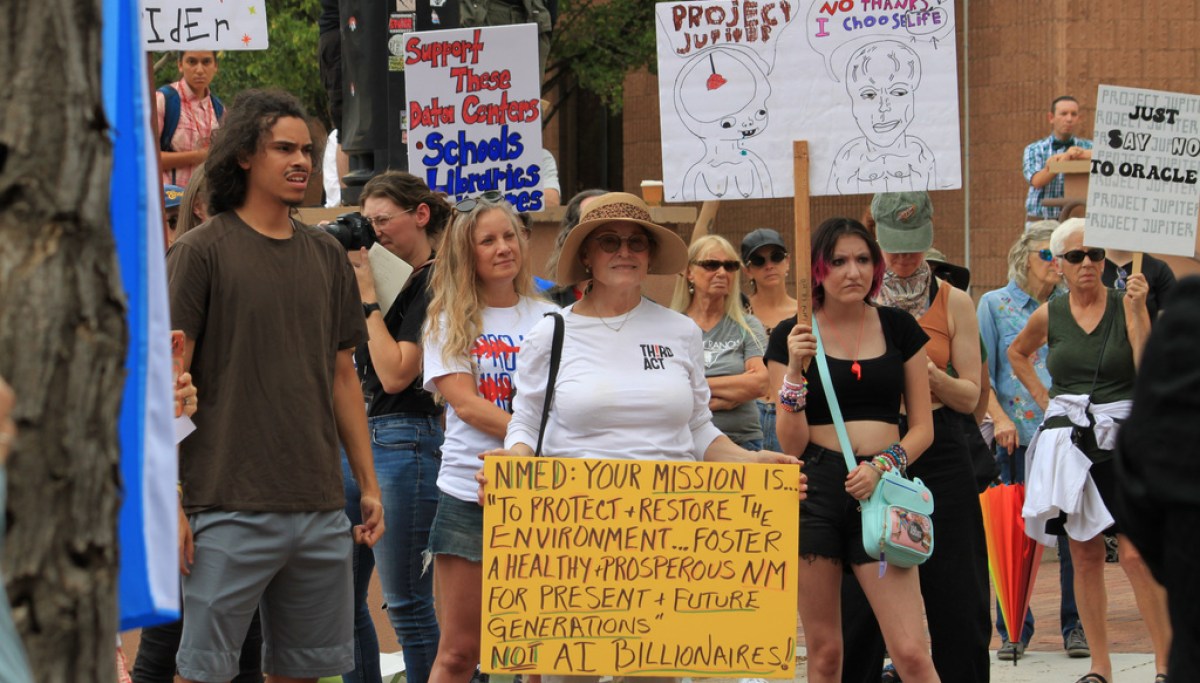
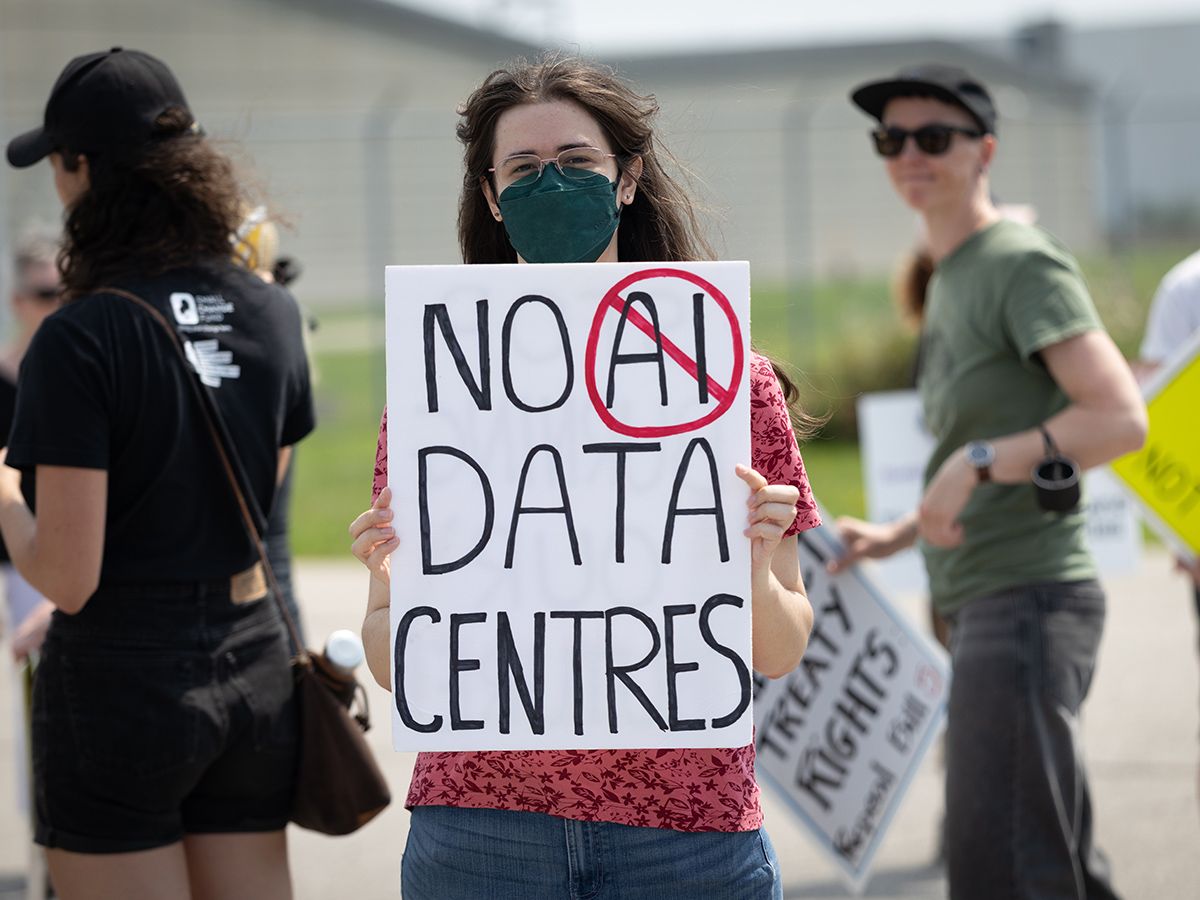
The opposition is incredibly bipartisan, with both Republicans and Democrats lining up to block data center construction. asserted
Republicans → line → construction
New York put a moratorium on data center construction in July, while Texas followed suit earlier this month. asserted
Texas → put → suit
So far, there has been no strong move toward a federal data center pause, and the bills that have been introduced in Congress are pretty mild stuff. asserted
that → introduce → Congress
That’s why as long as the movement to stop data centers stayed confined to blue states, it didn’t really matter much. asserted
it → ’ → states
It was just another instance of a very traditional story that we’ve all come to expect — states like New York basically ban new physical industries, so those industries go to places like Texas. asserted
industries → come → Texas
The red states get the economic activity they want, the blue states get the stasis they want, and everyone is happy. asserted
everyone → get → stasis
Nor would a few state-level bans affect the progress of AI. asserted
bans → affect → AI
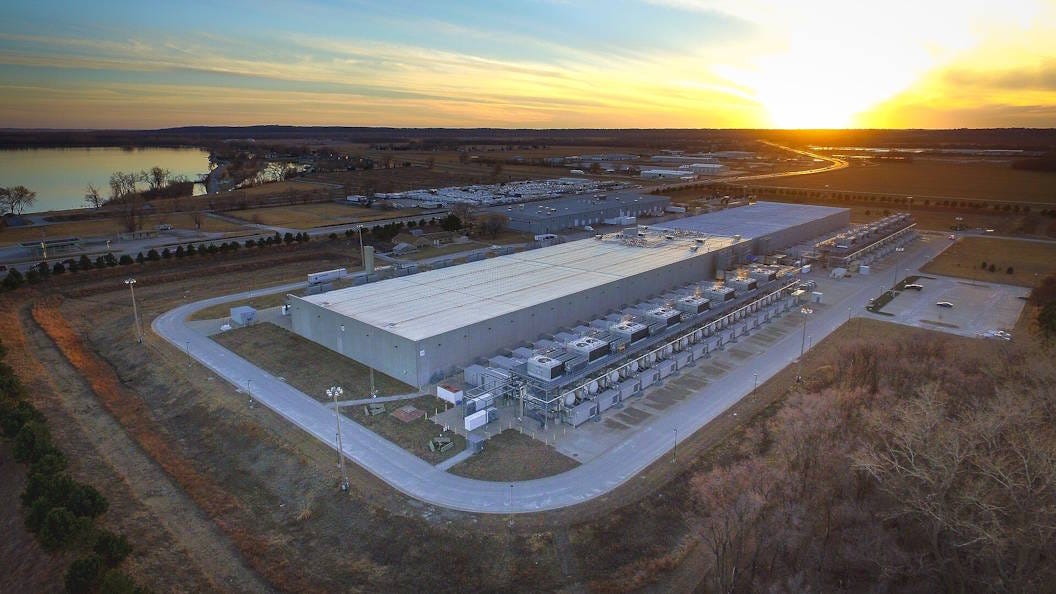
AI is a creature of bits and bytes; it lives in the cloud, and it doesn’t care about the physical location of the data centers that represent the lobes of its vast, alien brain. asserted
that → live → brain
Data centers in Texas would sustain AI progress and AI applications just as well as data centers in New York. asserted
centers → sustain → York
Except now Texas is pausing data centers too. asserted
Texas → pause → centers
If almost all states ban data centers — or if the federal government gets involved in a major way — there could be major consequences for the U.S. economy. uncertain
government → ban → economy
In the long run, I think limiting the physical resources devoted to AI would be a good thing; in the short run, it will simply clobber the already-wobbly U.S. economy. asserted
it → think → economy
A movement against data centers has the seeds of something good and useful, but it has huge risks that most Americans seem not to realize yet. asserted
Americans → have → that
The big danger is that data center bans will choke off the main engine of U.S. growth, throwing a lot of Americans out of their jobs and putting a hole in Americans’ retirement savings. asserted
bans → choke → savings
But before I talk about that, I should talk about why I think limitations on data centers aren’t actually a crazy idea. asserted
limitations → talk → centers
Why data center limitations make sense in the long run A couple of years ago, I wrote that no matter how good AI gets, comparative advantage will still mean humans are paid to do something: [A]s AI gets better and better, and gets used for more and more different tasks, the limited global supply of compute will eventually force us to make hard choices about where to allocate AI’s awesome power… asserted
supply → make → power
When AI becomes so powerful that it can be used for practically anything, the cost of using AI for any task will be determined by the value of the other things the AI could be used for instead… uncertain
AI → become → things
So…because of comparative advantage, it’s possible that many of the jobs that humans do today will continue to be done by humans indefinitely, no matter how much better AIs are at those jobs. asserted
AIs → ’ → jobs
And it’s possible that humans will continue to be well-compensated for doing those same jobs. asserted
humans → ’ → jobs
But how well would humans be paid for those jobs? asserted
humans → pay → jobs
If people don’t get paid enough to live a decent life, it’s still game over for humanity. asserted
it → pay → humanity
“Living a decent life” basically requires some minimum share of natural resources. asserted
Living → live → resources
So as I explained in my post, the real danger isn’t that AI will render humans obsolete; the danger is that AI will render humans too expensive to sustain: asserted
humans → explain → post
The example of horses scares a lot of people who think about AI and its impact on the labor market… asserted
who → scar → market
Horses’ comparative advantage was in pulling things, and yet this wasn’t enough to save them from obsolescence… asserted
this → pull → obsolescence
The reason is that horses competed with other forms of human-owned capital for scarce resources… asserted
horses → compete → resources
The key resources that became scarce were urban land (for stables), as well as the human time and effort required to raise and care for horses in captivity. asserted
that → become → captivity
…and 27 more, not listed.

💬 Give feedback
🕘 History 🎫 Support