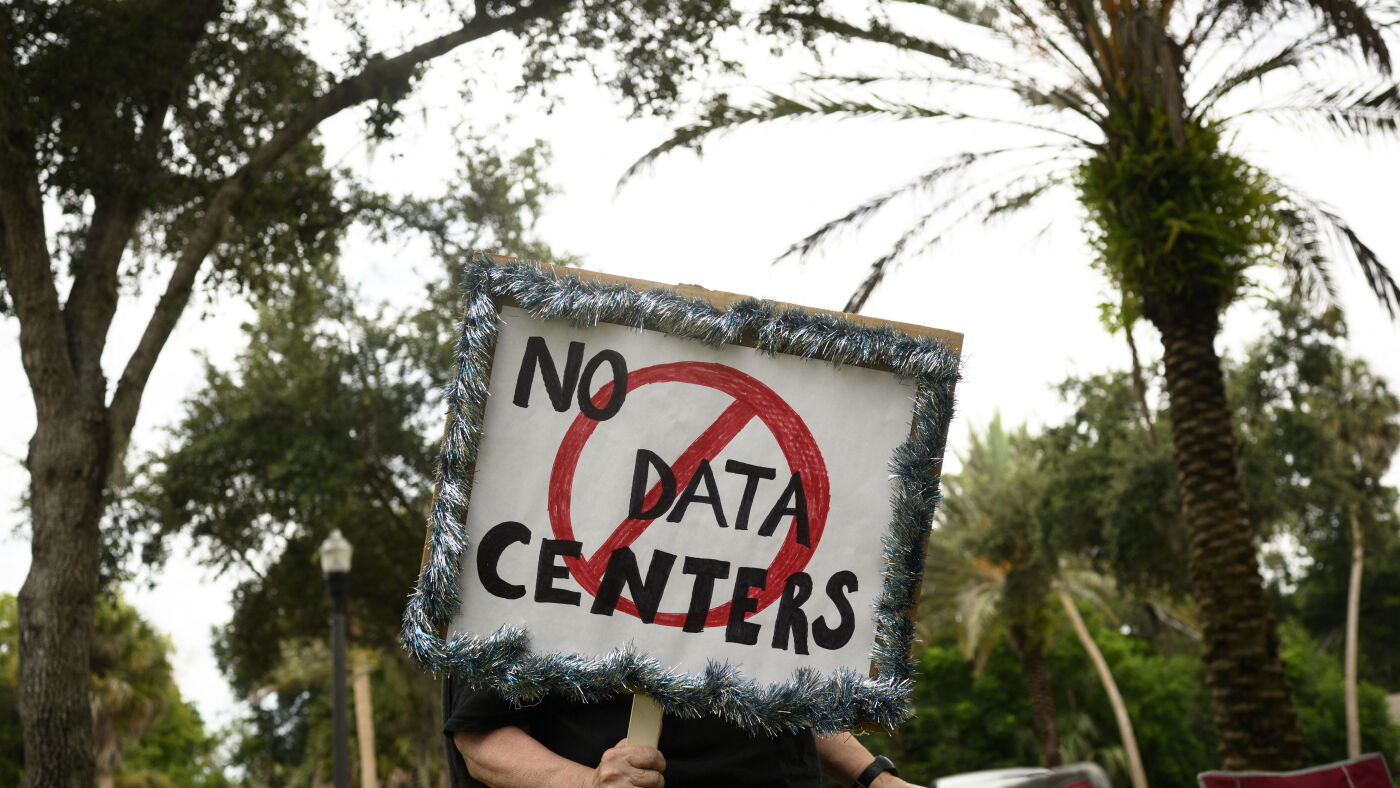
IF YOU WERE THE PRESIDENT and were purposefully trying to tank your party’s chances of retaining control of Congress in an election year, you might say something like: “The only reason that communities throughout the U.S.A. should not want Data Centers is if they want to end up being backwards and poor.”
uncertain
they → try → Centers
For dramatic effect, maybe you even come up with a new, let-them-eat-cake–style slogan along the lines of: “let Data Reign.”
asserted
Data → come → lines
As it happens, that’s exactly what Donald Trump posted to Truth Social on Monday morning:
asserted
Trump → happen → morning
Trump may have been throwing a bone to the Big Tech benefactors who supported his campaign and who are spending heavily on Republicans this election cycle.
uncertain
who → throw → Republicans
But his post also followed a familiar pattern: He seems perversely intent on making this campaign season as difficult as possible for the GOP—just look at his decisions to launch a trade war with Canada and sell out American cattle ranchers to a Brazilian billionaire in the same week.
asserted
season → follow → week
But while those instances of self-sabotage impacted different voting blocs in distinct regions, the embrace of data centers was seen by the president’s opponents as him touching a new third rail, one relevant to the whole country.
asserted
him → impact → country
“The data center issue is . . . an albatross for those who are connected to the industry,” Democratic pollster Zac McCrary told me.
asserted
McCrary → connect → me
“Voters just want to hit the pause button, hit the stop button, and take a deep breath.
asserted
Voters → want → breath
Democrats and data center opponents [don’t have] to have all the answers.”
asserted
Democrats → have → answers
Republicans, he added, are fighting internally over the issue and “Democrats just need to get out of the way.”
asserted
Democrats → add → way
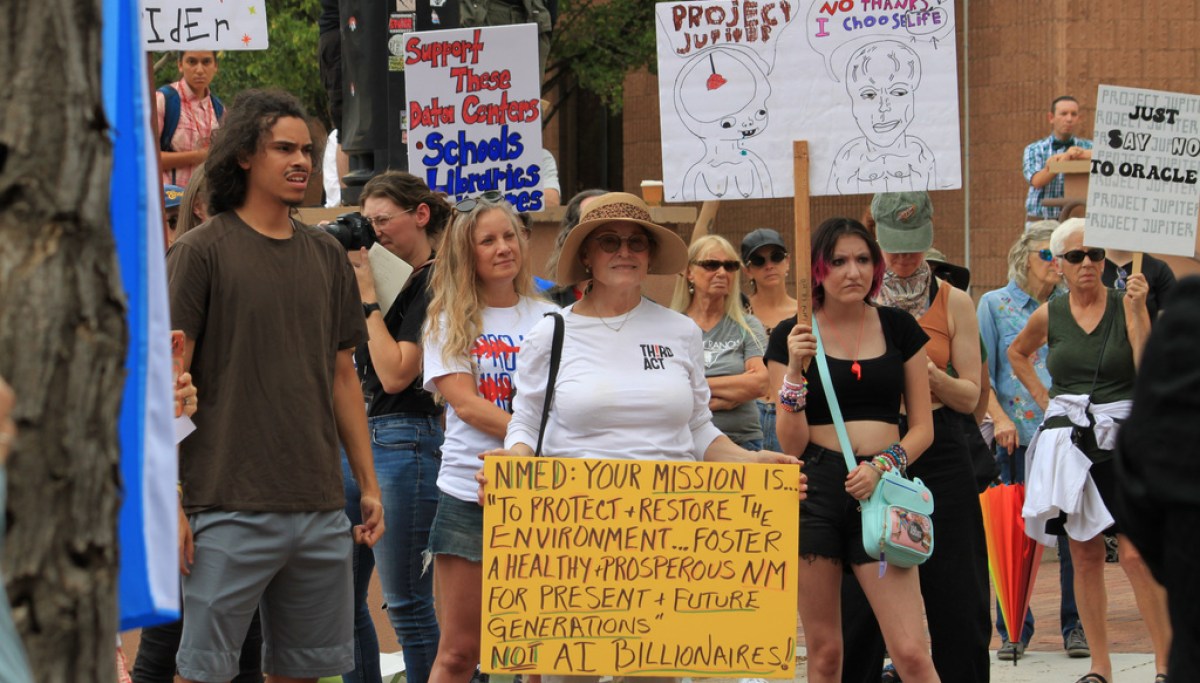
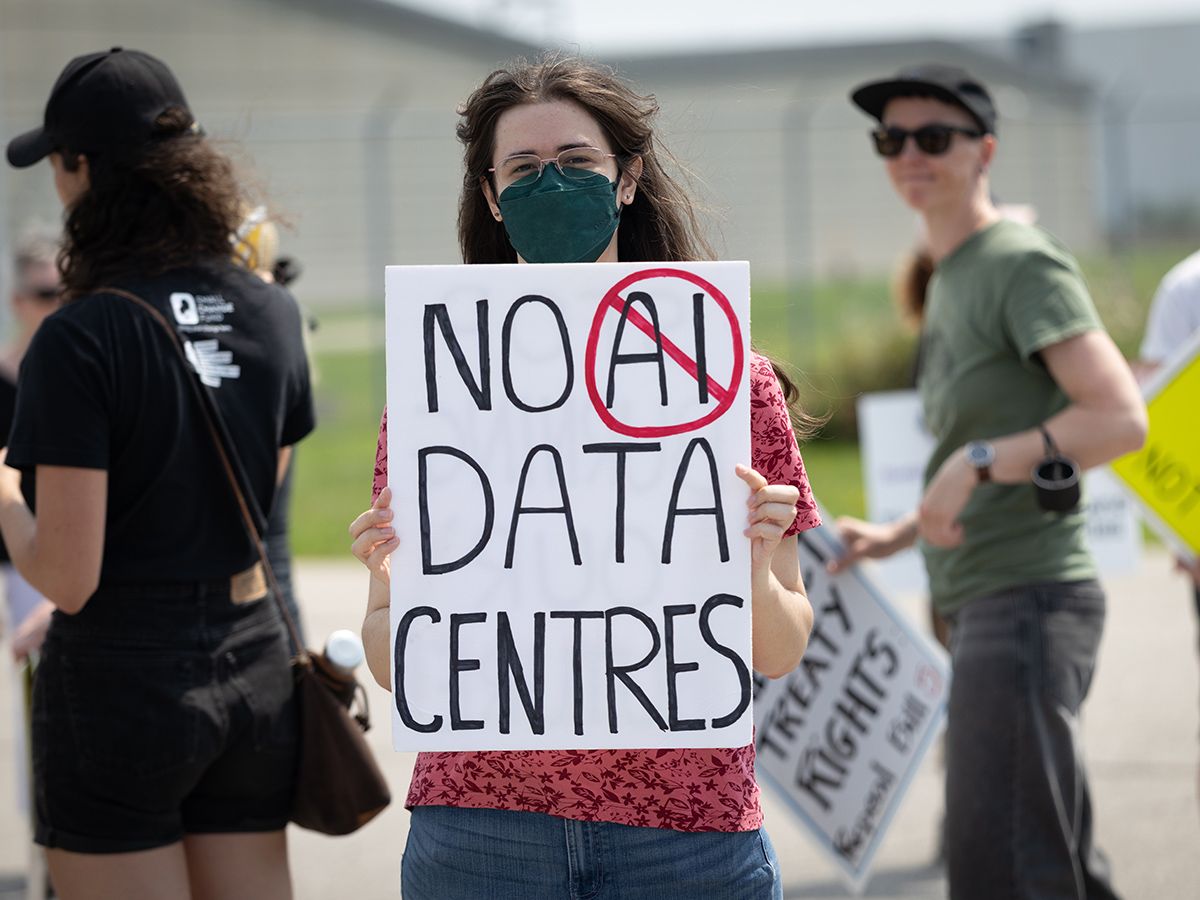
For months, Democrats running in competitive races have taken note of the widespread and growing public backlash to data centers and have begun elevating their opposition to them in campaign settings.
asserted
Democrats → run → settings
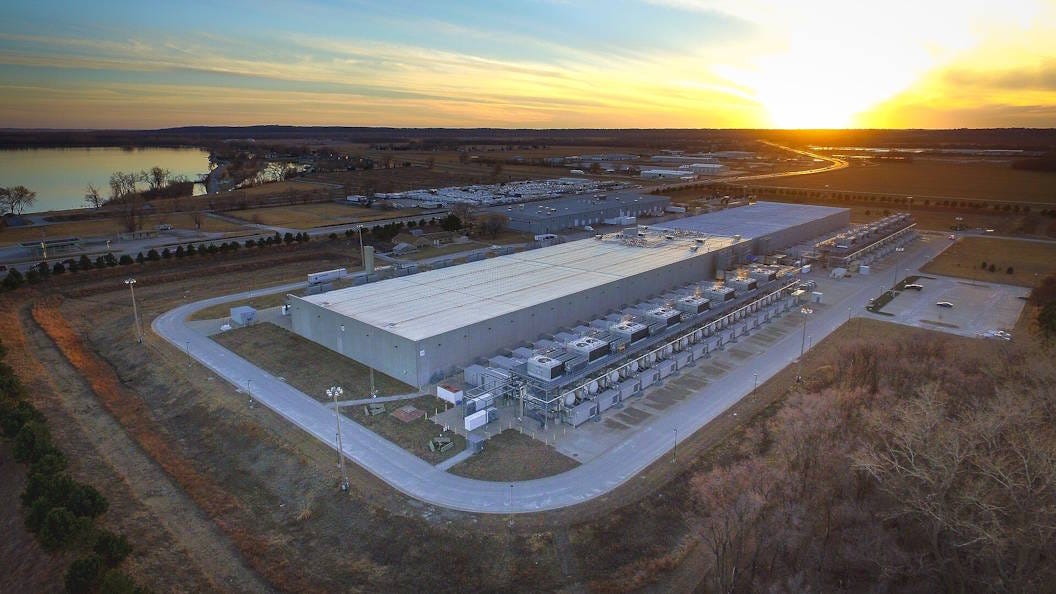
Given the public perception that data centers are responsible for rising utility costs, Democrats have tied the proliferation of those facilities to the party’s overarching midterm theme of affordability, and they’ve blamed Republican incumbents for courting them.
asserted
they → give → them
Democratic candidates have even tied data centers to their midterm anti-corruption message, arguing that Trump supports building more precisely because they benefit those Big Tech executives.
asserted
they → tie → executives
Seemingly every Democratic ad maker this cycle has cut a TV spot railing against data centers—whether for House candidates (like Rebecca Cooke in Wisconsin’s 3rd Congressional District), gubernatorial candidates (like Gina Hinojosa in Texas), or Senate candidates (like Sherrod Brown in Ohio).
asserted
maker → cut → Ohio
But in the past few weeks, Republican officials have seemingly started to wake up to the fact that their party is on the wrong political side of the issue.
asserted
party → start → issue
Rep. Tom Barrett (R-Mich.) recently released an ad stating he “stood up” to his own party on data centers; Texas GOP Gov. Greg Abbott ordered an audit that has frozen approvals of data centers; and Mike Rogers, the Republican nominee for the Senate in Michigan, said he supported a “pause” on data centers.
All that, however, was before Trump’s Truth Social post Monday morning.
asserted
that → release → post
Following that pronouncement from on high, Republicans may have to resort to equivocating, both-sides remarks, like the hedging statement Speaker Mike Johnson gave to reporters on Wednesday afternoon: “Data centers are a necessary thing,” he said, but “local concerns have to be addressed.
uncertain
concerns → follow → afternoon
Trust is earned.
asserted
Trust → earn → ?
We’re launching lots of new stuff at The Bulwark this fall!
asserted
We → launch → Bulwark
Make sure you don’t miss any of it—sign up for a Bulwark+ membership today.
asserted
you → make → membership
DEMOCRATIC OPERATIVES TOLD ME this week that they plan to send trackers to public events to ask Republicans if they agree with Trump’s “backwards and poor” comment.
asserted
they → tell → comment
Capitol Hill reporters have already asked Republican lawmakers to respond to Trump’s post, resulting in some awkward moments, such as when Rep. Tim Burchett (R-Tenn.) told a MeidasTouch reporter, “I guess I’m backwards and poor.”
asserted
I → ask → reporter
Dem operatives also said they’re vetting GOP donors for any ties to the AI industry and are scraping the internet for past comments candidates have made in favor of data-center construction—all of which is material that Democratic ad makers plan to use in attack ads later this fall.
asserted
makers → say → ads
“All these Republican candidates, no matter how much they try to separate themselves from Trump, they’re in the back seat of Trump’s car, and Trump is pressing the accelerator, heading right toward the brick wall,” McCrary told me.
asserted
McCrary → try → me
On social media, a number of battleground Democratic candidates are already exploiting the tension between public opinion and the president’s pronouncement.
asserted
number → exploit → opinion
“Donald Trump just called Pennsylvania families ‘backwards and poor’ for asking reasonable questions about data centers in their own backyard,” posted Bob Brooks, who is running to unseat Rep. Ryan Mackenzie in Pennsylvania’s 7th Congressional District.
asserted
who → call → District
Will Lawrence, who is challenging Barrett in Michigan, tweeted that “Trump is threatening anyone who dares to stand up to Big Tech billionaires.”
asserted
who → challenge → billionaires
In a direct-to-camera video, Denise Powell, running to flip Nebraska’s 2nd district, said she couldn’t wrap her head around how “insulting” Trump’s comments were.
asserted
comments → run → head
And that’s just a small sampling.
asserted
that → ’ → ?
It’s difficult to recall a similar case in which the party has become so unified, so quickly in opposition to an issue—and then moved so swiftly to capitalize on it.
asserted
party → ’ → it
There are some parallels to when George W. Bush embraced a Social Security privatization plan after the 2004 elections, but that fight was waged along ideological fault lines that had been there for decades.
asserted
that → be → decades
The data center debate has fault lines forming in real time.
asserted
debate → have → time
And those fault lines risk fracturing some coalitions.
asserted
lines → risk → coalitions
They have warned that stopping the projects will lead to fewer union jobs, and some union officials have said they won’t back candidates who oppose them.
asserted
who → warn → them
“It’s a political inconvenience for Democrats that has to be nuanced because of our coalition,” a Democratic ad maker told me.
asserted
maker → ’ → me
If you look at the data-center comments, if you look at how he’s treated farmers and ranchers by importing mystery meat from God-knows-where, it’s like he’s trying to test his coalition to see who sticks by him in a Mafioso-style strategy.”
asserted
who → look → strategy
— Democratic officials can’t quite figure out what role Kamala Harris should play in the party going forward.
asserted
Harris → figure → party
In a recent interview with Politico, Iowa gubernatorial nominee Rob Sand said he wouldn’t want to campaign with her in the state, adding: “Let’s move on.
asserted
’s → say → state
We need some new leadership.”
asserted
We → need → leadership
Iowa Democratic Senate candidate Josh Turek also recently said that he did not want Harris’s help this midterm election.
asserted
he → say → help
…and 9 more, not listed.
 The Aporia