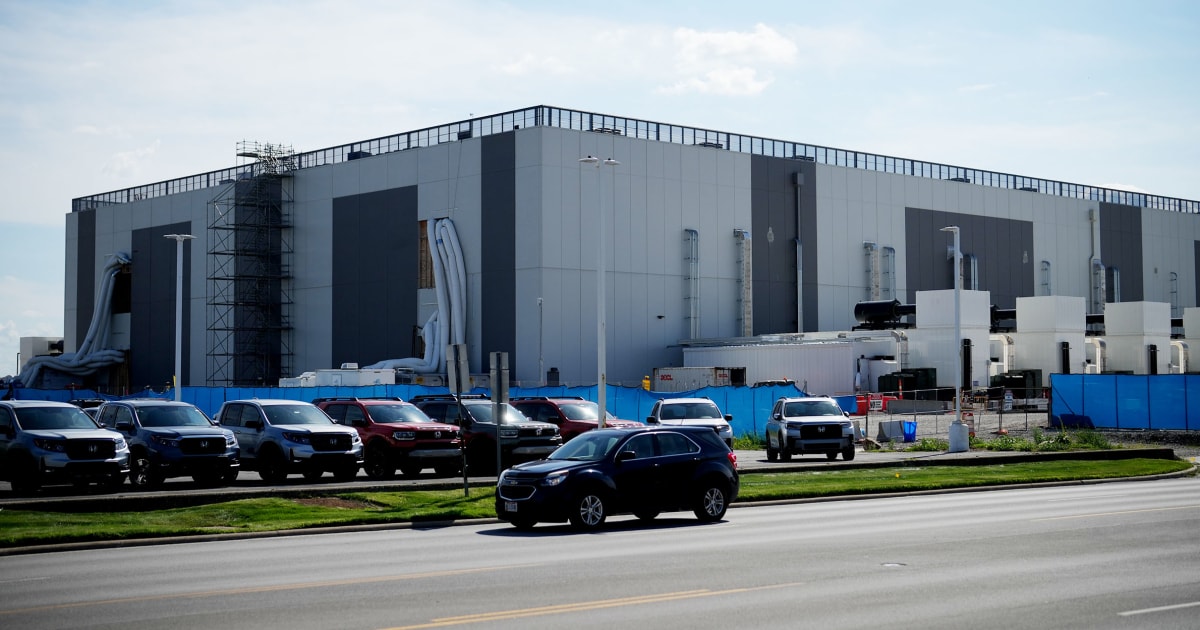
More than 20 artificial intelligence and digital infrastructure companies, including OpenAI and Anthropic PBC, have signed on to a new federal framework for data-centre development, as local opposition to these facilities grows.
asserted
opposition → include → facilities
Federal AI minister Evan Solomon announced five broad principles for building data centres on Thursday at an event in Markham, Ont.
asserted
Solomon → announce → Markham
Developers must minimize water use and other environmental effects, be transparent about the impact on the local area, and not shift electricity costs on to Canadians.
asserted
Developers → minimize → Canadians
Developers must also create lasting local benefits and bring “strategic value” to the country, the minister said.
asserted
minister → create → country
The government said the principles are meant to “complement existing provincial, territorial, municipal and Indigenous regulatory processes by setting a national recognized baseline,” according to a news release.
uncertain
principles → say → release
American cloud providers Amazon Web Services Inc. AMZN-Q, Microsoft Corp. MSFT-Q and Google GOOGL-Q have signed on, along with Meta Platforms Inc. META-Q, which is building a $13-billion data centre complex in Alberta.
asserted
which → sign → Alberta
Some regions of Canada have seen an influx of data-centre proposals as demand for AI continues to skyrocket.
asserted
demand → see → AI
Opposition has mounted at the same time, with some Canadians concerned about electricity costs, water consumption, noise and the loss of land.
asserted
Canadians → mount → land
Data centres have also become a focal point for general anxieties about AI and the dominance of massive technology companies.
asserted
centres → become → companies
According to a Leger poll published in July, 42 per cent of the 1,505 Canadians surveyed oppose data centre development in their own province, while 44 per cent support it.
uncertain
cent → accord → it
Albertans were the most likely to strongly oppose development.
asserted
Albertans → oppose → development
Provinces such as Quebec, Ontario and British Columbia have already been taking steps to prevent runaway data-centre development, particularly when it comes to allotting electrical capacity.
asserted
it → take → capacity
The Ontario government put forward a development playbook in August, proposing to charge data centres a higher electricity rate.
asserted
government → put → rate
That follows provincial legislation last year requiring that data centres meet certain criteria related to local economic benefits and digital sovereignty in order to connect to the electrical grid.
asserted
centres → follow → grid
Municipalities have taken action as well.
asserted
Municipalities → take → action
Oakville, Ont., introduced a one-year moratorium in August, while council in Mississauga will vote on a similar proposal later this month.
“I’m not trying to fight with councillors and cities who have real questions.
asserted
who → introduce → questions
Today is literally about saying, those are good questions,” Mr. Solomon said in an interview.
asserted
Solomon → say → interview
“Maybe some city councillors haven’t had a good assurance that there’s an answer, and so then they’re like, ‘Let’s have a moratorium.’”
asserted
’s → have → moratorium
Ottawa’s new data centre principles were developed with the Federation of Canadian Municipalities, with input from other levels of government, industry and Indigenous and environmental groups.
asserted
principles → develop → government
The framework is not legally binding, but Mr. Solomon said the fact that companies have committed to the principles publicly is still meaningful.
asserted
companies → bind → principles
“There can be demands that then the municipality and the province can hold them accountable for,” he said at the event.
asserted
he → hold → event
Under the framework, local benefits could include job creation, skills training and research partnerships, while limiting environmental effects could involve closed-loop cooling systems to reduce water use, low-emission energy sources and waste heat recovery.
uncertain
limiting → include → use
Companies will be expected to provide information about power, water use, noise levels and emissions, Mr. Solomon said.
asserted
Solomon → expect → power
Ottawa has been encouraging data-centre development for the past couple of years, particularly as a way to strengthen digital sovereignty and ensure that Canada has more control over AI and cloud computing infrastructure, along with the data that is housed at these facilities.
asserted
that → encourage → facilities
A recent Nanos poll conducted for The Globe and Mail found that the digital sovereignty message is not strongly resonating with Canadians, however.
asserted
message → conduct → Canadians
Only 8.2 per cent of respondents listed data sovereignty as a top benefit, while 6.5 per cent cited national control over infrastructure as an advantage.
asserted
cent → list → advantage
The public backlash to AI data centres could also prove to be a political vulnerability for some elected officials, and an opportunity for others.
uncertain
backlash → prove → others
Federal NDP Leader Avi Lewis, for one, has seized on public sentiment and called for a pause on new construction of these facilities.
asserted
Lewis → seize → facilities
AI has become a flashpoint in some U.S. elections.
asserted
AI → become → elections
Pennsylvania Governor Josh Shapiro issued an executive order in August to block “speculative, irresponsible” developments, while his opponent for re-election, Stacy Garrity, said it was “damage control” after “rolling out the red carpet” for developers.
asserted
it → issue → developers
Alberta’s government has courted data centres, in part because the province has abundant supplies of natural gas to produce electricity.
asserted
province → court → electricity
As part of Meta’s efforts to engender goodwill in the province during its data-centre build-out, the social media giant is spending $60-million on infrastructure upgrades and providing grants to local non-profits.
asserted
giant → engender → profits
Anthropic, the San Francisco-based AI giant behind the Claude chatbot, could also have its eye on Alberta.
uncertain
Anthropic → base → Alberta
Anthropic recently posted a job for someone to lead the company’s compute strategy in Canada and ultimately bring “gigawatts of compute online” in the country.
asserted
Anthropic → post → country
It’s also hiring for a data centre community engagement manager based in Alberta to make the company “a trusted, visible, and valued neighbour.”
asserted
company → hire → Alberta
 The Aporia