Maybe the Rapture is already here

Read the original at Noahpinion ↗
Noahpinion · collected 2026-10-09 · by Noah Smith commentary

Quick Summary

This piece is an opinion article reflecting on changes in American culture and mass entertainment over time from a personal perspective. The author notes that while millions watched the finale of "Seinfeld" in 1998, far fewer tuned into the last episode of "Game of Thrones" two decades later. They observe that social media once created a unified digital consciousness but now seems diminished, with fewer viral memes circulating and platforms like Twitter feeling less active. The author speculates about where people have gone, suggesting they might be engaging in offline activities or private messaging apps, though the article concludes by noting the dominance of short-form video content across various platforms.
Written locally by qwen2.5:14b on 2026-10-09, using this article's own text rather than the other coverage of the same event (that is the story summary below).

AI analysis runs on qwen2.5:14b, locally

Story summary

Back when Noah Smith was a teenager, the Evangelical Christian community in Texas, particularly influenced by books like the *Left Behind* series, fervently believed in an impending Rapture event. Today, Smith observes that while this apocalyptic belief system has waned, he feels as if something akin to the Rapture has already occurred within American culture. He notes a significant decline in shared cultural experiences; for instance, 76 million people watched the finale of *Seinfeld* in 1998 compared to fewer than 20 million who viewed the final episode of *Game of Thrones* two decades later.

Smith also points out how social media platforms like Twitter and Facebook have fragmented mass culture into a diverse array of micro-cultures centered around memes, making it challenging to identify common cultural touchstones that resonate with large audiences. This shift reflects broader changes in how people consume content and interact socially, hinting at a profound transformation akin to the disappearance of a significant portion of society envisioned in apocalyptic narratives.

Written for “End Times Speculation” on 2026-10-09, grounded in this article and the 0 other(s) covering the same event.
Why this leaning score
This article does not take a side on a contested political question, so it has no leaning score. That is an answer rather than a gap: a match report or a rescue can be warmly or critically written without being left or right, and scoring it anyway is how approval of a subject gets recorded as a political position.
No political leaning scored for article 67911 · logged 2026-10-09

Signals How these are calculated →

Claims extracted
75
claim-shaped sentences
Uncertain
12%
9 of 75 hedged
Leaning
not political
takes no side on a contested political question
Correction & hedging signals
not measured
these signals count newsroom corrections; Commentary has none to count
Outlets on this story
1
Other
Narrative spread
1
articles carrying this framing
Analyzed 2026-10-09 · how these are computed

Story

📰 End Times Speculation
Other · 1 article(s) covering the same event.

How this is being covered How these are calculated →

Article leaning vs. publisher reliability
Source leaning vs. consistency

Compared with similar articles

Nothing to compare against. No article is close enough to this one for the pipeline to have linked or judged the pair.

Publisher

Noahpinion · 37 article(s) · 0 correction(s) detected
No corrections detected for this publisher. That may mean careful reporting, or simply that nothing has been checked.

Who wrote this

Noah Smith
31 article(s) here · 1 carrying a prediction
🔮 Right now I can’t even think of what an appropriate comparison would be.
2026-10-09 · assertive framing · Maybe the Rapture is already here
🔮 In 1998 he famously wrote: The growth of the Internet will slow drastically, as the flaw in ‘Metcalfe’s law’—which states that the number of potential connections in a network is proportional to the square of the number of participants—becomes apparent: most people have nothing to say to each other!
2026-10-05 · assertive framing · What the AI boom is doing for Americans
🔮 I wrote one of them back in May:
2026-10-03 · assertive framing · The second Trump presidency is a world-historic failure
🔮 Earlier this year, Americans were mostly concerned that AI would take their jobs.
2026-10-01 · assertive framing · Roundup #89: It isn’t X, it’s Y
🔮 Back in the early 2000s, as far as I could tell, pretty much nobody in the world cared about what some dorky hoodie-wearing computer programmers were up to on a Saturday night in SF.
2026-09-25 · assertive framing · Four eras of San Francisco tech culture
🔮 Democrats' decision to formalize land acknowledgments in their party meetings could haunt their candidates more than they realize…
2026-09-24 · assertive framing · No, you are not on Indigenous land
🔮 Part of that involved thinking a lot about the future of artificial intelligence, and a lot of the tech people who would end up working at AI companies — especially Anthropic — were very influenced by those discussions.
2026-09-22 · assertive framing · The problem(s) with utilitarianism
🔮 In the Long Telegram, Kennan laid out a theory of how Soviet power could be defeated.
2026-09-20 · assertive framing · How we can beat China
🔮 There are five main groups of people opposing the slowdown: The Trump administration, which is worried that an AI slowdown might also slow down economic growth Investors who think a slowdown might hurt their bottom line Libertarians and techno-optimists who think regulating technological progress is bad on principle China hawks who worry that a slowdown would let China take the lead in the AI race Progressives who spent the last few years telling themselves that AI doesn’t work, that AI is a huge economic bubble, and so on, and who now can’t bring themselves to admit that yes, the techbros actually built something that works. This is a strange alliance indeed.
2026-09-18 · assertive framing · Roundup #88: Is it time to panic yet?
🔮 A 27-year-old AI researcher named Jacob Coxon quit his job at Anthropic, declaring that OpenAI and Anthropic are racing to create technology that could destroy the human race:
2026-09-14 · assertive framing · Two missing pieces in the AI safety discussion
Also by Noah Smith
Roundup #89: It isn’t X, it’s Y
2026-10-01 · Noahpinion
Nothing else under this byline is closely related to this article, so these are simply their most recent.
All 31 articles by Noah Smith →

Topics

American Christian Evangelical Facebook Texas

Subjects

American NORP · 2× Facebook ORG · 2× Borg PERSON · 1× Christian NORP · 1× Dunbar PERSON · 1× Evangelical NORP · 1× Jesus Christ’s PERSON · 1× Texas GPE · 1× TikTok ORG · 1× Vine ORG · 1×

Narrative

Given the timing and the microeconomic evidence, smartphones are the likeliest explanation for why instead of leveling out near 2, the total fertility rate in rich countries — and, increasingly, in middle-income countries — has busted right through that floor and headed down toward zero.
framing: assertive · carried by 1 article(s) · first seen 2026-10-09
🔮 Right now I can’t even think of what an appropriate comparison would be.
2026-10-09 · Noahpinion
Maybe the Rapture is already here · assertive framing

Claims (75 extracted, 9 hedged)

Evangelical Christianity was still very strong in those days, especially in Texas, and Left Behind blew up by putting Christian eschatology into page-turning airport-bookstore-novel form. asserted
Left → blow → form
People really believed that the stories in those novels weren’t just stories — they were glimpses of a very real future event. asserted
they → believe → event
The Rapture — Jesus Christ’s gathering of the faithful to Heaven before the end of the world — is something that believers expect is going to happen one of these days. asserted
believers → expect → days
Sometimes, these days, I feel as if it’s already happened. asserted
it → feel → ?
I look around at American culture and I wonder: Where did everybody go? asserted
everybody → look → culture
The mass culture of my youth is long gone. asserted
culture → go → youth
76 million people watched the last episode of Seinfeld in 1998; fewer than 20 million watched the last episode of Game of Thrones two decades later. asserted
million → watch → Thrones
Right now I can’t even think of what an appropriate comparison would be. asserted
comparison → think → ?
What’s the show that everyone watches? asserted
everyone → ’ → that
In the 2010s, mass culture was replaced by meme culture. asserted
culture → replace → culture
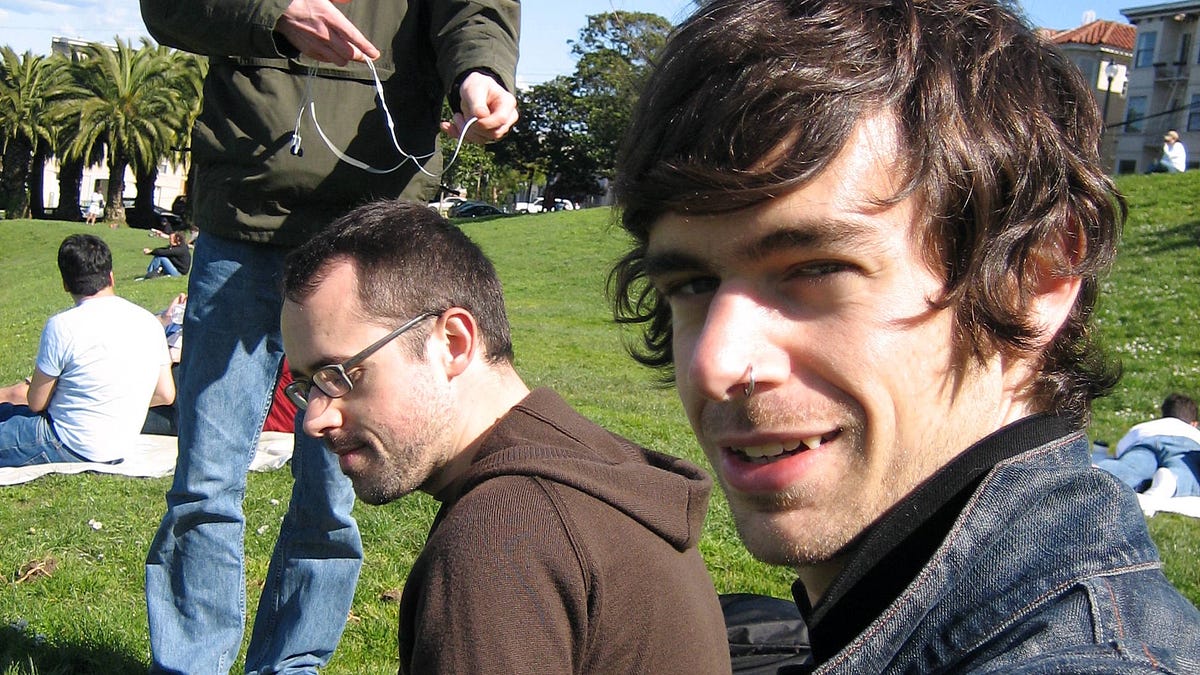
Everyone knew this photo and what it represented: asserted
it → know → what
Social media feeds — Twitter and the Facebook wall — turned American society into a sort of digital hive mind. asserted
feeds → turn → mind
Feeling yourself being absorbed into that great unified consciousness could be an agonizing experience — mobs constantly punished any deviation from conformity, quirky unique subcultures were devoured and metabolized, everyone was forced into a cell with people they had spent their lives trying to escape. uncertain
they → feel → lives
Viral memes were the thoughts that drifted through the mind of the social media Borg. asserted
that → drift → Borg
For so many years there was a steady drumbeat of images and phrases that people passed around among each other ad infinitum; now, I can’t even think of the last one that really made the rounds. asserted
that → be → rounds
Twitter — now X — has not died but is diminished in scope and relevance. asserted
Twitter → die → scope
At times it feels like a ghost town. asserted
it → feel → town
Where did everybody go? asserted
everybody → go → ?
I would like to think that they’re offline, living as we lived in the Before Times, running through sunlit fields blasting each other with Super Soakers or playing Dungeons and Dragons in their living rooms. asserted
we → like → rooms
Or perhaps they’re in Signal and WhatsApp chats and Discord channels, talking with their friends in the comfort and safety of privacy. asserted
they → ’re → privacy
I would like to think that they rejected the digital hive mind for the ancient ways of individuality and Dunbar’s Number. asserted
they → like → individuality
But my bet is that they’re just watching short form video. asserted
they → watch → video
Over the last few years, the entire internet has steadily carcinized into a single type of app/website/media/entertainment — a vertically scrolling feed full of short video clips. asserted
internet → carcinize → clips
Vine invented it, TikTok popularized it, and now every other site has copied this one dominant, all-conquering format. asserted
site → invent → format
Already, vertical short-form video feeds are more dominant than every form of media except for social media itself: But even this significantly understates the change. asserted
this → understate → change
The term “social media” used to mean people writing things to each other or sending images on Facebook or Twitter; now, it’s mostly used to mean people watching videos: asserted
it → use → videos
Even the long-form video sites, like YouTube, are increasingly just short-form sites showing a bunch of clips. asserted
sites → show → clips
This shift has basically killed the original use of social media, turning it from a town square or conversation room into a form of purely passive entertainment: I am not part of this trend. asserted
I → kill → trend
I had TikTok on my phone for a year or so, but I could never get into it; in 2021 I deleted the app. uncertain
I → have → app
The videos all felt like some kind of bland snack that you keep eating even though you don’t really like it — everything seemed optimized to make you swipe to the next thing, like the programming in those hundreds of channels that only existed so that satellite TV could brag that it had 700 channels. uncertain
it → feel → channels
Short-form video feels to me like anesthesia; the swiping is the point, not the content. asserted
swiping → feel → anesthesia
As Jerry Seinfeld once said, “Men don’t care what’s on TV. asserted
what → say → TV
They only care what else is on TV.” asserted
what → care → TV
I suppose I’m the exception. asserted
I → suppose → ?
I feel like one of the people from the Left Behind series, waking up to find most of the people around me taken to digital Heaven. asserted
most → feel → Heaven
Have you ever heard of “heavenbanning”? asserted
you → hear → heavenbanning
It’s not a real thing…yet. asserted
It → ’ → ?
It’s the hypothetical idea that social media platforms could neutralize obstreperous users by replacing their entire feed with AI content that flatters and agrees with them. uncertain
that → ’ → them
You’d think you’re interacting with other human beings, and that everybody just happens to love you and think you’re brilliant, while in reality you’re in solitary confinement with an LLM. asserted
you → think → LLM
It’s possible to think of vertical short-form video feeds as a kind of heavenbanning. asserted
It → ’ → heavenbanning
…and 35 more, not listed.

💬Give feedback
🕘History 🎫Support