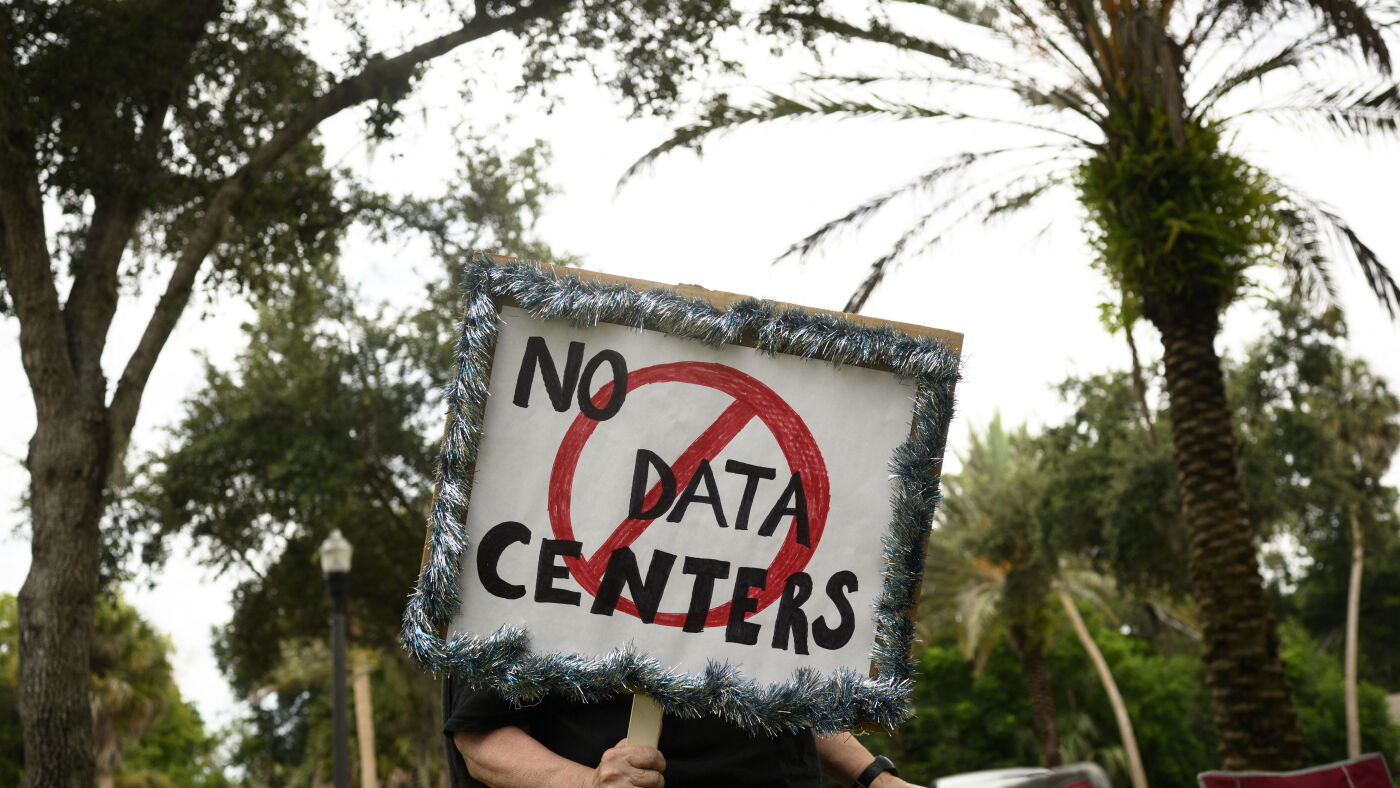
Mark Carney runs into backlash over push to build Canadian data centres

National Post · collected 2026-09-05 · by Bloomberg News
Read the original at National Post ↗

Summary

Mark Carney faces opposition from some Canadian communities and politicians over plans to build artificial intelligence data centers, with two municipalities imposing moratoriums on such projects. A proposed 7.5 gigawatt data center by Kevin O'Leary has also sparked pushback, while a poll found that 68% of Canadians would oppose a large AI data center near their home. The Canadian government's efforts to promote domestic data centers as a way to bolster digital sovereignty are being met with skepticism from critics who argue that these projects may not provide the economic benefits claimed and could have negative environmental impacts. Recent trade data shows that Canada is importing record-high amounts of US computer parts for data centers.
Written by the local model on 2026-09-05, using this article's own text rather than the other coverage of the same event.

Signals How these are calculated →

Claims extracted
52
claim-shaped sentences
Uncertain
6%
3 of 52 hedged
Leaning
Leans left
of the writing, not the subject
Publisher trust
95.8
red-flag proxy, not a credibility rating
Outlets on this story
unclustered
not grouped into a story yet
Narrative spread
1
articles carrying this framing
Analyzed 2026-09-05 · how these are computed

AI analysis (generated at analysis time, not now)

Why this leaning score
The article's own words the score was based on. Each is quoted verbatim and was checked against the article text before being stored, so you can find it in the original.
Score -0.35 Confidence medium
Leaning score -0.35 for article 4406 (medium confidence, 3 verified quotes) · logged 2026-09-05

How this is being covered How these are calculated →

Article leaning vs. publisher reliability
Source leaning vs. consistency

Compared with similar articles

This article reads leans left and hedges 6% of its claims. Each row says how that neighbour differs.
News - South China Morning Post
⚖️ Leans left 🔴 27% hedged 3 of 11 📰 publisher trust 94
“Article A describes Thailand suspending the building of 49 data centres due to resource strain concerns, while Article B mentions Canada and Prime Minister Mark Carney's efforts to attract investment in AI infrastructure, referencing data centre projects in two Canadian municipalities”
Why does everyone hate data centers? different event · 100%
Silver Bulletin
⚖️ Leans left 🔴 4% hedged 26 of 608
“Article A discusses a general topic of 'data centers' without referencing any specific incident or location, while Article B reports on a backlash against data centres in Canada related to efforts by Prime Minister Mark Carney”
National Post
⚖️ leaning not scored 🔴 4% hedged 2 of 45 📰 publisher trust 96
“Article A discusses a backlash against data centre projects in Canada, while Article B is an opinion piece on Conservative policies being co-opted by Prime Minister Mark Carney's government”
The Standard
⚖️ Leans strongly left further left than this 🔴 0% hedged 0 of 27 📰 publisher trust 96
“Article A refers to a protest in Larbert, Scotland, while Article B mentions protests in Oakville and Rocky View County, Canada”
Washington Examiner
⚖️ Leans strongly right further right than this 🔴 3% hedged 1 of 31 📰 publisher trust 96
“Although both articles mention a 'data center backlash', they reference different countries (US and Canada) and do not describe a shared specific incident”
Trump Hands Dems Their Best Gift Yet different event · 80%
The Bulwark
⚖️ Leans strongly right further right than this 🔴 6% hedged 3 of 49
“The articles mention a backlash against data centers in general, but they are discussing two separate locations (US and Canada) with different political figures involved”
Noahpinion
⚖️ Leans left 🔴 6% hedged 4 of 67
“The articles mention different countries (USA vs Canada), different political figures (Francesca Hong vs Mark Carney), and different regions, suggesting they report on related but distinct events”
NPR Topics: News
⚖️ Leans left 🔴 9% hedged 4 of 45 📰 publisher trust 58
“Article A discusses a backlash against data centre projects in Canada, while Article B focuses on political advertising and campaign spending on the issue of data centres in the US”
The Bulwark
⚖️ leaning not scored 🔴 0% hedged 0 of 8
“Article A is a general discussion about the growing backlash to data centers, while Article B specifically mentions Prime Minister Mark Carney's efforts and two municipalities implementing moratoriums on data center development”

Publisher

National Post · 120 article(s) · 0 correction(s) detected
SignalValueWeight
Correction rate 0.000 0.4
Uncertainty density 0.084 0.25
Assertive mismatch rate 0.000 0.35
No corrections detected for this publisher. That may mean careful reporting, or simply that nothing has been checked.

Who wrote this

Bloomberg News
10 article(s) here · 1 carrying a prediction
🔮 In the sparsely-populated province of Manitoba, Premier Wab Kinew vetoed a project that would have been built outside of Winnipeg, saying the drawbacks outweighed the benefits.
🔮 The number of public sector employees fell for a third straight month, declining by 20,000 in August and 78,000 since May.
🔮 Ontario Premier Doug Ford ridiculed President Donald Trump’s order changing the name of Lake Ontario to Lake America, while expressing optimism that Canada and the U.S. would eventually overcome their differences on trade and tariffs.
🔮 Braid’s announcement came a week after Leavitt — another one of Trump’s most trusted advisers and fiercest defenders — said she would step down at the end of August.
🔮 Canada’s government on Tuesday will announce a range of measures to “protect and support” its workers and businesses in response to 50 per cent U.S. tariffs which were applied to about US$20 billion of its annual exports on Saturday.
🔮 The U.S. proceeded to apply a 50 per cent tariff on about US$20 billion in Canadian goods, and Carney announced retaliation that will take effect on Sept. 8.
🔮 U.S. Treasury Secretary Scott Bessent said the U.S. will soon unveil its plan to economically isolate Iran and its trading partners, after President Donald Trump threatened Tehran and others with “an ECONOMIC D-DAY” to end the current stalemate in the Middle East.
🔮 Swift, which has been studying gamma-ray bursts from space since 2004, has been slowly falling out of orbit and will eventually burn up in Earth’s atmosphere.
2026-08-20 · assertive framing · NASA calls off risky mission to save falling satellite
Wire or desk byline, not an individual reporter.
Also by Bloomberg News
Nothing else under this byline is closely related to this article, so these are simply their most recent.
All 10 articles by Bloomberg News →

Topics

Canada Canadian Oakville Ontario U.S.

Subjects

Canada GPE · 6× Canadian NORP · 5× U.S. GPE · 4× Balsillie PERSON · 2× Carney PERSON · 2× Alberta NORP · 1× Mark Carney PERSON · 1× Oakville GPE · 1× Ontario GPE · 1× Rocky View County GPE · 1×

Narrative

The Trump Factor Federal and provincial officials have also pitched data centres as a necessity to bolster Canada’s sovereignty at a time when tensions are high with the U.S. “Ontario has a choice: we can build the economy of the future and ensure Canadians’ data stays in Canada and out of President Trump’s hands, or we can get left behind and risk Canadians’ data being sent down to the U.S.,” Premier Doug Ford said in August.
framing: assertive · carried by 1 article(s) · first seen 2026-09-05
🔮 In the sparsely-populated province of Manitoba, Premier Wab Kinew vetoed a project that would have been built outside of Winnipeg, saying the drawbacks outweighed the benefits.
2026-09-05 · National Post
Mark Carney runs into backlash over push to build Canadian data centres · assertive framing

Claims (52 extracted, 3 hedged)

The data centre backlash that has gripped U.S. politics is spreading north, complicating Prime Minister Mark Carney’s efforts to attract investment in the rapidly expanding artificial intelligence infrastructure. asserted
that → grip → infrastructure
In many respects, Canada is an alluring alternative for Silicon Valley firms: it has a cooler climate, abundant energy resources and plenty of open land. asserted
it → have → land
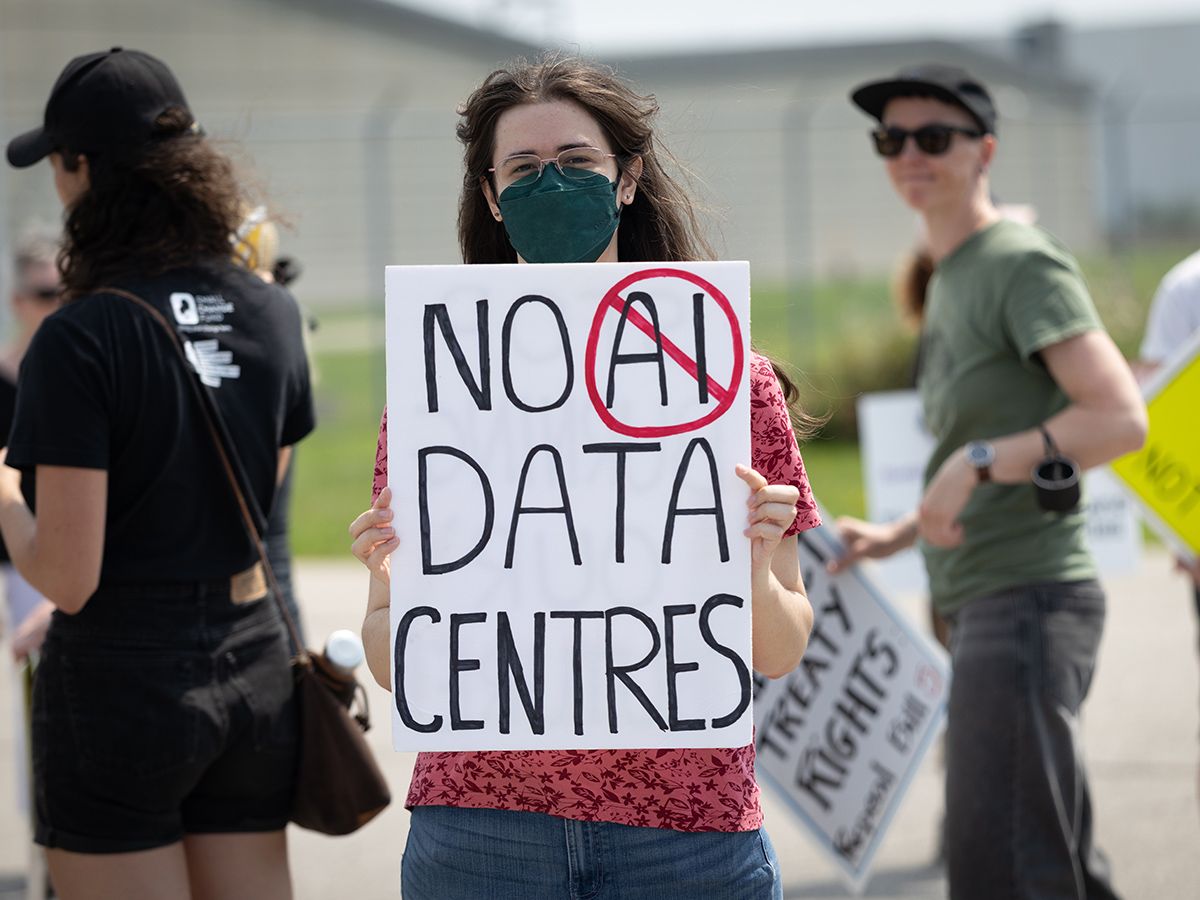
But a growing number of Canadian communities are looking to slam the brakes on server farm projects. asserted
number → grow → projects
Two municipalities — Oakville, Ontario and Rocky View County, Alberta — have implemented one-year moratoriums on data centre developments. asserted
municipalities → implement → developments
In the sparsely-populated province of Manitoba, Premier Wab Kinew vetoed a project that would have been built outside of Winnipeg, saying the drawbacks outweighed the benefits. asserted
drawbacks → populate → benefits
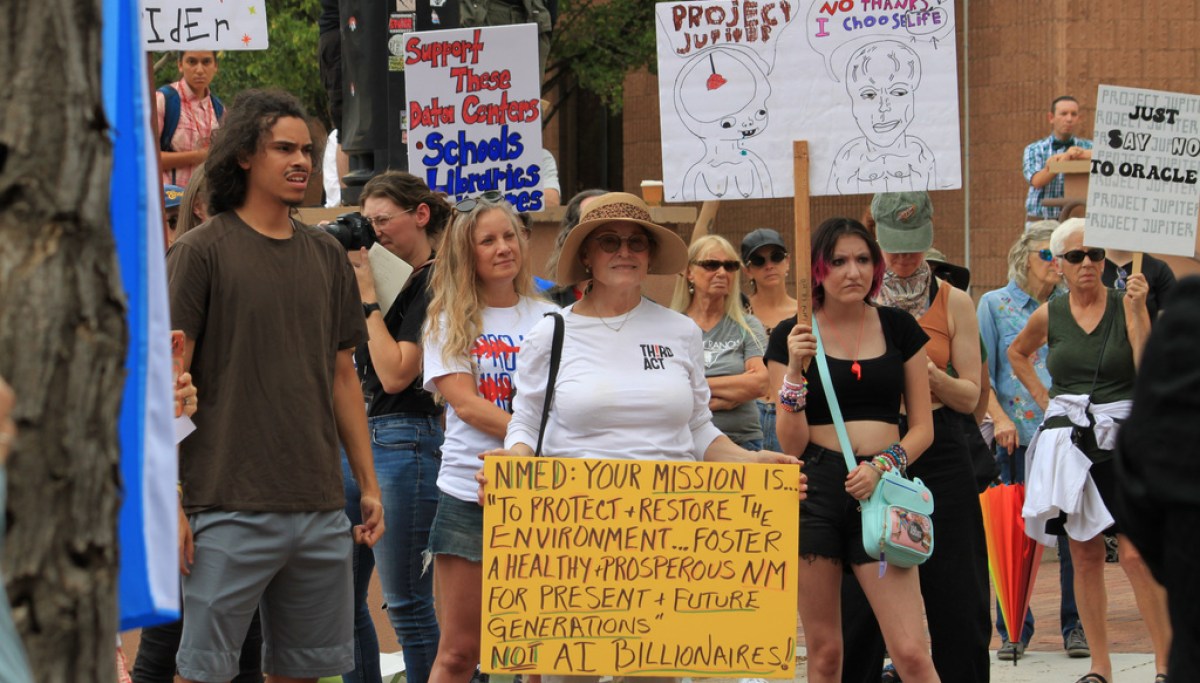
A huge 7.5 gigawatt proposal by Canadian entrepreneur and Shark Tank personality Kevin O’Leary has also sparked pushback, while protestors have marched against data centres proposed in Vancouver which have been championed by all levels of government. asserted
which → spark → government
The Canadian hesitancy mirrors the skepticism toward data centres that has led to hundreds of local bans in the U.S., as well as a statewide moratorium in New York. asserted
that → mirror → York
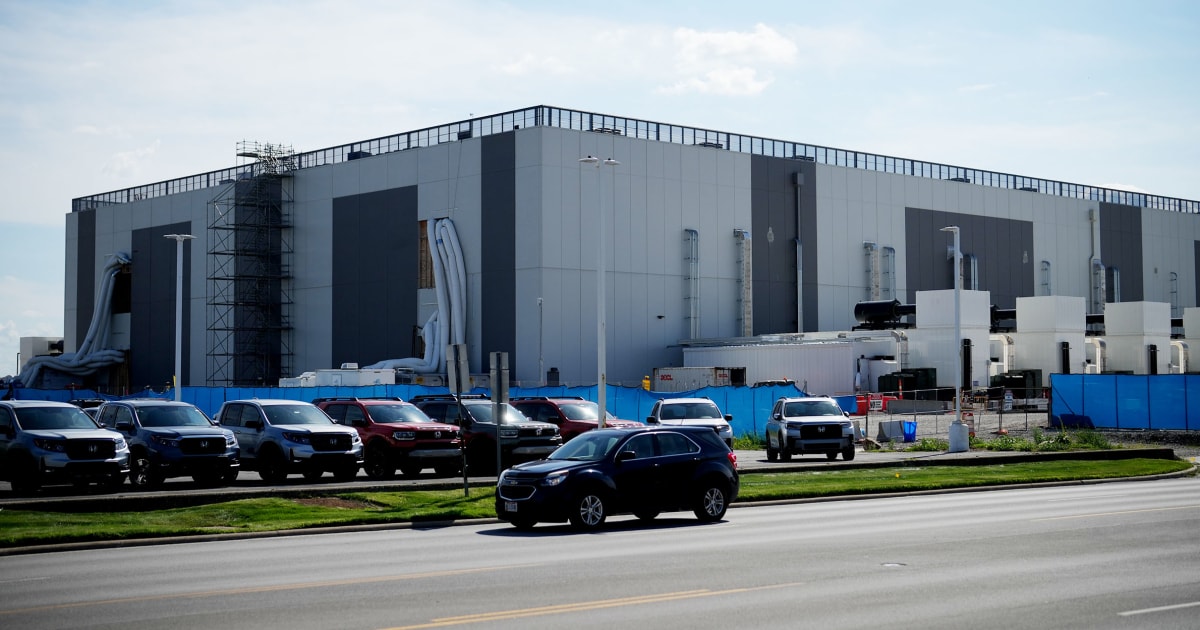
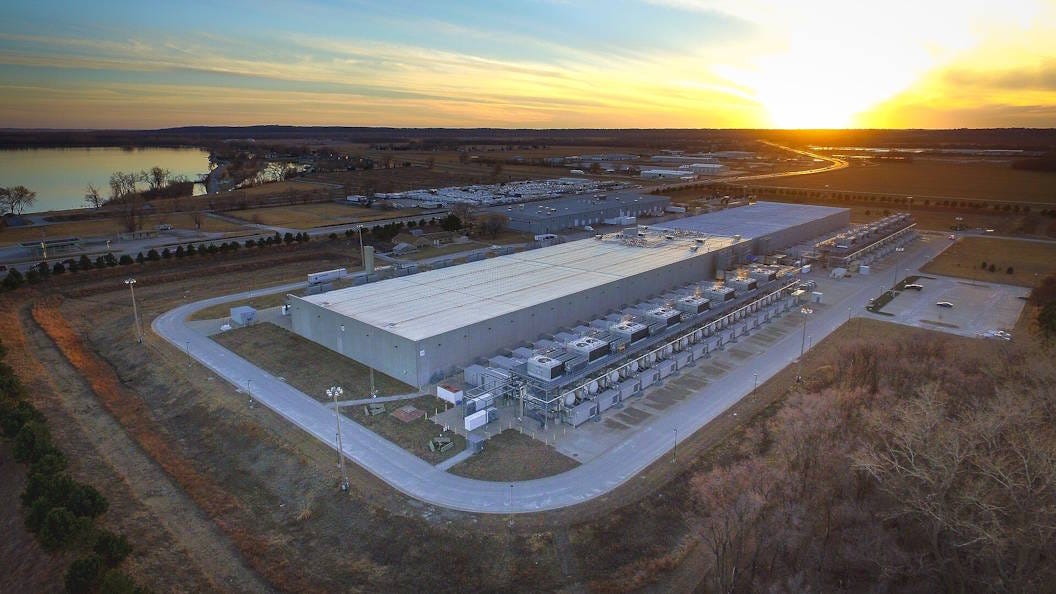
Supersized data centres are loud and energy-hungry, and many people are still not convinced about the benefits of AI the facilities are meant to support. asserted
facilities → convince → AI
Carney and other government officials have also presented data centres as an opportunity to bolster the country’s digital sovereignty. asserted
Carney → present → sovereignty
But tech policy critics warn that efforts to store Canadians’ data domestically aren’t always a protection against U.S. influence, while the economic benefits of these projects may be more modest than some claim. uncertain
benefits → warn → projects
Although the number of local bans in Canada is limited for now, public polling suggests the hesitancy is more widespread. uncertain
hesitancy → limit → Canada
An Angus Reid Institute poll found 68% of respondents would oppose a large AI data centre near their home, while a survey by Leger found four in five respondents said they’re concerned about potential increases to electricity bills and environmental impacts. asserted
they → find → bills
Two of the three petitions with the most signatures gathered to submit to Canada’s House of Commons are calling for a stop to data centres. asserted
Two → gather → centres
The left-wing New Democratic Party is calling for a nationwide pause. asserted
Party → call → pause
“I don’t think their concerns are groundless, but I don’t think we can put the brakes on progress asserted
we → think → progress
,” said Jim Balsillie, the former head of BlackBerry Ltd., who has become an outspoken advocate for Canadian technological sovereignty. asserted
who → say → sovereignty
Canadian Advantage Canada’s AI data centre expansion is still in its early stages, but it’s poised to ramp up fast. asserted
it → poise → stages
Recent research from Toronto’s York University shows there are only five operational hyperscale data centres, defined as 50 megawatts or above, but 159 more are announced or under construction. asserted
159 → show → construction
That push is also showing up in trade data: Canadian imports of U.S. goods hit a record high in June driven by a surge in the computer parts used for data centres. asserted
imports → show → centres
The federal government argued in its AI strategy that Canada is “uniquely positioned to lead in building this infrastructure responsibly and sustainably.” asserted
Canada → argue → infrastructure
“As demand for AI compute grows, Canada’s approach will be to link new data centre development with clean energy expansion, robust environmental standards, and tangible benefits for local communities,” the document said. asserted
document → grow → communities
Balsillie said the challenge with data centres is that, unlike other forms of capital investment, they don’t necessarily spur the same kind of economic benefits to people, while the negative spillovers can be material for communities. asserted
spillovers → say → communities
“It’s a fine line between being strip-mined for low value-add, metaphorically, and capturing high value-added sovereign participation in this era of AI,” Balsillie said. asserted
Balsillie → ’ → AI
Carney’s government unveiled a framework on Thursday to help guide communities’ decisions on data centre development. asserted
government → unveil → development
It said such projects must create lasting local benefits, limit environmental impacts and ensure electricity costs are not pushed onto residents. asserted
costs → say → residents
Tech giants including Amazon.com Inc., Meta Platforms Inc. and Anthropic PBC signed on to the principles. asserted
giants → include → principles
BCE Inc. Chief Executive Officer Mirko Bibic applauded the framework, which he said acknowledged the critical nature of AI infrastructure and the need for more domestic compute capacity. asserted
he → applaud → capacity
“On the other hand, there’s an acknowledgement that while we do that, we need to engender trust amongst all stakeholders in the country — citizens, communities, investors,” Bibic said in an interview Friday on BNN Bloomberg. asserted
Bibic → ’ → Bloomberg
Provincial governments are also trying to address concerns surrounding energy costs. asserted
governments → try → costs
British Columbia is restricting electric grid use for data centres and forcing operators to compete for access. asserted
Columbia → restrict → access
Energy-rich Alberta’s government has been particularly bullish about data centres and attracted the bulk of Canada’s proposals. asserted
government → attract → proposals
Nonetheless, it’s stipulated operators must supply their own power. asserted
operators → stipulate → power
The province will be home to a $13-billion Meta data centre, set to be the largest in the country. asserted
province → set → country
Even so, an analysis by the Pembina Institute suggested Albertans could see their electricity bills rise by as much as $460 per year, because the centres would be allowed to connect to the grid before their own generation comes online. uncertain
generation → suggest → grid
The Brookings Institute found data centres create a modest amount of jobs and workers see no wage gain, while home prices tend to rise by 2-5% in communities that harbor the infrastructure. asserted
that → find → infrastructure
“Canada has always been seduced by this promise of jobs, and we’ve given away a lot historically in the past in order to get jobs here. asserted
we → seduce → jobs
And data centres don’t really have that promise,” said Vass Bednar, managing director of the Canadian Shield Institute, a public policy think tank. asserted
Bednar → have → Institute
The Trump Factor Federal and provincial officials have also pitched data centres as a necessity to bolster Canada’s sovereignty at a time when tensions are high with the U.S. “Ontario has a choice: we can build the economy of the future and ensure Canadians’ data stays in Canada and out of President Trump’s hands, or we can get left behind and risk Canadians’ data being sent down to the U.S.,” Premier Doug Ford said in August. asserted
Ford → pitch → August
But Balsillie said holding Canadians’ data domestically doesn’t necessarily protect it from the Trump administration. asserted
holding → say → administration
Under the Cloud Act, U.S. law enforcement can compel American tech companies to hand over electronic data, regardless of where it is stored. asserted
it → compel → data
…and 12 more, not listed.

💬 Give feedback
🕘 History 🎫 Support