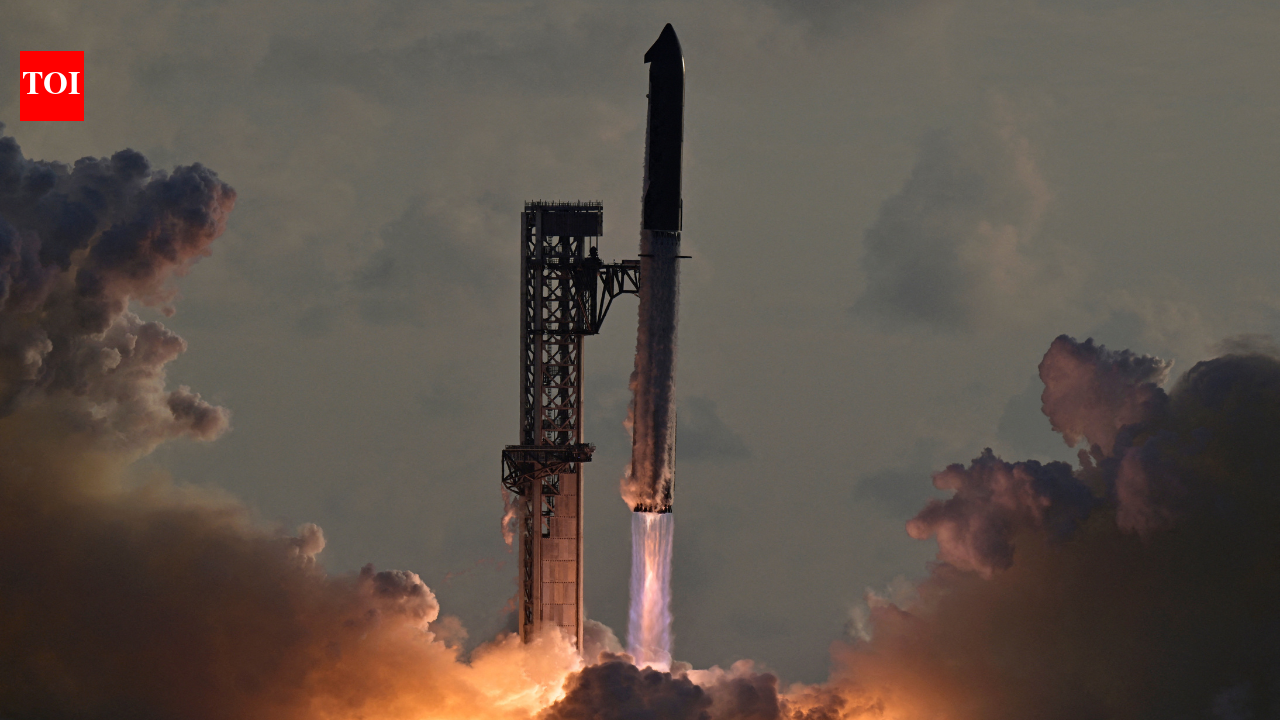
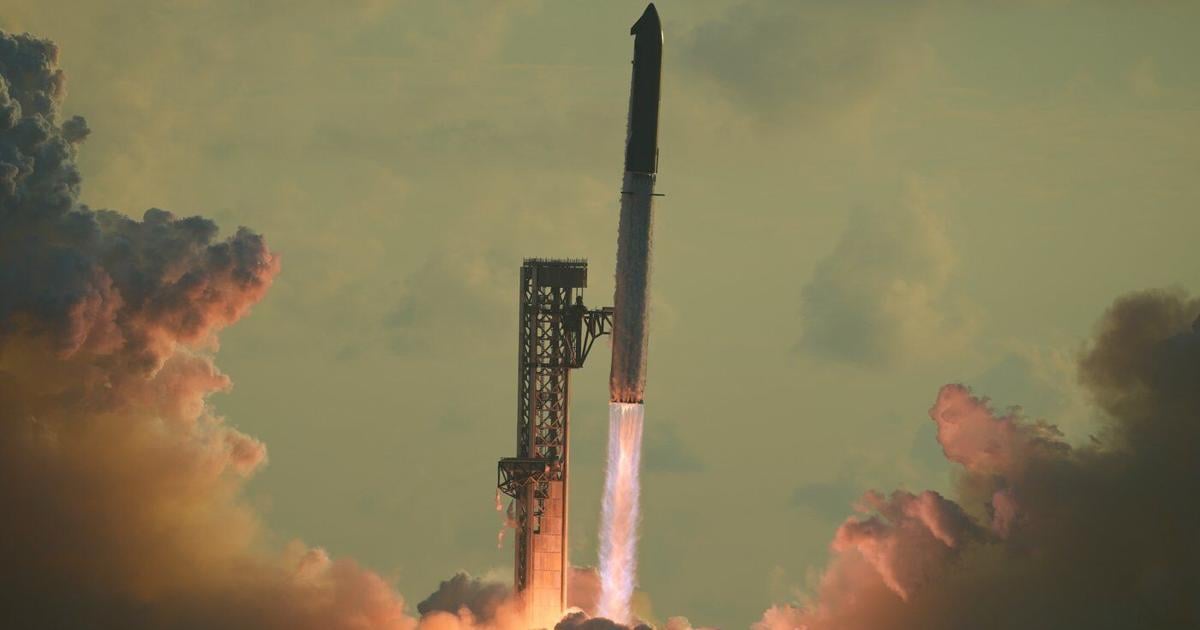
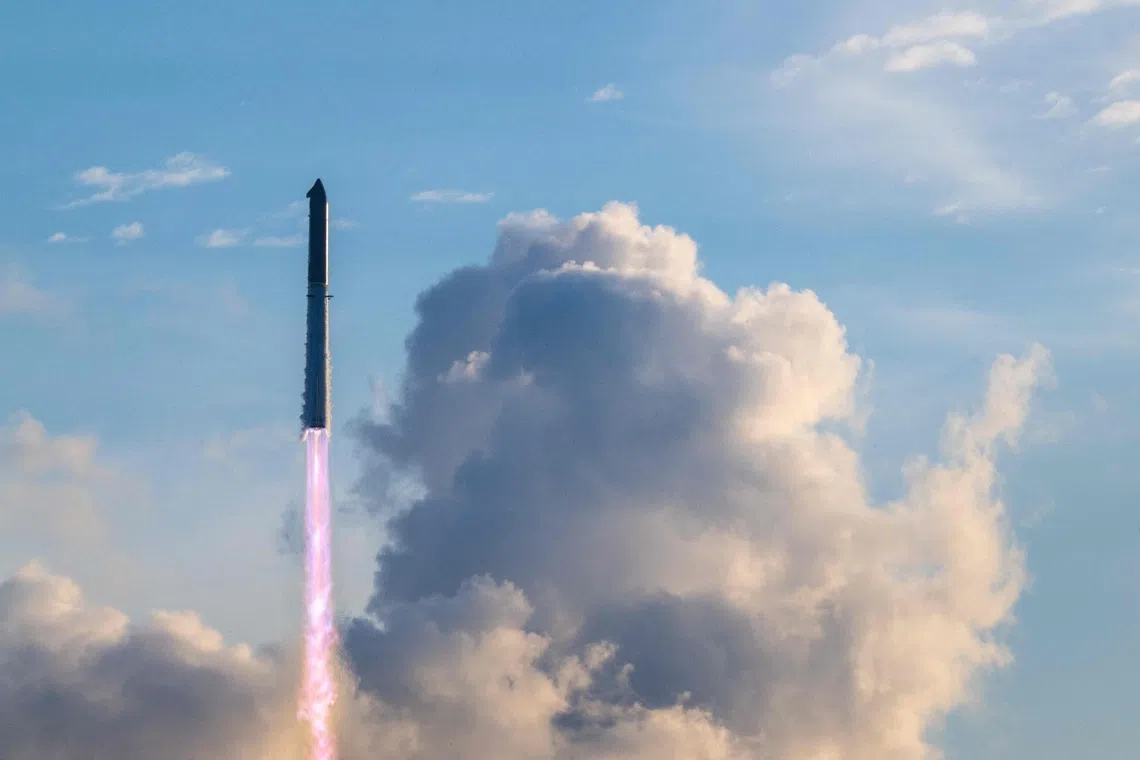
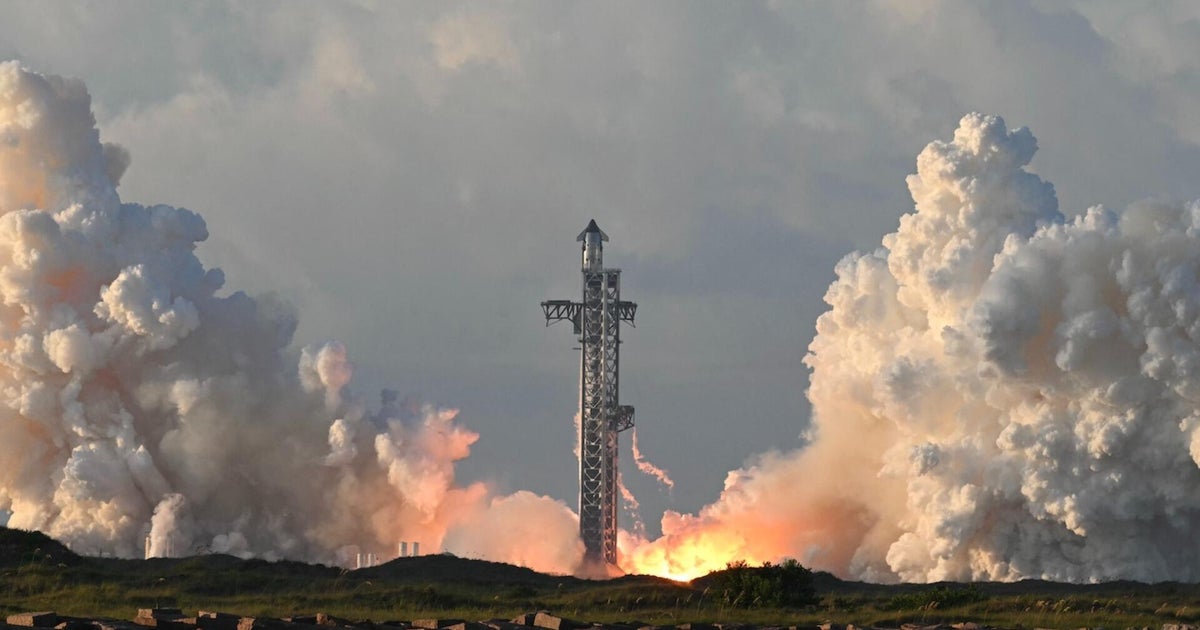
SpaceX successfully launched its Starship rocket into orbit from Texas on Monday, marking a significant milestone after previous test flights failed to achieve orbit. The spacecraft will complete six orbits around Earth before splashing down in the Pacific near Chile, aiming to prove its readiness for NASA’s Artemis moon program. During the launch, one of Starship's engines prematurely shut down, causing initial concern but did not prevent the mission from proceeding as planned. This orbital test flight is crucial for SpaceX as it seeks full certification for future missions involving both lunar exploration and Mars travel.
Written locally by qwen2.5:14b on 2026-09-28,
using this article's own text rather than the other coverage of the
same event (that is the story summary below).
Story summary
On Monday, SpaceX launched its enormous Starship, the largest and most powerful rocket ever built, from Boca Chica Beach in Texas. The mission was originally planned to last for approximately 10 hours, completing about six orbits around Earth at an altitude of roughly 170 miles (275 km) before a splashdown in the Pacific Ocean west of Chile. However, due to an engine failure shortly after launch, SpaceX decided to cut the flight short and ended it within three hours instead.
Despite initial concerns, mission control announced that "Starship is orbital," marking the first time Starship successfully achieved orbit. The spacecraft also deployed 26 of its newest Starlink satellites during this test flight, bringing the total number of active Starlinks to over 11,000, providing internet services worldwide. This historic mission aims to pave the way for future missions to the Moon and Mars under NASA’s Artemis program.
Written for “SpaceX Starship Orbital Test” on 2026-10-05,
grounded in this article and the 15 other(s) covering the same event.
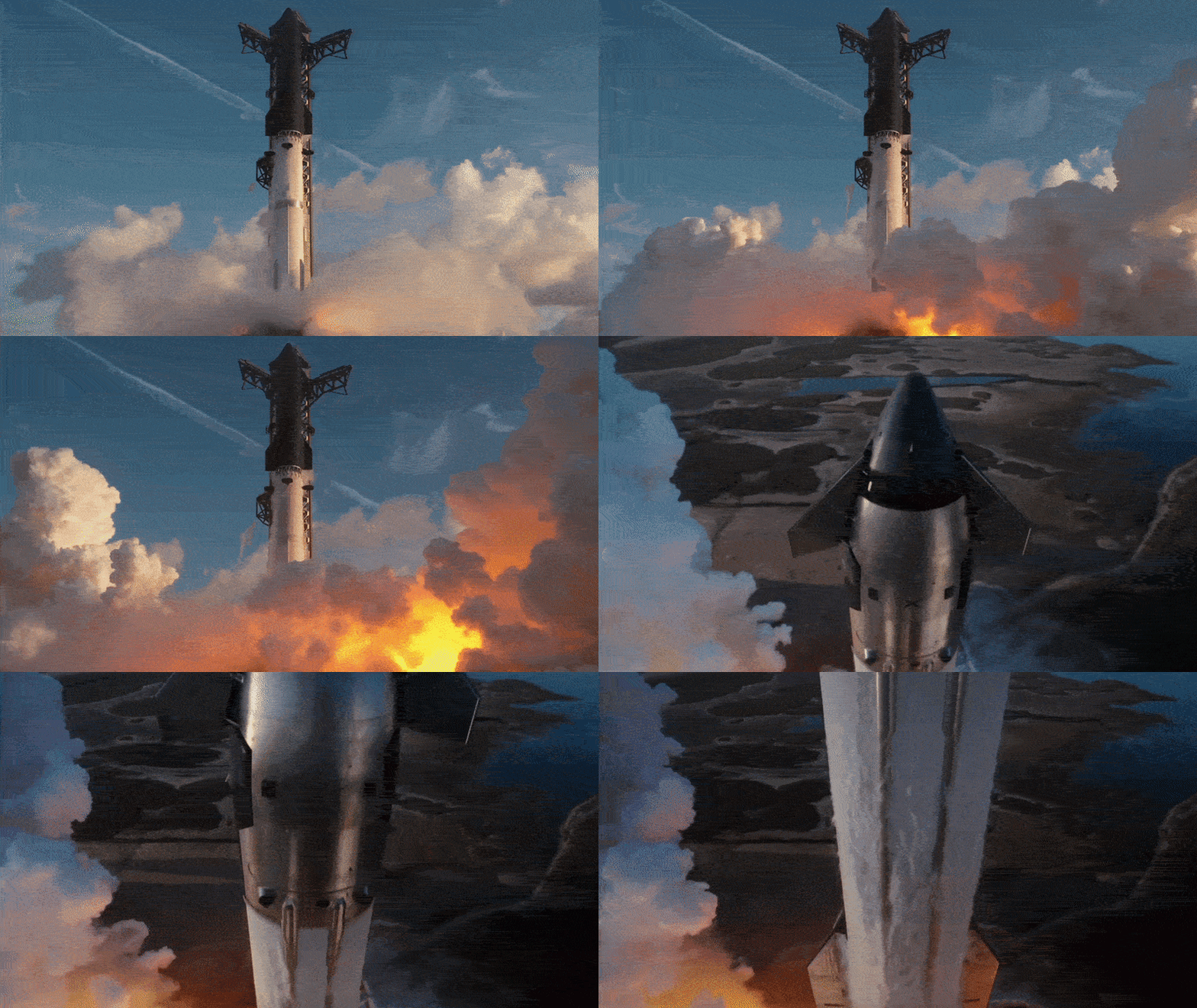
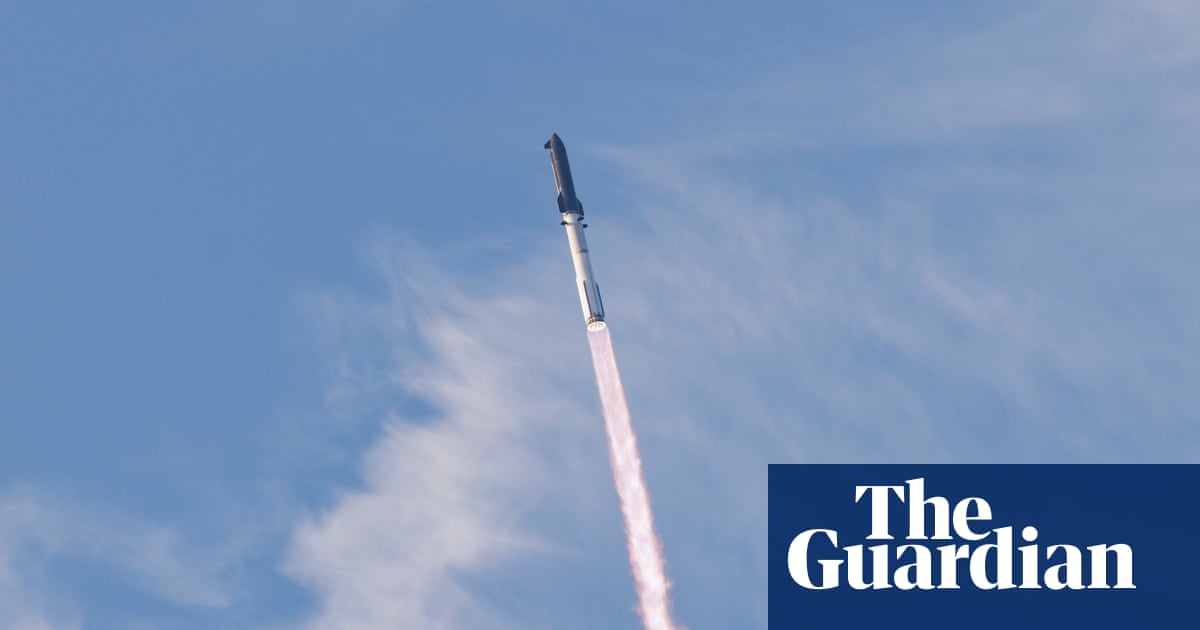
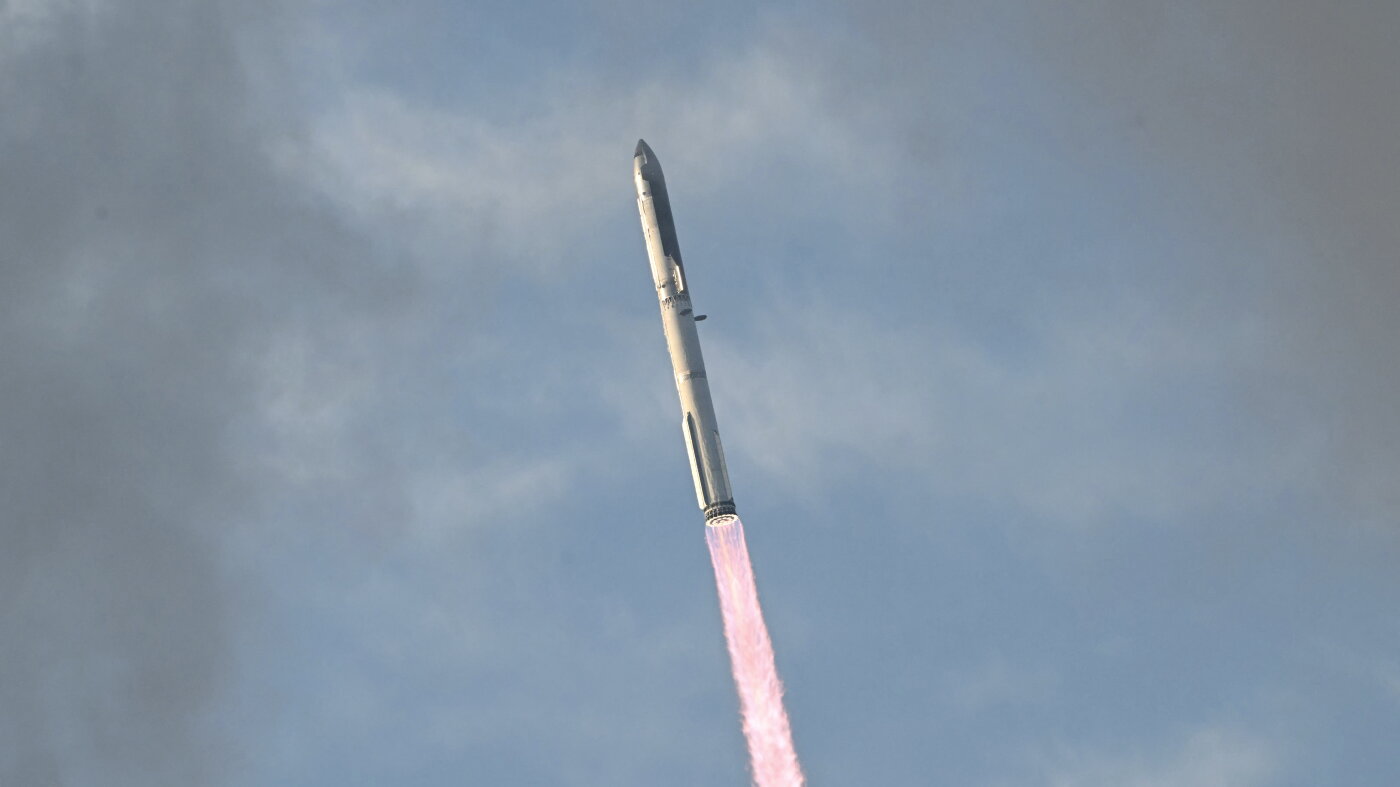
SpaceX launched its enormous Starship into orbit for the first time on Monday, aiming for six full laps around Earth to prove its readiness for NASA’s Artemis moon program.
asserted
SpaceX → launch → program
The spacecraft almost didn’t achieve the long-desired goal after one of its engines shut down too soon.
asserted
one → achieve → engines
But with everything else working well and the bad engine no longer needed, flight controllers decided after several tense minutes to proceed as planned.
asserted
controllers → work → minutes
“Starship is orbital,” Mission Control announced to cheers.
asserted
Control → announce → cheers
Founder Elon Musk’s showpiece rocket – the biggest and most powerful ever built – carried 26 of the latest and most advanced Starlink satellites to join the 11,000 older models already providing internet service.
asserted
rocket → build → service
They popped out of the spacecraft one by one, drawing more cheers from the SpaceX crowds looking on from the launch site at Starbase, Texas.
asserted
They → pop → Starbase
The earlier test flights ventured no farther than the Indian Ocean halfway around the world, often crashing in flames and briefly skimming space.
asserted
flights → venture → space
This time, SpaceX was intent on circling the globe from an altitude of 170 miles (275 kilometres) – not just once but six times over almost 10 hours, ending with a Pacific splashdown near Chile.
asserted
SpaceX → circle → Chile
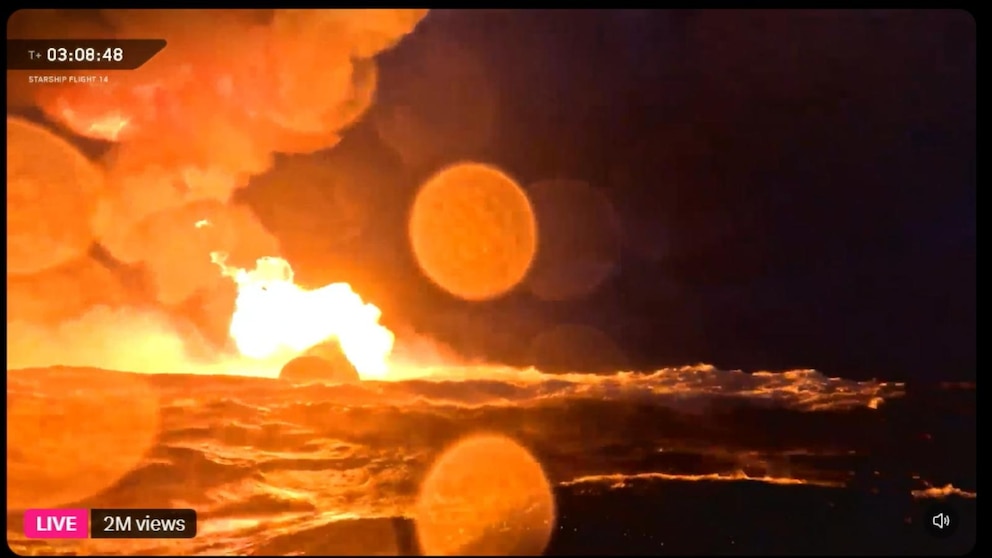
The first-stage booster wasn’t meant to return to the Starbase launch site either, instead dropping into the Gulf of Mexico within minutes of the morning liftoff.
asserted
booster → mean → liftoff
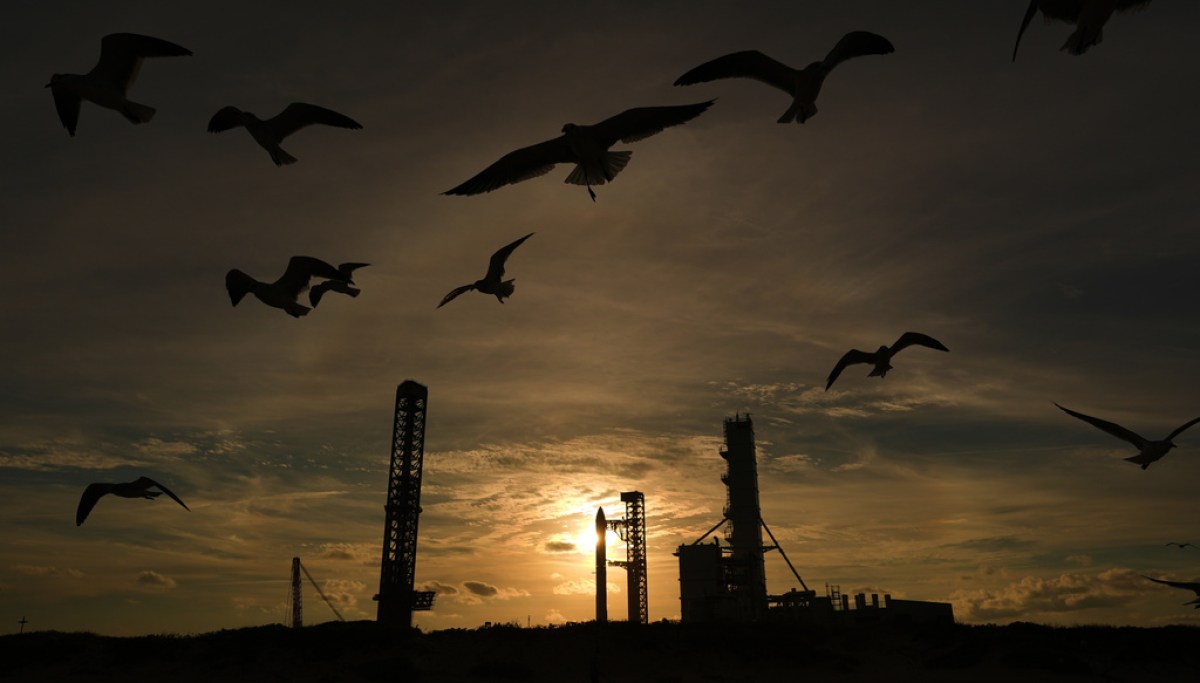
SpaceX wants to ensure that everything works before flying Starship back to Starbase.
asserted
everything → want → Starbase
If the spacecraft breaks apart over land and rains debris onto people, “our popularity would diminish very rapidly,” Musk said at a business summit earlier this month.
asserted
Musk → break → summit
“That’s why we’re being extremely cautious here.”
asserted
we → ’ → ?
If all goes well with this orbital debut, the next Starship will return to the launch pad with giant mechanical arms grabbing the hovering spacecraft.
asserted
arms → go → spacecraft
If the catch works – Musk gives it even or slightly better odds – then SpaceX will re-fly the spacecraft by year’s end or early next.
asserted
SpaceX → work → end
The 407-foot (124-metre) rocket was designed from the start to be fully reusable – a key to lowering launch costs.
asserted
rocket → design → costs
SpaceX managed to salvage the last Starship from the Indian Ocean in July.
asserted
SpaceX → manage → July
Engineers modified the newly launched Starship’s heat shield based on hands-on inspections from the recovered spacecraft, which is being tugged back to Starbase.
asserted
which → modify → Starbase
SpaceX is pressing hard to certify Starship for orbital flight, a vital step toward moon and Mars travel.
asserted
SpaceX → press → travel
NASA’s Artemis III mission is coming up as soon as next summer, a triple-launch docking exercise in orbit around Earth between an Orion capsule full of astronauts and competing lunar landers.
asserted
mission → come → astronauts
Jeff Bezos’ Blue Moon will blast off first, then Orion – which will close in for a linkup – then Musk’s Starship for a docking with Orion once Blue Moon launches.
asserted
Moon → blast → Orion
The next mission – Artemis IV slated for no sooner than 2028 – would have astronauts landing on the moon in either Blue Moon or Starship, whichever is ready first.
asserted
whichever → slat → Moon
Subsequent moonshots will alternate between the two billionaires’ landers.
asserted
moonshots → alternate → landers
Musk originally developed Starship for Mars, intending to launch scores of them with the red planet’s first settlers.
asserted
Musk → develop → settlers
For now, he plans to focus on the moon and use Starship to haul satellites into orbit by the truckload, phasing out the company’s frailer Falcon 9 rocket within several years.
asserted
he → plan → years
A second Starship launch site is nearing completion at Florida’s Kennedy Space Centre and a third is planned for Louisiana.
asserted
third → near → Louisiana
Get a note directly from our foreign correspondents on what’s making headlines around the world.
asserted
what → get → world
 The Aporia