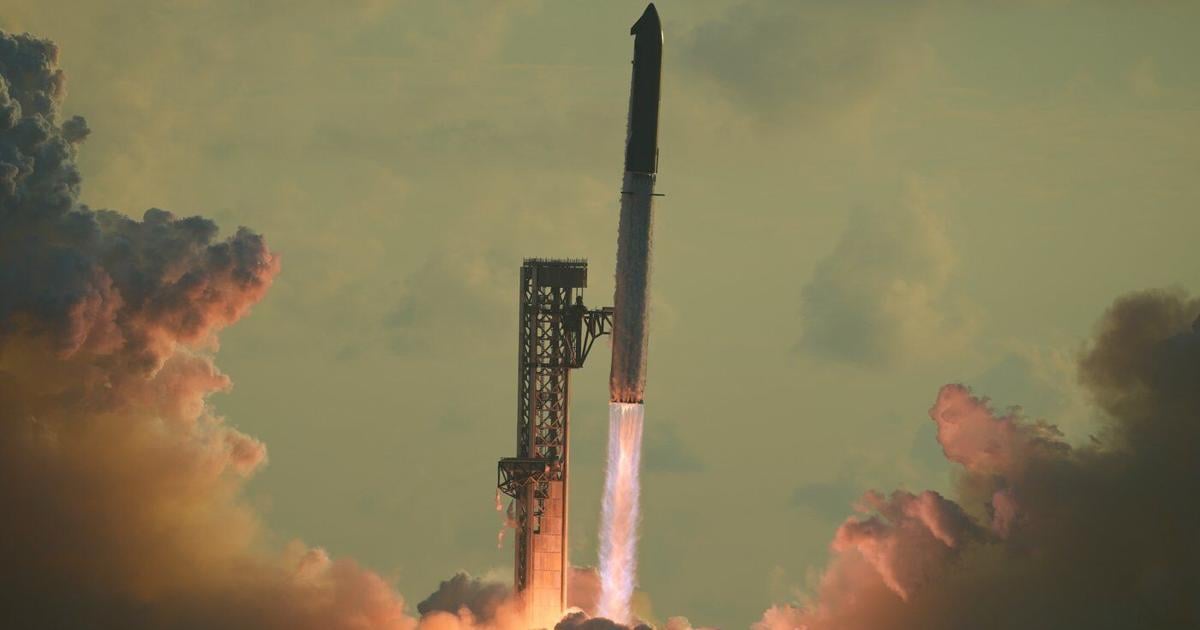
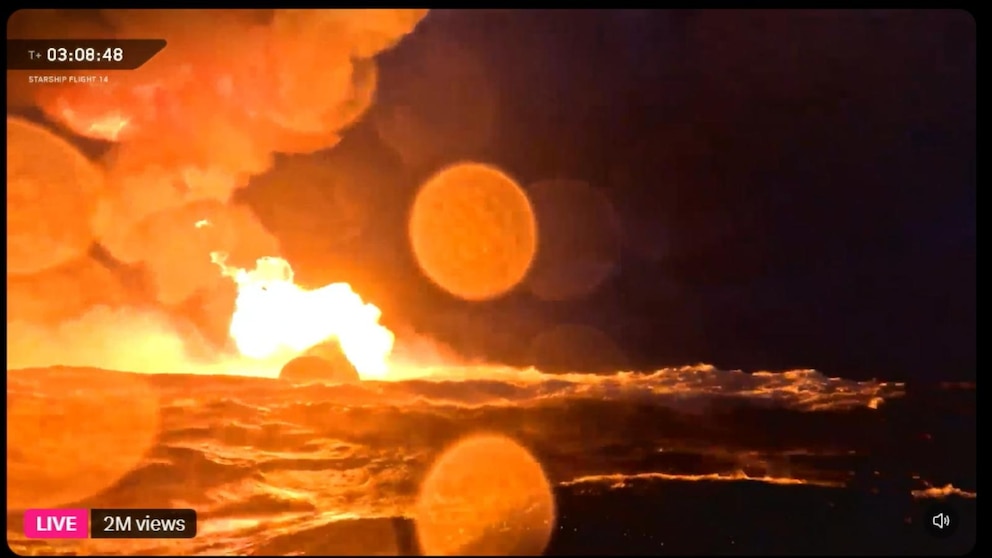
Watch: From launch to fiery splashdown, SpaceX's Starship completes orbit test

Read the original at BBC News ↗
BBC News · collected 2026-09-28

Quick Summary

SpaceX's Starship completed its first orbital flight test, lasting approximately three hours before splashing down in the Pacific Ocean. During this mission, it deployed 26 new-generation Starlink V3 satellites and is described by SpaceX as the world’s most powerful launch vehicle ever developed. The spacecraft aims to facilitate long-duration interplanetary flights for up to 100 people to destinations such as Earth orbit, the Moon, and Mars.
Written locally by qwen2.5:14b on 2026-09-28, using this article's own text rather than the other coverage of the same event (that is the story summary below).

AI analysis runs on qwen2.5:14b, locally

Story summary

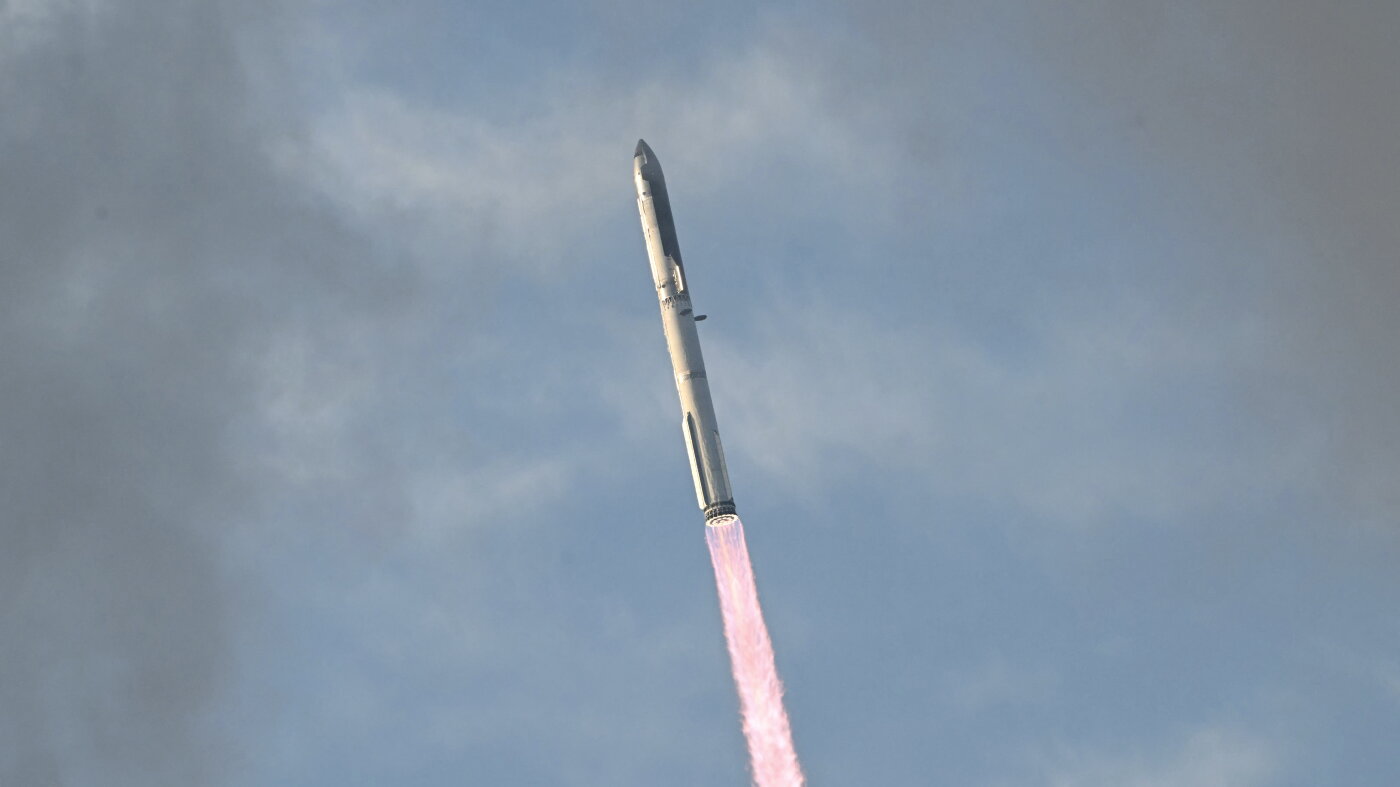
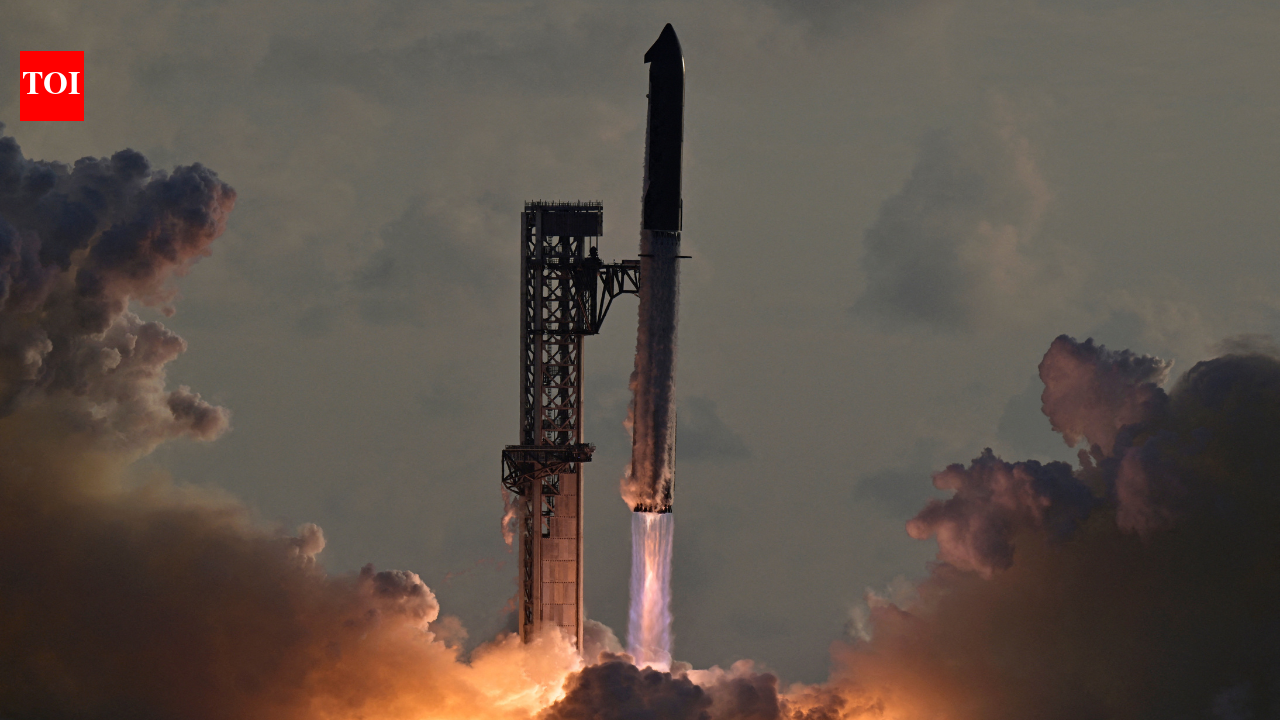
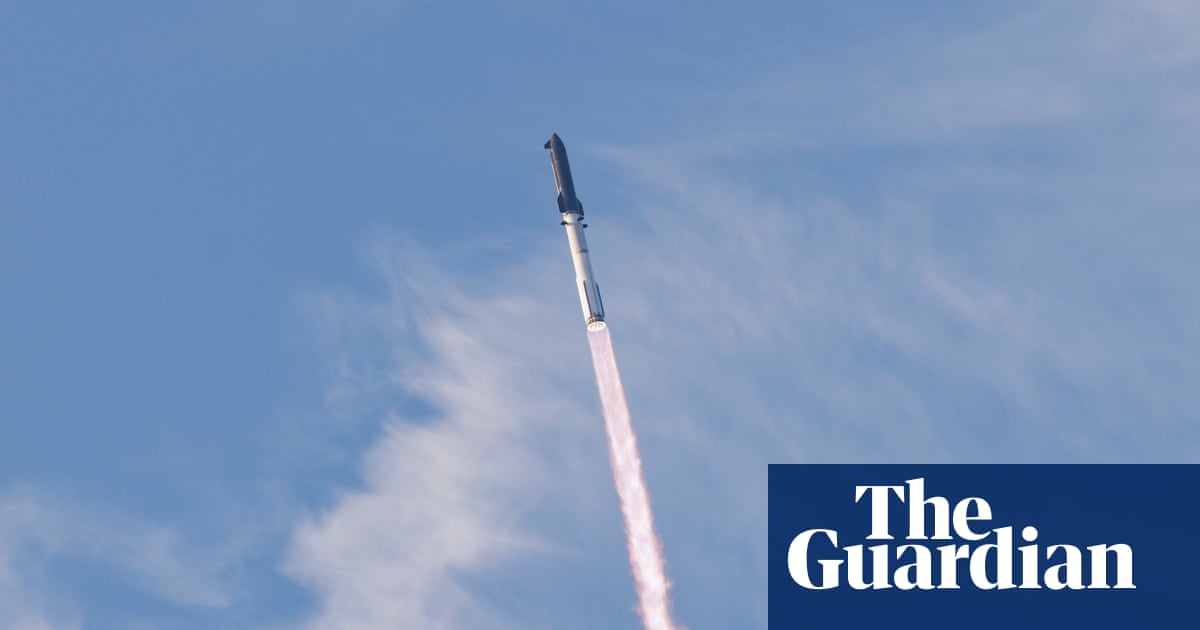
On Monday, SpaceX launched its enormous Starship, the largest and most powerful rocket ever built, from Boca Chica Beach in Texas. The mission was originally planned to last for approximately 10 hours, completing about six orbits around Earth at an altitude of roughly 170 miles (275 km) before a splashdown in the Pacific Ocean west of Chile. However, due to an engine failure shortly after launch, SpaceX decided to cut the flight short and ended it within three hours instead.

Despite initial concerns, mission control announced that "Starship is orbital," marking the first time Starship successfully achieved orbit. The spacecraft also deployed 26 of its newest Starlink satellites during this test flight, bringing the total number of active Starlinks to over 11,000, providing internet services worldwide. This historic mission aims to pave the way for future missions to the Moon and Mars under NASA’s Artemis program.

Written for “SpaceX Starship Orbital Test” on 2026-10-05, grounded in this article and the 15 other(s) covering the same event.

Signals How these are calculated →

Claims extracted
6
claim-shaped sentences
Uncertain
0%
0 of 6 hedged
Leaning
not political
takes no side on a contested political question
Correction & hedging signals
78.1
corrections and hedging in what we collected; not a measure of accuracy
Outlets on this story
16
Technology
Narrative spread
1
articles carrying this framing
Analyzed 2026-09-28 · how these are computed

Story

📰 SpaceX Starship Orbital Test
Technology · 16 article(s) covering the same event. See how they differ ↓

How this is being covered How these are calculated →

Article leaning vs. publisher reliability
Source leaning vs. consistency

Compared with similar articles

This article reads unscored and hedges 0% of its claims. Each row says how that neighbour differs.
BBC News · 0.86 cosine similarity
⚖️ leaning not scored 🔴 0% hedged 0 of 4 📰 publisher trust 78
“Both articles describe SpaceX's Starship completing an orbital test flight and splashing down in the Pacific Ocean after about three hours, deploying 26 Starlink V3 satellites.”
BBC News
⚖️ leaning not scored 🔴 0% hedged 0 of 4 📰 publisher trust 78
“Both articles describe SpaceX's 14th Starship test flight which achieved orbit around Earth before landing in the Pacific Ocean.”
Washington Examiner
⚖️ leaning not scored 🔴 8% hedged 1 of 12 📰 publisher trust 72
“Both articles describe SpaceX's Starship orbital flight test on September 28, 2026, including details like deploying 26 Starlink satellites and splashing down in the Pacific Ocean.”
NPR
⚖️ leaning not scored 🔴 0% hedged 0 of 27 📰 publisher trust 60
“Both articles describe SpaceX's Starship launch from Texas on its first orbital mission which concluded with an early splashdown in the Pacific Ocean.”
Times of India
⚖️ leaning not scored 🔴 8% hedged 1 of 13 📰 publisher trust 59
“Both articles describe SpaceX's Starship reaching Earth orbit on September 28, 2026, including details of the launch from Texas and splashdown in the Pacific.”
The Sydney Morning Herald
⚖️ leaning not scored 🔴 0% hedged 0 of 26 📰 publisher trust 61
“Both articles describe SpaceX's Starship launch on September 28, 2026, including its orbit around Earth and subsequent splashdown.”
The Guardian
⚖️ leaning not scored 🔴 3% hedged 1 of 31 📰 publisher trust 68
“Both articles describe SpaceX's Starship rocket completing its first orbital flight around Earth on the same date.”
Toronto Star
⚖️ leaning not scored 🔴 3% hedged 1 of 32 📰 publisher trust 63
“Both articles describe SpaceX's first orbital flight of Starship on September 28, 2026, which ended early after three hours due to an engine shutdown issue.”
CBC News
⚖️ leaning not scored 🔴 3% hedged 1 of 30 📰 publisher trust 77
“Both articles describe SpaceX's Starship orbital test flight that ended early after about three hours on September 28, 2026.”
ABC News (US)
⚖️ leaning not scored 🔴 0% hedged 0 of 2 📰 publisher trust 59
“Both articles describe SpaceX's Starship splashing down in the Pacific Ocean after a successful first orbital flight test on September 28, 2026.”

Publisher

BBC News · 2507 article(s) · 2 correction(s) detected
Running correction rate · 2 correction(s)
2026-10-03
Tennessee prison chief to resign after Christa Pike's failed execution, governor says
2026-09-21
Watch: BBC tracks down abusive teacher secretly released early

Who wrote this

No reporter is named on this article.

Topics

SpaceX Starlink Starship

Subjects

SpaceX ORG · 4× Starlink ORG · 1×

Narrative

SpaceX describes Starship as "the world's most powerful launch vehicle ever developed" and says it will eventually carry crew and cargo "to Earth orbit, the Moon, Mars and beyond".
framing: assertive · carried by 1 article(s) · first seen 2026-09-28
🔮 SpaceX describes Starship as "the world's most powerful launch vehicle ever developed" and says it will eventually carry crew and cargo "to Earth orbit, the Moon, Mars and beyond".

Claims (6 extracted, 0 hedged)

Watch: From launch to fiery splashdown, SpaceX's Starship completes orbit test asserted
Starship → watch → test
SpaceX's Starship rocket has splashed down in the Pacific Ocean after orbiting the Earth for about three hours. asserted
rocket → splash → hours
The mission was supposed to last about 10 hours, but the SpaceX team decided to end it early. asserted
team → suppose → it
The ship deployed 26 "next generation" Starlink V3 satellites, joining the existing constellation which deliver broadband internet on Earth. asserted
which → deploy → Earth
SpaceX describes Starship as "the world's most powerful launch vehicle ever developed" and says it will eventually carry crew and cargo "to Earth orbit, the Moon, Mars and beyond". asserted
it → describe → orbit
The aim of the spacecraft is to be able to carry up to 100 people on "long-duration, inter-planetary flights". asserted
aim → carry → flights
💬Give feedback
🕘History 🎫Support