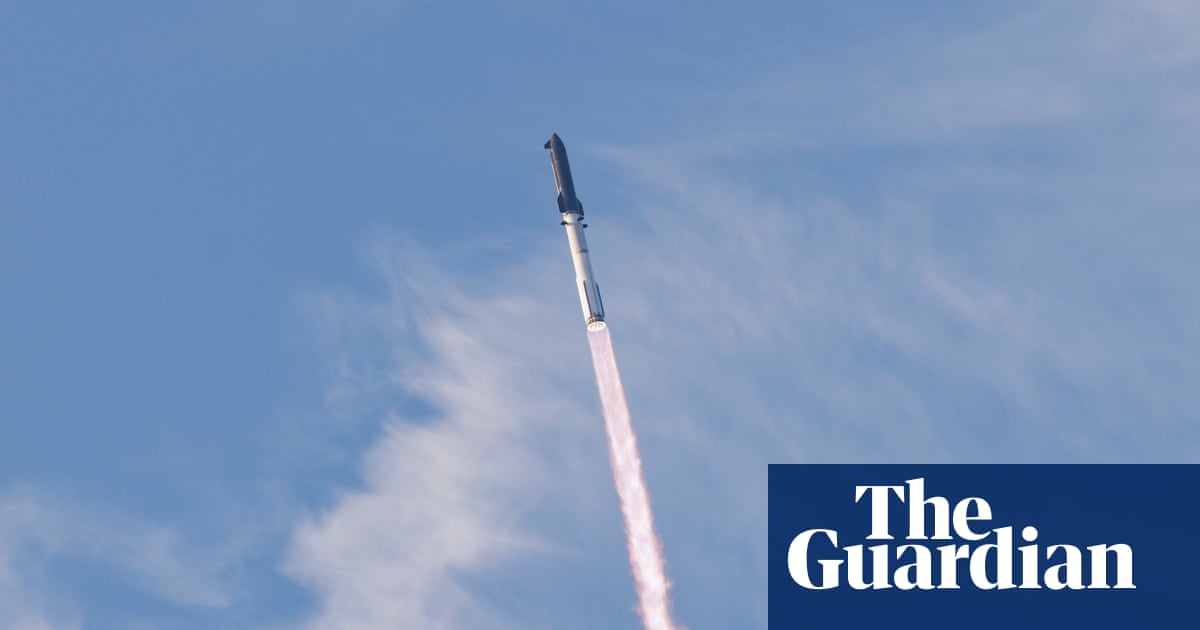
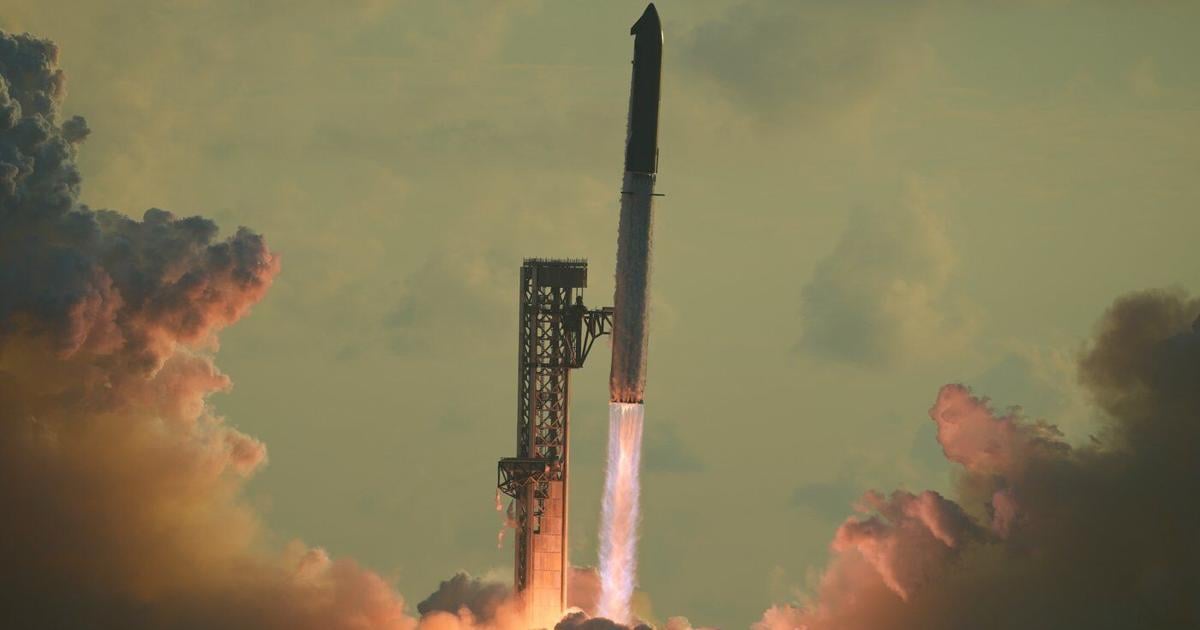
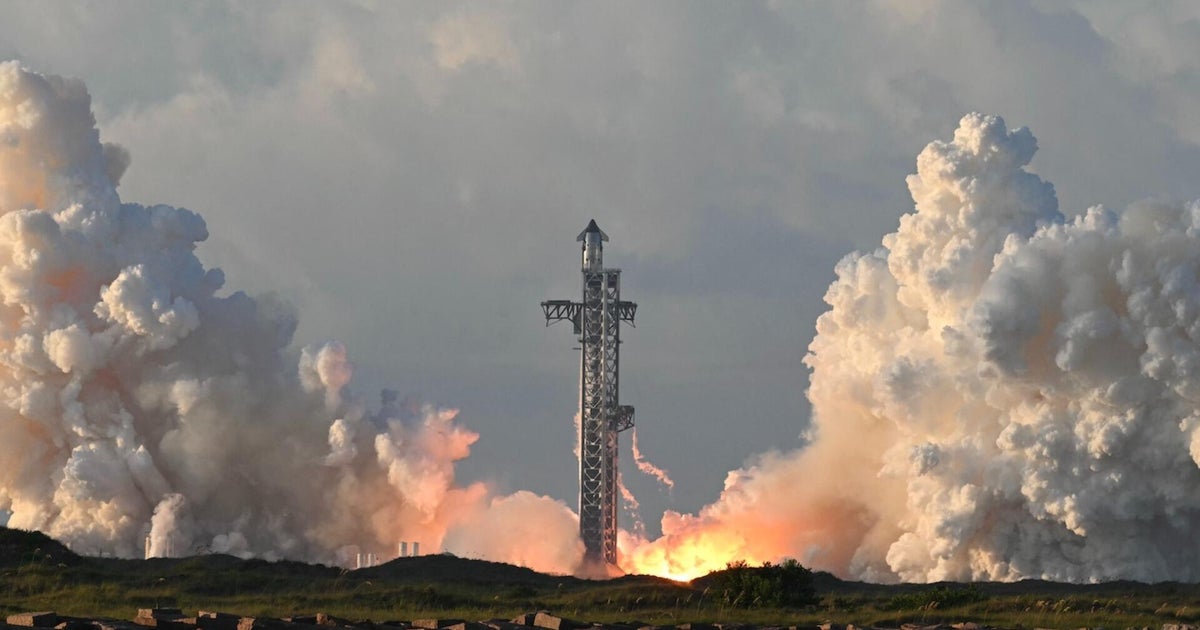
SpaceX launched its Starship spacecraft on its first orbital mission from Boca Chica Beach in Texas at 7:48 a.m. CT. The 171-foot-tall vehicle, carrying no crew and 26 new Starlink satellites, successfully separated from its Super Heavy booster despite one engine failure during ascent. This test flight aims to validate upgrades to the spacecraft's systems and prepare for future missions, including NASA’s Artemis program which plans to use Starship as a human landing system on the moon.
Written locally by qwen2.5:14b on 2026-10-02,
using this article's own text rather than the other coverage of the
same event (that is the story summary below).
Story summary
On Monday, SpaceX launched its enormous Starship, the largest and most powerful rocket ever built, from Boca Chica Beach in Texas. The mission was originally planned to last for approximately 10 hours, completing about six orbits around Earth at an altitude of roughly 170 miles (275 km) before a splashdown in the Pacific Ocean west of Chile. However, due to an engine failure shortly after launch, SpaceX decided to cut the flight short and ended it within three hours instead.
Despite initial concerns, mission control announced that "Starship is orbital," marking the first time Starship successfully achieved orbit. The spacecraft also deployed 26 of its newest Starlink satellites during this test flight, bringing the total number of active Starlinks to over 11,000, providing internet services worldwide. This historic mission aims to pave the way for future missions to the Moon and Mars under NASA’s Artemis program.
Written for “SpaceX Starship Orbital Test” on 2026-10-05,
grounded in this article and the 15 other(s) covering the same event.
SpaceX's Starship launches on first orbital mission from Texas
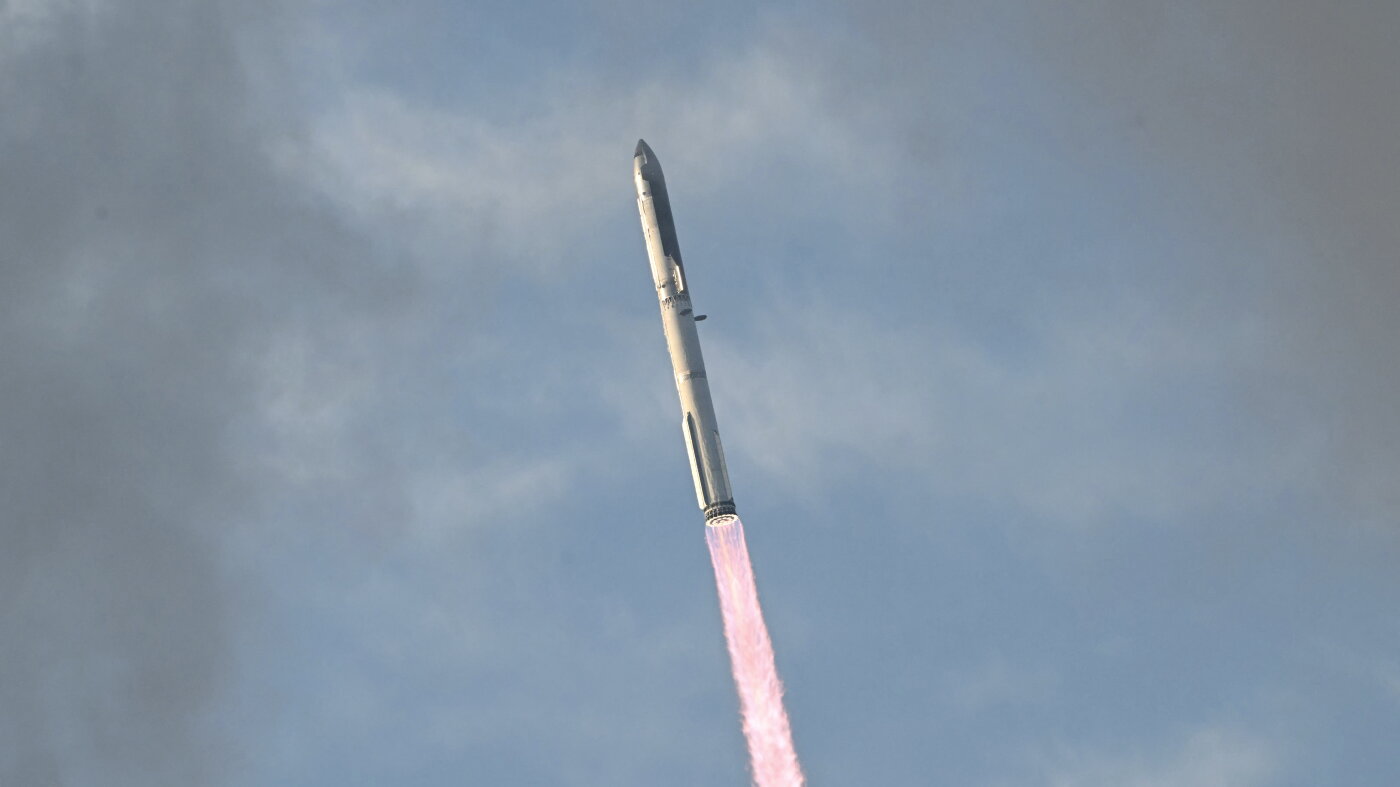
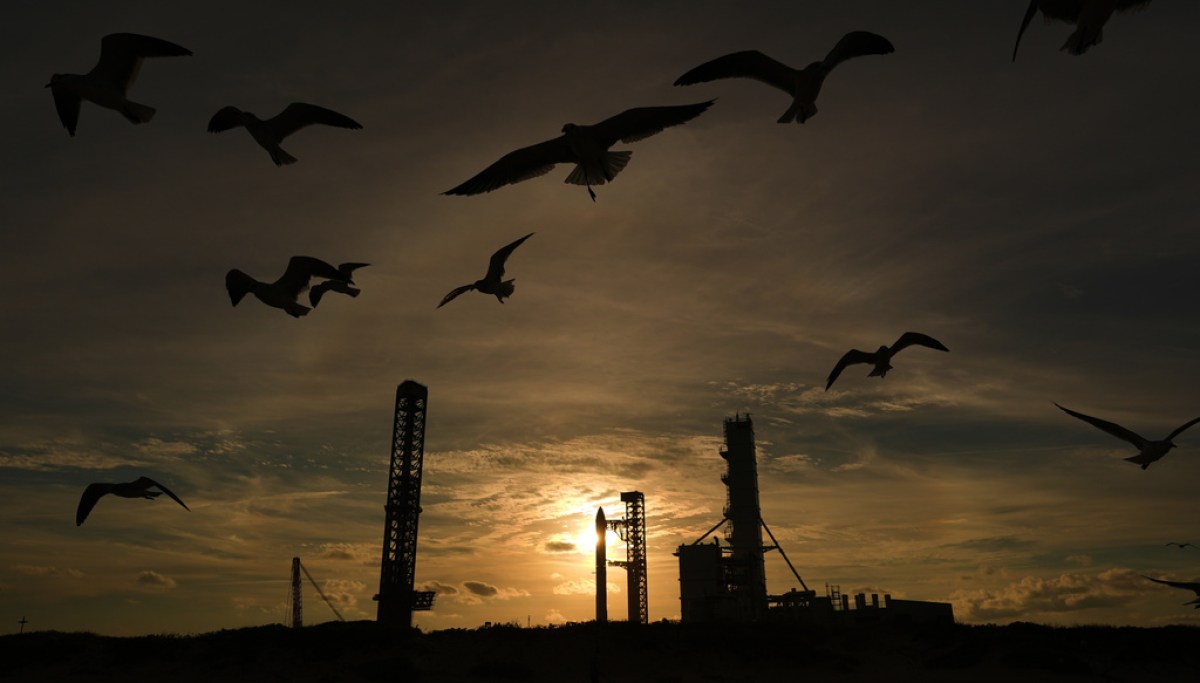
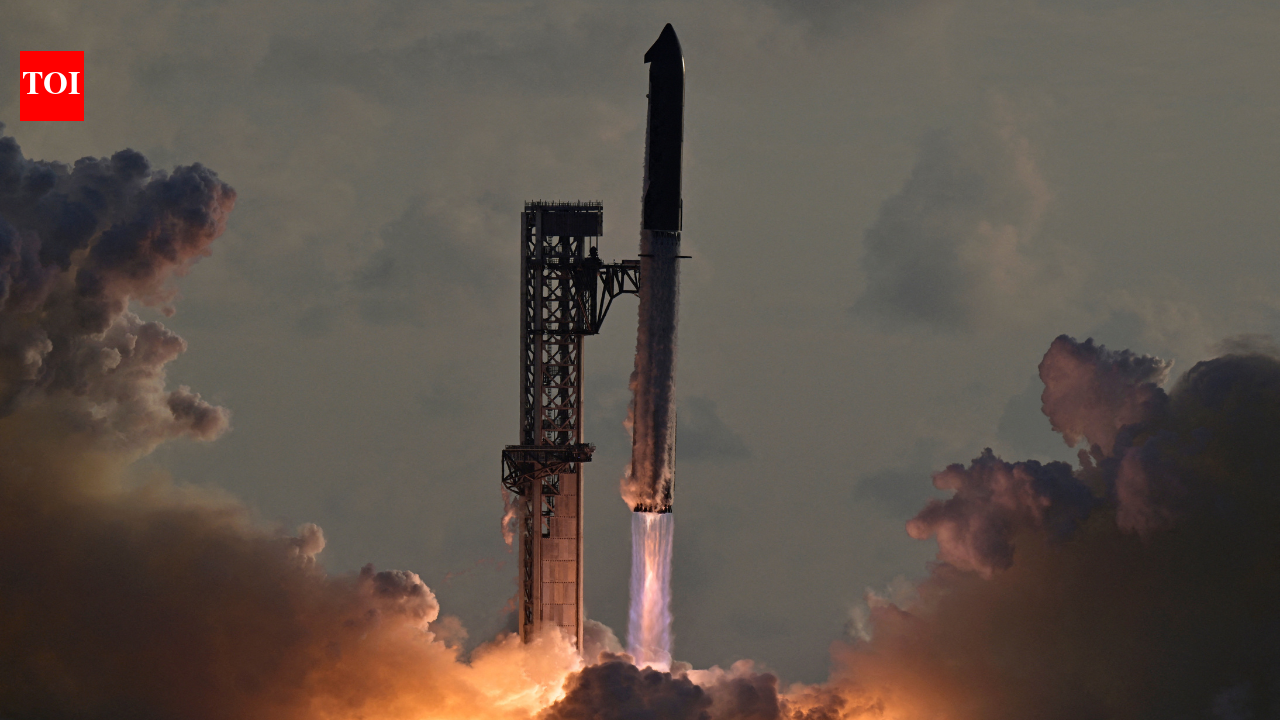
SpaceX has launched its Starship spacecraft from the company's Starbase facility from Boca Chica Beach in Texas, on a critical test flight that sent the 171-foot-tall vehicle into orbit for the first time.
asserted
that → launch → time
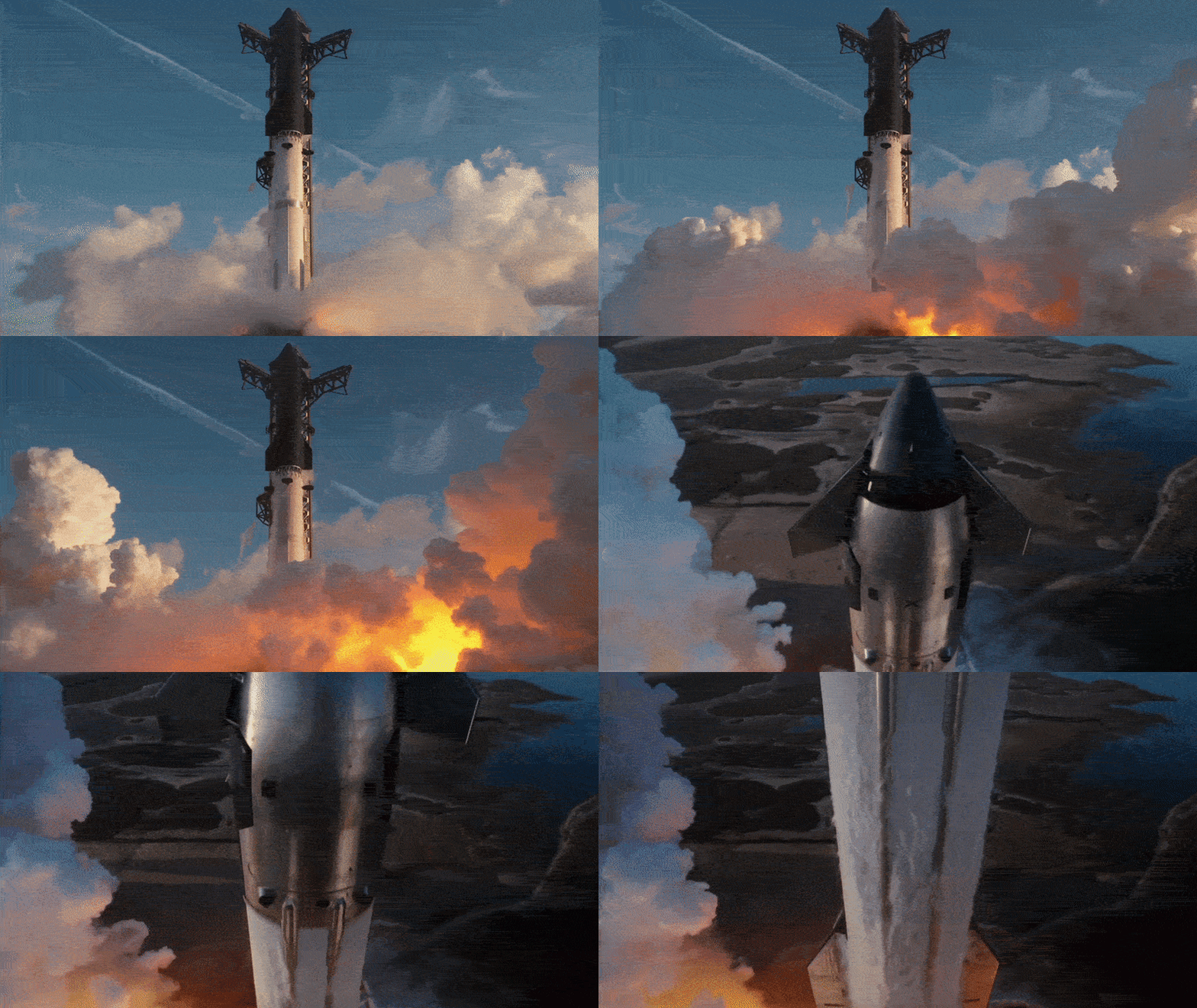
At 7:48 a.m. CT, Starship's Super Heavy booster ignited its 33 rocket engines to send the spacecraft on its 14th flight.
asserted
booster → ignite → flight
Two-and-a-half minutes after launch, Starship separated from the booster and continued into space.
asserted
Starship → separate → space
One of the six engines on Starship failed during ascent, prompting SpaceX to decide whether to continue to orbit.
asserted
One → fail → orbit
About 22 minutes into the flight, the team decided it was safe to do so.
asserted
it → decide → flight
Super Heavy is designed to be reusable by returning to its launch site, where it is caught by the launch tower.
asserted
it → design → tower
This booster, however, simulated a landing offshore in the Gulf of Mexico.
asserted
booster → simulate → Mexico
SpaceX is testing upgrades to the booster's software and hardware during this flight.
asserted
SpaceX → test → flight
The 10-hour flight plan for Starship includes approximately six orbits around the Earth at an altitude of about 170 miles.
asserted
plan → include → miles
Starship 14 is the first time the vehicle will reach orbital speeds — about 17,500 mph.
asserted
vehicle → reach → speeds
SpaceX says this mission's launch profile includes portions that would allow Starship to abort its orbital trajectory and return to Earth safely.
asserted
Starship → say → Earth
During its flight, SpaceX deployed 26 Starlink V3 next-gen satellites into its constellation of thousands of internet satellites that provide broadband access worldwide.
asserted
that → deploy → access
SpaceX regularly launches Starlink satellites from Florida and California using its Falcon 9 rocket, but announced the final mission from Florida last month with plans to use Starship from Florida's Space Coast in the future.
asserted
SpaceX → launch → future
If all goes as planned during Monday's flight, Starship will splash down in the Pacific Ocean off the coast of Chile.
asserted
Starship → go → Chile
Eventually, SpaceX wants to recover the spacecraft and reuse it.
asserted
SpaceX → want → it
SpaceX is testing key systems of the Starship vehicle, like its heat shield.
asserted
SpaceX → test → shield
Three of those Starlink satellites have cameras installed to capture data on Starship's heat shield.
asserted
Three → have → shield
Surviving reentry is key to SpaceX's plans for spacecraft reusability.
asserted
Surviving → survive → reusability
The company is betting on Starship to continue its growth.
asserted
company → bet → growth
It's the only spacecraft that can launch the larger V3 version of its Starlink satellites.
asserted
that → launch → satellites
In its filings to the FEC ahead of SpaceX's IPO in June, the company underscored Starship's role in its plans for growth.
asserted
company → underscore → growth
"Any failure or delay in the development of Starship at scale or in achieving the required launch cadence, reusability and capabilities thereafter would delay or limit our ability to execute our growth strategy," it reads.
asserted
it → achieve → strategy
Starship is also key to NASA's plan to return humans to the moon.
asserted
Starship → return → moon
The agency tapped SpaceX to develop Starship as a human landing system to transport astronauts to the lunar surface for future Artemis missions.
asserted
agency → tap → missions
NASA is planning to test the ability to dock its Orion human space capsule to Starship, along with another commercial lander designed by Blue Origin during Artemis III, which is slated to launch late next year.
asserted
which → plan → Artemis
SpaceX announced plans to build a massive facility in Louisiana, aiming to launch Starship.
asserted
SpaceX → announce → Starship
The company says the $100 billion investment includes plans for dozens of launch pads with the goal of sending Starship from Starbase, La., beginning in 2029.
asserted
investment → say → 2029
 The Aporia