NASA’s Voyager 1 is about to become humanity’s first object to reach one light-day from Earth as it pushes ever deeper into interstellar space.
asserted
it → become → space
That’s a mind-blowing distance of more than 16 billion miles (26 billion kilometers) for the spacecraft launched 49 years ago.
asserted
That → ’ → spacecraft
When Voyager 1 reaches that remarkable milestone on Wednesday, its radio signals will take precisely 24 hours traveling at the speed of light to reach Earth — in other words, one light-day.
asserted
signals → reach → day
NASA is looking at another 18,000 years before the spacecraft achieves a full light-year and more than double that before it comes near another star.
asserted
it → look → star
Project manager Suzanne Dodd sees Voyager 1 as Earth’s ambassador hurtling between stars while providing a “sense of wonder” on the home front.
asserted
Dodd → see → front
“It’s a national treasure,” she told The Associated Press.
asserted
she → ’ → Press
To celebrate this moment, NASA is urging people from all corners to grab their phone or a flashlight to create a wave of golden light after sunset Tuesday, using Morse code to spell the letters V-G-R, Voyager’s call sign, into the night sky.
asserted
NASA → celebrate → sky
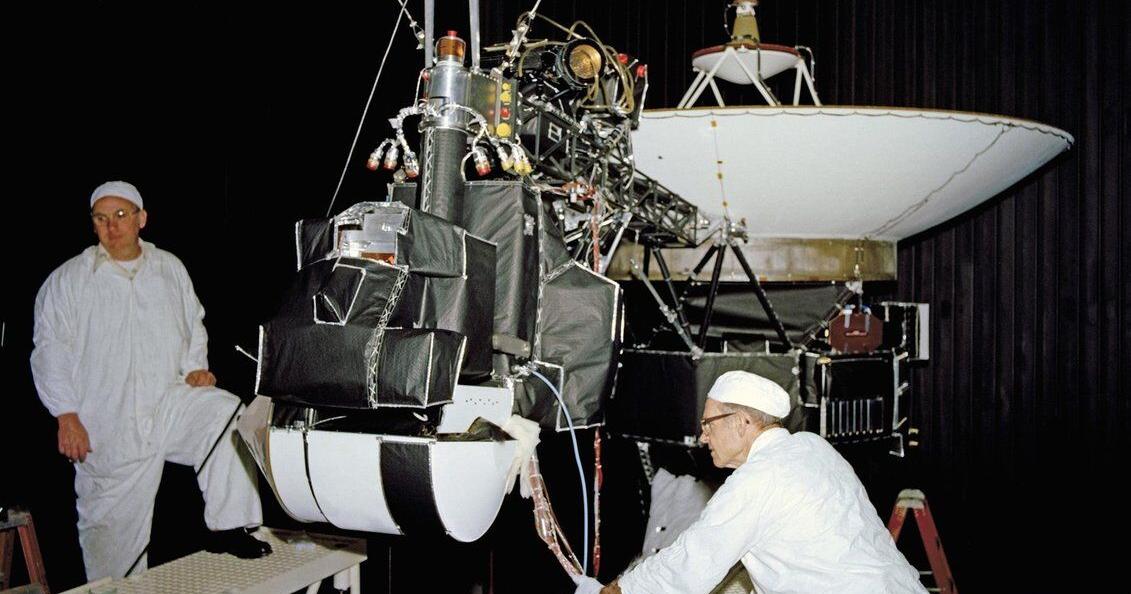
Despite sporadic problems typical of old age, Voyager 1 and its twin Voyager 2 continue to send back science and engineering data as they zoom toward different points in space at 38,000 mph (61,000 kph).
asserted
they → continue → mph
Although launched two weeks before its sibling in 1977, Voyager 2 won’t reach the one light-day mark until 2035.
asserted
Voyager → launch → 2035
Voyager 1 swept past Jupiter and Saturn to scientists’ delight in 1979 and 1980, respectively, before exiting the solar system.
asserted
Voyager → sweep → system
It reached what NASA defines as interstellar space — the expansive region between star systems — in 2012.
asserted
NASA → reach → 2012
Voyager 2 visited those two planets plus Uranus and Neptune, also sending back stunning photos, before entering interstellar space in 2018.
asserted
Voyager → visit → 2018
Almost every day, the Voyagers beam back details about their never-before-explored environment: the strength and direction of the magnetic field as well as tidbits about the surrounding pressure, dust and galactic cosmic rays.
asserted
Voyagers → beam → pressure
They’re a bit like weather satellites, according to Dodd, who’s worked with the Voyagers since 1984.
uncertain
who → ’re → 1984
The skeleton flight control team at NASA’s Jet Propulsion Laboratory in Pasadena, California, sends commands about once a week.
asserted
team → send → commands
The operation ramps up when spacecraft problems arise, with help sometimes coming from a couple of retirees who once worked on the project.
asserted
who → ramp → project
In September, controllers completed the latest power-conserving effort for the plutonium-powered spacecraft, then in October briefly lost contact with it.
asserted
controllers → complete → it
They’re still trying to figure out why communication was disrupted.
asserted
communication → try → ?
All this expertise and love have kept Voyager 1 chugging along like “the little engine that could,” according to Dodd, while racking up entries in Guinness World Records.
uncertain
that → keep → Records
Besides venturing farther than any other human-made object, Voyager 1 in 1990 snapped the most distant picture of Earth: the iconic “Pale Blue Dot” as seen from beyond Neptune.
asserted
Voyager → venture → Neptune
“On that blue dot, that’s where everyone you know and everyone you ever heard of and every human being who ever lived, lived out their lives.
asserted
who → ’ → lives
It’s a very small stage in a great cosmic arena,” Cornell University astronomer Carl Sagan, part of the imaging team, said as he introduced the picture to the world in 1990.
asserted
he → ’ → 1990
While the majority of people alive today were not yet born when the Voyagers launched, “all of us — everyone on Earth — have been touched by these missions,” the Planetary Society’s Bill Nye said in a statement.
asserted
Nye → bear → statement
The society was co
asserted
society → co → ?
founded in 1980 by Sagan, who died in 1996.
asserted
who → found → 1996
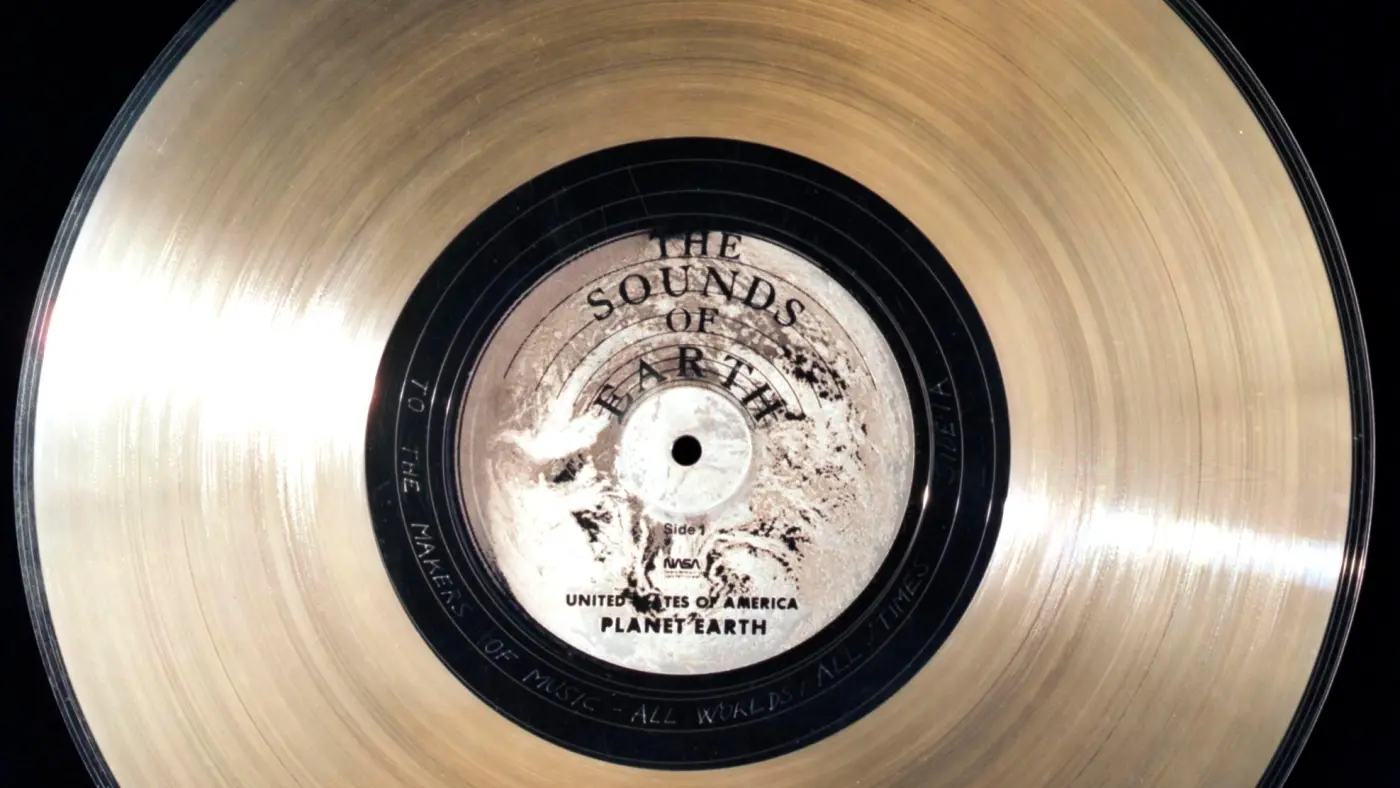
The Golden Record also resulted from Sagan’s effort.
asserted
Record → result → effort
Each Voyager carries a 12-inch (30-centimeter) gold-plated phonographic record containing greetings in 55 languages as well as images and diagrams.
asserted
Voyager → carry → languages
Sagan included the voice of his son Nick, then 6: “Hello from the children on Planet Earth.”
asserted
Sagan → include → Earth
He added a stylus and instructions for any finders-keepers out there.
asserted
He → add → keepers
“It’s a time capsule of life on Earth from 1977,” Dodd said.
asserted
Dodd → ’ → 1977
“I hope something, someone, finds it maybe 1,000 years from now.”
asserted
something → hope → it
The Associated Press’ health and science coverage receives financial support from the AP Fund for Journalism and private foundations.
asserted
coverage → receive → Journalism
 The Aporia