Story summary
Russian parliamentary elections, held from September 18-20, were widely expected to see United Russia, President Vladimir Putin's party, maintain its dominance over the State Duma (lower house of parliament). Despite critics arguing that the outcome was predetermined and would have no significant impact on the country’s future, Russian authorities made persistent efforts to ensure high voter participation under current electoral law. The elections came amidst increasing war fatigue and economic hardship due to Ukraine's drone strikes targeting oil refineries and warehouses within Russia, causing fuel shortages and internet blackouts.
Exit polls conducted by independent groups at embassies and consulates abroad revealed starkly different results from those inside Russia: New People, an opposition party, garnered around 45% of the votes compared to United Russia’s reported near-58% support domestically. These discrepancies highlight a divergence between domestic and international perceptions of Putin's popularity, with many Russian expatriates opposing the war and expressing anxiety over its economic and social consequences.
Critics argue that these elections are more about demonstrating the regime's resilience than reflecting genuine public sentiment or political contestation, given the tight control exercised by the Kremlin.
Written for “Russia's Wartime Elections” on 2026-10-05,
grounded in this article and the 64 other(s) covering the same event.
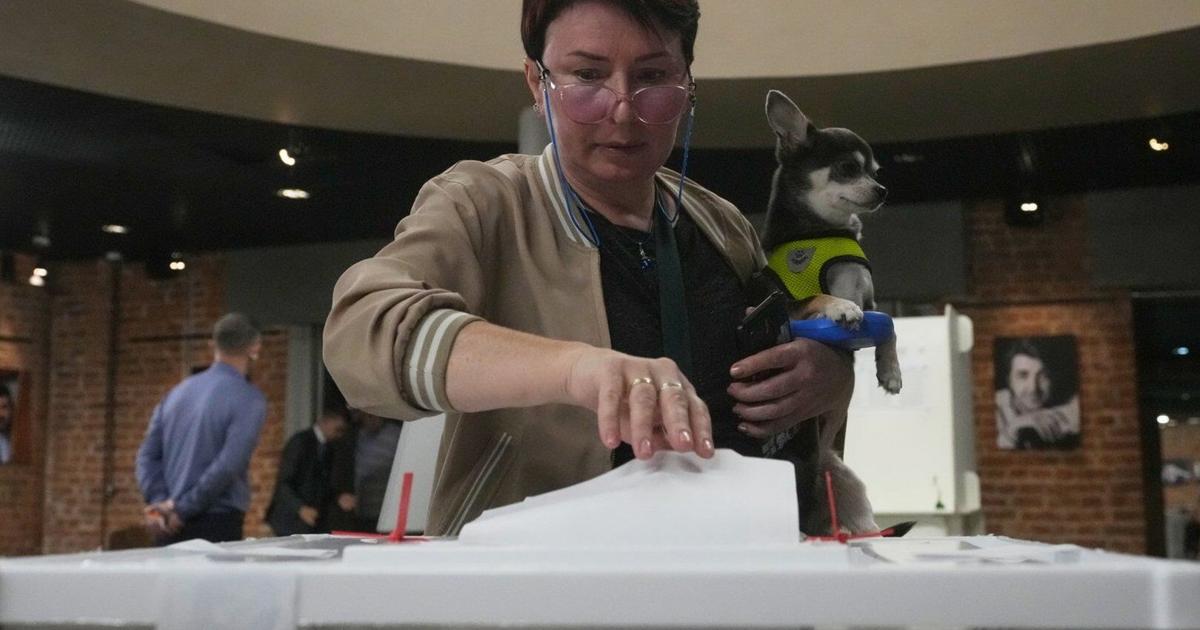
Russians went to the polls.
asserted
Russians → go → polls
The votes were counted.
asserted
votes → count → ?
Russian President Putin's party United Russia won again, and comfortably.
asserted
party → win → ?
The more interesting question is why Russia still goes through the elaborate business of elections when the system makes a genuine change of power extremely unlikely.
asserted
change → go → power
Because in Russia, an election may not simply be about choosing who governs.
uncertain
who → choose → Russia
It can also tell the Kremlin who is turning up, where support is weakening, which regional leaders can deliver and how well the machinery is working.
asserted
machinery → tell → Kremlin
But first, a simpler question: does a Russian vote actually matter?
asserted
vote → matter → ?
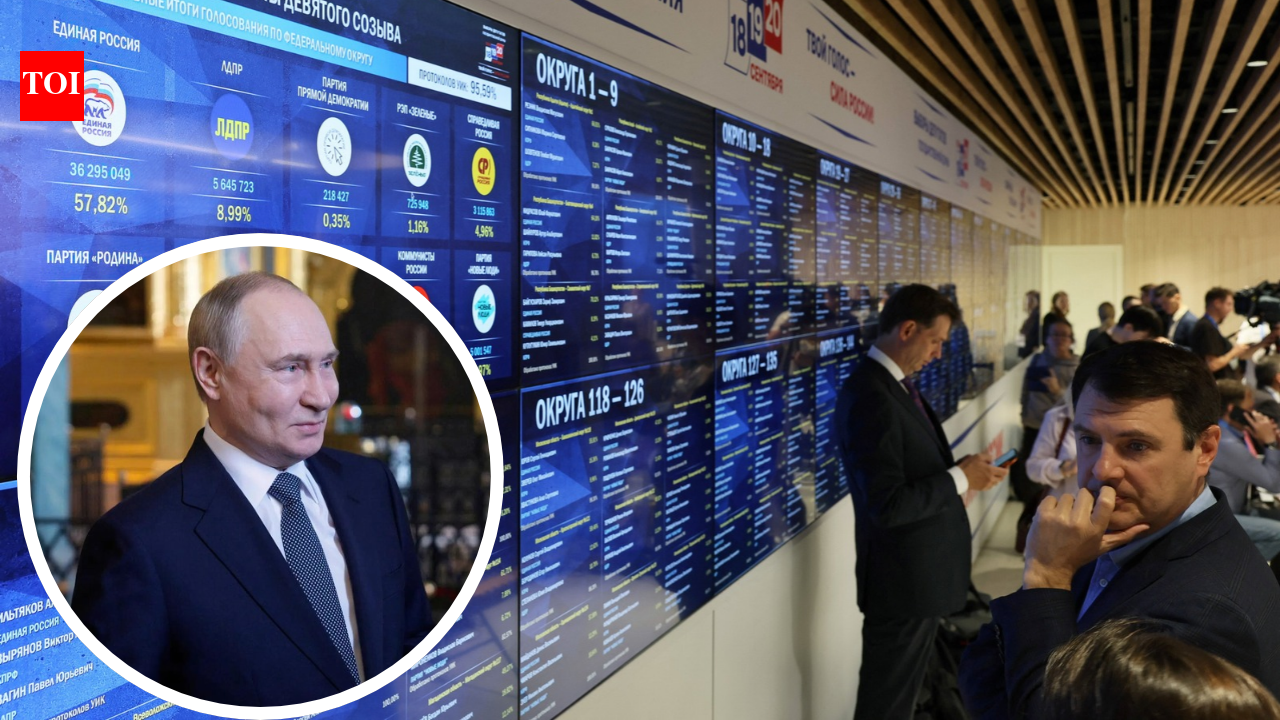
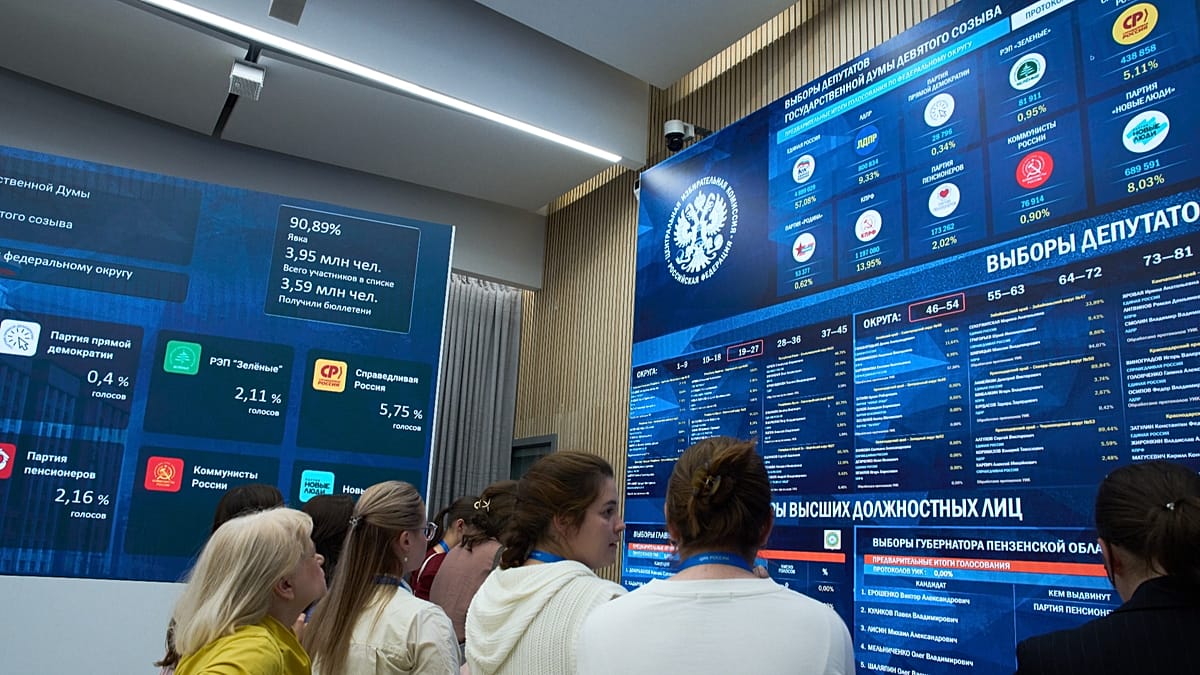
Putin's ruling United Russia party won 57.83% of the vote, according to Russia's Central Election Commission, with more than 95% of ballots counted.
uncertain
% → rule → ballots
The result gives United Russia 355 of the 450 seats in the State Duma, preserving its constitutional majority.
asserted
result → give → majority
In the previous parliamentary election in 2021, the party officially received 49.8% of the vote.
asserted
party → receive → vote
The election was also the first parliamentary vote since Russia launched its full-scale invasion of Ukraine in 2022.
asserted
Russia → launch → 2022
Putin had presented it as a test of support for his policies and the war.
asserted
Putin → present → policies
The Kremlin said the first parliamentary election since Moscow sent troops to Ukraine in 2022 showed Russians were united around Putin, who has been in power since New Year's Eve 1999.
asserted
who → say → Eve
That raises an obvious question: If Russia is widely described as an authoritarian or 'managed' political system, and the Kremlin is not seriously threatened by an opposition party taking power, why bother holding elections at all?
asserted
Kremlin → raise → elections
Putin’s United Russia party has won 355 of the 450 seats in the State Duma.
asserted
party → win → Duma
Does a Russian vote actually matter?
asserted
vote → matter → ?
It would be too simplistic to say that an individual vote is completely meaningless simply because the ruling party is expected to win.
asserted
party → say → ?
Formally, an individual Russian vote can affect the composition of the Duma in two ways.
asserted
vote → affect → ways
Half of the 450 seats are distributed through nationwide party-list proportional representation, with a 5% threshold, while the other 225 are elected from single-member constituencies.
asserted
225 → distribute → constituencies
The weight of an individual vote differs between the two.
asserted
weight → differ → two
“In the party-list contest, one vote is a very small part of the national total, although collectively these votes determine 225 seats and can be particularly important when a party is near the 5% threshold,” explained foreign affairs expert Robinder Sachdev.
asserted
Sachdev → determine → threshold
“In a close constituency race, however, a relatively small number of votes can directly determine who wins that seat,” explained foreign expert he added.
asserted
he → determine → seat
The 2026 result illustrates how strongly the constituency component can amplify a party's parliamentary strength.
asserted
component → illustrate → strength
United Russia won 355 of the 450 seats, up from 343 in the previous Duma and the party's highest total so far.
asserted
Russia → win → Duma
That gives the party well over the two-thirds threshold in the Duma.
asserted
That → give → Duma
It can pass ordinary federal legislation without needing support from other parties and has enough votes for federal constitutional laws and the Duma stage of constitutional amendments.
asserted
It → pass → amendments
“So an individual vote has limited weight by itself, but aggregated votes — particularly in single-member constituencies — can have a major effect on the parliamentary balance of power,” Sachdev said.
asserted
Sachdev → limit → power
Does the vote count actually matter?
asserted
count → matter → ?
Russians cast ballots, those ballots are counted and the resulting numbers determine how parliamentary seats are allocated.
asserted
seats → cast → ballots
United Russia's 57.83% vote share is therefore not simply a number that has no connection whatsoever to voting.
asserted
that → have → voting
But whether voters have a meaningful opportunity to change who exercises power is a different question.
asserted
who → change → power
Russia's political system has placed significant restrictions on genuine electoral competition.
asserted
system → place → competition
Reuters described the 2026 parliamentary election as taking place in a “tightly controlled political system” in which candidates opposed to Moscow's war in Ukraine have largely been excluded.
asserted
candidates → describe → Ukraine
Several parties besides United Russia are represented in the Duma, but Russia's parliamentary opposition operates within tightly drawn limits, with the major parties generally supporting Putin on key issues, including the war in Ukraine.
asserted
parties → represent → Ukraine
According to the Center for European Policy Analysis (CEPA), Yabloko, a liberal party that opposed the Ukraine war and called for a ceasefire, was excluded from the federal parliamentary contest.
uncertain
that → accord → contest
CEPA said Yabloko's support among decided voters had risen to about 6% in the weeks before the election, compared with 1.2% in the 2021 election.
asserted
support → say → election
Meanwhile, Putin critic Nikolai Bondarenko had already been barred from standing.
asserted
Bondarenko → bar → standing
So should this be called a gimmick?
asserted
this → call → ?
Even when the broad political outcome is predictable, elections can serve several purposes for an authoritarian political system.
asserted
elections → serve → system
Sachdev said elections provide formal electoral legitimacy while allowing the leadership to demonstrate a measurable level of public participation and support.
asserted
leadership → say → participation
…and 62 more, not listed.
 The Aporia