Story summary
On September 27, the Parades Commission allowed the Orange Order's Drumcree parade to proceed along Garvaghy Road for the first time in almost 30 years. The commission restricted the number of participants to 35 people, starting at 8 am, and required them to disperse by 9:30 am from Carleton Street Orange Hall, with only the Portadown District banner allowed during this stretch. No supporters or bands were permitted along the parade route near residents' homes on Dungannon Road and Drumcree Road.
The decision drew mixed reactions; DUP hailed it as a breakthrough while Sinn Féin condemned it strongly, viewing it as forcing an Orange march through the community. Garvaghy Road residents had been vehemently opposed to such parades during the 1990s Troubles era, leading to violent clashes and political tension necessitating significant security measures.
Following an unprecedented late-night court hearing concluding at 2:15 am, Justice Michael Humphreys upheld the commission's ruling. Crowds gathered in Portadown early Sunday morning, with many wearing balaclavas, awaiting the parade amidst heavy rain and tense conditions. The hearing acknowledged the unusual circumstances but maintained respect for public bodies' decisions.
Concerns were raised that this go-ahead could disrupt agreements at other flashpoint areas across Northern Ireland, signaling potential challenges to maintaining peace in former conflict zones.
Written for “Drumcree Parade Decision” on 2026-10-05,
grounded in this article and the 59 other(s) covering the same event.
The Northern Ireland Secretary has appealed for calm as he urged political and community leaders to reach for compromise to resolve a tense parading stand-off in Portadown.
asserted
he → appeal → Portadown
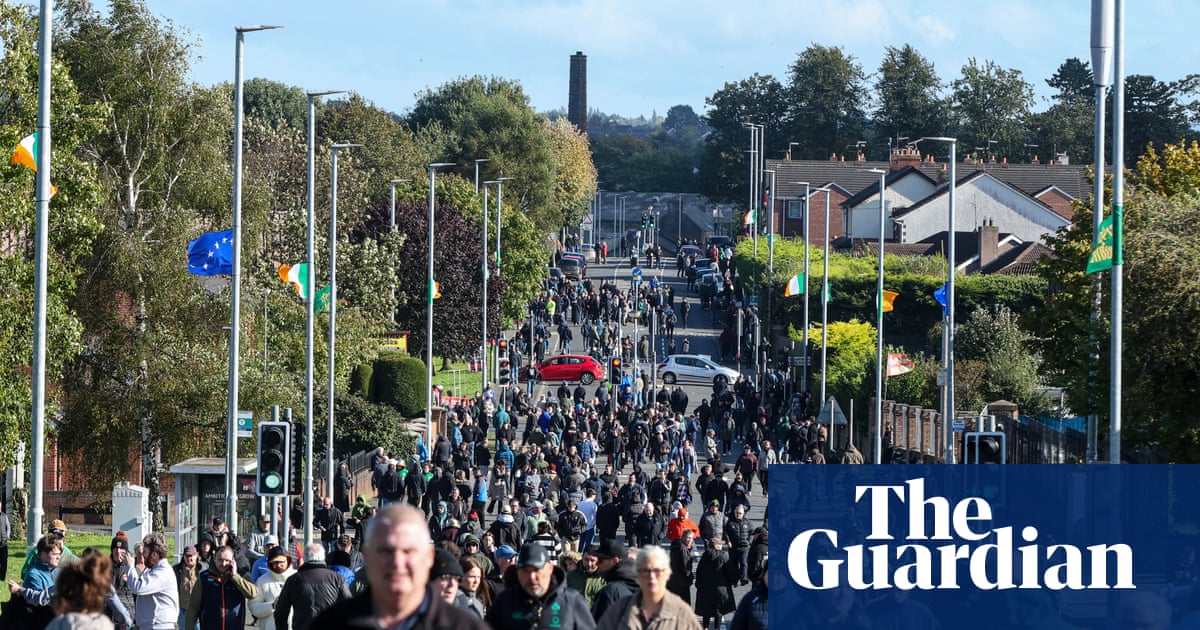
Sir Chris Bryant’s comments came as thousands of protesters continue to blockade the predominately nationalist Garvaghy Road in Portadown in a bid to prevent a contentious Orange Order parade passing.
asserted
thousands → come → passing
Large crowds remained on the road until late on Sunday.
Northern Ireland’s First Minister Michelle O’Neill and other senior party figures joined those protesting on the road on Sunday, prompting accusations of law breaking from unionists.
asserted
O’Neill → remain → unionists
Under parading legislation in the region, protests against parades must be notified and approved by the Parades Commission adjudication body.
asserted
protests → notify → body
Ms O’Neill and other ministers in the Stormont Executive are bound by a pledge of office that contains a commitment to uphold the law.
asserted
that → bind → law
Through Sunday, police repeatedly notified the protesters through a loudspeaker that they are liable for arrest for blocking the road.
asserted
they → notify → road
On Sunday evening, Ms O’Neill encouraged protesters to the “stay the course” as she urged them to remain on the road until at least midnight.
asserted
she → encourage → midnight
“We can’t have a situation where people who have the privilege of holding high office in Northern Ireland so flagrantly disregard the pledge of office and statutory underpinnings of their office,” he told media in Belfast on Sunday afternoon.
asserted
he → have → afternoon
A ruling by the Parades Commission permitting the Orange Order march from Drumcree Church and along the Garvaghy Road was upheld in an “unprecedented” late-night sitting of the High Court in Belfast in the early hours of Sunday morning.
asserted
ruling → permit → morning
The Drumcree parade, which was associated with violent clashes during the Troubles, has been banned since 1998.
asserted
which → associate → 1998
Protesters, many of them wearing balaclavas, clustered in large groups in heavy rain along the road on Sunday morning, a move that delayed the scheduled 8am start of the parade.
asserted
that → wear → parade
The stand-off has continued through the day and into the evening, with Orangemen waiting at Drumcree Church around a mile from the road waiting to commence their parade.
asserted
Orangemen → continue → parade
Around 6pm, several Orangemen emerged from the church hall and walked down the hill where they were met by police.
asserted
they → emerge → police
Officers subsequently told senior members of the institution that they could not have more than 35 people on the hill – as that was a restriction placed on the parade by the commission.
uncertain
that → tell → commission
A crowd of supporters gathered with the Orangemen.
asserted
crowd → gather → Orangemen
By 10pm the numbers on the hill beside the church had dwindled to a token presence.
asserted
numbers → dwindle → presence
But a spokesperson for the Orangemen said hundreds of protesters remained in Portadown while most of the brethren were in the church hall, adding “we demand the parade goes ahead”.
asserted
parade → say → hall
The escalating political row over the parade is set to test the stability of the powersharing institutions in Belfast.
asserted
row → escalate → Belfast
Mr Robinson was asked whether he was prepared to continue to work with Sinn Féin.
asserted
he → ask → Féin
If either the DUP or Sinn Féin withdrew from the executive, the devolved government would effectively collapse.
asserted
government → withdraw → executive
“Our party is maintaining the dignity of the Portadown Orangemen as they have shown determination and patience so will we,” replied Mr Robinson.
asserted
Robinson → maintain → determination
“I can look at you all in the eye today and say we are being plunged into difficult territory because of the actions of people who are expected to be lawmakers in our country breaking the law.
asserted
who → look → law
“The fundamental principle of upholding the rule of law in this society are sacrosanct and cannot be tarnished.”
asserted
principle → uphold → society
Earlier, Sinn Féin vice-president Ms O’Neill told reporters on the Garvaghy Road that the reignition of the Drumcree dispute “brings into question how this whole peace process works”.
asserted
process → tell → question
Party president Mary Lou McDonald called on Northern Ireland Secretary Sir Chris to intervene to ban the parade.
asserted
McDonald → call → parade
She said the people of the Garvaghy Road would “not be drawn back to the past”.
asserted
people → say → past
“The Secretary of State needs to intervene.
asserted
Secretary → need → State
The chief constable of the PSNI needs to intervene and put a stop to this,” she said.
asserted
she → need → this
Sir Chris has the power to ban the parade if Northern Ireland’s police chief requests such a step citing concerns over the potential for public disorder.
asserted
chief → have → disorder
The Northern Ireland Secretary flew into Northern Ireland on Sunday from the Labour Party conference in Liverpool to have discussions with political leaders.
asserted
Secretary → fly → leaders
Speaking to reporters in Belfast, Sir Chris said “nobody wants to go back 28 years”.
asserted
nobody → speak → Belfast
“The whole idea of us coming here is to be able to try and be able to talk specifically face to face to some of the political leaders and some of the community leaders to see if we can get to a settled position,” he said.
asserted
he → come → position
“The truth is everybody has to double down on compromise – that’s what life’s all about – double down on compromise.”
asserted
life → have → compromise
Police Service of Northern Ireland chief constable Jon Boutcher called for people come together to try to get past their issues.
asserted
people → call → issues
He said the police operation thus far had involved evidence-gathering of “whatever has been happening from whatever party”.
asserted
whatever → say → party
“I am hoping we will bring all of today’s events to a sensible and peaceful conclusion,” he said.
asserted
he → hop → conclusion
On what a successful conclusion may look like, he added: “There has got to be a longer-term conversation which involves politicians and the people involved in what we have seen in the last 24 hours, trying to find a space that they can resolve these issues.”
uncertain
they → look → issues
There had been many “sensible voices” calling for calm which he thought had been “listened to by all parties”.
asserted
he → call → parties
Prime Minister Andy Burnham has appealed for “calm on all sides”, saying there have been “big gains made in Northern Ireland, and we don’t want to see things go backwards”.
asserted
things → appeal → Ireland
Taoiseach Micheál Martin also urged calm as he expressed concern about the situation.
asserted
he → urge → situation
…and 16 more, not listed.
 The Aporia