That is 0 articles you have read today.
The Aporia is free and carries no advertising, so readers are the only
thing paying for it. If you are getting this much out of it, a small
donation is what keeps it independent.
Daily limit reached
You have read 0 articles today.
That is more than the 15 a day The Aporia gives away,
and well past what it can carry on nothing. Your allowance resets at
midnight.
There is no advertising here and nothing about you is sold, so readers
are the only thing paying for it. If the site is worth this much of
your day, it is worth a few dollars.
Everything else stays open: the
maps, the
directory and
search do
not count against this, and neither does re-opening something you have
already read today.
After a three-day summit in Washington, DC, the United States and China have agreed to establish a bilateral communication channel for artificial intelligence incidents. The White House announced this development following meetings between US President Donald Trump and Chinese President Xi Jinping, who also discussed trade, among other topics. No immediate comment was provided by Beijing regarding the AI communication channel.
Written locally by qwen2.5:14b on 2026-09-27,
using this article's own text rather than the other coverage of the
same event (that is the story summary below).
Story summary
Before the Xi-Trump summit last week, analysts expected soybeans to be included in tariff-reduced arrangements between China and the U.S., but China excluded them from a tariff-reduction list released on September 28, 2026, despite cutting tariffs on other agricultural goods like corn, wheat, meat, and dairy. This decision disappointed American farmers, such as John Bartman, an Illinois-based soybean farmer who called it "a missed opportunity." U.S. soybeans still face an additional tariff of 10%, which traders say is too high for private crushers to absorb, even as Chinese state buyers have stepped up purchases. Despite this exclusion, both sides agreed to form a trade council to discuss reciprocal tariff cuts on $30 billion worth of products and stabilize economic ties.
Written for “US-China Tariff Cuts Deal” on 2026-10-05,
grounded in this article and the 283 other(s) covering the same event.
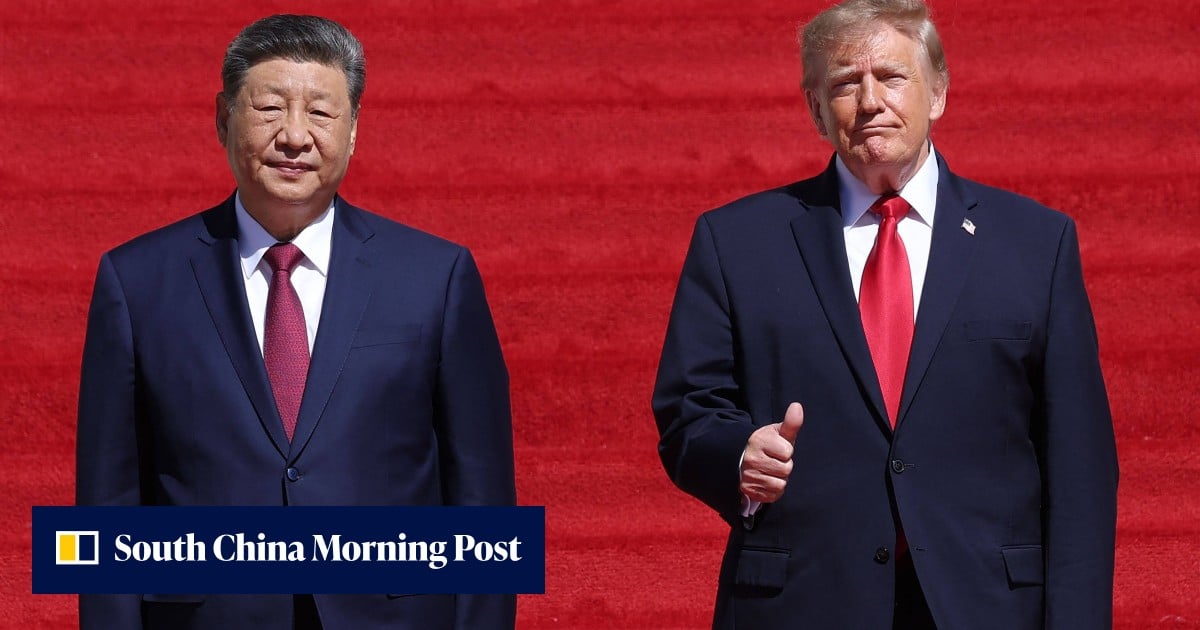
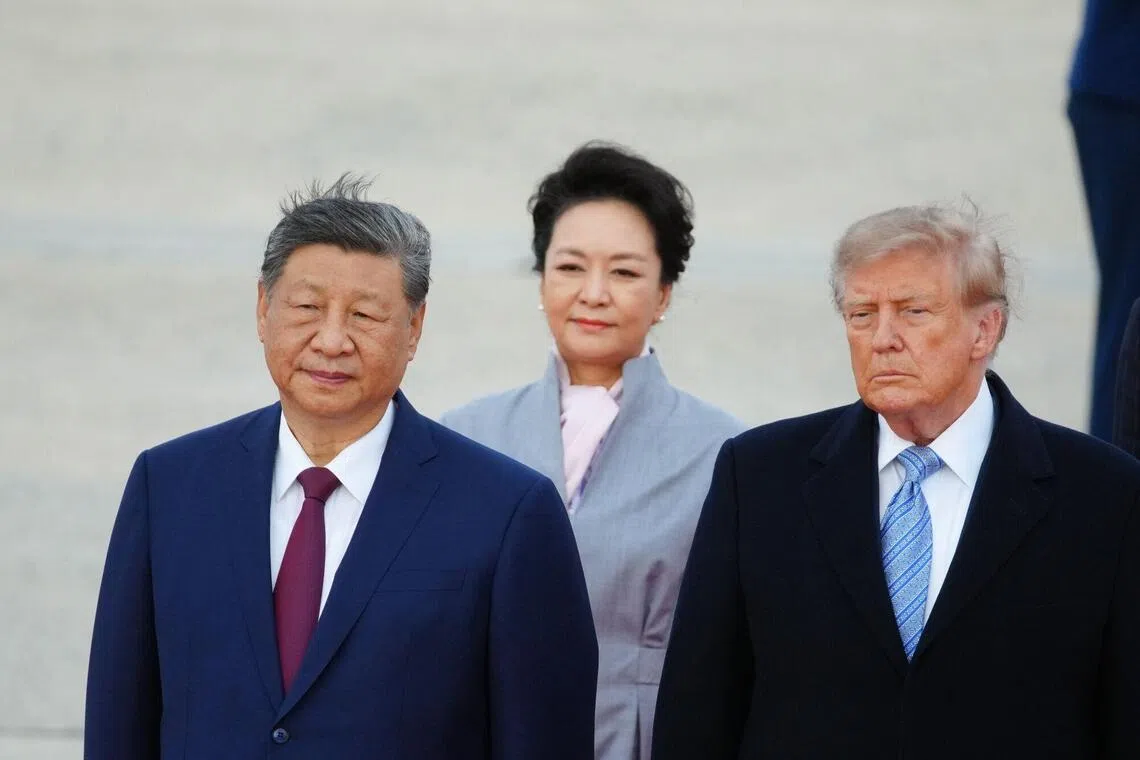
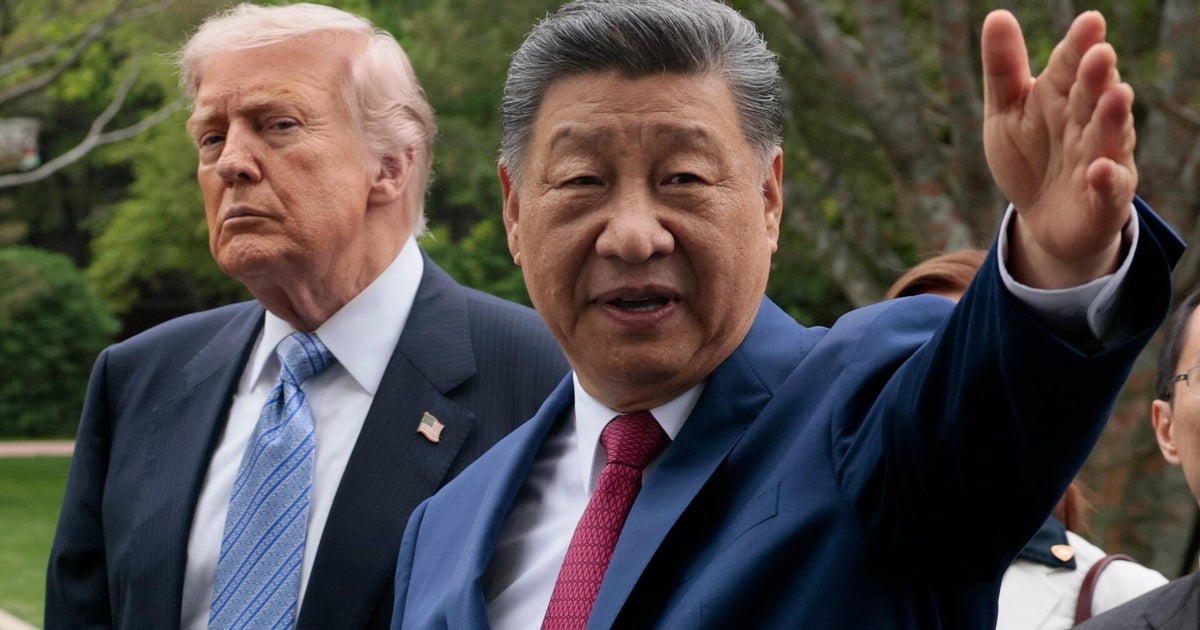
The United States and China have agreed to establish a “communication channel” for artificial intelligence (AI) incidents, the White House said after a summit in Washington, DC.
asserted
House → agree → Washington
US President Donald Trump and Chinese President Xi Jinping discussed matters ranging from AI and trade to the stalled war in Iran during a three-day state visit, and confirmed that they would meet for a third and fourth time this year at international summits in China and the US.
Recommended Stories
list of 3 items- list 1 of 3Trump praises US-China friendship at state dinner with Xi Jinping
- list 2 of 3From ‘cheats’ to ‘great friendship’: How Trump’s rhetoric on China changed
- list 3 of 3The Trump-Xi summit exposes a US disadvantage in the Global South
The White House said on Friday that the nations agreed to establish a “bilateral communication channel” for AI incidents.
asserted
nations → discuss → incidents
The announcement came after a summit short on breakthroughs that was dominated by ceremony, according to Al Jazeera’s Alan Fisher, reporting from the White House.
uncertain
that → come → House
In fact, there was a lot more pomp than progress,” Fisher said.
asserted
Fisher → be → progress
The two sides agreed to extend a trade truce due to expire in November, pushing the deadline to January “to give both sides the chance to talk”.
asserted
sides → agree → chance
Trump said the visit had strengthened his personal rapport with Xi, which he said would benefit the US in the long run.
asserted
he → say → run
“We’ve had a tremendous visit from two spectacular people, and we really enjoyed it, and I think we’ve made tremendous strides,” Trump said.
asserted
Trump → have → strides
“We’ve made great strides, very positive for both countries.”
asserted
We → make → countries
Calling on both nations to pursue “a healthy competition” that acts as “a race of catching up with one another, not a wrestle in which one either wins or loses”, President Xi stated that as “leading nations in artificial intelligence”, the two powers share “the capability and responsibility to develop and manage AI for good”.
asserted
powers → call → good
Fisher reported that Xi used the summit to press specific aims, seeking assurance that China would be “treated more fairly” in future dealings and laying out guidelines he wants to shape upcoming talks between the two countries.
asserted
he → report → countries
Xinhua reported Xi also urged Trump to “handle the Taiwan issue prudently” along with discussions on the Middle East, Ukraine, and the Korean Peninsula.
asserted
Xi → report → East
On trade, the White House said China agreed to import at least 10 million metric tonnes of US coal in 2027-2028, with more favourable tariffs on $30bn of “non-sensitive goods” each way.
asserted
China → say → goods
Two pandas are also set to arrive at a US zoo.
asserted
pandas → set → zoo
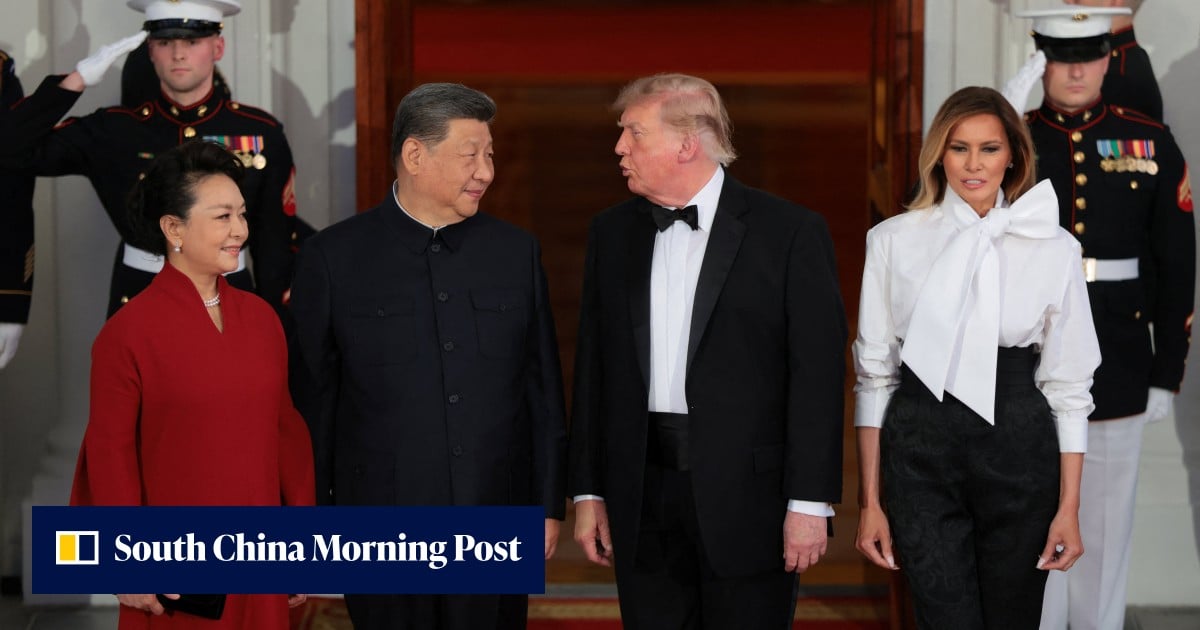
The visit featured a state banquet, a military parade and a tour of the National Archives, where the leaders viewed the Declaration of Independence and Constitution.
asserted
leaders → feature → Independence
Trump noted the US “goes 250 years; theirs goes 6,000 years”.
asserted
theirs → note → ?
The two leaders will meet again at the APEC summit in Shenzhen in November and the G20 in Miami in December.
asserted
leaders → meet → December
Fisher said the continuation of dialogue was “perhaps the biggest deliverable for both sides”.
asserted
continuation → say → sides
 The Aporia