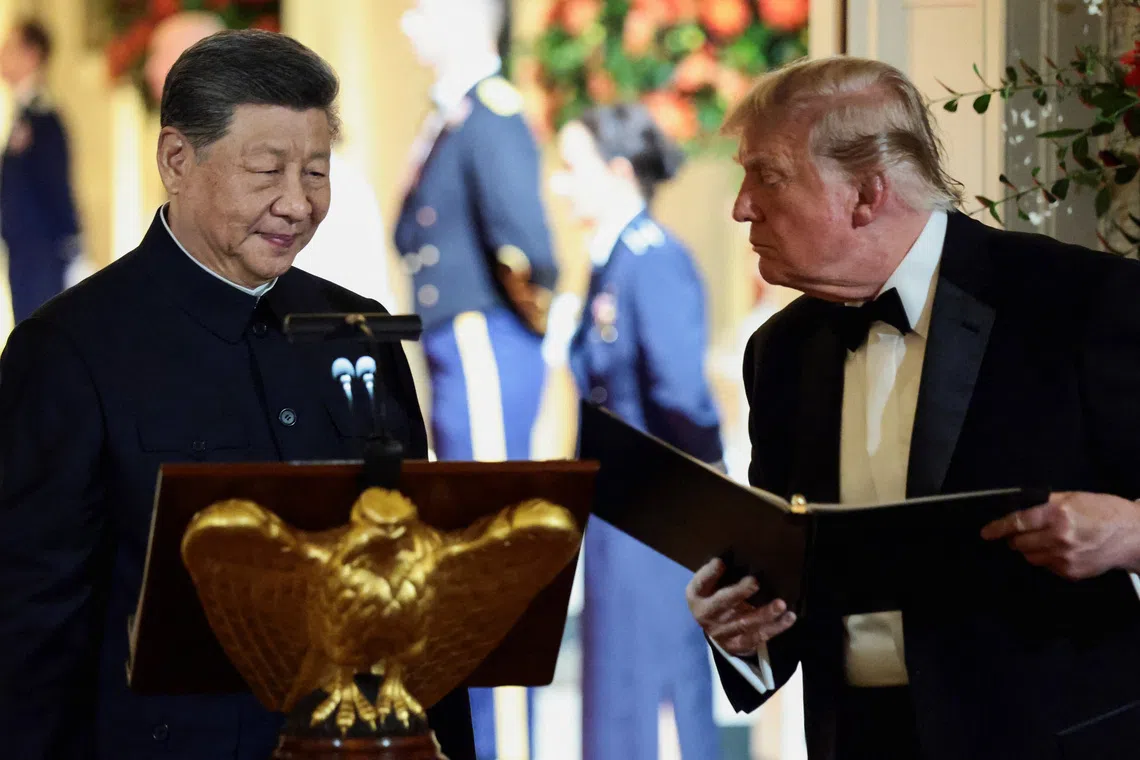
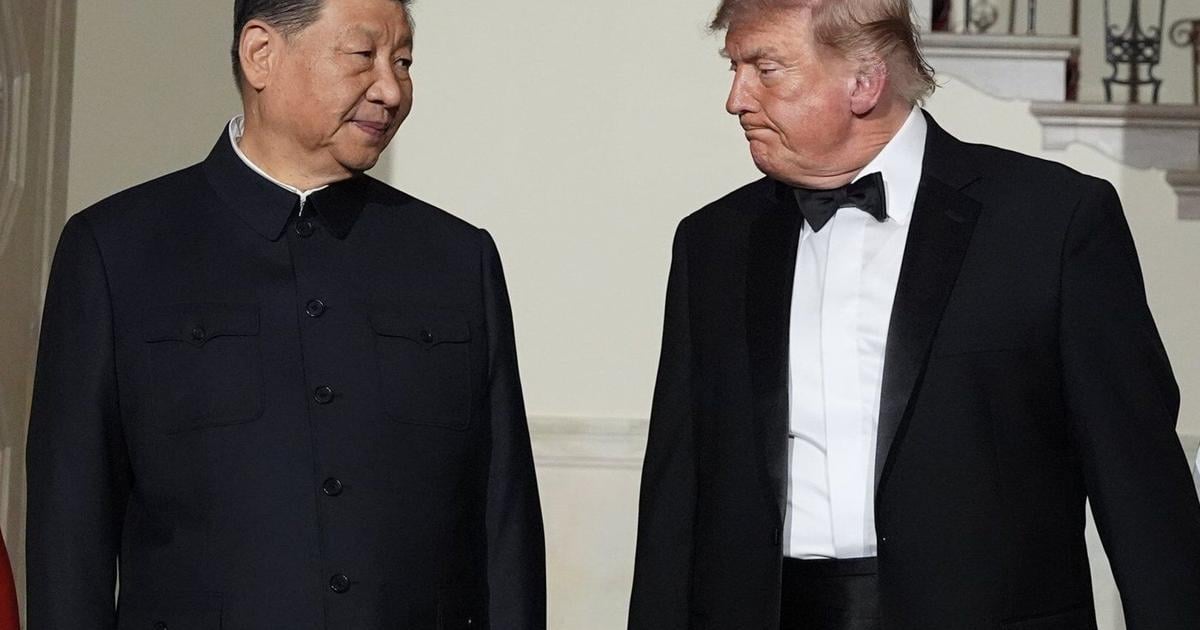
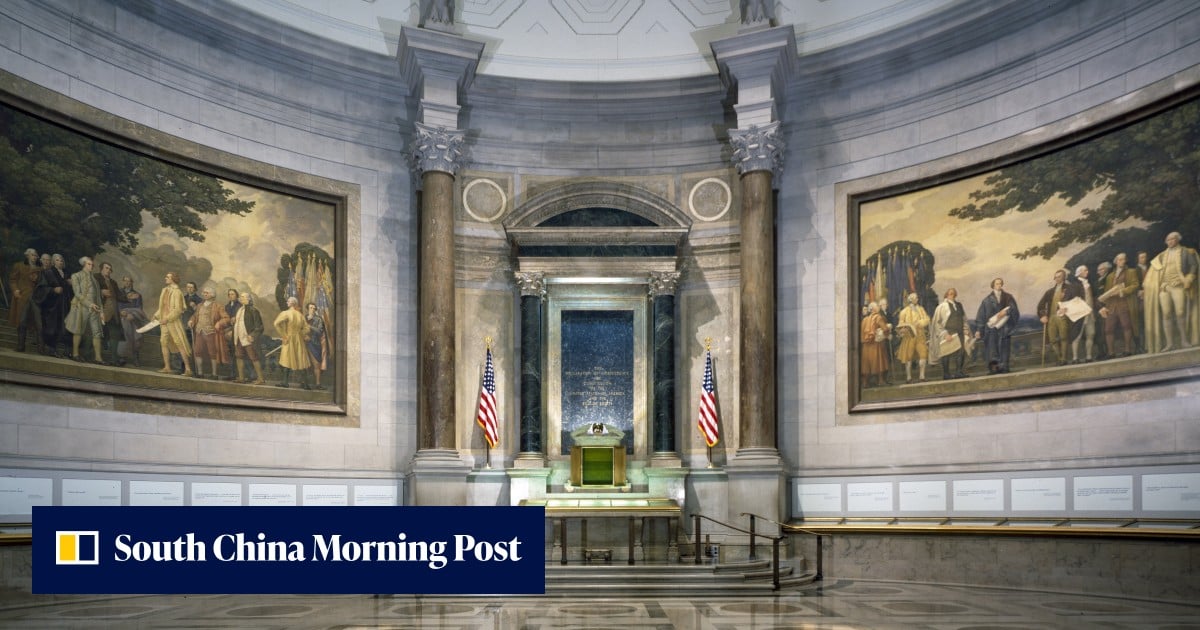
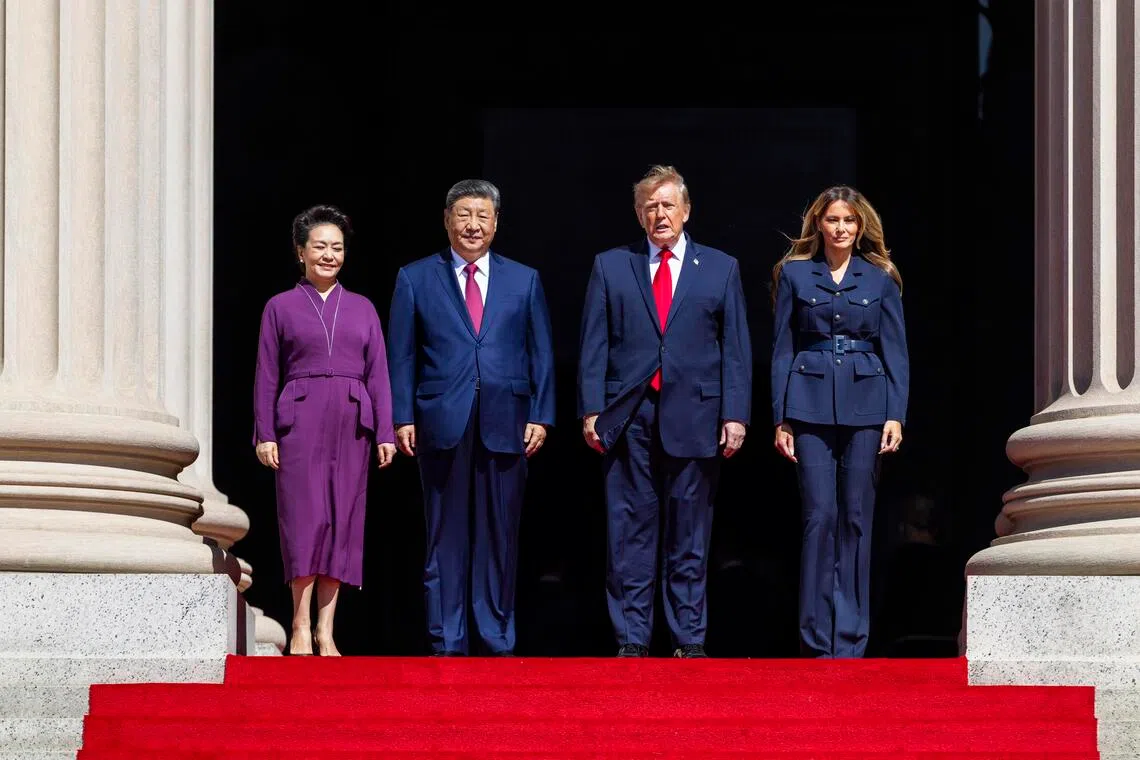
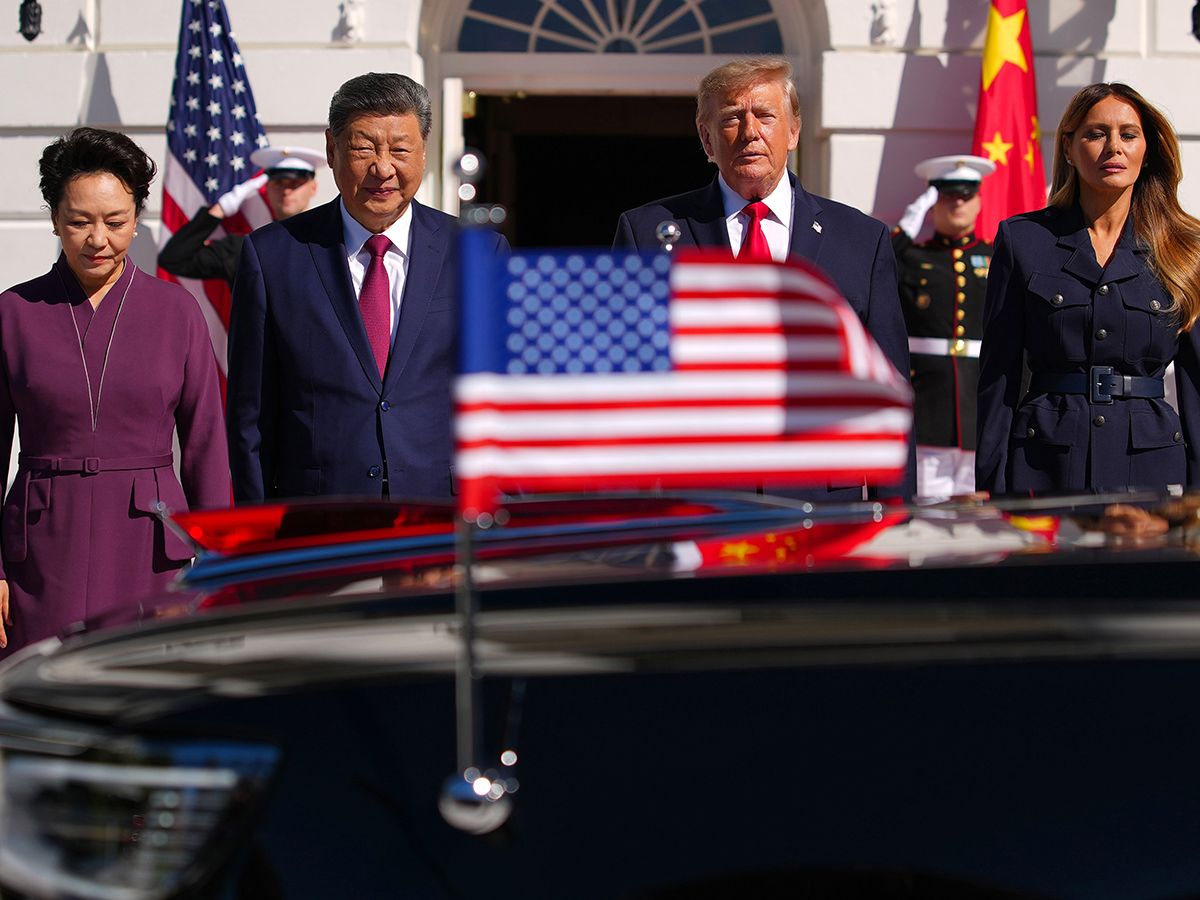
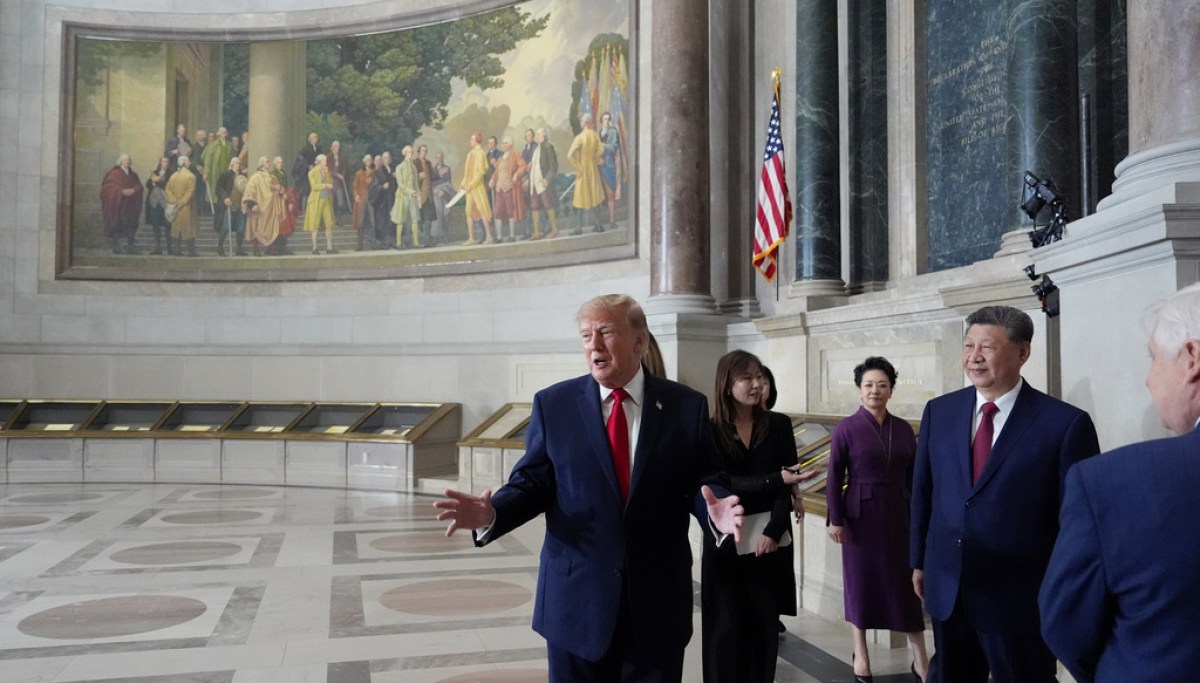
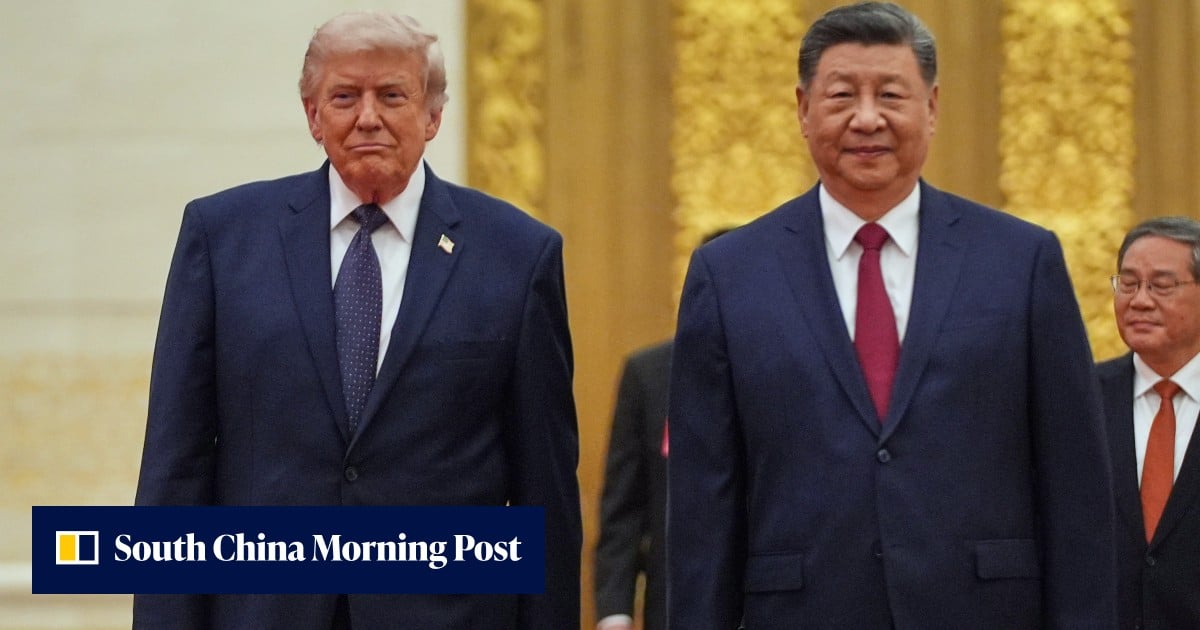
US President Donald Trump will conclude his summit with Chinese leader Xi Jinping by taking him to the US National Archives, where they will view historical documents and artifacts that highlight the long-standing relationship between the two countries. During Thursday's state dinner at the White House, both leaders discussed progress in bilateral trade mechanisms but did not announce significant breakthroughs or agreements. Analysts suggest that China may be interested in records related to the U.S. switch of recognition from Taiwan to mainland China in 1979.
Written locally by qwen2.5:14b on 2026-09-25,
using this article's own text rather than the other coverage of the
same event (that is the story summary below).
Story summary
Before the Xi-Trump summit last week, analysts expected soybeans to be included in tariff-reduced arrangements between China and the U.S., but China excluded them from a tariff-reduction list released on September 28, 2026, despite cutting tariffs on other agricultural goods like corn, wheat, meat, and dairy. This decision disappointed American farmers, such as John Bartman, an Illinois-based soybean farmer who called it "a missed opportunity." U.S. soybeans still face an additional tariff of 10%, which traders say is too high for private crushers to absorb, even as Chinese state buyers have stepped up purchases. Despite this exclusion, both sides agreed to form a trade council to discuss reciprocal tariff cuts on $30 billion worth of products and stabilize economic ties.
Written for “US-China Tariff Cuts Deal” on 2026-10-05,
grounded in this article and the 283 other(s) covering the same event.
Trump to wrap up Xi summit with a tour of US archives
WASHINGTON, Sept 25 -
asserted
Trump → wrap → archives
US President Donald Trump will follow up his summit with Xi Jinping by taking the Chinese leader on Friday to the US National Archives, where they are expected to stress views about the history and direction of ties between their countries.
asserted
they → follow → countries
Thursday's lavish state summit at the White House appeared heavy on symbolism but light on substance, with no sign of major breakthroughs between the world's biggest economies.
asserted
summit → appear → economies
Still, Trump highlighted progress under a bilateral trade mechanism, citing what he described as increased market access for US farmers and ranchers, while both leaders identified artificial intelligence as an area for cooperation.
asserted
leaders → highlight → cooperation
Trump said in remarks welcoming Xi they would see some of the greatest treasures of US history at the National Archives, including the Declaration of Independence and the US Constitution and the Bill of Rights.
They would also see "artifacts testifying to the long and cherished relationship" between China and the United States and their "cultural exchanges," he said.
asserted
he → say → China
"Just as our ancestors reached across the ocean centuries ago to trade, to learn, and to build a better world, our two countries do really the same thing, and we're very proud of it and the relationship," Trump said.
asserted
Trump → reach → it
China has not commented on the visit to the archives, but analysts say Xi may be keen to see records relating to the US switch of recognition to communist China from Taiwan in 1979.
uncertain
Xi → comment → 1979
CHINA PRESSES ON TAIWAN
China claims democratically governed Taiwan as its own and Xi has long sought to persuade Trump to state publicly that the United States opposes Taiwan's independence, rather than saying only that it does not support independence, which has been Washington's formulation for decades.
uncertain
which → press → decades
He is also keen to get the US to halt arms sales to the island.
asserted
US → get → island
As expected, Xi pressed Trump on Taiwan on Thursday, saying he hoped the United States would "handle the Taiwan question with prudence."
asserted
States → expect → prudence
China's state news agency also reported that Xi "hopes the US side will adhere to the correct position of opposing 'Taiwan independence'."
asserted
side → report → independence
While the United States, like most countries, has no formal diplomatic relations with Taipei, Washington is its most important international backer and is bound by US law to provide it with the means to defend itself.
asserted
Washington → have → itself
America's Asian allies will watch closely to see how Trump talks about Taiwan following Xi's visit.
asserted
Trump → watch → visit
After his May summit with Xi, Trump, whose administration in December approved an $11 billion arms sale package to Taiwan, said he was holding a second package, worth some $14 billion, in abeyance and described it as a "very good negotiating chip."
Craig Singleton of the Foundation for Defense of Democracies think tank said Beijing may believe it has established a new baseline on Taiwan with Trump.
uncertain
it → approve → Trump
He said Xi's use of the word "adhere" was revealing because "it implies Beijing believes Washington is already behaving in ways it wants."
asserted
it → say → ways
"In the context of the current standdown on Taiwan arms sales, China may increasingly view that restraint as a new baseline rather than a temporary pause," he said.
uncertain
he → view → baseline
"Beijing's objective is to get Trump to absorb Chinese red lines into his own definition of a stable relationship."
asserted
Trump → get → relationship
On Thursday, Senate Democrats criticized the summit, saying Trump had failed to secure meaningful concessions from Beijing on trade, security, artificial intelligence or human rights.
asserted
Trump → criticize → trade
They also criticized Trump for failing to publicly address China's military pressure on Taiwan and called for the immediate delivery of approved military aid and arms sales to the island.
asserted
They → criticize → island
 The Aporia