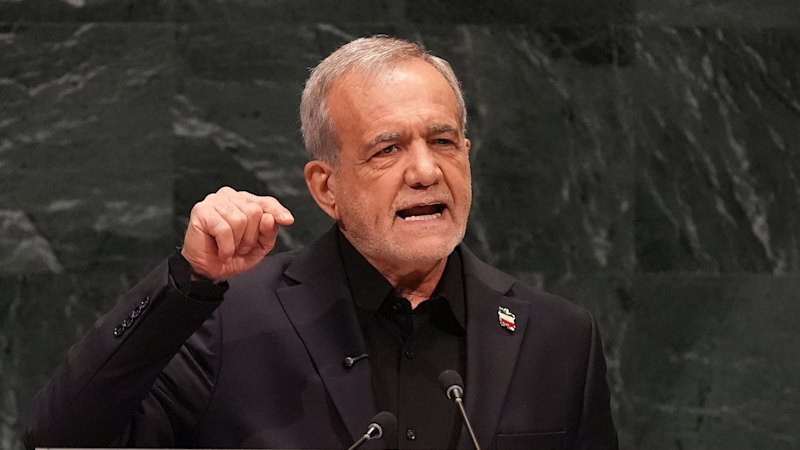
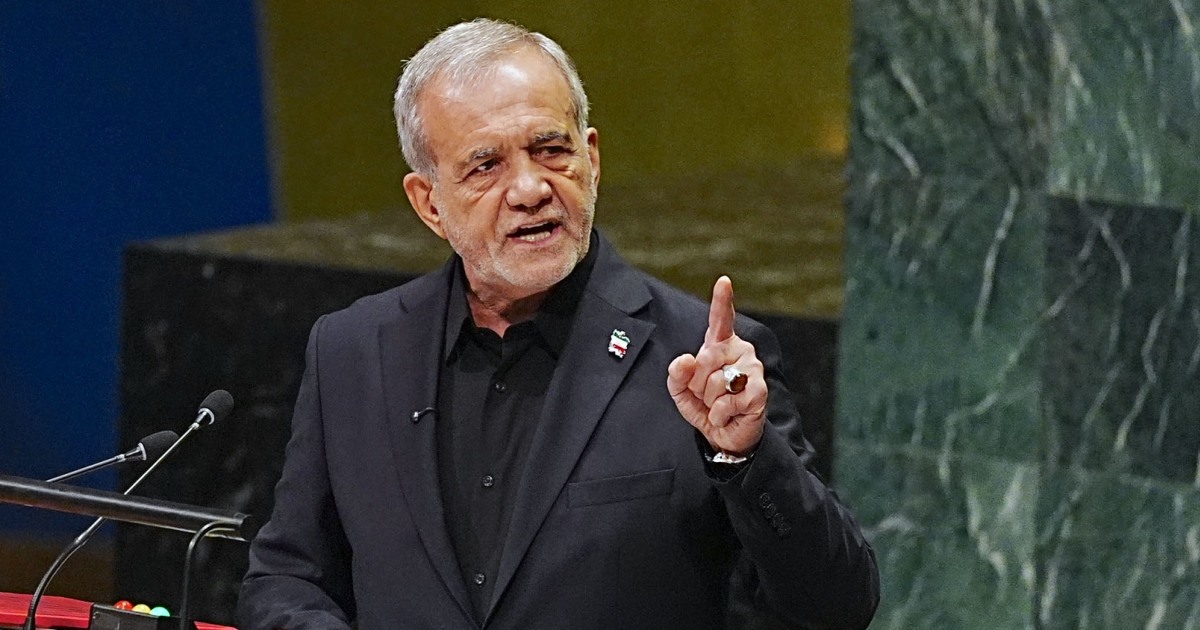
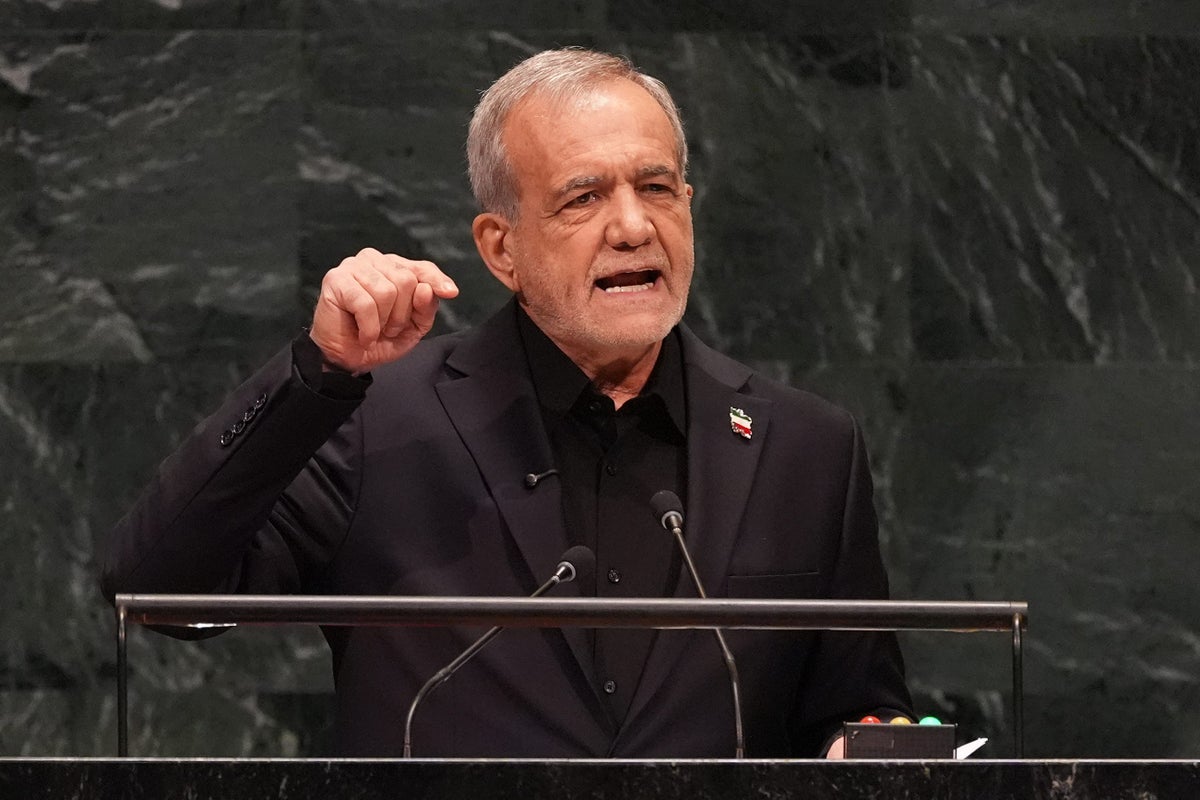
Iran’s President Masoud Pezeshkian criticized the United States and Israel during a speech at the UN General Assembly, accusing them of terrorism and disregarding international law. This came after U.S. President Donald Trump threatened to “annihilate” Iran in his own address. Pezeshkian defended Iran's actions as defensive and not aggressive, highlighting an attack on a school that killed 177 civilians, including 120 children, which the UN report suggested involved U.S.-provided weapons.
Written locally by qwen2.5:14b on 2026-09-24,
using this article's own text rather than the other coverage of the
same event (that is the story summary below).
Story summary
US President Donald Trump met with Chinese President Xi Jinping, where Xi pressed Trump to adopt Beijing's stance against Taiwan independence, which Taiwan rejected outright. Meanwhile, Taiwan is crucial for global tech and economy due to its leading semiconductor production; TSMC alone produces the majority of advanced chips that power smartphones, AI systems, and more. As Stanford Hoover fellow Eyck Freymann noted, economic disruption from a conflict over Taiwan would be severe.
In unrelated developments, Iranian President Masoud Pezeshkian met with US media at the UN General Assembly, where he denied Iran's nuclear ambitions while offering to dilute its enriched uranium and allow inspections under international law. He also blamed Washington for ongoing conflicts in the Middle East. The International Atomic Energy Agency (IAEA) estimates that Iran has over 440 kilograms of uranium enriched up to 60%, raising concerns despite Pezeshkian's denials.
Taiwan's representative, Ambassador Alexander Yui, clarified during an interview on CBS’s "Face the Nation" that while Taiwan was discussed between Trump and Xi, it wasn't a major focus. He emphasized there has been no change in US policy towards Taiwan amid recent tensions with China.
Written for “Taiwan Iran Us Relations Midterms” on 2026-10-05,
grounded in this article and the 386 other(s) covering the same event.
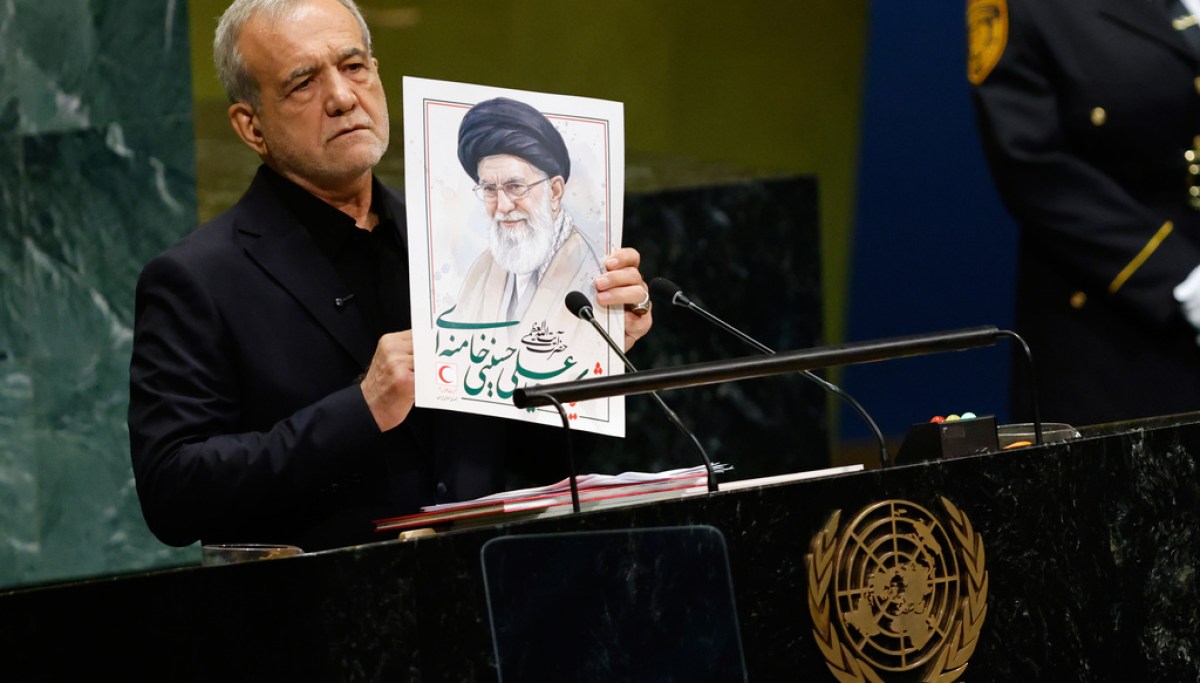
Iran’s president Masoud Pezeshkian launched a defiant attack on the United States and Israel at the UN, the day after President Donald Trump threatened to “annihilate” the Islamic Republic.
asserted
Trump → launch → Republic
The US leader warned he could send Iran to “hell” during his combative address to the United Nations General Assembly Tuesday, seven months after the war he started alongside Israel’s Benjamin Netanyahu.
uncertain
he → warn → Netanyahu
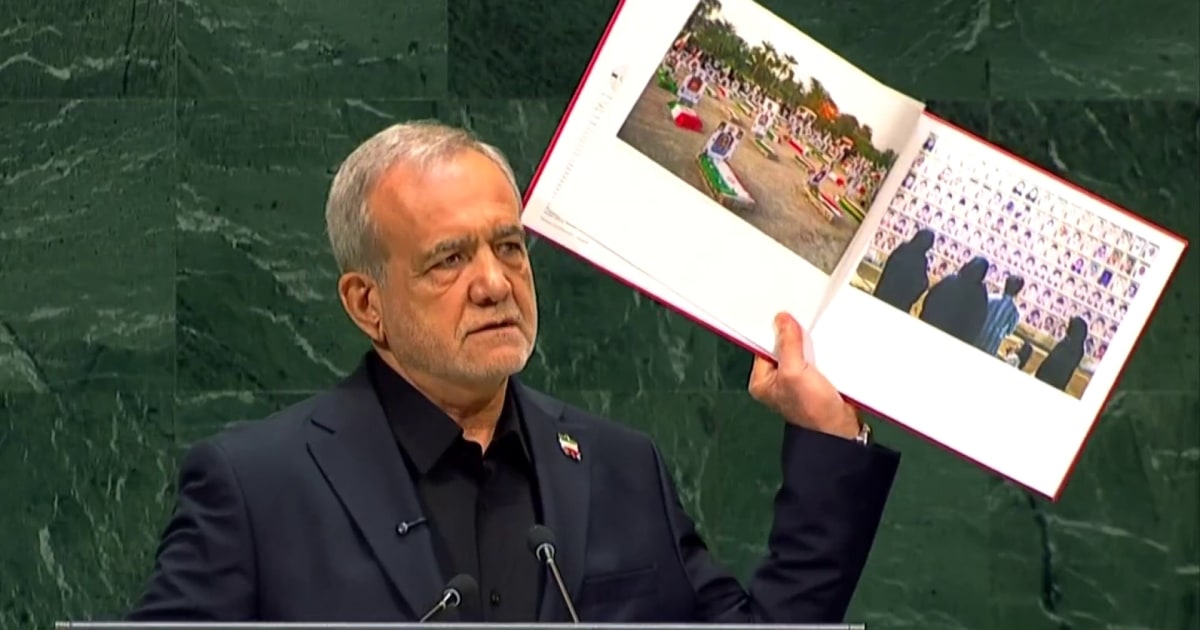
In his address to the gathering in New York on Wednesday, Pezeshkian insisted that Iran would never surrender and held up images of children killed in a strike on a primary school in Minab.
asserted
Iran → insist → Minab
An American delegate walked out of the meeting in response to the comments.
asserted
delegate → walk → comments
The Iranian delegation had done the same during Trump’s comments on Tuesday.
asserted
delegation → do → Tuesday
“They have tested the strength and the steadfastness of Iran, and they have learned that Iran cannot be made to surrender,” Pezeshkian said, while praising the country’s “commitment to the negotiating table”.
asserted
Pezeshkian → test → table
“They impose the war on us but we have proven that we’re not afraid of fighting, of war, that is defensive in nature, and we will stand in defence of our beloved Iran, our homeland, until our last breath.”
asserted
we → impose → breath
Pezeshkian appeared to touch on the theme of the 81st General Assembly, which has focused on “restoring trust” in the UN, and referred to double standards, accusing the US of having no respect for international law.
asserted
which → appear → law
Israel kills, but Iran is subject to sanctions,” he said.
asserted
he → kill → sanctions
“The US president described us as terrorists.
asserted
president → describe → terrorists
The Iranian leader also highlighted the Minab primary school strikes that killed 177 civilians including 120 children and said “children perished under bombs with weapons used by the US and Israel”.
asserted
children → highlight → US
A report by the UN recently found that the US was likely responsibly for the attack, in what may have been a war crime.
uncertain
what → find → attack
Pezeshkian said Iran has only operated to protect itself, saying the country “only defended ourselves - we are not terrorists”.
asserted
we → say → ourselves
He accused the US of “bullying” and said that the “resistance of the Iranian people will only increase” in the face of sanctions and pressure.
asserted
resistance → accuse → sanctions
“We will never bow our head or bend at the knee,” he continued.
asserted
he → bow → knee
“Iran must be understood by Mr Trump and those who seek to bully us; that we are ready for dialogue and diplomacy and negotiations - without accepting the language of force.”
asserted
we → understand → force
US secretary of state Marco Rubio later called the Islamic Republic a “malign” force in comments on the sidelines of the meeting on Wednesday.
asserted
Rubio → call → Wednesday
Earlier in the week Rubio had said that Trump is “open” to dialogue with the Iranians after weeks of stalled talks despite reports that no negotiations had been scheduled.
asserted
negotiations → say → reports
Trump said on Tuesday that his special envoy Steve Witkoff and son-in-law Jared Kushner had met with Iranian mediators.
asserted
envoy → say → mediators
“I think there's a lot of momentum for them to make a deal,” he said after the speech on Tuesday despite its hostile content.
asserted
he → think → content
“It's what we're hearing from everybody.”
asserted
we → hear → everybody
Iranian foreign ministry spokesperson Esmail Baghaei said Tehran had engaged with the US through a Qatari mediator and had communicated its conditions including an end to all US “acts of aggression”.
asserted
Tehran → say → aggression
They
Diplomatic contact has sparked backlash across Tehran in hardline circles with Iranian sources telling Reuters that the delegation had been ordered not to meet with the Americans face-to-face.
asserted
delegation → spark → face
Some Iranian state media initially reported that Iranian foreign minister Abbas Araghchi and Witkoff had met, but Iranian officials told Reuters that this was not face-to-face.
asserted
this → report → face
Washington said it will impose secondary sanctions against countries that allow Iranian flights into their territory after Wednesday.
asserted
that → say → Wednesday
But Iran appeared to threaten neighbours in response with Mohsen Rezaei, secretary of Iran's Supreme National Security Council, telling state TV that Tehran would ensure neighbouring countries' airports could not function if they stop Iranian flights.
uncertain
they → appear → flights
 The Aporia