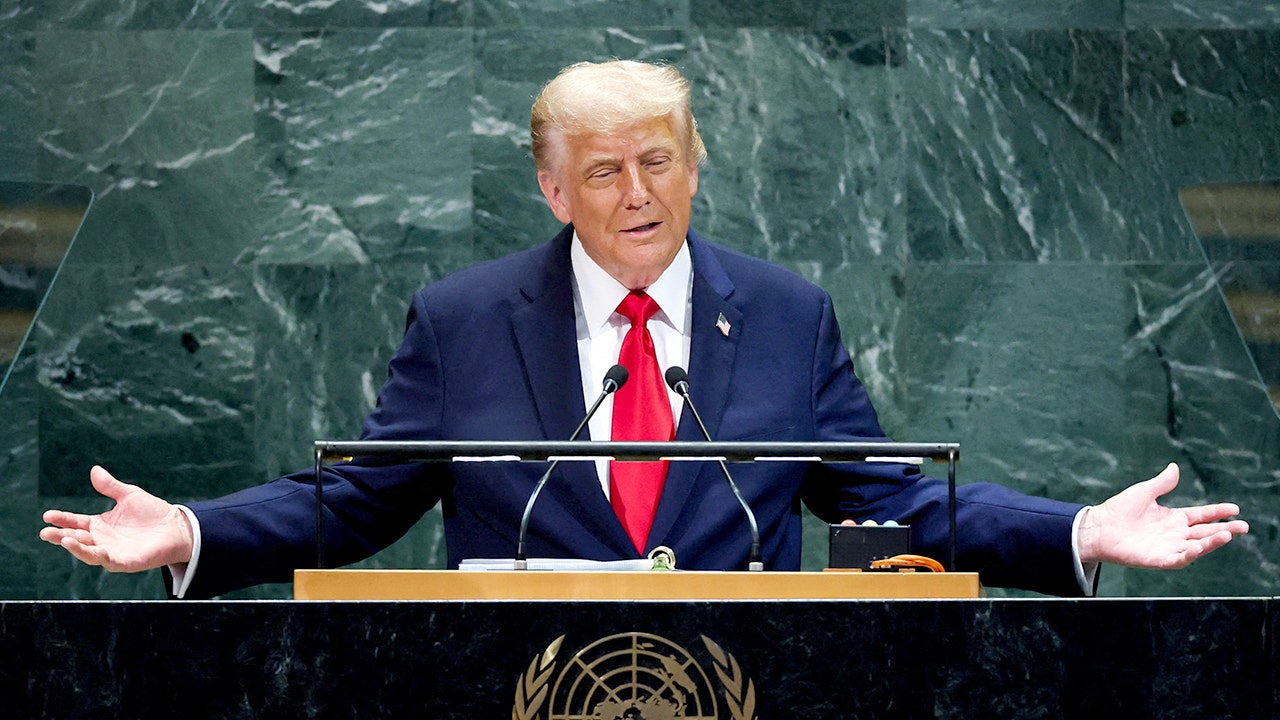
US President Donald Trump announced during a speech at the United Nations General Assembly that artificial intelligence should be renamed as “super intelligence” or SI. Following a poll on his Truth Social platform where followers voted on potential names for AI, super intelligence won out. Experts argue that this term is typically used to refer to more advanced and self-improving systems, which makes Trump's rebranding misleading given current technological capabilities. Some of Trump’s aides have already adopted the new terminology, but industry experts doubt its widespread adoption due to the specific connotations associated with “super intelligence.”
Written locally by qwen2.5:14b on 2026-09-23,
using this article's own text rather than the other coverage of the
same event (that is the story summary below).
Story summary
US President Donald Trump met with Chinese President Xi Jinping, where Xi pressed Trump to adopt Beijing's stance against Taiwan independence, which Taiwan rejected outright. Meanwhile, Taiwan is crucial for global tech and economy due to its leading semiconductor production; TSMC alone produces the majority of advanced chips that power smartphones, AI systems, and more. As Stanford Hoover fellow Eyck Freymann noted, economic disruption from a conflict over Taiwan would be severe.
In unrelated developments, Iranian President Masoud Pezeshkian met with US media at the UN General Assembly, where he denied Iran's nuclear ambitions while offering to dilute its enriched uranium and allow inspections under international law. He also blamed Washington for ongoing conflicts in the Middle East. The International Atomic Energy Agency (IAEA) estimates that Iran has over 440 kilograms of uranium enriched up to 60%, raising concerns despite Pezeshkian's denials.
Taiwan's representative, Ambassador Alexander Yui, clarified during an interview on CBS’s "Face the Nation" that while Taiwan was discussed between Trump and Xi, it wasn't a major focus. He emphasized there has been no change in US policy towards Taiwan amid recent tensions with China.
Written for “Taiwan Iran Us Relations Midterms” on 2026-10-05,
grounded in this article and the 386 other(s) covering the same event.
- Published
US President Donald Trump says artificial intelligence (AI) makes the technology "sound fake" and wants it to be called "super intelligence" from now on.
asserted
it → publish → ?
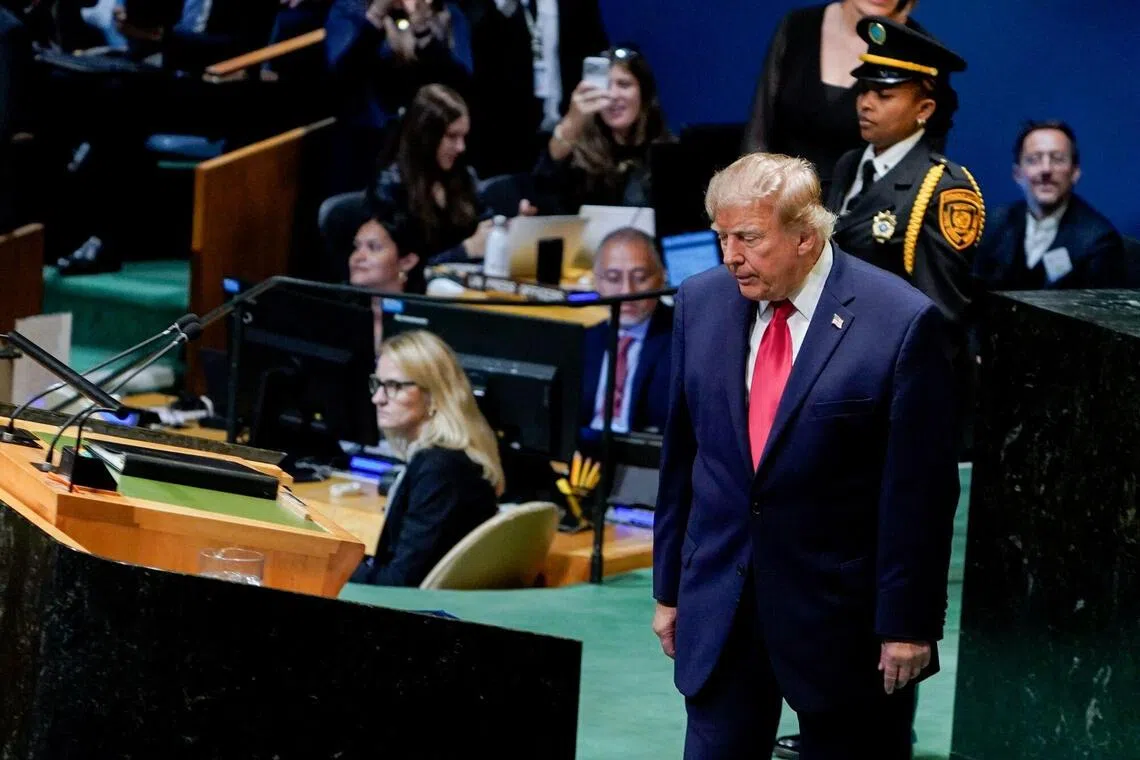
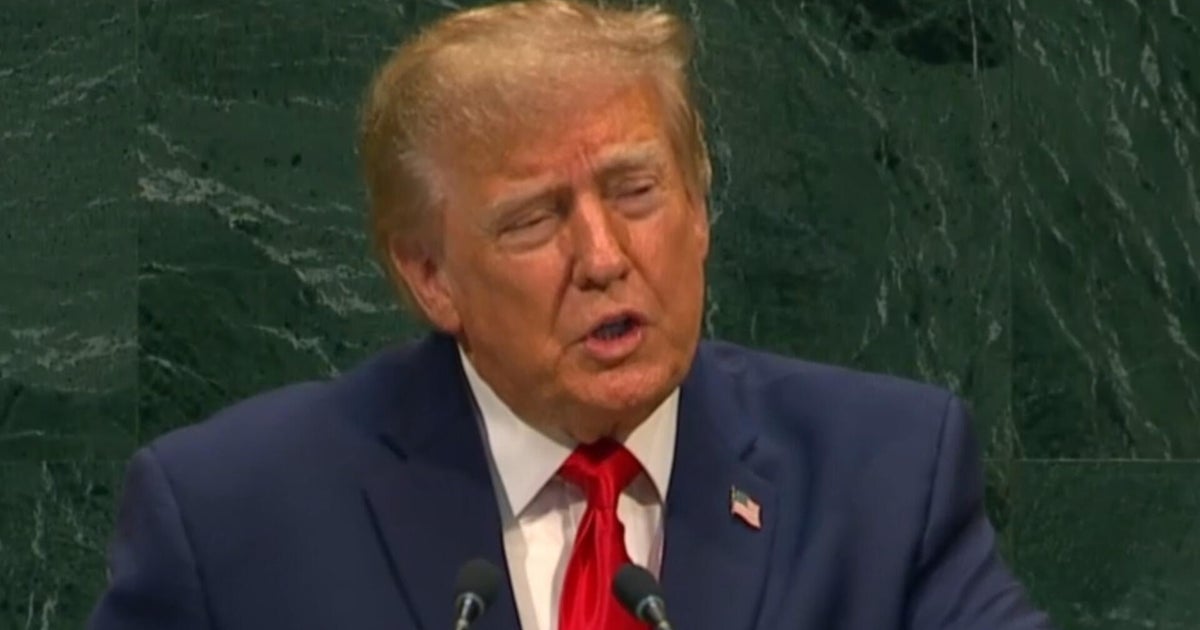
"Welcome to the new world of super intelligence - SI," Trump said during a wide-ranging speech to the United Nations General Assembly in New York on Tuesday.
asserted
Trump → say → Tuesday
While some people close to the president immediately started to use the term, experts have told the BBC that it is unlikely to gain widespread traction in the industry because it is typically used to refer to more advanced systems.
asserted
it → start → systems
The announcement is Trump's latest rebranding move after he had the names of Lake Ontario and the Gulf of Mexico changed on US maps and federal communications.
"From this point forward, all of United States' documents, and hopefully the world's, will be changed to use the more accurate term 'super' as opposed to 'artificial'.
asserted
all → have → term
So its 'super intelligence'," Trump said.
asserted
Trump → say → ?
In the past week, Trump asked his followers on social media to vote on other potential new names for AI including superior intelligence, extreme intelligence and supreme intelligence.
asserted
Trump → ask → intelligence
After a series of polls on his Truth Social platform, super intelligence came out as the winner.
asserted
intelligence → come → winner
The purpose of renaming AI - and whether it will be adopted by the technology industry - is unclear.
uncertain
it → rename → industry
AI refers to computer technology that allows machines to do tasks that usually require human thinking.
asserted
that → refer → thinking
Meanwhile, super intelligence has a specific meaning within the tech community.
asserted
intelligence → have → community
The term is often linked to the author and philosopher Nick Bostrom, who more than a decade ago defined the idea as an "intellect" that is superior to humans in all forms.
asserted
that → link → forms
The rebranding is "misleading", as super intelligence typically refers to a system that has the ability to improve by itself, said digital ethics lecturer Simon Coghlan from The University of Melbourne.
asserted
Coghlan → refer → Melbourne
"I doubt 'SI' will stick, in part because it exaggerates the current capacities of AI," he said.
asserted
he → doubt → AI
"A superintelligent system, if it came about, would be regarded by experts as the most consequential technology ever made," Coghlan said.
asserted
Coghlan → come → technology
National University of Singapore computer science lecturer Ben Leong said: "My guess is that professionals will want to save 'SI' for a higher level of AI, not so much to describe AI today.
asserted
professionals → say → AI
It doesn't feel like it's at that level yet.
asserted
it → feel → level
"
But some in Trump's circle have already started to use the new term.
asserted
some → start → term
"The Super Intelligence (SI) President has spoken!
asserted
President → speak → ?
The United States is and will remain the global leader in SI," US Chief Technology Officer Ethan Klein wrote on social media.
asserted
Klein → remain → media
While Trump's ambassador to the UN Michael Waltz later said: "If you didn't see the president's speech, it's now super intelligence.
asserted
it → say → speech
I think he's absolutely right."
asserted
he → think → ?
However, when asked for his thoughts on the new name, Canada's minister of AI Evan Solomon said: "Canadians are not enthusiastic, at all, about renaming things," in an apparent reference to Trump renaming Lake Ontario.
asserted
Trump → ask → Ontario
It comes as top tech executives and researchers have in recent weeks called on the US government to regulate the industry over fears that AI could endanger humanity - concerns that Trump has dismissed as "a hoax".
uncertain
Trump → come → hoax
He has argued against regulating the technology and said the US cannot afford to give China - its key technology rival - an advantage, adding that whichever side "wins AI, wins".
asserted
side → argue → AI
"We're leading now over China by a lot, and everyone else, and we're going to keep it that way," Trump said.
asserted
Trump → lead → it
The US is not going to "stifle the growth of something that will be bigger than the industrial revolution," he added.
asserted
he → go → revolution
The government will "rein things in" if needed and will lead the sector responsibly, Trump said.
asserted
Trump → rein → sector
Trump is set to meet his Chinese counterpart Xi Jinping this week, with AI expected to be discussed by the leaders of the world's two biggest economies.
asserted
AI → set → economies
 The Aporia