Story summary
US President Donald Trump met with Chinese President Xi Jinping, where Xi pressed Trump to adopt Beijing's stance against Taiwan independence, which Taiwan rejected outright. Meanwhile, Taiwan is crucial for global tech and economy due to its leading semiconductor production; TSMC alone produces the majority of advanced chips that power smartphones, AI systems, and more. As Stanford Hoover fellow Eyck Freymann noted, economic disruption from a conflict over Taiwan would be severe.
In unrelated developments, Iranian President Masoud Pezeshkian met with US media at the UN General Assembly, where he denied Iran's nuclear ambitions while offering to dilute its enriched uranium and allow inspections under international law. He also blamed Washington for ongoing conflicts in the Middle East. The International Atomic Energy Agency (IAEA) estimates that Iran has over 440 kilograms of uranium enriched up to 60%, raising concerns despite Pezeshkian's denials.
Taiwan's representative, Ambassador Alexander Yui, clarified during an interview on CBS’s "Face the Nation" that while Taiwan was discussed between Trump and Xi, it wasn't a major focus. He emphasized there has been no change in US policy towards Taiwan amid recent tensions with China.
Written for “Taiwan Iran Us Relations Midterms” on 2026-10-05,
grounded in this article and the 386 other(s) covering the same event.
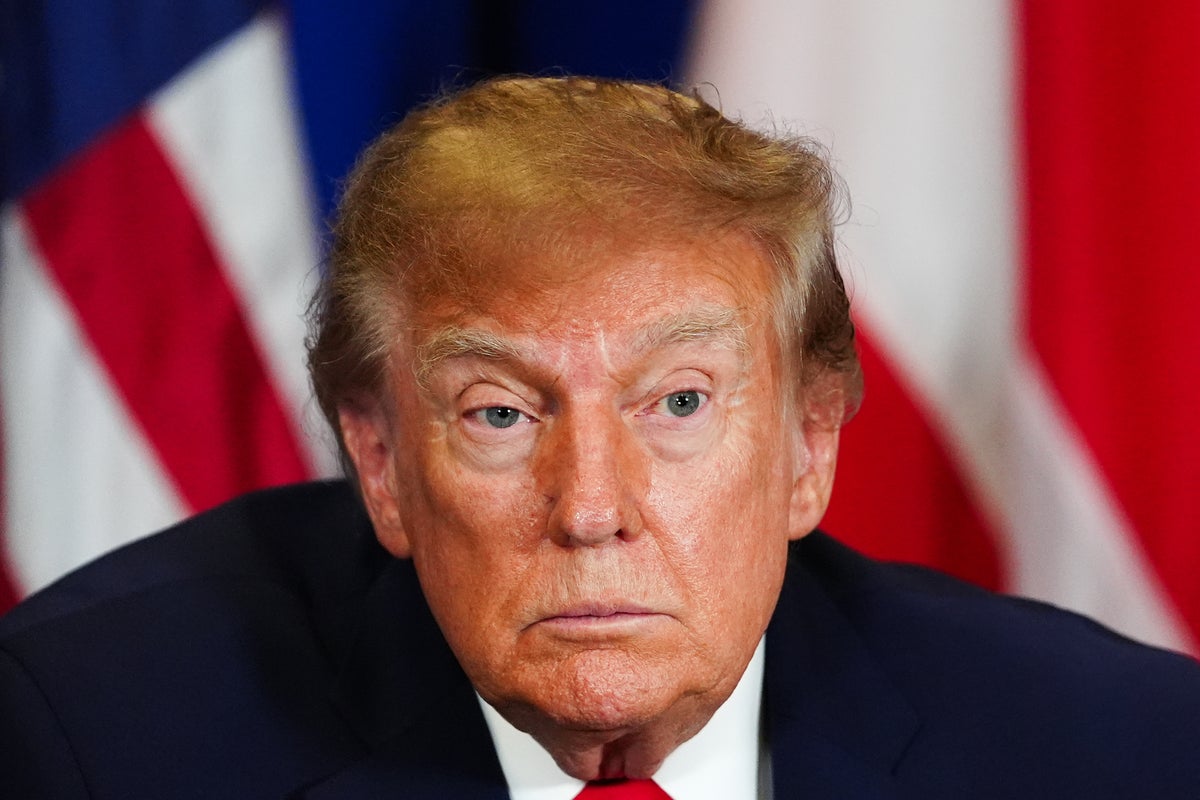
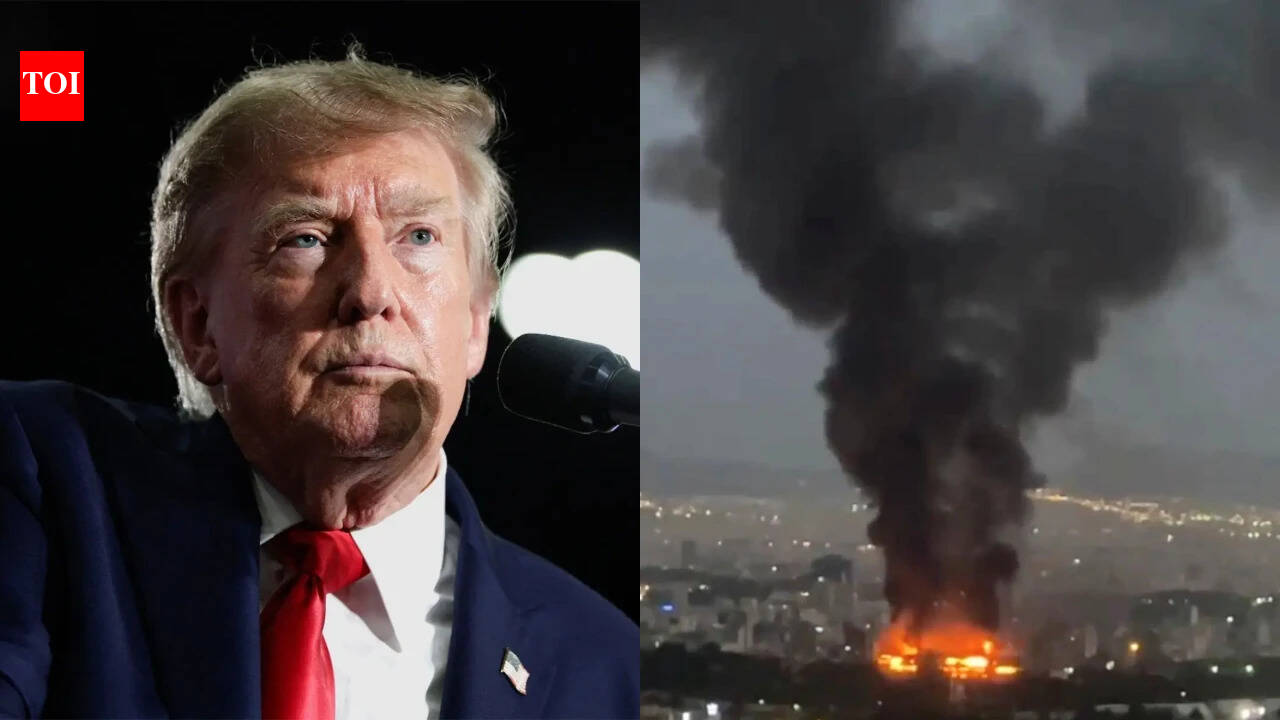
Iran warned Monday it would use “new weapons with new capabilities” if the U.S. launched a fresh assault after President Donald Trump ramped up the rhetoric against Tehran over the weekend.
asserted
Trump → warn → weekend
“If a new aggression takes place, we will definitely change the weapons and geography of the war,” Hossein Mohebbi, a spokesman for Iran’s Islamic Revolutionary Guard Corps said Monday, according to semiofficial Fars news agency.
uncertain
Mohebbi → take → agency
Mohebbi did not provide details on what the new weapons were or which new locations could be hit.
uncertain
locations → provide → details
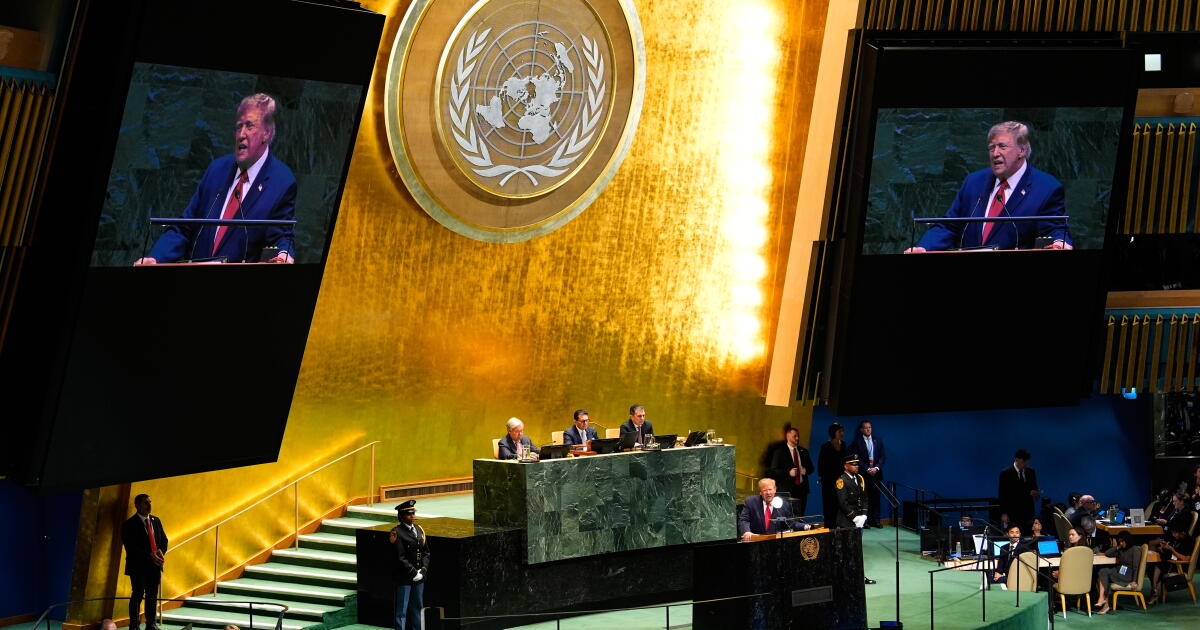
Earlier, Trump said he would “probably” be open to meeting with Iranian counterpart President Masoud Pezeshkian during the United Nations General Assembly this week, Fox News’s chief foreign correspondent Trey Yingst reported Sunday.
asserted
Yingst → say → Assembly
The possibility of a meeting offered some small glimmer of hope for a resolution to the nearly seven-month war with Iran, which has resulted in Iran blocking the key Strait of Hormuz, and its Yemeni allies bombing a crucial east-west oil pipeline and threatening another crucial waterway.
asserted
allies → offer → waterway
Resultant economic shockwaves have hit the U.S. and world economy, driving up oil and diesel prices and fueling inflation.
asserted
shockwaves → hit → inflation
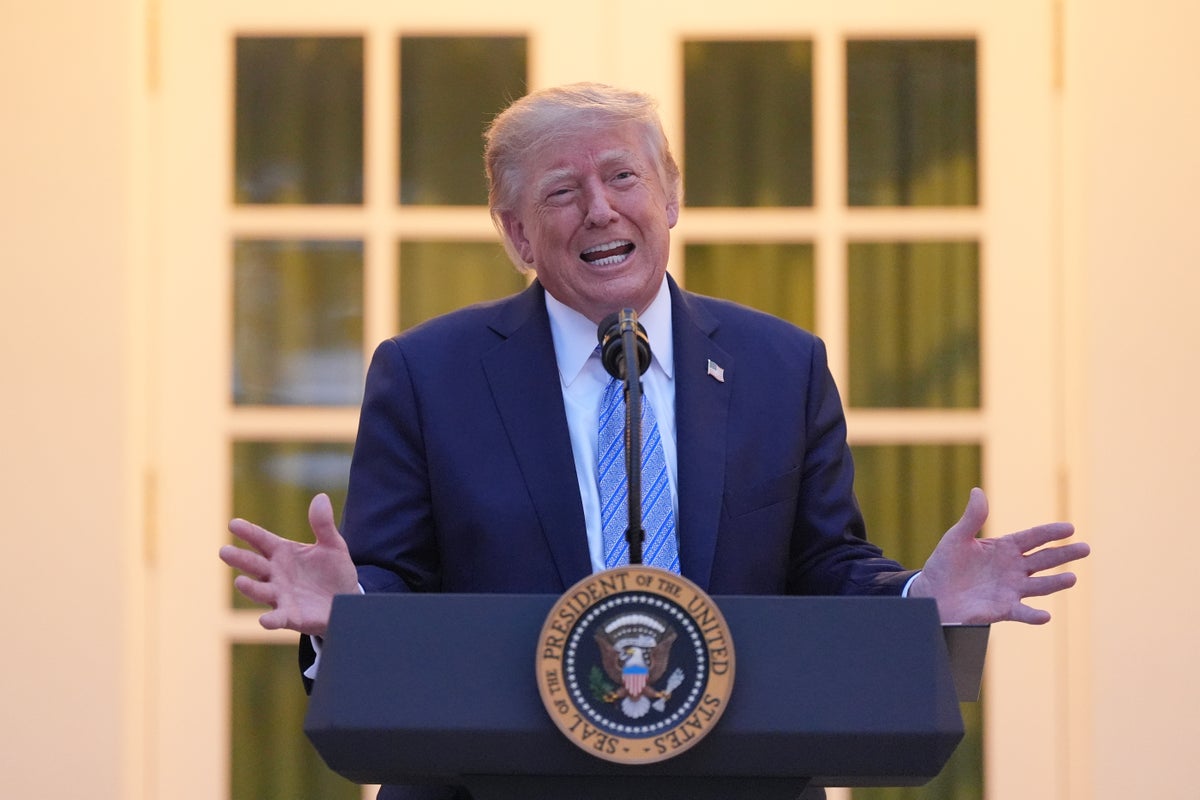
Trump also said he was still deciding how to proceed with the war, describing his options as “wiping Iran out, letting them rot economically, or making a deal.”
“My question is, if and when do I blow the entire nation up,” he said.
asserted
he → say → nation
“They better behave,” Trump warned.
asserted
Trump → behave → ?
The president has previously said he did not believe the Iran war would end until after November’s midterm elections.
asserted
war → say → elections
He has also said oil prices would not come down until then.
asserted
prices → say → ?
Oil prices slid to their lowest point in more than a week on Monday as hopes for renewed talks between the U.S. and Iran grew, while signs of a recovery in Saudi crude exports eased supply concerns, despite continued attacks by the Iran-backed Houthis.
asserted
signs → slide → Houthis
Trump told Fox News that Washington was in constant communication with the Houthis — and that the Yemeni rebel group had agreed not to fight the United States, Yingst reported.
asserted
Yingst → tell → States
Trump has said that the administration had been in touch with the Houthis, but did not say when.
asserted
administration → say → Houthis
“The Houthis called us, and they don’t want to fight with us,” he said earlier this month.
asserted
he → call → us
“They would much prefer not having us involved, and they’re letting most ships go through.”
asserted
ships → prefer → ?
Violence escalated over the weekend, with the Houthis saying they had used missiles and drones to attack “sensitive” sites in Riyadh on Saturday, as well as an Aramco facility in the Red Sea city of Yanbu, a key oil export hub.
asserted
they → escalate → Yanbu
Meanwhile, fighting flared in southwest Yemen as the rebel group made gains against Saudi-backed forces.
asserted
group → flare → forces
The New York Times reported Monday that the president had considered, but ultimately decided against on Sunday joining Saudi Arabia in joint strikes against the Houthis in Yemen.
asserted
president → report → Yemen
NBC News was not immediately able to independently confirm the newspaper’s reporting.
asserted
News → confirm → reporting
The White House did not immediately respond to a request for comment.
asserted
House → respond → comment
“This is a really fluid situation,” Adam Baron, a fellow at New America, a think tank based in Washington, D.C., who follows Yemen and the wider Gulf region, said Monday.
asserted
who → base → Yemen
He cautioned that when it comes to Trump he would not “rule out anything” when it comes to Trump’s stance on whether to help Saudi Arabia in its fight against the Houthis.
asserted
it → caution → Houthis
Shipping data showed 17 commodity vessels transited the Strait of Hormuz over the weekend, down from 37 a week earlier, though Middle Eastern producers continue to export oil on tankers with their transponders off, Reuters reported.
asserted
Reuters → show → transponders
A total of 22 tankers, mainly Very Large Crude Carriers, or VLCCs, exited Hormuz in the week of September 13, with Saudi Arabia and Iraq each accounting for 43% of the volume, the outlet reported, citing data from tracking group Kpler, which maintains the MarineTraffic website.
Meanwhile, at least 51 vessels made the crossing along the Bab el-Mandeb Strait, with 33 vessels exiting the waterway over the weekend as the Houthis tightened their grip over the strait, the outlet reported.
asserted
outlet → exit → strait
Yemen’s Ministry of Health and Environment accused Saudi Arabia of launching airstrikes targeting telecommunications towers in the Khabb wa ash-Sha’af district of Al-Jawf Governorate on Sunday that killed four telecommunications workers and injured three others.
asserted
that → accuse → others
“Targeting essential service infrastructure, including telecommunications towers, constitutes a flagrant violation of international and humanitarian laws,” the ministry said in a post on Telegram.
asserted
ministry → target → Telegram
“It reveals the aggressor’s determination to disrupt basic services and exacerbate the suffering of the Yemeni people,” it said.
asserted
it → reveal → people
 The Aporia