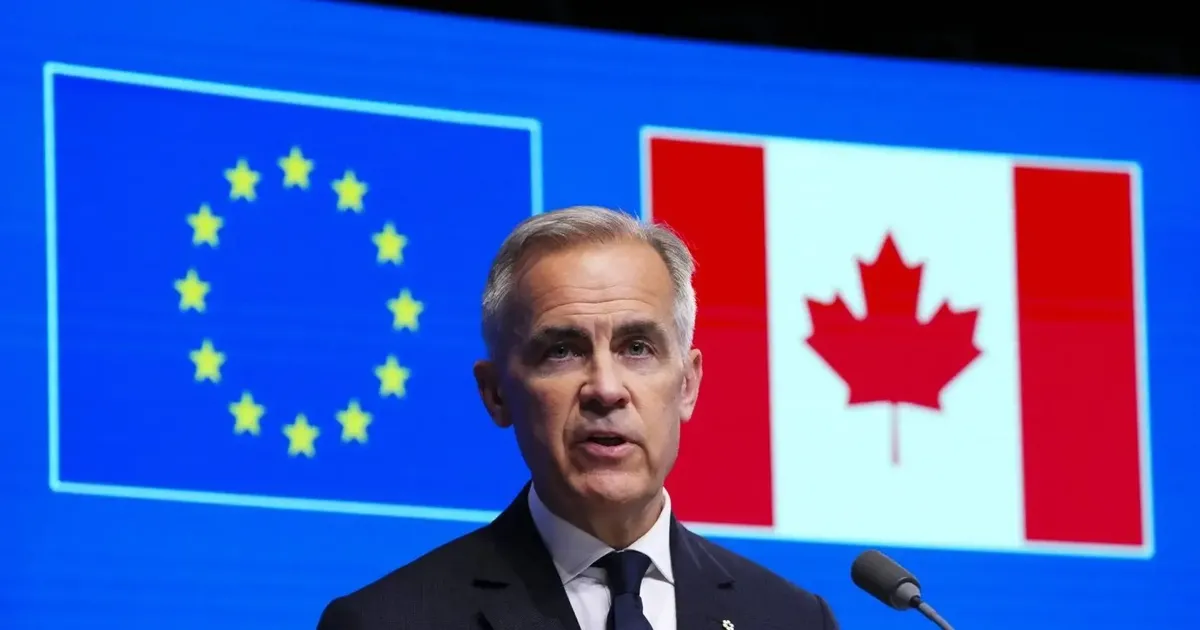
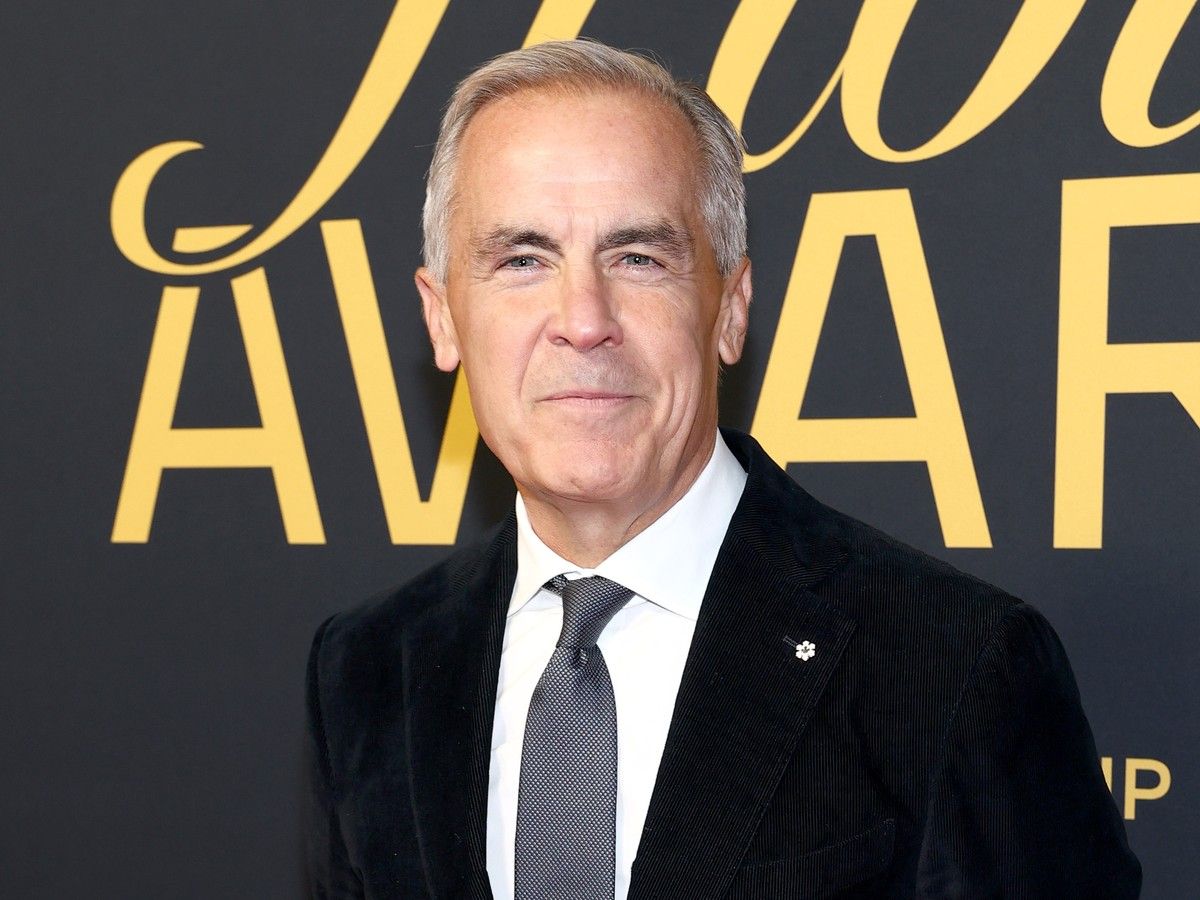
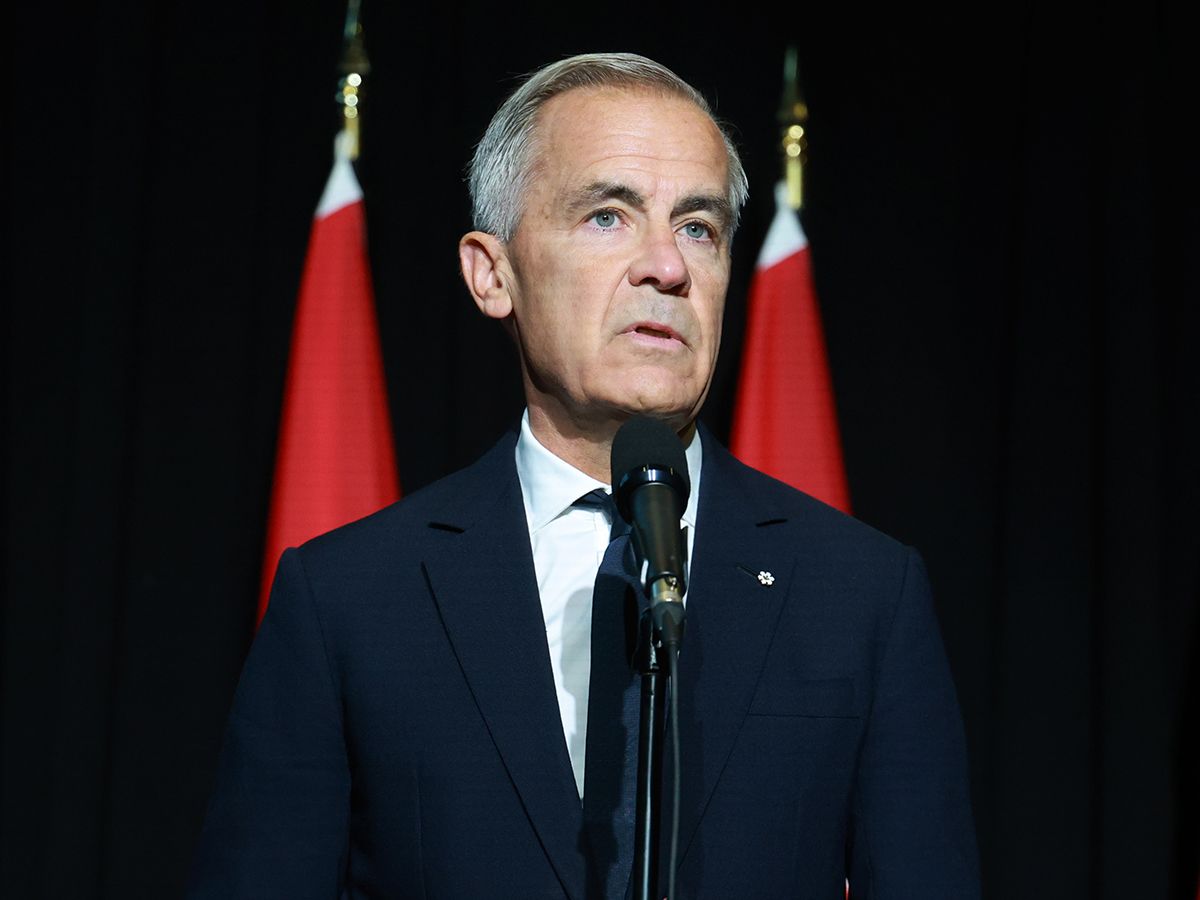
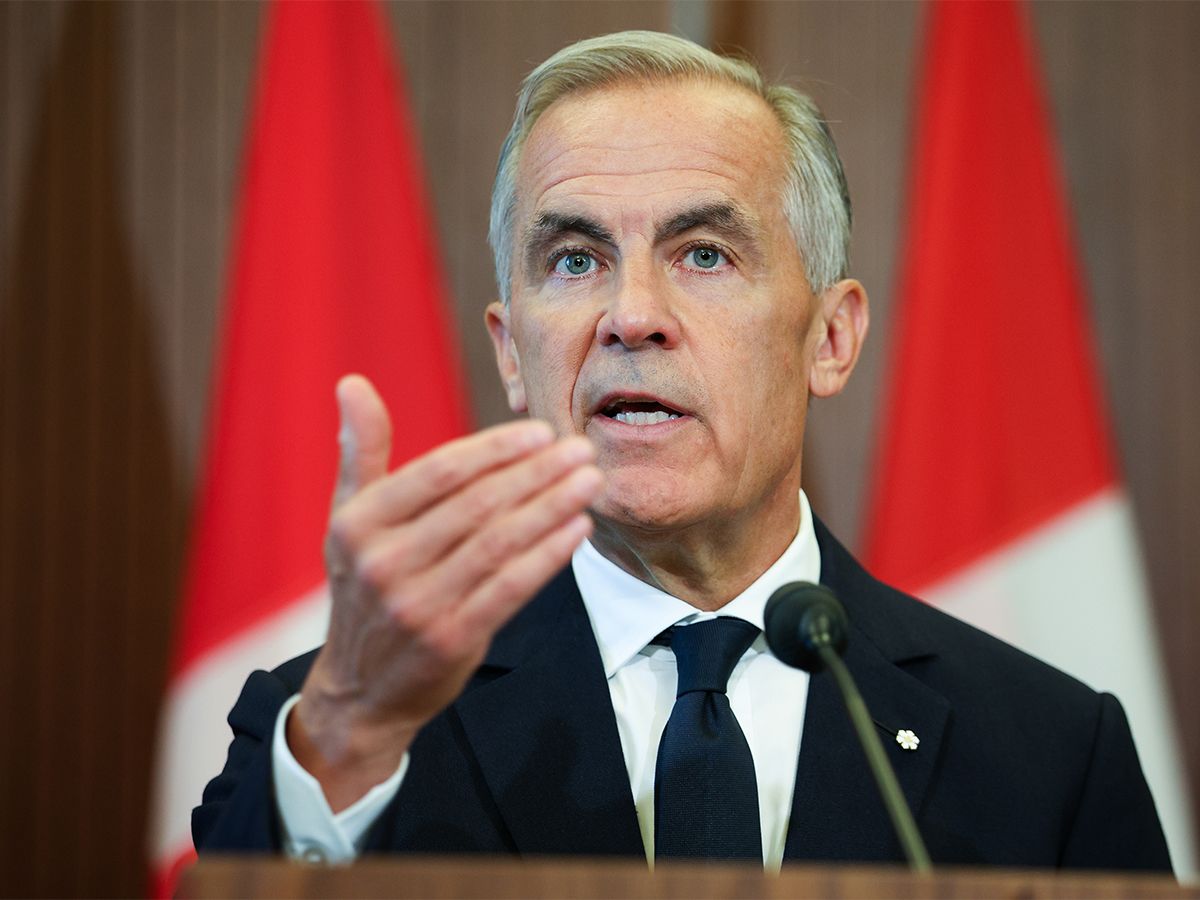
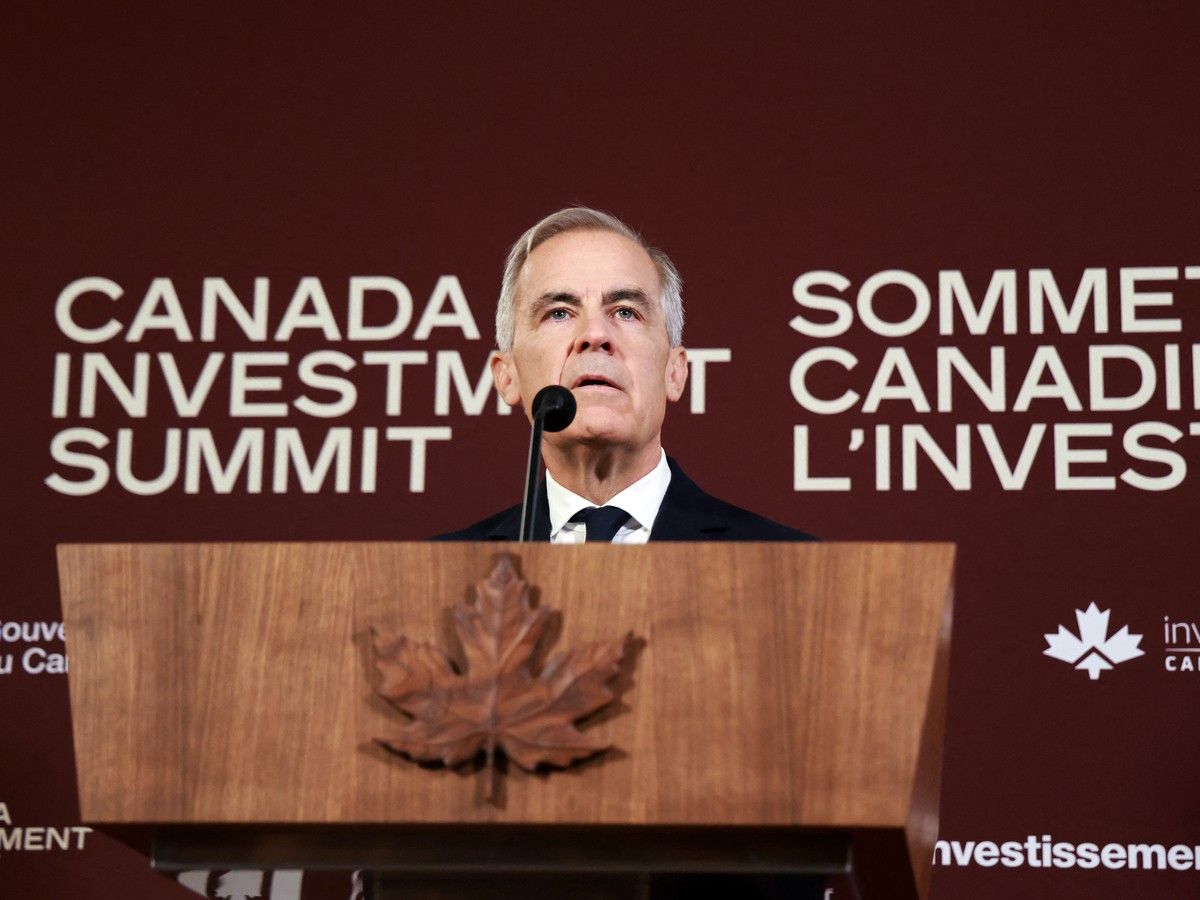
Prime Minister Mark Carney’s cozying up to the European Union has been cast as a bid to control Canada’s destiny in a rapidly changing world.
asserted
cozying → cast → world
But several countries that already have close ties to the EU have cited the desire for control and sovereignty as a reason to ultimately reject deeper integration or full-fledged membership in the 27-country bloc.
asserted
that → have → bloc
Most recently, in late August, voters in Iceland rejected a referendum question about restarting talks to formally join the EU.
asserted
voters → reject → EU
The ‘No’ side won the day by warning EU membership could cost the country sovereign control over its lucrative fisheries, which accounts for 8 per cent of Iceland’s GDP and more than 40 per cent of its exports.
uncertain
which → win → exports
As Carney hits the European circuit, his critics and supporters believe it’s time to flesh out what his idea of deeper ties really looks like.
asserted
idea → hit → ties
As Carney hits the European circuit, his critics and supporters believe it’s time to flesh out what his idea of deeper ties really looks like.
asserted
idea → hit → ties
“For most Icelanders, this is where the conversation stops,” Thordis Kolbrun Gylfadottir, Iceland’s ambassador to the United Kingdom, wrote in an article published by the European Council on Foreign Relations.
asserted
Gylfadottir → stop → Relations
The impetus for Carney’s pivot toward Europe is to build closer bonds with new partners and diversify the trade in Canadian goods away from the United States, which under U.S. President Donald Trump has imposed stiff tariffs.
asserted
which → build → tariffs
Ottawa is already paying for access to EU programs like Erasmus Plus, a university exchange program; the research funding partnership known as Horizon Europe; and a EU defence procurement partnership, Security Action for Europe.
asserted
Ottawa → pay → Europe
The contours of the deepening relationship are to be revealed this week in speeches by Carney and European Commission President Ursula von der Leyen at the European Parliament.
asserted
contours → deepen → Parliament
In a Bloomberg interview Monday, the Prime Minister hinted that there could be closer cooperation in space programs, artificial intelligence, critical minerals and energy.
uncertain
Minister → hint → programs
“There’s a huge opportunity for both of us to build our sovereignty (and build) prosperity for all.”
asserted
both → ’ → all
Carney has, however, denied a Wall Street Journal report that cited him as saying Canada could ultimately become an “associate member” of the European Union.
uncertain
Canada → deny → Union
The report sparked a frenzy among opposition parties, with Conservative Leader Pierre Poilievre writing in a social media post that there were just as many problems with Canada becoming the 28th EU member state as with becoming the 51st American state.
asserted
Canada → spark → post
“Will European border policies apply in Canada, further overwhelming our immigration system while our youth can’t find homes?
asserted
youth → apply → homes
Will Canadian waitresses struggling with rent have to pay tax dollars to the bloated EU bureaucracy?” he asked.
asserted
he → struggle → bureaucracy
Instead of EU membership in any form, Carney has said Canada would be forging a “unique alliance.”
asserted
Canada → say → alliance
“We share the same values.
asserted
We → share → values
We have the same priorities.
asserted
We → have → priorities
And we have very complementary strengths.
asserted
we → have → strengths
We’re stronger together and this is at a time when the world is more dangerous and divided,” he said.
asserted
he → ’re → time
“Friends need to stick together at these times.”
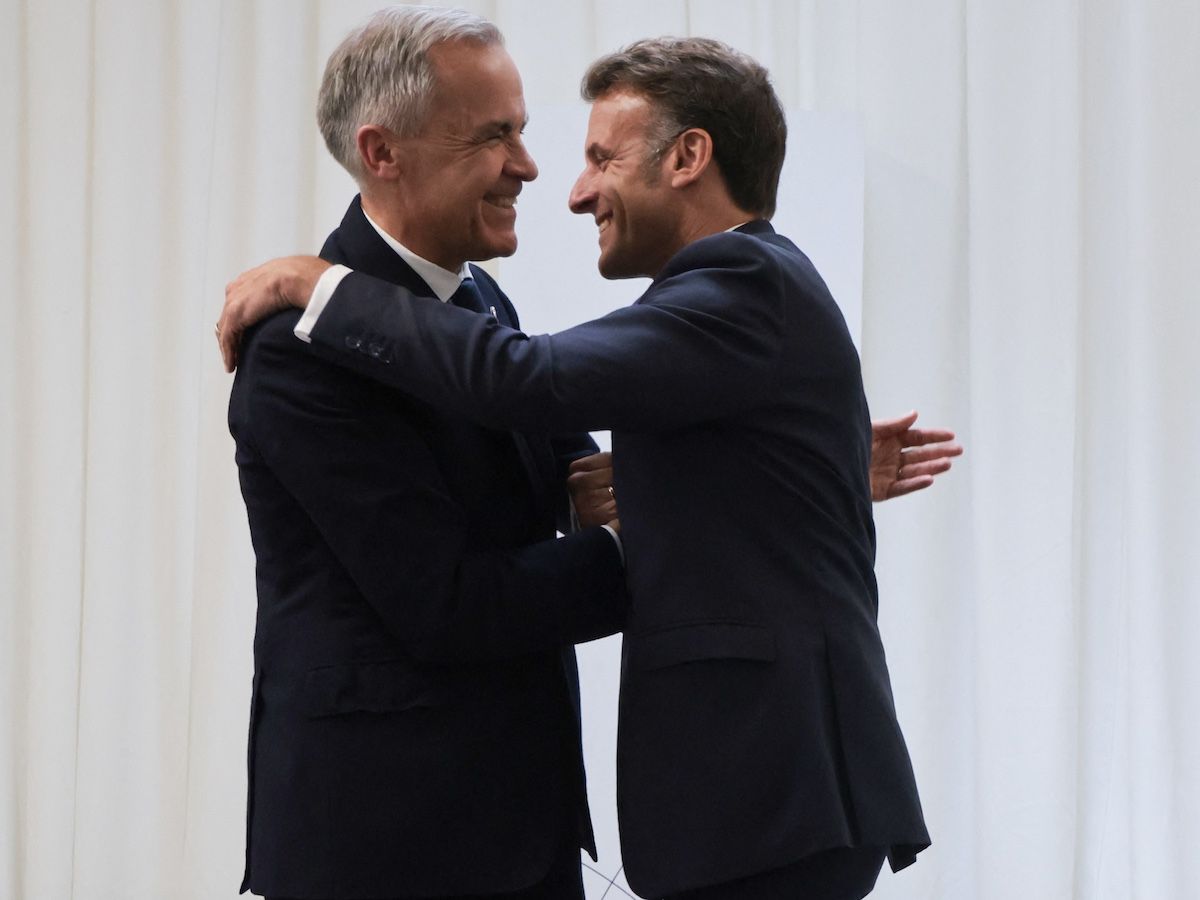
The full-court Canadian press is welcome in Europe, where it is seen as giving a boost to the continent’s perpetually-challenged political project.
asserted
it → need → project
A decade ago, the United Kingdom voted to leave the EU and Switzerland withdrew its bid for full membership.
asserted
Switzerland → vote → membership
Iceland’s most recent rejection comes with the rise of insular, far-right political parties in Germany and in France, where Marie Le Pen’s National Rally is leading in early presidential election polls.
asserted
Rally → come → polls
Federal and provincial governments have squandered the last decade of opportunities.
asserted
governments → squander → opportunities
That needs to change
Federal and provincial governments have squandered the last decade of opportunities.
asserted
governments → need → opportunities
That needs to change
Against that context, Canada is being held up as a glittering counterpoint, said Petros Fassoulas, Secretary General of European Movement International, a Brussels-based group that promotes democratic participation and cooperation.
asserted
that → need → participation
“I think it demonstrates that there is indeed an appreciation of what European integration can offer a country,” he said.
asserted
he → think → country
There are several existing models that the emerging Canada-EU partnership could follow.
uncertain
partnership → be → that
Norway, Iceland and Liechtenstein are part of the European Economic Area and Single Market, meaning that they have free movement and tariff-free trade into Europe, but maintain control of their borders and their trade agreements with other countries.
asserted
they → mean → countries
As part of the deal, they pay grants similar to Canadian equalization payments to fund poorer EU countries.
asserted
they → pay → countries
Turkey has a customs union with the EU that binds the country to adopt European tariff rates but does not include passport-free movement of people.
asserted
that → have → people
In both cases, the countries are obliged to adopt EU rules and regulations to secure the special market access but don’t get to vote or a say over the adoption of rules in the European Parliament.
asserted
countries → oblige → Parliament
Turkey and nine other countries — among them Ukraine, Georgia, Albania, and Moldova — have been identified as candidates for future EU membership, though the bids are hampered by concerns about respect for democratic norms, corruption and potential interference and repercussions from Russia.
asserted
bids → identify → Russia
Fassoulas said that EU enlargement has always ended up benefiting the bloc by increasing its economic and political clout.
asserted
enlargement → say → clout
“That’s why the argument is always in favor of enlargement among many EU officials.
asserted
argument → ’ → officials
And certainly, when it comes to a country like Canada, that would be even more pronounced.”
asserted
that → come → Canada
Some argue that the EU needs to become even more creative in partnering with countries that lie outside of the European continent.
asserted
that → argue → continent
The approach should be “geopolitical rather than geographical,” said Fabian Zuleeg, chief executive and chief economist at the European Policy Centre, writing in the Guardian this week.
asserted
Zuleeg → say → Guardian
This relationship could ultimately amount to quasi-membership, with corresponding rights and obligations.
uncertain
relationship → amount → rights
…and 3 more, not listed.
 The Aporia