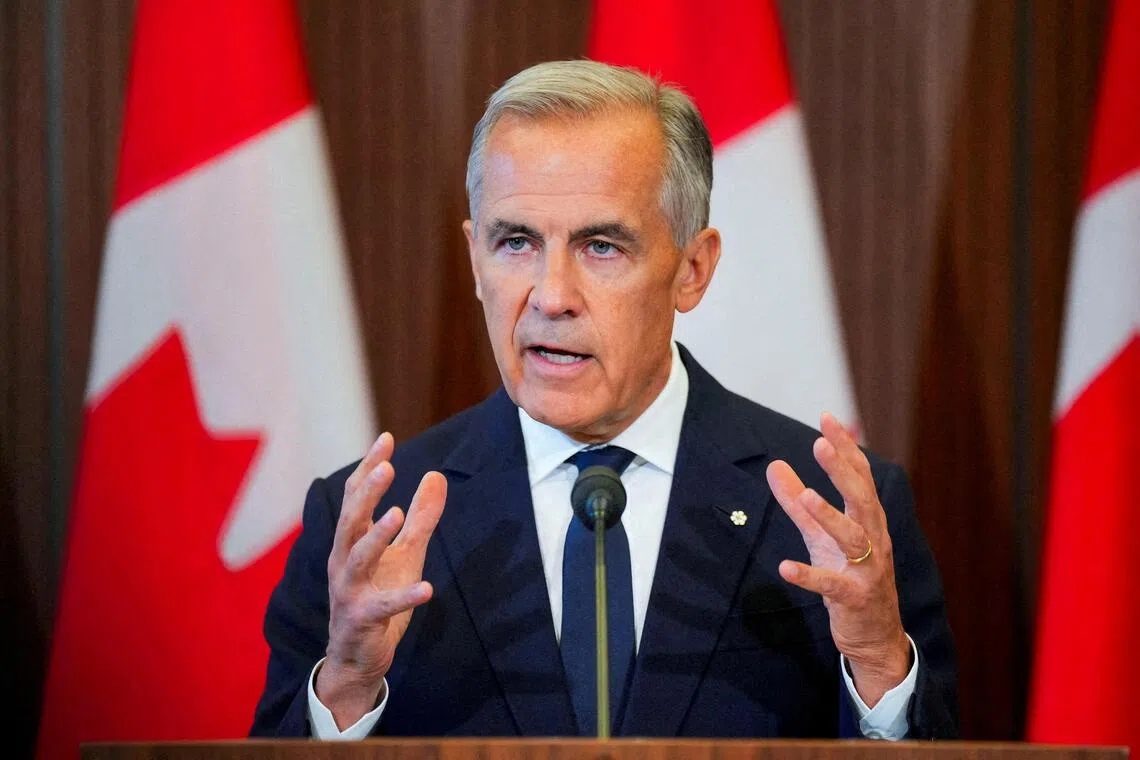
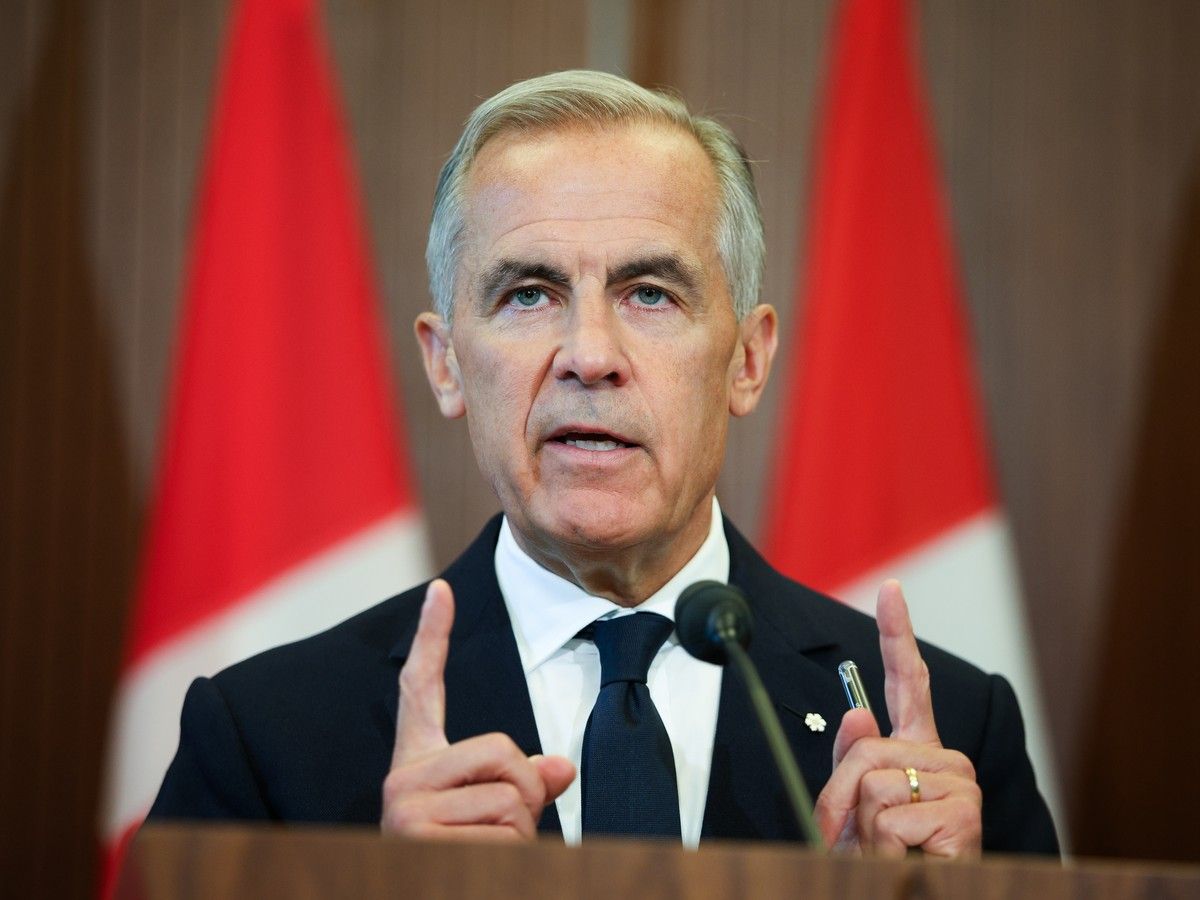
Ben Woodfinden: The EU is an economic disaster. What exactly is Mark Carney after?

National Post · collected 2026-09-14 · by Carson Jerema analysis
Read the original at National Post ↗

Summary

Ben Woodfinden critiques Prime Minister Mark Carney’s potential plans to strengthen Canada's relationship with the European Union, suggesting that a deeper connection might include an "associate member" status. The Wall Street Journal reported that Carney has been advocating for closer ties using his extensive European connections, although government sources later clarified that these reports overstated actual discussions. Woodfinden argues against joining or adopting similar formal roles within the EU, emphasizing Canada's need to maintain independence while diversifying economic and security alliances beyond its reliance on the United States.
Written by the local model on 2026-09-14, using this article's own text rather than the other coverage of the same event (that is the story summary below).

Signals How these are calculated →

Claims extracted
66
claim-shaped sentences
Uncertain
11%
7 of 66 hedged
Leaning
Leans left
of the writing, not the subject
Correction & hedging signals
95.6
corrections and hedging in what we collected; not a measure of accuracy
Outlets on this story
1
Economy/Business
Narrative spread
1
articles carrying this framing
Analyzed 2026-09-14 · how these are computed

AI analysis (generated at analysis time, not now)

Story summary

On Thursday, Prime Minister Mark Carney addressed the opening of the European Parliament in Strasbourg, an unusual event that suggested significant developments were being announced. The Wall Street Journal reported Carney has been advocating for deeper relations between Canada and the EU, even suggesting Canada consider becoming an Associate Member of the EU over recent months. However, government sources later clarified that the WSJ's reporting "overstates" what is actually under discussion. The innovation gap highlighted in Europe—only 30% of European startups valued at over $1 billion remained there by moving abroad, mostly to the U.S.—raises questions about whether closer ties with the EU would truly benefit Canada economically.

Written for “EU Economics Criticism” on 2026-09-14, grounded in this article and the 0 other(s) covering the same event.
Why this leaning score
The article's own words the score was based on. Each is quoted verbatim and was checked against the article text before being stored, so you can find it in the original.
Score -0.35 Confidence medium
Leaning score -0.35 for article 8864 (medium confidence, 3 verified quotes) · logged 2026-09-14

Story

📰 EU Economics Criticism
Economy/Business · 1 article(s) covering the same event. This is the one the site leads with.

How this is being covered How these are calculated →

Article leaning vs. publisher reliability
Source leaning vs. consistency

Compared with similar articles

This article reads leans left and hedges 11% of its claims. Each row says how that neighbour differs.
The Globe and Mail
⚖️ leaning not scored 🔴 0% hedged 0 of 36 📰 publisher trust 40
“The articles discuss different events involving Prime Minister Mark Carney: one about a trade war with the U.S., and another regarding his address to the European Parliament.”
The Hindu
⚖️ leaning not scored 🔴 11% hedged 3 of 28 📰 publisher trust 96
“The articles describe different events: one in Toronto with global investors, and another in Strasbourg at the European Parliament.”
The Globe and Mail
⚖️ Leans left 🔴 0% hedged 0 of 12 📰 publisher trust 40
“The articles describe different events: one is about a speech by Mark Carney in Strasbourg regarding a potential new relationship between Canada and the EU, while the other is about protests planned for an investment summit in Toronto.”
The Globe and Mail
⚖️ leaning not scored 🔴 0% hedged 0 of 2 📰 publisher trust 40
“Article A reports on statements made by Prime Minister Carney regarding Canada's relationship with the EU, while Article B discusses a guest address by Carney to the European Parliament and speculates about an upcoming announcement.”
The Straits Times
⚖️ Leans left 🔴 8% hedged 1 of 13 📰 publisher trust 58
“The articles refer to different aspects of Carney's push for closer ties with the EU, one mentioning a report about associate membership and the other discussing an address at the European Parliament.”
The Globe and Mail
⚖️ leaning not scored 🔴 5% hedged 2 of 37 📰 publisher trust 40
“While both articles discuss Prime Minister Mark Carney's address to the European Parliament, Article A focuses on the general goals and context of Canada's relationship with the EU, while Article B emphasizes skepticism towards the EU and hints at a significant announcement. These appear to be different aspects or angles rather than the same specific incident.”
CBC News
⚖️ leaning not scored 🔴 15% hedged 3 of 20 📰 publisher trust 95
“The articles discuss different aspects of Prime Minister Carney's planned address and Canada's relationship with the EU, but do not describe the same specific incident or occurrence.”
The Globe and Mail
⚖️ leaning not scored 🔴 0% hedged 0 of 2 📰 publisher trust 40
“Article A discusses Carney's general stance on seeking an alliance with the EU, while Article B mentions a specific upcoming address by Carney at the European Parliament where he might announce new relationship details.”

Publisher

National Post · 189 article(s) · 0 correction(s) detected
No corrections detected for this publisher. That may mean careful reporting, or simply that nothing has been checked.

Who wrote this

Carson Jerema
19 article(s) here · 1 carrying a prediction
🔮 Guest addresses like this aren’t unheard of, but they have mostly been reserved in recent years for civil society figures focused on Ukraine, which was already a signal that something significant was to be announced, and reporting has suggested that some sort of new relationship between Canada and the European Union was in the cards. Then on Saturday, a 5,000-word Wall Street Journal exclusive gave us a hint at what might be coming.
🔮 It’s unclear whether this might lead to further escalation or whether there’s a path back to the negotiating table.
🔮 This is a good development, as the deal is structured in a way that will strengthen Ottawa’s military prowess, but more details are sorely needed to properly assess the full return-on-investment.
🔮 On Tuesday, the Government of Canada announced, through a series of statements, that it will impose trade restrictions on so-called Israeli settlements.
🔮 Canadian progressives have spent the better part of a decade doing just that, think of the Langevin Block that became the Office of the Prime Minister, the now Toronto Metropolitan (formerly Ryerson) University, Sankofa square in Toronto (formerly Dundas), the Kichi Zībī Mīkan (formerly the Sir John A. Macdonald Parkway in Ottawa), and the list could go on.
🔮 A state may maintain its own names database or have other policies that govern state map production, but typically and for consistency, they use the names in GNIS.
🔮 However, policies are not copyrighted, and the public will not judge Carney for championing an expanded housing supply, accelerated major projects, and stronger national defence, among other plans.
🔮 Instead, CBC highlights how differently the case would proceed if the killings had happened in Canada and the trial were heard here.
🔮 It would be hard to deny that a trade war is a bad time to impose new costs on Canadians and it’s encouraging to see the government acknowledge this.
🔮 Thirty years ago, women’s golf was scandalized when CBS sports commentator Ben Wright allegedly claimed that women were “handicapped” by virtue of having breasts, which, he stupidly claimed, would “get in the way” of their golf swings.
More on this subject from Carson Jerema
J.D. Tuccille: Canada can win at trade by ignoring Trump
2026-08-25 · National Post · 63% similar
All 19 articles by Carson Jerema →

Topics

America Canada Wall Street Journal the European Parliament the European Union

Subjects

Canada GPE · 7× the European Union ORG · 4× America GPE · 2× Carney PERSON · 2× European NORP · 2× Switzerland GPE · 2× Wall Street Journal ORG · 2× Mark Carney PERSON · 1× Strasbourg GPE · 1× the European Parliament ORG · 1×

Narrative

The innovation numbers are just as stark: of the 147 unicorns, private startups valued at over $1 billion before they ever go public, founded in Europe between 2008 and 2021, roughly 30 per cent packed up and moved abroad, mostly to the U.S., and no European company built from scratch in the last 50 years has grown into a 100 billion euro (C$160 billion) firm, while seven American companies crossed one trillion euros ( C$1.6 trillion) in that same span.
framing: assertive · carried by 1 article(s) · first seen 2026-09-14
🔮 Guest addresses like this aren’t unheard of, but they have mostly been reserved in recent years for civil society figures focused on Ukraine, which was already a signal that something significant was to be announced, and reporting has suggested that some sort of new relationship between Canada and the European Union was in the cards. Then on Saturday, a 5,000-word Wall Street Journal exclusive gave us a hint at what might be coming.

Claims (66 extracted, 7 hedged)

This Thursday, Prime Minister Mark Carney is due to address the opening of the European Parliament in Strasbourg. asserted
Carney → address → Strasbourg
Guest addresses like this aren’t unheard of, but they have mostly been reserved in recent years for civil society figures focused on Ukraine, which was already a signal that something significant was to be announced, and reporting has suggested that some sort of new relationship between Canada and the European Union was in the cards. Then on Saturday, a 5,000-word Wall Street Journal exclusive gave us a hint at what might be coming. uncertain
what → reserve → hint
The reporting claimed that the prime minister has spent months using his extensive European rolodex and connections to push for a deeper relations with the EU. asserted
minister → claim → EU
According to the Journal, Carney even “suggested Canada take on a new title: Associate Member of the European Union.” uncertain
Canada → accord → Union
Government sources challenged the story later in the day, saying the reporting “overstates” what is being discussed. asserted
what → challenge → day
Recommended Videos Carney owes all Canadians a clear explanation of what is actually on the table, but asserted
what → owe → table
even if we don’t know for sure just yet, it’s important we have a clear eyed view about what would actually be in Canada’s interests. asserted
what → know → interests
Getting closer to Europe and the European Union is appropriate in a world where Canada is in need of closer economic and security relationships with likeminded allies and friends, as Ottawa seeks to lessen dependence on the United States. asserted
Ottawa → get → States
But this does not, and should not, mean joining the EU even in an “associate” role, even if the government is not currently pursuing anything so formal. asserted
government → mean → anything
The whole reason the government is seeking close relationships with other allies and partners is precisely because there is a newfound sense of urgency in protecting and reasserting Canadian independence. asserted
government → seek → independence
We cannot trick ourselves into giving up sovereignty to Brussels. asserted
We → trick → Brussels
I am of the view that we must lessen our dependence on a much less reliable and volatile United States no matter who succeeds Donald Trump as president. asserted
who → lessen → president
A president who muses about annexation and slaps tariffs on his closest ally and biggest trading partner isn’t just an aberration, he is himself a symptom of an America that haw changed. asserted
that → muse → America
At the same time, we cannot delude ourselves into thinking we will ever be able to entirely detach ourselves from America. asserted
we → delude → America
They will likely remain our biggest trading partner and most important security partner. asserted
They → remain → ?
Turning to Europe as a place we can build closer economic and defence arrangements with is a fitting a approach in the light of how relations with the U.S. have devolved. asserted
relations → turn → U.S.
But don’t be fooled into thinking this means we must therefore join the European Union. asserted
we → fool → Union
We still have no idea what being an “associate member” would mean, and the Wall Street Journal reporting doesn’t make that clear. asserted
that → have → what
There are other arrangements like the European Free Trade Association, which includes Iceland, Norway, Switzerland and Liechtenstein who are not full members, but three of whom participate in the European single market via the European Economic Area, with Switzerland’s access instead coming through its own bilateral deals, and all four of whom are in the Schengen Area, meaning open borders with the EU. asserted
four → be → EU
Some are not in the monetary union and don’t use the Euro. asserted
Some → use → Euro
But whatever is being proposed for Canada appears to be new. asserted
proposed → propose → Canada
This obscures the more useful and important question, which is not whether Canada should join the EU in some new, undefined capacity, but whether it needs to. asserted
it → obscure → capacity
We don’t. asserted
We → do → ?
For instance, if we want free trade with the EU (which is not the same as being in the single market), Canada signed CETA, the Comprehensive Economic and Trade Agreement, with the bloc back in 2016. asserted
Canada → want → 2016
A decade later, 10 member states, including France, still have not ratified it. asserted
states → include → it
If we want to deepen economic ties with the EU, why don’t we start here? asserted
we → want → EU
It might not be as flashy and sexy, but getting CETA fully ratified, deepening the defence procurement and research ties that are already underway, building out the data and satellite infrastructure both sides say they want do not require anything that changes our existing arrangements and would benefit both Canada and the EU. uncertain
that → get → Canada
But even if full, or even partial membership, is not in the cards, we should think carefully about what we are attaching ourselves to. asserted
we → think → ourselves
The 27 member nations of the EU (and the few others closely intertwined through the EFTA) have created an economic entity that guarantees the free movement of goods, capital, services, and people — known as “the four freedoms.” asserted
that → intertwine → freedoms
More access to this market is a great idea, but let’s be honest about what full integration with that would entail. asserted
integration → let → that
EU member states give up a significant amount of sovereignty and national self-determination. asserted
states → give → sovereignty
National courts must set aside domestic law that conflicts with EU law, and governments can no longer block goods, services, or workers from other member states to protect their own industries. asserted
governments → set → industries
Environmental, energy, labour and procurement regulations must be aligned, as well. asserted
regulations → align → ?
Deeper still, the customs union means Brussels alone sets tariffs and negotiates trade deals with non members, so no country can strike its own agreement with Washington or Beijing. asserted
country → mean → Washington
Eurozone members surrender monetary policy entirely to the European Central Bank and accept Brussels-enforced limits on deficits and debt, and Schengen states abolish their own border controls with each other altogether. asserted
states → surrender → other
Together these amount to one of the deepest peacetime surrenders of national control any democracy has ever voluntarily accepted. asserted
democracy → amount → control
You can make the argument that these are sacrifices are worth making, but make no mistake that joining this union means sacrificing sovereignty at a level that, quite frankly, I think most Canadians divorced of our current fight with the Americans, would be very uncomfortable giving up. asserted
Canadians → make → Americans
While the EU might be a massive market we should want access to, it faces its own major challenges. uncertain
it → want → challenges
Mario Draghi, the former president of the European Central Bank and briefly prime minister of Italy, authored a major report in 2024 that exposes how sclerotic and stagnant the EU economy has become. asserted
economy → author → 2024
He found that the income gap between the EU and the United States had roughly doubled in the two decades before the report, from about 15 per cent to about 30 per cent, and that closing it would require something like 800 billion euros a year in new investment. asserted
closing → find → investment
…and 26 more, not listed.
💬 Give feedback
🕘 History 🎫 Support