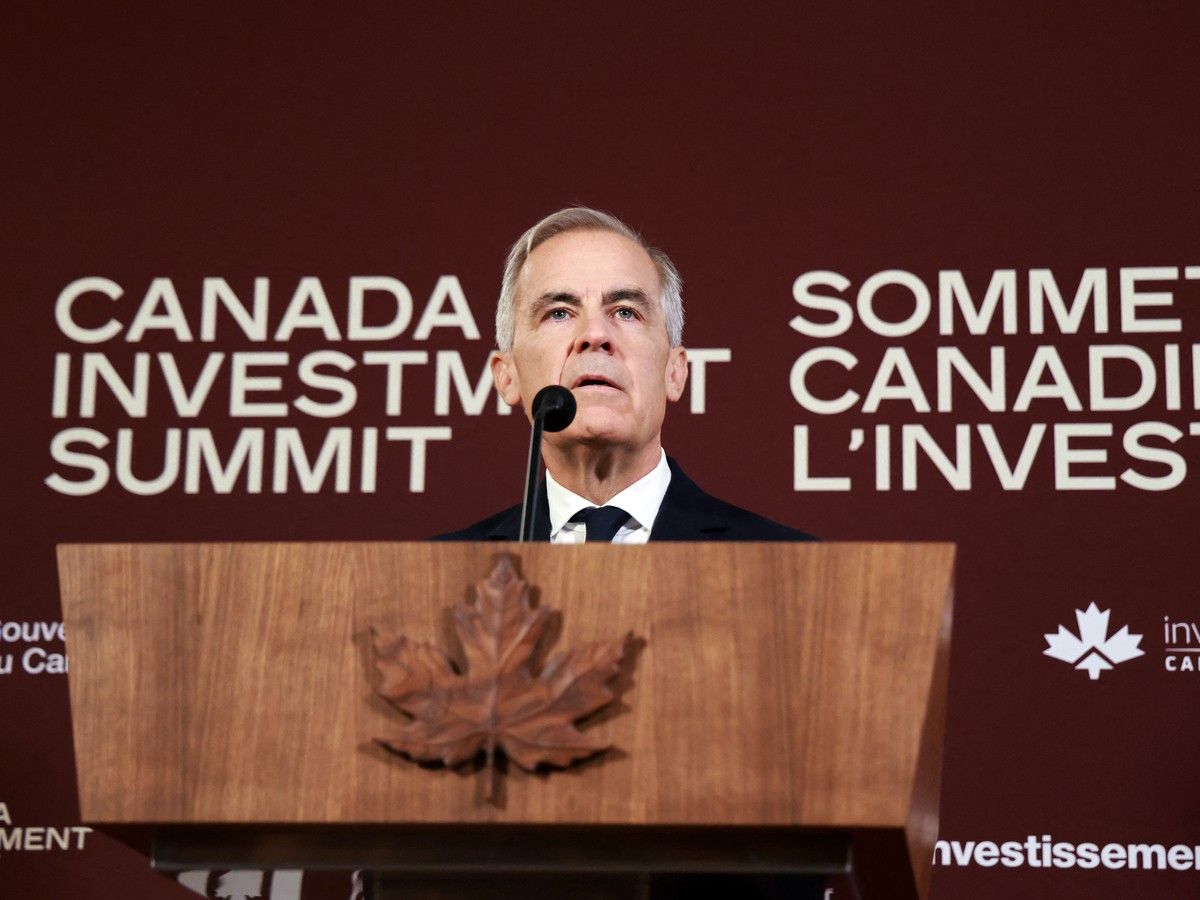
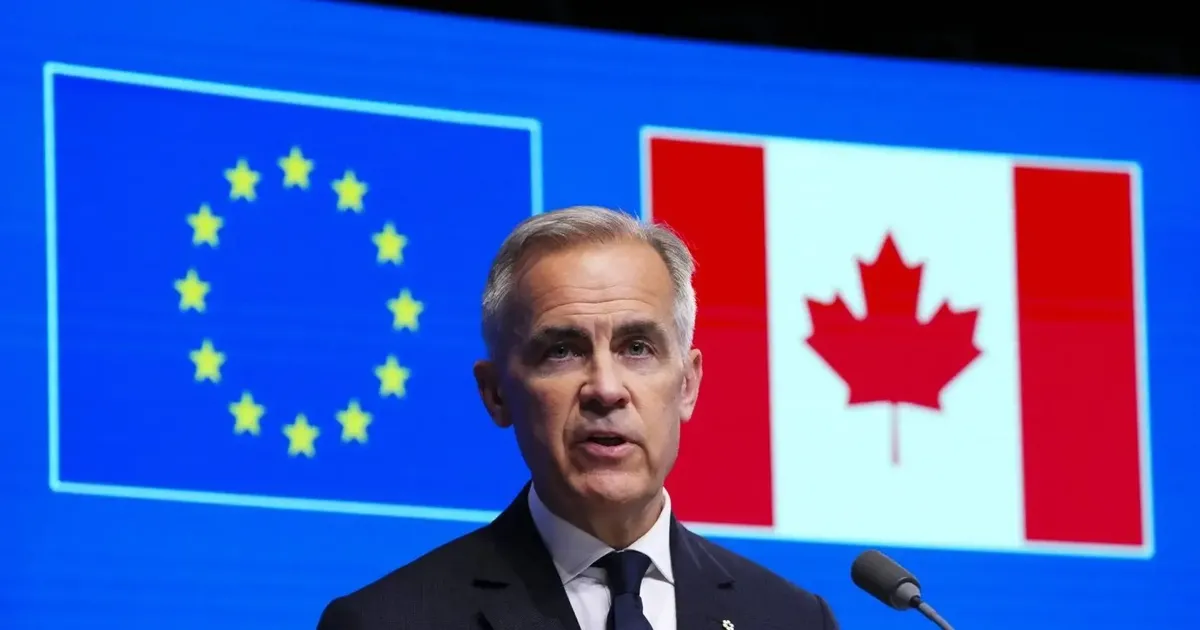
Chris Selley criticizes Prime Minister Mark Carney’s communications strategy for its similarity to Justin Trudeau's approach, which he views as overly cautious and manipulative. The article discusses a Wall Street Journal report suggesting Canada is pursuing “associate membership” in the European Union, an idea Carney has neither confirmed nor denied but downplayed when directly questioned. Selley argues that the PMO’s handling of this issue exemplifies their tendency to launch trial balloons and then retract them, playing to public opinion rather than providing clear leadership.
Written by the local model on 2026-09-15,
using this article's own text rather than the other coverage of the
same event (that is the story summary below).
Why this leaning score
The model judged this article politically coded and scored it -0.35, but every quote it verified points right, so the score is not published.
Written under an earlier scoring contract, which gave a paragraph
rather than checkable quotes. Re-analysing this article replaces it.
Leaning score withheld for article 12021: score contradicts its own evidence · logged 2026-09-15
PMO Comms World hasn’t changed much since Justin Trudeau’s departure, interestingly.
asserted
World → change → departure
Prime Minister Mark Carney’s gang is still far too cute for its own long-term good, launching trial balloons and then deflating them, leveraging foreign (especially American) media when able, and apparently believing that their popularity in the polls is proof of this strategy’s success.
asserted
popularity → launch → success
It’s just proof of what Carney is able to get away with these days.
asserted
Carney → ’ → what
The Wall Street Journal’s report, published Sunday, that Canada is pursuing “associate membership” in the European Union, and that the EU is “open to the idea,” was a fine piece of journalism with a lot of resources behind it.
asserted
EU → publish → it
It cited officials, albeit mostly anonymous, “from a dozen different governments involved in … conversations” to back up the story.
asserted
It → cite → story
No doubt the Journal asked the PMO to comment on this, which is when the PMO could have poured cold water on the idea right out of the gate.
uncertain
PMO → ask → gate
For that matter, if Carney didn’t want this story out there, he and his representatives could presumably have made that clear to their EU partners during these “conversations.”
uncertain
that → want → conversations
Those dozen governments’ officials mentioned everything from “frictionless” trade in goods and services to allowing Canadians to work in Europe without a visa — and, presumably, vice versa.
asserted
Canadians → mention → visa
You might reasonably call such an agreement “associate membership,” though that’s not a category that currently exists.
uncertain
that → call → agreement
Helpfully for the Liberals, it could mean anything.
uncertain
it → mean → anything
“What we are looking and will begin discussion for is a unique alliance … between Canada and the European Union,” Carney told reporters hours after the Journal story dropped.
asserted
story → look → reporters
Speaking to Bloomberg, Carney called it a “high-ambition process.”
asserted
Carney → speak → it
But never “associate membership,” whatever that means, heavens no.
asserted
that → associate → whatever
I suspect the PMO’s communications gurus are quite pleased with themselves.
asserted
gurus → suspect → themselves
Now, low-information voters who support deep integration with the EU, or even some kind of official membership — or who think they support it, never having really considered the idea other than as a rebuke to President Donald Trump — have something to latch onto.
asserted
they → support → something
And Carney-friendly EU skeptics have the PMO’s denials to latch onto as well.
asserted
skeptics → have → denials
When Conservatives quite rightly complain Carney is trying to sneak us into the EU, The elbows-up crowd can point to news stories ostensibly debunking the idea and dismiss them as cranks.
asserted
crowd → complain → cranks
An Abacus Data poll conducted Sept. 4–9 found a remarkable 49 per cent of Canadians support (or think they support) Canada becoming a full-on EU member state, while only 30 per cent outright oppose it.
asserted
cent → conduct → it
Asked about “closer integration,” 81 per cent of respondents said they supported it, including 75 per cent of Albertans and 70 per cent of Conservative voters.
asserted
they → ask → voters
I won’t belabour the issue of why so much of this EU-relationship discourse makes absolutely no sense.
asserted
much → belabour → sense
Icelanders rejected EU membership talks 53 per cent to 47 in a referendum last month, with 83 per cent turnout.
asserted
Icelanders → reject → turnout
At a time when you might expect Iceland to be eager for more geopolitical shelter, the “no” campaign won the day with a message focusing on sovereignty — especially Iceland’s indispensable fisheries and its cultural tolerance (though it’s far from universal) of whaling, which is strictly banned in EU waters.
uncertain
which → expect → waters
Preserving Canadian sovereignty is exactly the argument the Liberals would face if they pursued any serious kind of economic integration with Europe — especially assuming the process dragged on past the end of Trump’s presidency, when a lot of Canadians will suddenly rediscover their love of the status quo.
asserted
lot → preserve → quo
In the meantime, the whole foofaraw is very unbecoming of a government that claims to be getting serious.
uncertain
that → claim → government
As is true with many things Carney says and does, it remains fascinating to see him planting and fertilizing the seeds of his own eventual defeat.
asserted
him → say → defeat
 The Aporia