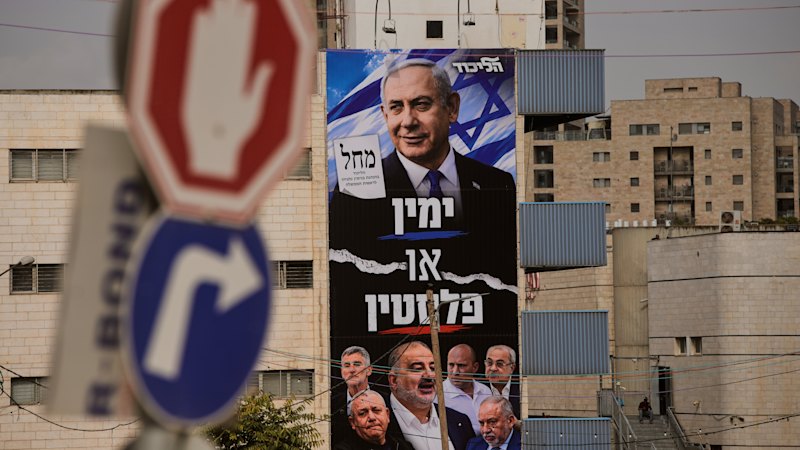
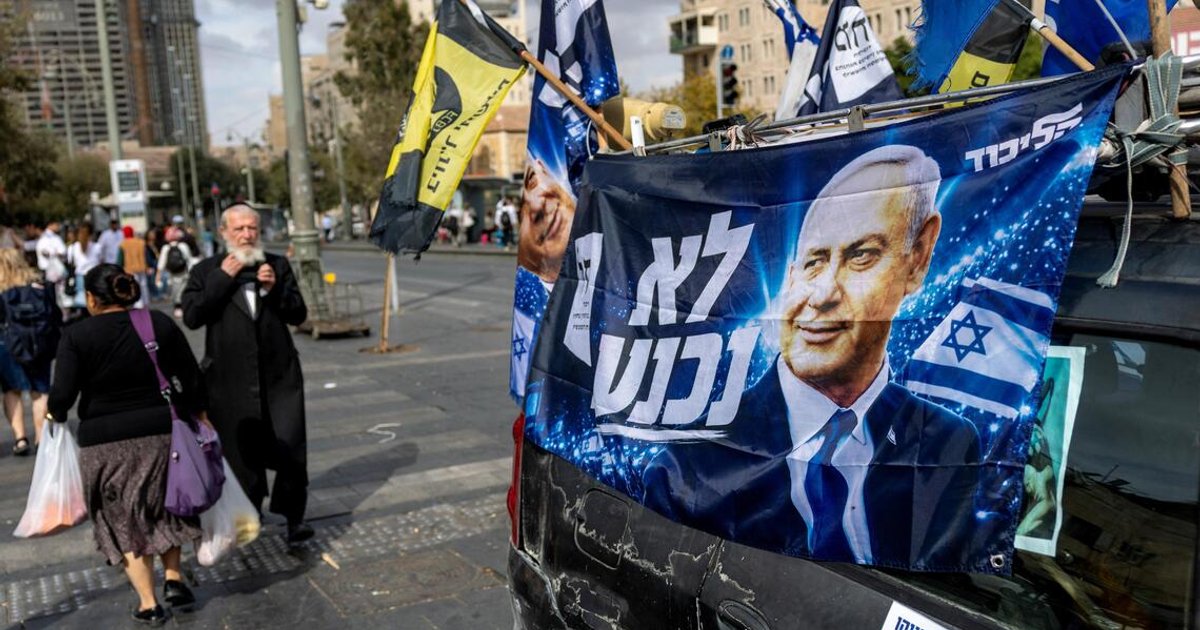
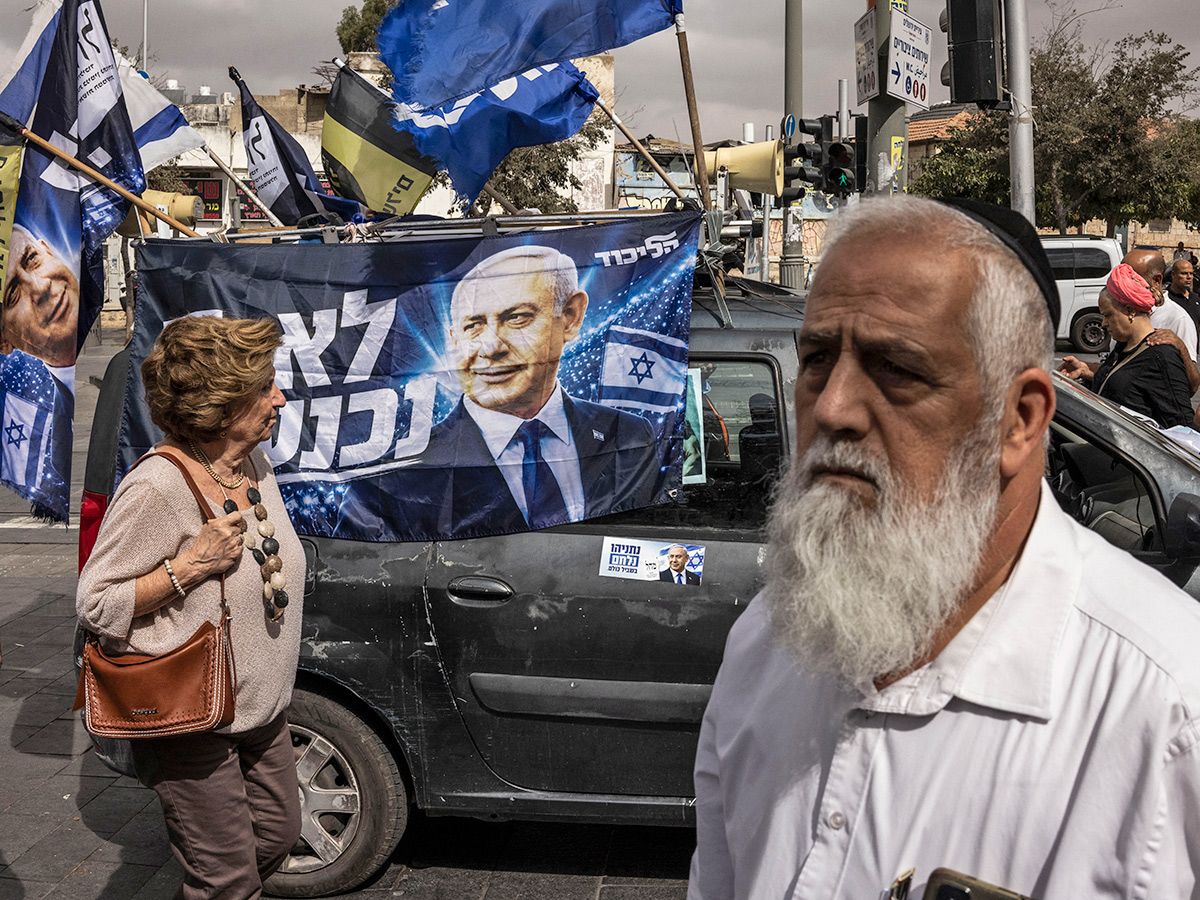
Israelis head to the polls on October 27 in the first election since the genocide in Gaza and the wars on Lebanon and Iran, a vote widely seen as a referendum on Prime Minister Benjamin Netanyahu’s rule.
asserted
Israelis → head → rule
Since the start of the war on Gaza in October 2023, Israel’s parliament, known as the Knesset, has passed or advanced a wave of laws and motions affecting Palestinians, from rejecting their statehood and backing annexation of the occupied West Bank to cutting off the aid they receive.
asserted
they → know → aid
Israel’s Jewish-led opposition casts itself as the alternative to Netanyahu’s right-wing government, but when it comes to Palestinians, the two often vote as one.
asserted
two → lead → one
What do left and right mean in Israel?
asserted
left → mean → Israel
Left and right are the most common way of mapping where parties stand on a political spectrum.
asserted
parties → map → spectrum
The left generally favours more state spending and is more liberal on immigration and minority rights.
asserted
left → favour → immigration
The right generally favours lower taxes, tighter borders and a cohesive national identity.
asserted
right → favour → taxes
In Israel, the labels work differently.
asserted
labels → work → Israel
They are defined less by economics than by the conflict with Palestinians.
asserted
They → define → Palestinians
Broadly, the left has been associated with territorial compromise and negotiations, and the right with opposing a Palestinian state and supporting the growth of illegal settlements.
asserted
left → associate → settlements
Israel’s political spectrum as a whole has shifted right, with once-fringe positions on Palestinians now very much the mainstream view.
asserted
positions → shift → Palestinians
According to Palestinian political analyst Ehab Jabareen, much of Jewish Israeli politics now works from “assumptions that would have been treated as right-wing a generation ago”.
uncertain
that → accord → wing
The chart below shows generally where each party sits on that spectrum today.
asserted
party → show → spectrum
Israel’s parties and coalitions, explained
No party has ever won an outright majority in Israel’s Knesset.
asserted
party → explain → Knesset
To govern, a prime minister needs at least 61 of its 120 seats, which means building a coalition of smaller parties, often with competing demands.
asserted
which → govern → demands
That gives small parties outsized leverage: if one walks out, the government can fall.
asserted
government → give → leverage
After the November 2022 election, Netanyahu’s right-wing Likud, the largest party with 32 seats, formed a 64-seat coalition.
asserted
Likud → form → coalition
Bezalel Smotrich, head of Religious Zionism, is finance minister and also holds authority over civilian affairs in the occupied West Bank, including settlement planning.
asserted
Smotrich → hold → planning
He and Smotrich have both pushed for annexation and settlement expansion, and both have used the threat of quitting to shape government policy.
asserted
both → push → policy
The coalition has shifted repeatedly since.
asserted
coalition → shift → ?
Benny Gantz’s National Unity alliance joined after the October 7, 2023 attacks by Hamas and left in June 2024, and Gideon Sa’ar’s New Hope joined that September.
asserted
Hope → join → June
Ben-Gvir’s Otzma Yehudit quit over a “ceasefire” in Gaza in January 2025 and returned two months later.
asserted
Yehudit → quit → January
In July 2025, United Torah Judaism (UTJ) walked out over a stalled bill to exempt ultra-Orthodox men from military service.
asserted
Judaism → walk → service
Shas, another party representing ultra-Orthodox voters, withdrew its ministers at the same time, but stayed in the coalition.
asserted
Shas → represent → coalition
When parliament dissolved in July ahead of the October 27 election, the coalition held 60 seats: Likud (32), Shas (11), Otzma Yehudit (7), Religious Zionism (6) and New Hope (4).
asserted
coalition → dissolve → seats
The opposition
Opposition in Israel does not mean left.
asserted
Opposition → mean → left
Yesh Atid, led by Yair Lapid, was the largest party in the outgoing Knesset, with 24 seats.
asserted
Atid → lead → seats
Both are centrist and have campaigned against a judicial overhaul proposed by Netanyahu and his coalition of religious and nationalist partners.
asserted
Both → campaign → partners
Yisrael Beiteinu, led by Avigdor Lieberman, is secular and right wing.
asserted
Beiteinu → lead → Lieberman
Lieberman is a former Netanyahu ally who opposes draft exemptions for ultra-Orthodox men.
asserted
who → oppose → men
Labor, now part of the Democrats, is the only Jewish party in the outgoing Knesset that openly backs a two-state solution to the Israel-Palestine conflict.
asserted
that → back → conflict
The Arab-led parties, which represent Palestinian citizens of Israel, differ in ideology but share opposition to the occupation.
asserted
which → lead → occupation
Ra’am, led by Mansour Abbas, made history in 2021 as the first Arab party to enter an Israeli government.
asserted
Ra’am → lead → government
Hadash-Ta’al, led by Ayman Odeh and Ahmad Tibi, has never joined one.
asserted
Ta’al → lead → one
It is running in this election as part of the Joint List, alongside Balad.
asserted
It → run → Balad
How has each party voted?
asserted
party → vote → ?
Al Jazeera analysed the 10 most consequential Knesset votes affecting Palestinians between July 2024 and March 2026.
asserted
Jazeera → analyse → July
In Israel, a bill must pass three votes in the Knesset to become law.
asserted
bill → pass → Knesset
Most votes need only a simple majority of members present, and parties often stay away on purpose, either to deny a bill legitimacy or to avoid going on record.
asserted
parties → need → record
As a result, some votes in this analysis involve only a fraction of the 120-seat parliament.
asserted
votes → involve → parliament
…and 31 more, not listed.
 The Aporia