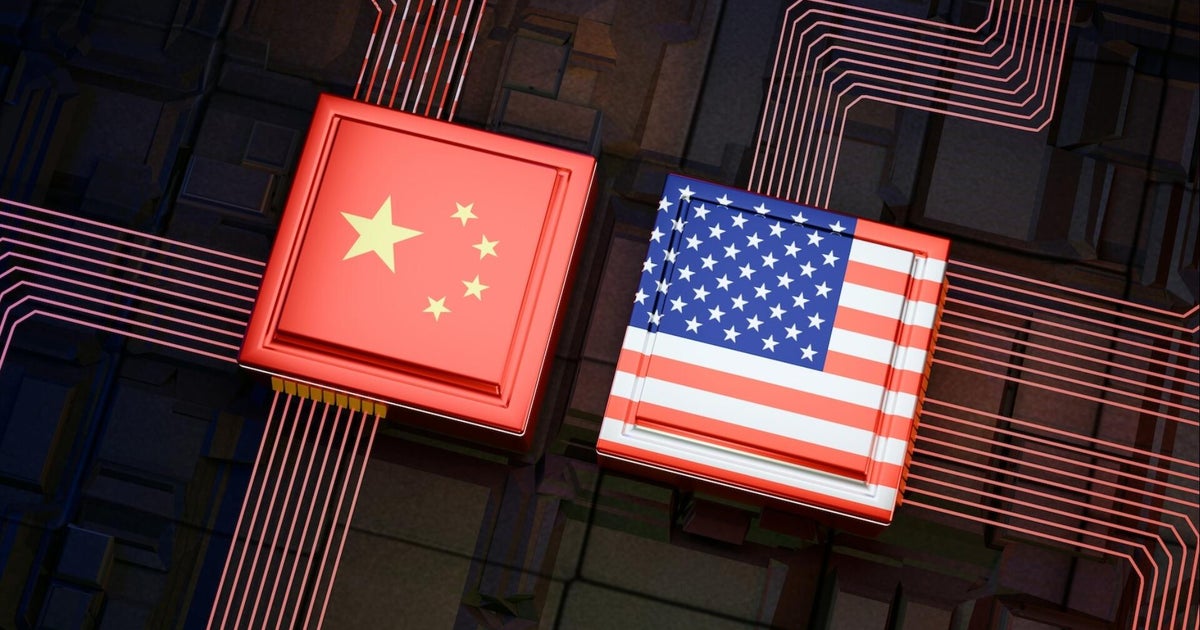
What are the biggest AI companies and how much are they worth?

Al Jazeera · collected 2026-09-17 · by Hanna Duggal
Read the original at Al Jazeera ↗

Summary

Al Jazeera explores the debate over AI regulation and identifies key players in the industry. Companies are categorized into hardware makers like Nvidia and Intel, cloud and compute providers such as Google Cloud and AWS, and software developers including OpenAI and Salesforce. The article notes that the top 10 publicly traded AI companies have a combined market capitalization of at least $25 trillion, surpassing the GDP of most countries globally.
Written by the local model on 2026-09-17, using this article's own text rather than the other coverage of the same event (that is the story summary below).

Signals How these are calculated →

Claims extracted
27
claim-shaped sentences
Uncertain
11%
3 of 27 hedged
Leaning
withheld
no quote in the article backed the model's score
Correction & hedging signals
95.7
corrections and hedging in what we collected; not a measure of accuracy
Outlets on this story
1
Technology
Narrative spread
1
articles carrying this framing
Analyzed 2026-09-17 · how these are computed

AI analysis (generated at analysis time, not now)

Story summary

The debate over AI regulation intensified following an essay by Anthropic CEO Dario Amodei, who called for slowing down AI development due to safety concerns. US President Donald Trump countered this argument on Truth Social, asserting that the US already has significant regulatory power over AI companies and dismissed safety worries as a conspiracy aiding China. Al Jazeera examined the major players in the AI industry, noting its complex ecosystem comprising hardware makers like Nvidia, cloud infrastructure providers such as Google Cloud, Microsoft Azure, Amazon AWS, and Oracle, and specialized computing power suppliers including CoreWeave and Lambda. These companies are driving an industry valued at trillions of dollars and are central to the global race for AI dominance.

Written for “AI Companies Valuation” on 2026-09-17, grounded in this article and the 0 other(s) covering the same event.
Why this leaning score
The model judged this article politically coded and scored it -0.35, but every quote it verified points right, so the score is not published.
Written under an earlier scoring contract, which gave a paragraph rather than checkable quotes. Re-analysing this article replaces it.
Leaning score withheld for article 15285: score contradicts its own evidence · logged 2026-09-17

Story

📰 AI Companies Valuation
Technology · 1 article(s) covering the same event. This is the one the site leads with.

How this is being covered How these are calculated →

Article leaning vs. publisher reliability
Source leaning vs. consistency

Compared with similar articles

This article reads unscored and hedges 11% of its claims. Each row says how that neighbour differs.
Dawn
⚖️ leaning not scored 🔴 5% hedged 1 of 22 📰 publisher trust 95
“Article A describes Trump's claim of a conspiracy against AI companies on a specific date, while Article B discusses a broader debate and includes Trump's response but does not specify it as the same exact occurrence or date.”
BBC News
⚖️ leaning not scored 🔴 7% hedged 2 of 29 📰 publisher trust 96
“The articles discuss related topics but describe different points in time and distinct events.”
CBS News
⚖️ Leans right 🔴 0% hedged 0 of 3 📰 publisher trust 77
“Article A describes President Trump's criticism of Dario Amodei's warnings and a discussion about maintaining U.S. lead in AI, while Article B discusses a broader debate over AI regulation initiated by an essay from Amodei and a response from President Trump on Truth Social.”
Semafor
⚖️ Leans right 🔴 0% hedged 0 of 5 📰 publisher trust 95
“While both articles discuss similar themes around AI regulation and leadership reactions, they describe different moments in time with distinct focus points.”
Al Jazeera
⚖️ Leans left 🔴 15% hedged 8 of 55 📰 publisher trust 96
“Article A reports on immediate reactions to Anthropic CEO's call for slowing down AI development, while Article B discusses broader debates over AI regulation and control in the context of a renewed dispute following Amodei's essay.”
The Free Press
⚖️ Leans left 🔴 8% hedged 1 of 12 📰 publisher trust 96
“Article A describes Dario Amodei's initial proposal for slowing down AI development, while Article B discusses a broader debate involving US President Donald Trump's response to the issue. The specific event is different as it covers reactions and debates rather than the original announcement.”
Washington Examiner
⚖️ leaning not scored 🔴 0% hedged 0 of 24 📰 publisher trust 96
“Article A describes a specific PR campaign by Anthropic's CEO, while Article B discusses a broader debate on AI regulation involving multiple parties including the US President.”

Publisher

Al Jazeera · 609 article(s) · 0 correction(s) detected
No corrections detected for this publisher. That may mean careful reporting, or simply that nothing has been checked.

Who wrote this

Hanna Duggal
2 article(s) here · 1 carrying a prediction
🔮 Additionally, several private AI companies are valued in the billions of dollars, with some expected to go public in the coming months.
🔮 “Once the Middle East war kicked off, we suddenly saw more ship owners being willing to go into the Red Sea because there were far fewer options to get to the crew they needed to get to.
Also by Hanna Duggal
Nothing else under this byline is closely related to this article, so these are simply their most recent.

Topics

Al Jazeera Anthropic China Nvidia Truth Social

Subjects

Nvidia ORG · 3× AMD ORG · 2× Anthropic ORG · 2× Broadcom ORG · 2× TSMC ORG · 2× Al Jazeera ORG · 1× China GPE · 1× Dario Amodei PERSON · 1× Donald Trump PERSON · 1× Truth Social ORG · 1×

Narrative

These include: - Hyperscalers, including Alphabet (Google Cloud), Microsoft (Azure), Amazon (AWS) and Oracle, which operate large-scale cloud infrastructure, storing data and delivering networking globally. - Neoclouds, such as CoreWeave, Lambda, Crusoe, Nebius, and Nscale, a newer wave of specialised providers built to supply the enormous computing power needed to train AI models. Software and applications These are the companies that create the AI products people and businesses actually use.
framing: assertive · carried by 1 article(s) · first seen 2026-09-17
🔮 Additionally, several private AI companies are valued in the billions of dollars, with some expected to go public in the coming months.
2026-09-17 · Al Jazeera
What are the biggest AI companies and how much are they worth? · assertive framing

Claims (27 extracted, 3 hedged)

A renewed debate has emerged over who should control the development of artificial intelligence (AI). asserted
who → renew → intelligence
The latest dispute follows an essay by Anthropic CEO Dario Amodei, who has argued that the development of increasingly powerful AI systems needs to slow down, calling for greater regulation. asserted
development → follow → regulation
US President Donald Trump pushed back, writing on Truth Social that the US already has “tremendous CRIMINAL and REGULATORY power” over AI companies, framing safety concerns as a conspiracy that only benefits China. asserted
that → push → China
He went on to say that whoever wins the AI race wins outright. asserted
wins → go → race
As states grapple with how to regulate an industry developing at an unprecedented pace, Al Jazeera unpacks the companies driving the AI race and the trillions of dollars behind them. asserted
Jazeera → grapple → them
Beneath them sits a much larger ecosystem of hardware, infrastructure, and software. asserted
ecosystem → sit → hardware
These companies can be broadly grouped into three categories: Hardware At the foundation of the AI industry are the companies that design and manufacture the physical chips AI runs on, along with the equipment that keeps data centres powered and cooled. asserted
that → group → centres
These include: - Chip designers such as Nvidia, Marvell, AMD, Broadcom, and Intel. - Chip makers like TSMC, which physically manufacture the designs. - Infrastructure firms such as Arista Networks, Vertiv, and Eaton, which supply the power, cooling, and networking equipment data centres depend on. asserted
centres → include → Networks
Cloud and compute These are the companies that turn raw chips into usable computing power, delivering the storage and processing capacity that AI systems run on. asserted
systems → turn → that
These include: - Hyperscalers, including Alphabet (Google Cloud), Microsoft (Azure), Amazon (AWS) and Oracle, which operate large-scale cloud infrastructure, storing data and delivering networking globally. - Neoclouds, such as CoreWeave, Lambda, Crusoe, Nebius, and Nscale, a newer wave of specialised providers built to supply the enormous computing power needed to train AI models. Software and applications These are the companies that create the AI products people and businesses actually use. asserted
people → include → products
These include: - Frontier AI labs, such as OpenAI, Anthropic, xAI, Google DeepMind and Meta AI develop large language models, with many also building their own compute infrastructure. - Enterprise AI companies, such as Palantir, ServiceNow, Salesforce, and Snowflake, apply AI to automate business operations. asserted
companies → develop → operations
The 10 largest public companies operating in the AI space – spanning AI chips, cloud infrastructure, and AI-driven software and services – have a combined market capitalisation of at least $25 trillion. asserted
companies → operate → trillion
That’s bigger than the gross domestic product (GDP) of every country except the United States, and larger than the entire Chinese economy. asserted
That → ’ → economy
The graphic below shows the 20 most valuable public companies with direct exposure to AI, ranked by market capitalisation. asserted
graphic → show → capitalisation
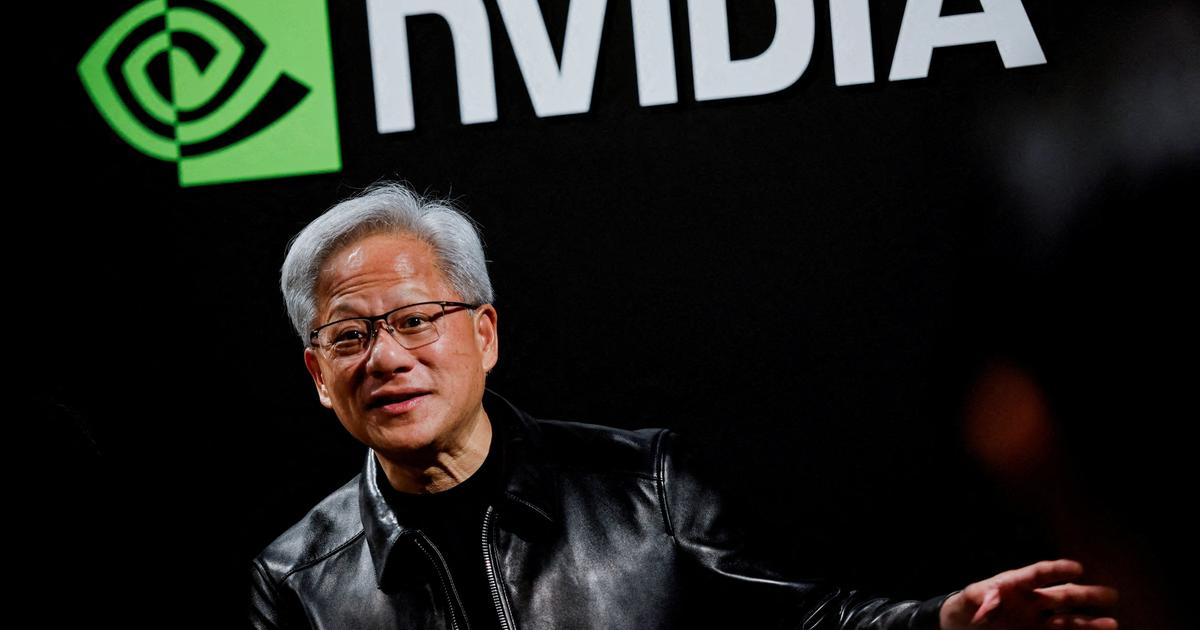
Nvidia is the largest AI-focused public company, with a market capitalisation of roughly $5.1 trillion as of mid-September 2026. asserted
Nvidia → focus → mid
It designs graphics processing units (GPUs) and AI accelerators – hardware components in a chip that speed up AI workloads – that power leading AI models. asserted
that → design → models
It makes its money by selling these chips to hyperscalers and AI companies. asserted
It → make → hyperscalers
Apple, while primarily a hardware company, has invested heavily in on-device AI features and its market cap of $4.86 trillion makes it one of the most valuable companies with any AI exposure. asserted
it → invest → exposure
Its main AI product, Siri AI, launched in 2026 and runs on Google’s Gemini models under a licensing deal. asserted
product → launch → deal
It makes the most advanced chips, designed by the likes of Nvidia, Broadcom, and AMD. asserted
It → make → Nvidia
It makes its money by manufacturing these chips at enormous scale, and currently controls over 70 percent of the global foundry market. asserted
It → make → market
Additionally, several private AI companies are valued in the billions of dollars, with some expected to go public in the coming months. asserted
some → value → months
Anthropic, valued at about $965bn (May 2026), develops the Claude family of AI models. uncertain
Anthropic → value → models
The company filed for an initial public offering (IPO) in June 2026 to sell stocks publicly, and is reportedly targeting a listing as early as October 2026. uncertain
company → file → October
OpenAI, valued at about $852bn, develops the GPT models behind ChatGPT. asserted
OpenAI → value → ChatGPT
OpenAI filed for an IPO in June 2026, but is now reportedly leaning toward a 2027 listing. xAI, now merged into SpaceX, develops the Grok family of AI models. uncertain
xAI → file → models
At the time of the February 2026 merger, xAI alone was valued at about $250bn. asserted
xAI → value → 250bn

💬 Give feedback
🕘 History 🎫 Support