President Donald Trump’s push to impose new restrictions on mail-in voting before the November midterm elections is running into an increasingly unforgiving deadline as ballots begin moving through the mail and the Supreme Court weighs whether to allow the administration to proceed.
asserted
administration → impose → mail
A second federal judge blocked the U.S. Postal Service from implementing its new “Ballot Mail for Federal Elections” rule late Sunday, leaving the Trump administration dependent on emergency relief from the Supreme Court with just 50 days until Election Day.
asserted
judge → block → Day
U.S. District Judge Carl J. Nichols of Washington, D.C., claimed the new rule exceeds “any conception of the outer bounds” of the authority of USPS.
asserted
rule → claim → USPS
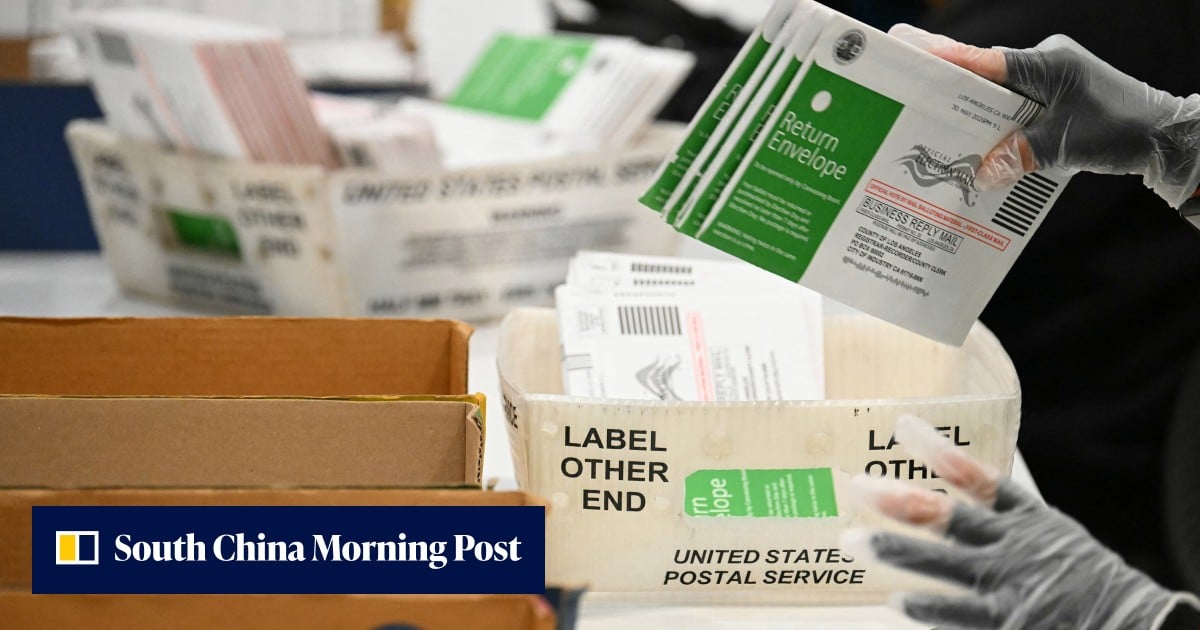
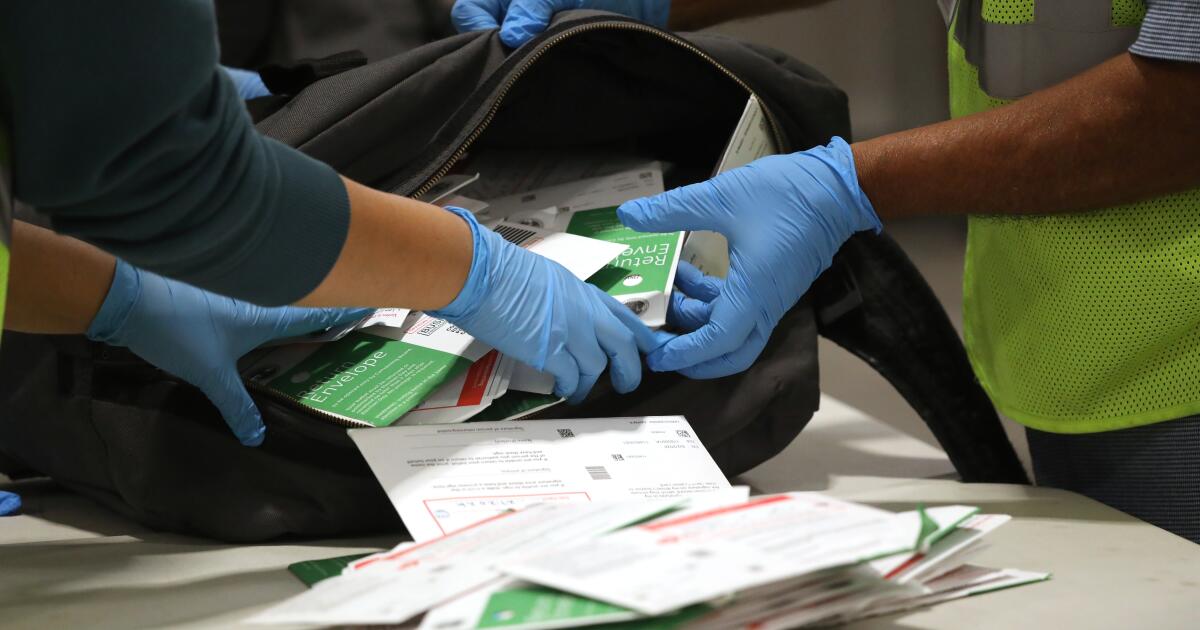
The rule would require ballot envelopes to comply with new USPS design requirements and carry unique barcodes while requiring states to upload information about voters receiving mail ballots into a federal online portal.
asserted
rule → require → portal
The Postal Service could refuse to deliver certain ballot mail that failed to meet those requirements.
uncertain
that → refuse → requirements
Nichols, a Trump-appointed judge, claimed that only Congress has the power to allow USPS to enforce this rule and wrote the rule would “create even more confusion and misunderstanding.”
asserted
rule → appoint → confusion
Nichols’s ruling followed a Sept. 4 injunction from U.S. District Judge Indira Talwani of Boston, an appointee of former President Barack Obama.
asserted
ruling → follow → Obama
The Trump administration has asked the Supreme Court to lift Talwani’s injunction and allow the Postal Service rules to take effect while litigation continues.
asserted
litigation → ask → effect
But the rapidly approaching election could complicate the administration’s effort even if the justices are receptive to its underlying legal arguments.
uncertain
justices → approach → arguments
Elections experts claim that implementing the executive order would inject chaos into the electoral process and likely disenfranchise millions of voters.
uncertain
implementing → claim → voters
Ballots have already been sent out in North Carolina, Alabama, and Wisconsin.
asserted
Ballots → send → Carolina
Military and overseas mail ballots are expected to be sent in all states by Saturday, 45 days before the midterm elections, according to USPS.
uncertain
ballots → expect → USPS
Two election law experts told the Washington Examiner that the increasingly compressed timeline makes it less likely the Supreme Court will allow the administration to impose the new system for the 2026 election.
asserted
administration → tell → election
“I’m very confident the Supreme Court is going to decline to stay the injunction,” said David Becker, executive director of the nonpartisan Center for Election Innovation and Research,
asserted
Becker → ’m → Innovation
“I believe they’re going … to keep the injunction in place for the 2026 election cycle.”
asserted
they → believe → cycle
“Right now, every time a court has considered either of the executive orders on elections this president has signed, they block them every single time,” Becker said.
asserted
Becker → consider → them
“Every single effort this administration has engaged in, they’ve lost.
asserted
they → engage → ?
[These] efforts to seize voter data, they’re 0 and 23 in those cases.
asserted
they → seize → cases
The efforts to investigate past elections and find past fraud or malfeasance, they found nothing.
asserted
they → investigate → nothing
There is zero reason to believe that the Supreme Court is going to go against what they’ve done.”
asserted
they → be → what
Stephen Richer, a legal fellow at the Cato Institute, also told the Washington Examiner that, based on Nichols’s ruling on the infeasibility of implementing the new rule “is part of the reason why I think that the court is going to leave the injunction in place from Boston.”
asserted
court → tell → Boston
“It’s become administratively even more complicated to put into effect in any meaningful and non-problematic way,” Richer said.
asserted
Richer → become → way
Experts also concede that the high court tends to prefer staying out of elections and opting to allow states to handle the process.
asserted
states → concede → process
Yet Trump’s order also deals with the federal government’s handling of the mail, which complicates the issue.
asserted
which → deal → issue
In an amicus brief, the American Postal Workers Union, AFL-CIO, claimed that “the Final Rule would likely cause catastrophic wholesale non-delivery of mail to hundreds of thousands of voters.”
asserted
Rule → claim → voters
“An enormous number of postal clerks in facilities nationwide would be needed to implement the Final Rule’s restrictions on mail ballot acceptance,” the union, which represents 200,000 employees in the U.S. postal industry, wrote.
asserted
which → need → industry
“These postal clerks cannot realistically be trained in the operation of the Ballot Portal in the short time before the November elections.”
asserted
clerks → train → elections
The Trump administration disputed claims that the USPS rule would disenfranchise voters so close to the election.
uncertain
rule → dispute → election
Solicitor General D. John Sauer filed a supplemental brief with the Supreme Court on Monday, arguing that “the Postal Service’s final rule imposes only modest envelope-design and addressee-information requirements for federal-election ballots sent via U.S. Mail.”
asserted
rule → file → Mail
“Specifically, the Rule creates standardized design and review requirements for ballot envelopes that build on practices the Postal Service has long recommended, some of which are already in use in many States (including many of the respondents here),” Sauer also wrote.
asserted
Sauer → create → respondents
“And it requires States to upload the name, address, and barcode information of intended recipients of ballot mail in an online portal—information that election officials would necessarily already possess to send ballot mail under the Rule to those recipients.”
asserted
officials → require → recipients
White House spokeswoman Lauren Bis defended the administration’s efforts to protect mail voting in a statement to the Washington Examiner.
asserted
Bis → defend → Examiner
“These are commonsense measures to protect the security of mail-in ballots and ensure only Americans vote in American elections,” Bis said.
asserted
Bis → protect → elections
“These safeguards for mail ballots were proposed months ago giving election officials ample time to prepare for the 2026 election.
asserted
safeguards → propose → election
We look forward to the Supreme Court’s ruling.”
asserted
We → look → ruling
Depending on what reasoning the Supreme Court offers in its final ruling could determine whether the Trump administration continues the fight beyond this election cycle.
uncertain
administration → depend → cycle
“It depends on the rule.
asserted
It → depend → rule
If it just says ‘Look, this is too late, sorry,’ I think that it continues to be litigated,” Richer said.
asserted
Richer → say → ?
“If the Supreme Court says, ‘Yeah, this is too late, and also it’s almost it’s very likely unconstitutional because the president doesn’t have this authority,’ then I think that they might just let this one die out and not further pursue it.”
uncertain
one → say → it
 The Aporia