California, other states warn Supreme Court of ‘chaos’ if it lets USPS mail ballot rules stand
-
Click here to listen to this article -
- The contested rules require states to rapidly overhaul mail voting with new voter lists and bar-coded envelopes.
asserted
rules → warn → lists
- The Supreme Court is expected to rule relatively quickly, given the emergency nature of the appeal.
asserted
Court → expect → appeal
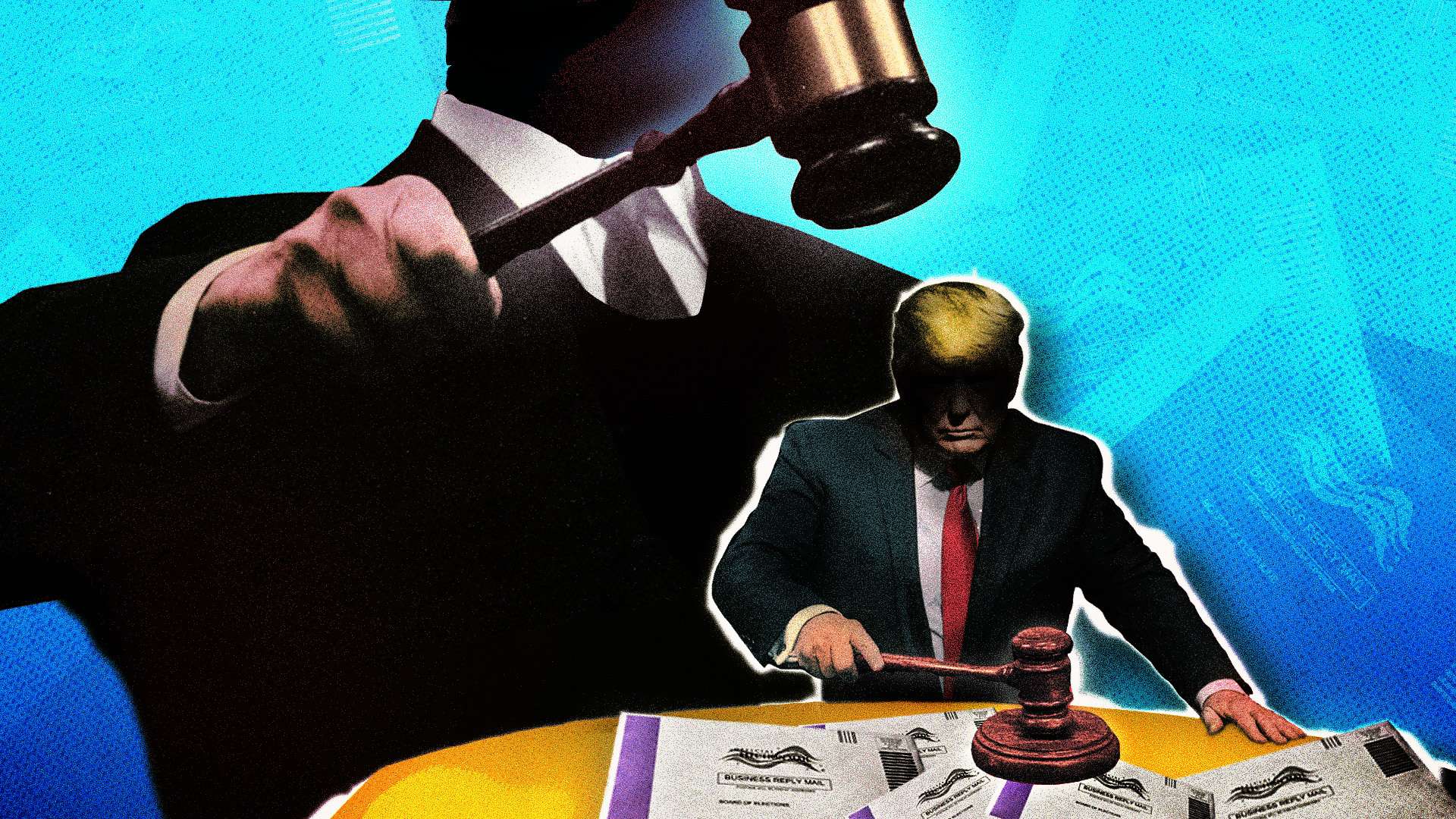
California and nearly two dozen other states warned the U.S. Supreme Court Wednesday that allowing the U.S. Postal Service to move forward with President Trump’s new rules for mail ballots in the November election would cause “chaos” and could disenfranchise millions of eligible voters.
uncertain
Service → warn → voters
“In some States ... compliance with USPS’ rule would be impossible ahead of the midterms, meaning that millions of voters would be unable to vote by mail and some would not be able to vote at all,” the states argued.
asserted
states → mean → mail
“In the remaining States, there would be chaos — and a significant risk that millions more voters would be denied the ability to vote.”
asserted
voters → remain → ability
The Democrat-led coalition — which includes California, 23 other states and the District of Columbia — also cited objections from lower-ranking state and elections officials in conservative states that have not objected to the Postal Service’s position, including the lieutenant governor and other officials in Utah saying implementation of the new rules would “be an unmitigated disaster.”
asserted
implementation → lead → rules
Similar warnings have emanated from Florida, Ohio, Texas and Wisconsin.
asserted
warnings → emanate → Florida
“Whatever else may be said of USPS’ new rule, it would wreak havoc on States and their voters if it takes effect at this late point,” the Democrat-led states wrote, pointing out that some States, including North Carolina and Wisconsin, have already begun to mail out ballots.
uncertain
States → say → ballots
The effort is part of the implementation of President Trump’s executive order limiting mail voting and has been temporarily halted by a federal judge.
asserted
effort → limit → judge
The ruling is being appealed by the administration and the directive may ultimately end up back before the U.S. Supreme Court.
uncertain
directive → appeal → Court
The states’ arguments were in response to the Trump administration over the weekend filing an emergency appeal to the high court, asking it to overturn a lower-court ruling halting the plan from being implemented for the Nov. 3 election.
asserted
administration → file → election
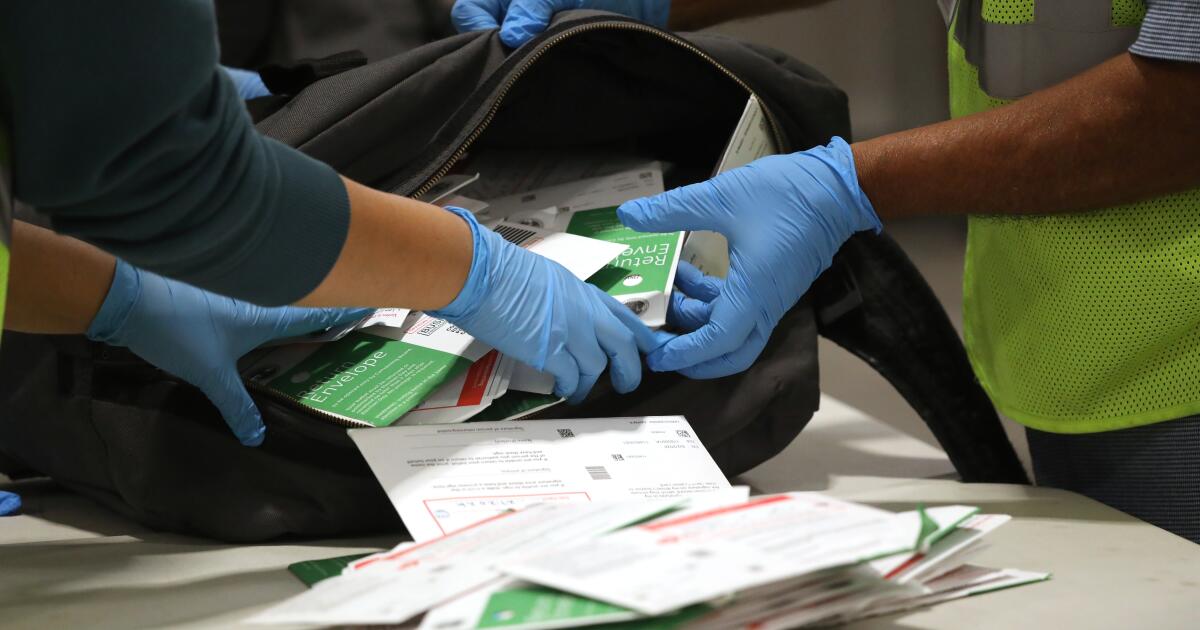
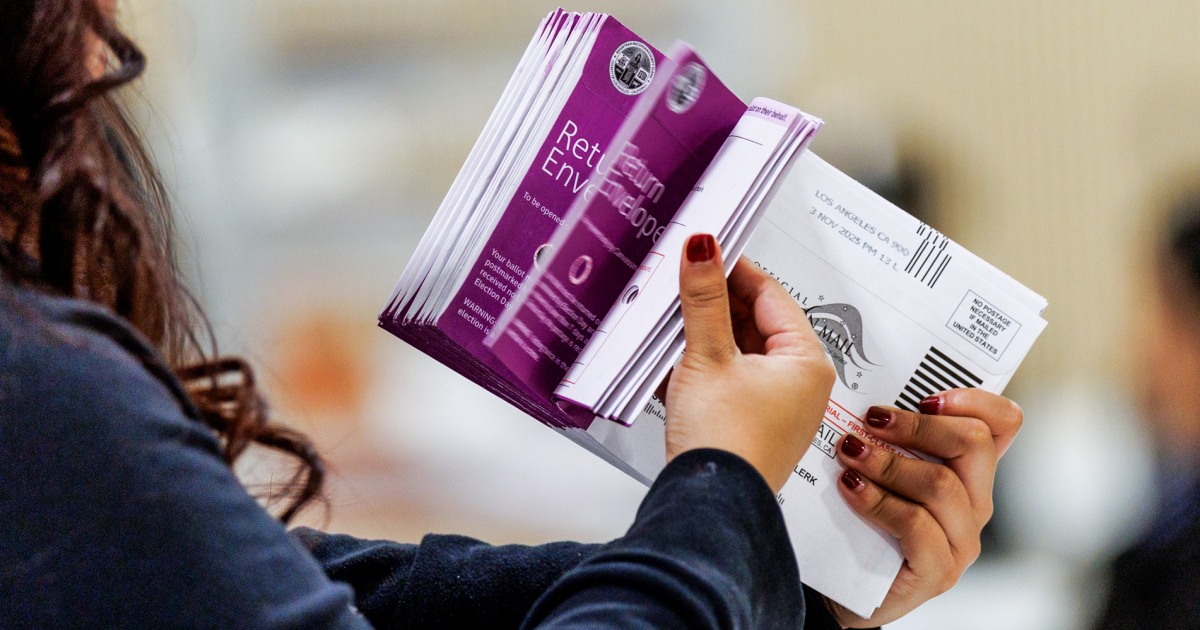
The new rules — developed in response to a March executive order from Trump — require states to submit their complete voter lists to the Postal Service, and to adopt new ballot envelopes with individualized voter bar codes designed by the Postal Service.
asserted
rules → develop → Service
They require the Postal Service to then reject any mail ballots that don’t match those lists.
asserted
that → require → lists
Trump’s order also directed the Department of Homeland Security to develop its own list of eligible citizen voters, ostensibly to be compared against the state lists.
asserted
order → direct → lists
Trump and other supporters of the changes — including top officials from a dozen Republican-led states — argue they are necessary to prevent widespread voter fraud, including by noncitizens.
asserted
they → include → noncitizens
Elections experts say there is no evidence of such widespread fraud, despite robust audits and other searches for it.
asserted
experts → say → it
The Democrat-led states sued to block the changes on multiple grounds, including that neither Trump nor the Postal Service have any authority to regulate state-run elections, that the changes would illegally prevent eligible voters from casting ballots, and that the timeline imposed by the new rule — formally issued by the Postal Service on Aug. 21 — made compliance by November impossible.
asserted
compliance → lead → November
Independent voting rights groups also sued, alleging the new rules threatened to disenfranchise voters and make their work educating voters on their options for casting a ballot impossible to carry out.
asserted
work → sue → ballot
A Postal Service whistleblower recently added skepticism to the agency’s ability to implement the new rules on its end, alleging in a statement published by congressional Democrats that the agency’s online portal for verifying ballots was built in a “slapdash” manner, is “fundamentally flawed” and threatens as built to reject thousands of ballots if just a single one cannot be properly read.
asserted
one → add → ballots
Last week, U.S. District Judge Indira Talwani granted requests from the states and the independent groups to halt the plans from being implemented nationwide, issuing a preliminary injunction requiring the Postal Service to cease all work on them.
asserted
Talwani → grant → them
The Trump administration then bypassed the U.S. 1st Circuit Court of Appeals to ask the Supreme Court for relief from Talwani’s order.
asserted
administration → bypass → order
Solicitor Gen. D. John Sauer, the administration’s top litigator, argued that the warnings from states that the changes are unworkable, represent an overreach of federal authority or would cause chaos in November are all baseless.
asserted
changes → argue → November
A federal judge again Friday blocked the U.S. Postal Service from enacting President Trump’s sweeping new mail ballot rules for the November election.
asserted
judge → block → election
“The Rule ensures that States remain responsible for determining voter eligibility and eligibility to vote by mail, and it does not dictate ballot content, mailing or receipt deadlines, or ballot-counting procedures,” Sauer wrote.
asserted
Sauer → ensure → content
“The Rule thus plainly does not seize control of States’ administration of elections — it simply imposes reasonable preparation requirements for certain election-related mail.”
asserted
it → seize → mail
Sauer argued that if the court does not allow the changes to proceed, it would cause “serious irreparable harm on the federal government, the States themselves, and the voting public” by “nullifying the Postal Service’s efforts to address the risk that the federal mails will be used to perpetrate voter fraud.”
asserted
mails → argue → fraud
Experts have consistently rejected those claims — including in their own filings before the high court.
uncertain
Experts → reject → court
Rick Hasen, director of the Safeguarding Democracy Project at UCLA Law, joined three other election experts to argue to the lower court that the Trump administration’s claims of injury were “speculative and weak.”
uncertain
claims → join → injury
They noted that the administration had “offered no evidence” in court that the new rules would “stop any appreciable amount of voter fraud or even that voter fraud through the mails is a widespread problem that USPS should address.”
asserted
USPS → note → that
Meanwhile, they wrote, there was “undisputed evidence” presented to the lower court that the Postal Service is “still not prepared to implement its new rule or do so accurately and efficiently, even as states have begun mailing out their ballots,” and that the “harm to the states and to voters is enormous, as the rule threatens to disenfranchise millions of elderly voters, disabled voters, military voters and all others including the most vulnerable who depend on mail voting, in both red and blue states.”
asserted
who → write → states
The Democrat-led states also noted that the Trump administration hadn’t proved that widespread voter fraud is a legitimate threat, but had shown it is ill-prepared itself to implement the changes without causing widespread disruption — as evidenced in part by the whistleblower’s claims.
uncertain
it → lead → claims
It’s unclear when the Supreme Court will rule, though a relatively quick decision is expected given the emergency nature of the appeal.
uncertain
decision → ’ → appeal
 The Aporia