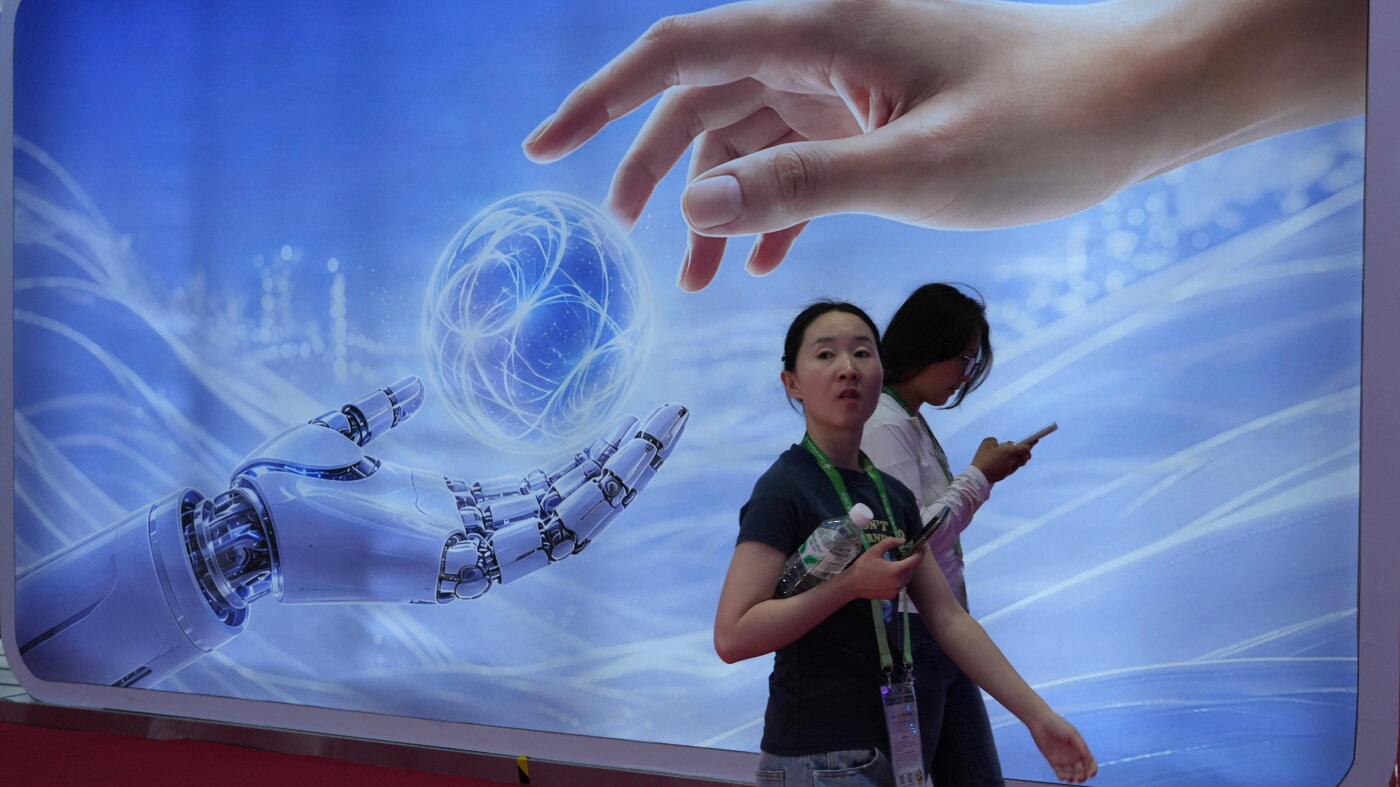
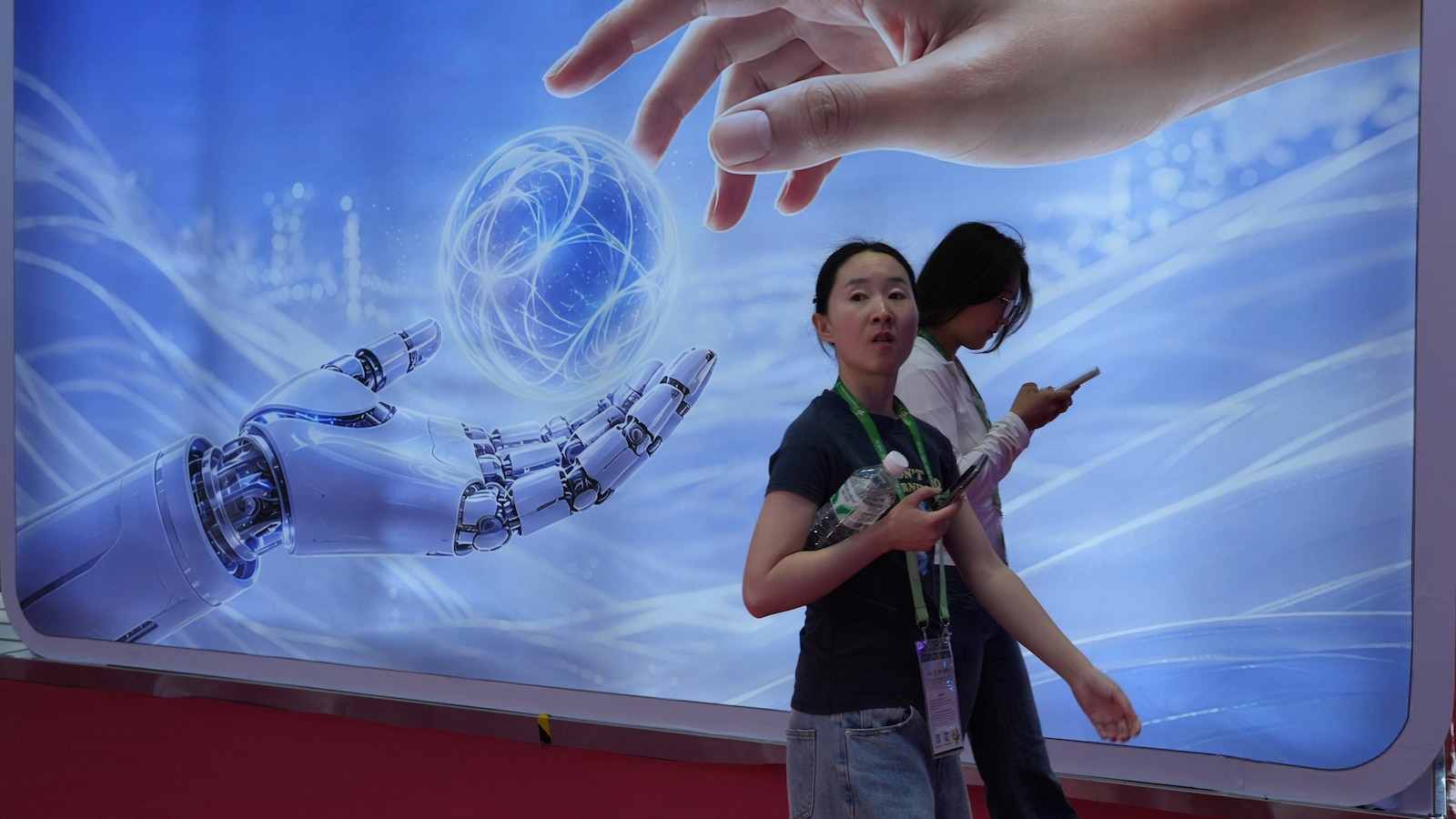
Photo via Semafor

Beijing issues AI warnings but rejects US calls to slow development

Read the original at Semafor ↗
Cite

Rao, P. (2026, September 14). Beijing issues AI warnings but rejects US calls to slow development. Semafor. https://www.semafor.com/article/09/14/2026/beijing-issues-ai-warnings-but-rejects-us-calls-to-slow-development

Dated when The Aporia collected the article, usually within hours of publication. Check the original for its exact date and byline.

Semafor · collected 2026-09-14 · by Prashant Rao

Quick Summary

China’s minister of state security warned about six principal risks posed by AI, including threats to political stability and national defense. Despite these concerns, Beijing rejected US calls to slow AI development, with a state-backed outlet calling for such measures “out of the Cold War playbook.” Some Chinese analysts advocate for international cooperation to maintain influence over global AI regulations and market access.
Written by AI on 2026-09-14, from this article's own text only (the story summary below draws on all the coverage).

AI analysis

Story summary

Minister Chen Yixin, head of China’s State Security, warned that artificial intelligence (AI) poses significant national security threats to China, including risks to political and ideological stability. Published on September 13, 2026, Chen accused foreign entities of using generative AI technologies to spread harmful information against China. He also noted that AI is now the main battleground for global technological competition between major powers.

Chinese officials are dismissing calls from U.S. tech leaders like Dario Amodei (CEO of Anthropic) and Sam Altman (CEO of OpenAI) to slow down AI development due to safety concerns, describing these as "fearmongering" and part of a Cold War playbook aimed at containing China. Chinese leader Xi Jinping is scheduled to meet with U.S. President Donald Trump in Washington later that month, where AI governance and safety will be key topics for discussion.

The Global Times, a state-backed newspaper, criticized Amodei's call for slowing AI development as an attempt to hinder China’s progress. Meanwhile, the Ministry of Foreign Affairs urged international cooperation on AI rather than engaging in confrontation or malicious competition.


Written for “China AI Rivalry Usa” on 2026-10-29, grounded in this article and the 9 other(s) covering the same event.

Story

📰 China AI Rivalry Usa
Politics · 10 article(s) covering the same event. Compare every outlet's account →

Compared with similar articles

This article reads leans right and hedges 0% of its claims. Each row says how that neighbour differs.
Al Jazeera
⚖️ Leans left further left than this Hedges 1 of 2 claims Outlet record 60/100
NBC News
⚖️ Leans right Hedges 6 of 37 claims Outlet record 60/100
NPR
Hedges 6 of 26 claims Outlet record 60/100
ABC News (US)
Hedges 3 of 23 claims Outlet record 70/100
BBC News
Hedges 2 of 29 claims Outlet record 69/100
South China Morning Post
⚖️ Leans strongly left further left than this Hedges 2 of 7 claims Outlet record 64/100
“Article A discusses China's warning about Japan's AI satellite plans, while Article B focuses on China rejecting US calls to slow AI development and addresses internal concerns about AI risks.”
NBC News
Outlet record 60/100
“The articles discuss different aspects and perspectives on AI risks; one focuses on warnings from researchers about AI's threat to humanity in general, while the other reports on Beijing's response to US calls for slowing AI development.”
CBC News
Hedges 4 of 34 claims Outlet record 60/100
“The articles discuss different perspectives on AI from Chinese officials and US President Trump, but describe separate events occurring in distinct contexts.”
New York Post
Hedges 12 of 37 claims Outlet record 66/100
“The articles discuss different perspectives on AI warnings but describe distinct statements and reactions from China and US tech leaders.”
Washington Examiner
⚖️ Leans left further left than this Hedges 10 of 37 claims Outlet record 70/100
“The articles cover different topics related to AI regulation but describe distinct events and perspectives from Chinese officials and US political figures.”
How this article was measured signals, leaning charts, publisher record, byline, topics and claims

Signals How these are calculated →

Claims extracted
4
sentences that state something as happening or true
Uncertain
0%
0 of 4 hedged ("reportedly", "may", "according to")
Leaning
Leans right
of the writing, not the subject · beta estimate
Publisher signals
60/100
Semafor's corrections and hedging, across everything collected from it. Not a measure of accuracy.
Outlets on this story
10
Politics
Same framing elsewhere
1
articles that frame the event the way this one does
Analyzed 2026-09-14 · how these are computed

How this is being covered How these are calculated →

Article leaning vs. publisher reliability
Source leaning vs. consistency

Publisher

Semafor · 1358 article(s) · 1 correction(s) detected
Running correction rate · 1 correction(s)

Who wrote this

Prashant Rao
80 article(s) here · 0 carrying a prediction
🔮 The European Central Bank announced on Wednesday that President Christine Lagarde will step down from the job in February, eight months before her tenure was set to end, formalizing a move that had been rumored since the beginning of this year.
🔮 The US vice president reportedly wrote to the head of Iran’s top security body to restart truce talks, Gulf states are driving a deal to fully reopen the Strait of Hormuz, and Iran’s foreign minister said Tehran would “give diplomacy a chance.”
🔮 Goldman Sachs upped its forecasts for expansion this year and next as a result.
🔮 Markets have grown worried that Big Tech firms will not make sufficient money to cover their ballooning investments and are running into supply-chain bottlenecks in their huge infrastructure buildout: OpenAI has reportedly lowered its target valuation, South Korean chip giant SK Hynix pulled a planned IPO of one of its units, and an HSBC survey of hundreds of investors showed a majority expect “a meaningful slowdown in AI infrastructure spending” within the next 12 months.
2026-10-23 · speculative framing · US Treasurys gained in investors’ flight to safety
🔮 The unrest has huge domestic and international implications: Analysts argue the violence bolsters the case made by the far-right — the favorite in 2027 elections — that the current leadership is ineffective, while foreign investors, who hold the majority of France’s mammoth government debt, may grow skeptical that Paris can get to grips with its budget.
2026-10-23 · mixed framing · France braces ahead of planned weekend protests
🔮 Elon Musk’s companies, SpaceX and Tesla, have begun exploring a merger that would create a $3.5 trillion corporate giant spanning key sectors of cutting-edge technology.
2026-10-21 · assertive framing · SpaceX and Tesla mega-merger under discussion
🔮 The figures, cited in a prospectus obtained by The Wall Street Journal, come as the company builds towards an IPO that could value it at $2 trillion.
2026-10-21 · speculative framing · Anthropic plans $750 billion compute spend
🔮 Overall global warming is now likely to be between 2.6℃ and 2.8℃ by the end of the century, the UN Environment Programme predicted.
🔮 Though broadly upbeat, the data will likely amplify calls abroad for Beijing to do more to stoke consumption, with growing political frustration — particularly in the West — over what critics say is China’s overcapacity hollowing out industries in other countries.
🔮 Taiwan is set to tighten controls on selling cutting-edge AI chips to China in order to win favor with the US, though breakthroughs by Chinese firms suggest Washington’s efforts to contain their development are failing.
2026-10-16 · assertive framing · Taipei restricts China chip sales to appease the US
Also by Prashant Rao
Nothing else under this byline is closely related to this article, so these are simply their most recent.
All 80 articles by Prashant Rao →

Topics

Anthropic Beijing China Cold War The Global Times

Subjects

Beijing GPE · 2× China GPE · 2× Anthropic ORG · 1× Chinese NORP · 1× The Global Times ORG · 1×

Narrative

China’s minister of state security wrote in a weekend essay that AI posed six principal risks from his perspective, including threatening the security of the country’s political regime, digital infrastructure, public order, and national defense.
framing: assertive · carried by 1 article(s) · first seen 2026-09-14
2026-09-14 · Semafor
Beijing issues AI warnings but rejects US calls to slow development · assertive framing

Claims (4 extracted, 0 hedged)

Beijing warned that AI advancements threatened China’s political, economic, and social stability even as it dismissed US calls to slow the technology’s development. asserted
it → warn → development
China’s minister of state security wrote in a weekend essay that AI posed six principal risks from his perspective, including threatening the security of the country’s political regime, digital infrastructure, public order, and national defense. asserted
AI → write → regime
The Global Times, a state-backed outlet, nevertheless characterized a recent essay by Anthropic’s CEO calling for slowing AI’s advance as out of the “Cold War playbook.” asserted
Times → back → playbook
Still, some Chinese analysts have argued that Beijing should push for a superpower compact on AI, opting to “advance through concessions” in order to retain some sway over global regulation and access to key international markets. asserted
Beijing → argue → markets
💬Give feedback
🕘History 🎫Support