China criticises idea it is in 'malicious competition' over AI

BBC News · collected 2026-09-14 · by Koh Ewe
Read the original at BBC News ↗

Summary

China’s foreign ministry spokesperson criticized narratives of threat and competition in artificial intelligence (AI) development, particularly responding to calls for slowing down AI advancement that could disadvantage China. This comes after warnings from US industry insiders about potential dangers posed by rapid AI progress and amid tensions between the United States and China over who will lead in this technology sector. The spokesperson emphasized the need for global cooperation in AI governance to be open and inclusive rather than confrontational, reflecting ongoing challenges in coordinating efforts between these two major players in AI innovation.
Written by the local model on 2026-09-14, using this article's own text rather than the other coverage of the same event (that is the story summary below).

Signals How these are calculated →

Claims extracted
29
claim-shaped sentences
Uncertain
7%
2 of 29 hedged
Leaning
withheld
no quote in the article backed the model's score
Correction & hedging signals
95.5
corrections and hedging in what we collected; not a measure of accuracy
Outlets on this story
16
Technology
Narrative spread
1
articles carrying this framing
Analyzed 2026-09-14 · how these are computed

AI analysis (generated at analysis time, not now)

Story summary

Anthropic CEO Dario Amodei called for slowing down AI development to ensure safety and alignment, a stance supported by OpenAI's Sam Altman and Elon Musk. However, these warnings have met significant pushback from China, with its State Security Minister Chen Yixin issuing a public warning about AI endangering national security. China’s Ministry of Foreign Affairs dismissed Amodei’s essay as an attempt to contain Chinese technological advancement, emphasizing the need for global cooperation rather than restrictions. The disagreement comes amid discussions between US President Donald Trump and Chinese leader Xi Jinping, set to meet in September 2026, where AI governance will be a key topic. China's Global Times newspaper described Amodei’s stance as part of a "Cold War playbook," suggesting that competition could outweigh safety concerns in the global race for AI dominance.

Written for “AI Development Debate China Us” on 2026-09-14, grounded in this article and the 15 other(s) covering the same event.
Why this leaning score
The model judged this article politically coded and scored it -0.35, but none of the 2 quote(s) it offered could be found in the article text, so the score is not published.
Written under an earlier scoring contract, which gave a paragraph rather than checkable quotes. Re-analysing this article replaces it.
Leaning score withheld for article 8652: no verified evidence · logged 2026-09-14

Story

📰 AI Development Debate China Us
Technology · 16 article(s) covering the same event.

How this is being covered How these are calculated →

Article leaning vs. publisher reliability
Source leaning vs. consistency

Compared with similar articles

This article reads unscored and hedges 7% of its claims. Each row says how that neighbour differs.
NBC News · 0.92 cosine similarity
⚖️ Leans right 🔴 16% hedged 6 of 37 📰 publisher trust 95
“Both articles report on China's response to calls for slowing AI development, criticizing it as fearmongering and a Cold War tactic aimed at hindering its progress relative to the US.”
NPR · 0.90 cosine similarity
⚖️ leaning not scored 🔴 23% hedged 6 of 26 📰 publisher trust 59
“Both articles report China's reaction to Anthropic CEO Dario Amodei's call for a slowdown in AI development, specifically criticizing narratives about malicious competition and addressing the topic on the same date.”
ABC News (US) · 0.87 cosine similarity
⚖️ leaning not scored 🔴 13% hedged 3 of 23 📰 publisher trust 95
“Both articles report on China's response to Anthropic CEO Dario Amodei's call for slowing AI development, specifically addressing concerns about China falling behind in the AI race.”
Semafor · 0.85 cosine similarity
⚖️ Leans right 🔴 0% hedged 0 of 4 📰 publisher trust 96
“Both articles discuss China's response to US calls for slowing down AI development on the same date and address similar concerns.”
CBC News
⚖️ leaning not scored 🔴 35% hedged 15 of 43 📰 publisher trust 95
“The articles discuss different aspects of AI concerns and reactions; Article A focuses on warnings from Anthropic about existential risks, while Article B discusses China's response to 'threat narratives' regarding AI development.”
NBC News
⚖️ Leans left 🔴 27% hedged 10 of 37 📰 publisher trust 95
“The articles discuss different aspects of concerns over AI, with Article A focusing on China's criticism and a call for slowing down AI development while preventing China from falling behind. Article B reports on two researchers leaving their positions to warn about the risks of advanced AI becoming uncontrollable.”
The Straits Times
⚖️ leaning not scored 🔴 3% hedged 1 of 36 📰 publisher trust 58
“The articles discuss different reactions to calls for an AI slowdown, with Article A focusing on China's response and Article B focusing on Silicon Valley figures' pushback.”
The Hammurabi solution to AI different event · 95%
Washington Examiner
⚖️ Leans left 🔴 27% hedged 10 of 37 📰 publisher trust 96
“The articles cover different perspectives on AI governance but do not describe the same specific incident or meeting.”
South China Morning Post
⚖️ leaning not scored 🔴 17% hedged 1 of 6 📰 publisher trust 93
“The articles describe different statements made by Chinese officials and US President Donald Trump regarding AI governance, rather than a single specific incident.”
Al Jazeera
⚖️ Leans left 🔴 50% hedged 1 of 2 📰 publisher trust 96
“Both articles discuss China's response to 'threat narratives' about AI governance on the same date, referencing Dario Amodei's call for slowing AI development.”

Publisher

BBC News · 793 article(s) · 0 correction(s) detected
No corrections detected for this publisher. That may mean careful reporting, or simply that nothing has been checked.

Who wrote this

Koh Ewe
6 article(s) here · 1 carrying a prediction
🔮 Over the past week, industry insiders at the leading US AI labs have been warning in extremely stark terms about the potential threat AI poses, with some saying it could wipe out humanity.
🔮 Dr Balakrishnan added the stone would have been in the patient's bladder for about five to 10 years.
🔮 "The sky was blue, life moved slowly and people could say what they really thought."
🔮 Starbucks Korea had in May launched a coffee tumbler promotion called "Tank Day" on the anniversary of the 1980 Gwangju Uprising, where hundreds were believed to have been killed by military forces.
Also by Koh Ewe
Nothing else under this byline is closely related to this article, so these are simply their most recent.
All 6 articles by Koh Ewe →

Topics

Anthropic Beijing China Chinese Singapore

Subjects

China GPE · 13× Anthropic ORG · 3× Beijing GPE · 3× Chinese NORP · 3× Donald Trump PERSON · 2× Chang Jun Yan PERSON · 1× Dario Amodei PERSON · 1× Guo Jiakun PERSON · 1× S Rajaratnam School of International Studies ORG · 1× Singapore GPE · 1×

Narrative

"We need ways to ensure that alignment and safety techniques stay ahead of progress in model capabilities," Open AI's chief exective Sam Altman wrote on X on Monday, which was echoed by Microsoft boss Satya Nadella who said AI development "cannot be controlled by a handful of entities". But US President Donald Trump downplayed the risks, saying that he wanted to keep the US's lead over China "because whoever wins AI, wins".
framing: assertive · carried by 1 article(s) · first seen 2026-09-14
🔮 Over the past week, industry insiders at the leading US AI labs have been warning in extremely stark terms about the potential threat AI poses, with some saying it could wipe out humanity.
2026-09-14 · BBC News
China criticises idea it is in 'malicious competition' over AI · assertive framing

Claims (29 extracted, 2 hedged)

- Published China has hit out against what it has called "threat narratives" over AI governance and warned against "engaging in confrontation and malicious competition". asserted
it → publish → confrontation
It follows Anthropic CEO Dario Amodei's calls for a slowdown in AI development - but in a way that prevents China from pulling ahead in the AI race. asserted
that → follow → race
Over the past week, industry insiders at the leading US AI labs have been warning in extremely stark terms about the potential threat AI poses, with some saying it could wipe out humanity. uncertain
it → lead → humanity
But US President Donald Trump has said his priority is making sure the US develops the tech faster than China. asserted
develops → say → China
China's foreign ministry spokesperson Guo Jiakun told reporters on Monday "narratives of threat, confrontation, and malicious competition serve only to disrupt the process of global AI governance and are not in anyone's interest". asserted
narratives → tell → interest
"All parties should work together to advance AI in a manner that is open, inclusive, beneficial to all, and oriented toward the good," he added. asserted
he → work → good
His comments highlight the difficulties in getting agreement between the world's two leading AI powers. asserted
comments → highlight → powers
An agreement between the US and China to regulate AI development is "next to impossible", says Chang Jun Yan, an assistant professor with the military studies programme at Singapore's S Rajaratnam School of International Studies. asserted
Yan → regulate → Studies
"As part of each state's core national security interests, cooperation in taking things slower and more safely in relation to AI, is very, very unlikely." asserted
cooperation → take → AI
AI now sits at the heart of the US-China rivalry as the world's two largest economies seek to gain an edge in advanced tech. asserted
economies → sit → tech
Despite US export bans on critical chips, Chinese AI innovation has been expanding, driven by open-source technology and Beijing's backing. asserted
innovation → expand → technology
Many experts believe the US is still ahead, and Chinese firms are trying to catch up as they struggle to raise the hundreds of billions of dollars that investors are ploughing into American AI. asserted
investors → believe → AI
But Beijing, including Chinese leader Xi Jinping himself, has also spoken about the risks posed by AI. asserted
Beijing → include → AI
China must "balance development and security", and introduce and improve relevant laws and ethical guidelines, and strengthen prevention of risks, to "safeguard the interests of the people and national security", state security minister Chen Yixin wrote on Sunday. asserted
Yixin → balance → Sunday
He warned of the dangers of "hostile forces" such as foreign intelligence using AI and called for international cooperation. asserted
He → warn → cooperation
"There are strong signals that Washington and Beijing share an understanding of frontier risks," Kenton Thibaut, a senior resident China fellow at the Atlantic Council, wrote recently. asserted
Thibaut → be → Council
China has "technical reasons" to work with the US, she argues, because its developers would be able to see how their models are deployed outside China, and detect and undertsand vulnerabilities. asserted
models → have → vulnerabilities
In July, China set up the World AI Cooperation Organisation, which aims to shape global AI governance. asserted
which → set → governance
And speaking at the Brics summit in India on Sunday, Xi proposed creating a community for open-source AI. asserted
Xi → speak → AI
All this comes as calls for AI regulation grow louder in the US, especially after a former Anthropic researcher Jacob Coxson said last week that "there is a strong chance that we could all die in the immediate future" if the current pace of development continued. uncertain
pace → come → development
Since then top industry bosses, such as Amodei, have called for a slowdown and more regulation. asserted
bosses → call → slowdown
"We need ways to ensure that alignment and safety techniques stay ahead of progress in model capabilities," Open AI's chief exective Sam Altman wrote on X on Monday, which was echoed by Microsoft boss Satya Nadella who said AI development "cannot be controlled by a handful of entities". But US President Donald Trump downplayed the risks, saying that he wanted to keep the US's lead over China "because whoever wins AI, wins". asserted
wins → need → AI
The former Anthropic employee Coxson told the BBC that there needed to be "some sort of coordinated slowdown with China, if we're going to avoid a race at an international scale". asserted
we → tell → scale
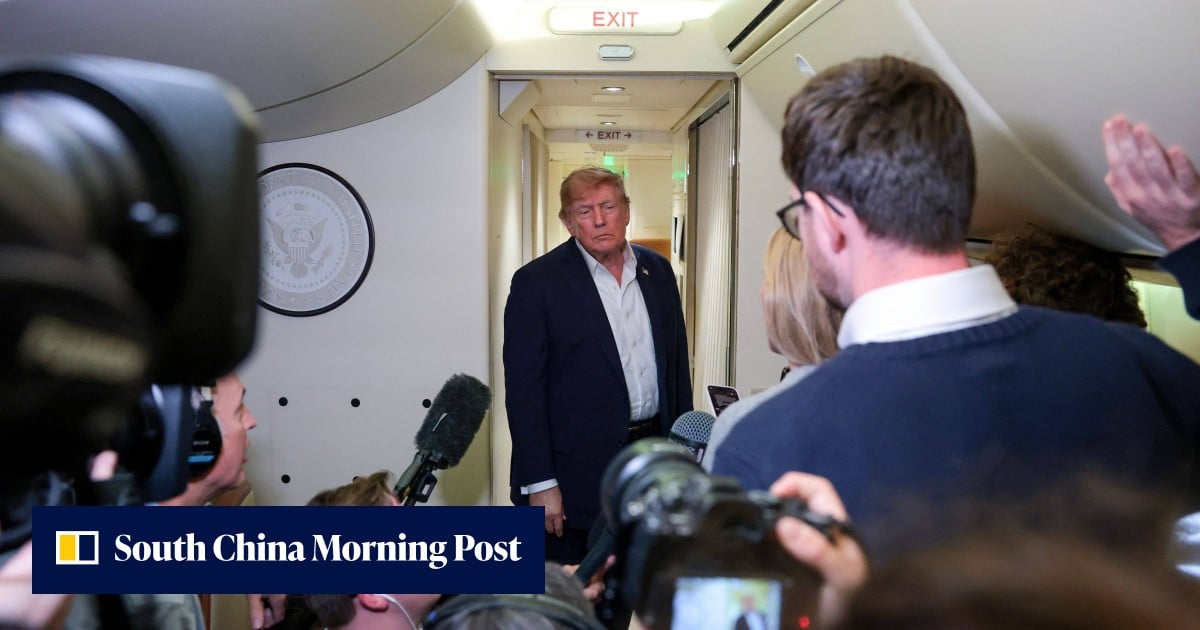
As Trump prepares to host Xi at the White House next week, the two sides are trying to include AI on the agenda, South China Morning Post reports. asserted
Post → prepare → agenda
It is also likely to be part of the talks between US Treasury Secretary Scott Bessent and Chinese Vice-Premier He Lifeng, who are trying to meet before next week's summit, the paper said. asserted
paper → try → summit
Vice-Premier He runs the agency that oversees the country's economic planning, including AI development. asserted
that → run → development
While collaboration between the US and China is important, experts say the nstakes are high for both countries. asserted
nstakes → say → countries
"If China establishes a durable lead in frontier AI, this will not be viewed in Washington as losing a technology race," says Chasen Nevett, managing director at Hong Kong-based firm, Forani Investments. " asserted
Nevett → establish → firm
It will be viewed as losing part of the strategic infrastructure of the next industrial era." asserted
It → view → era
💬 Give feedback
🕘 History 🎫 Support