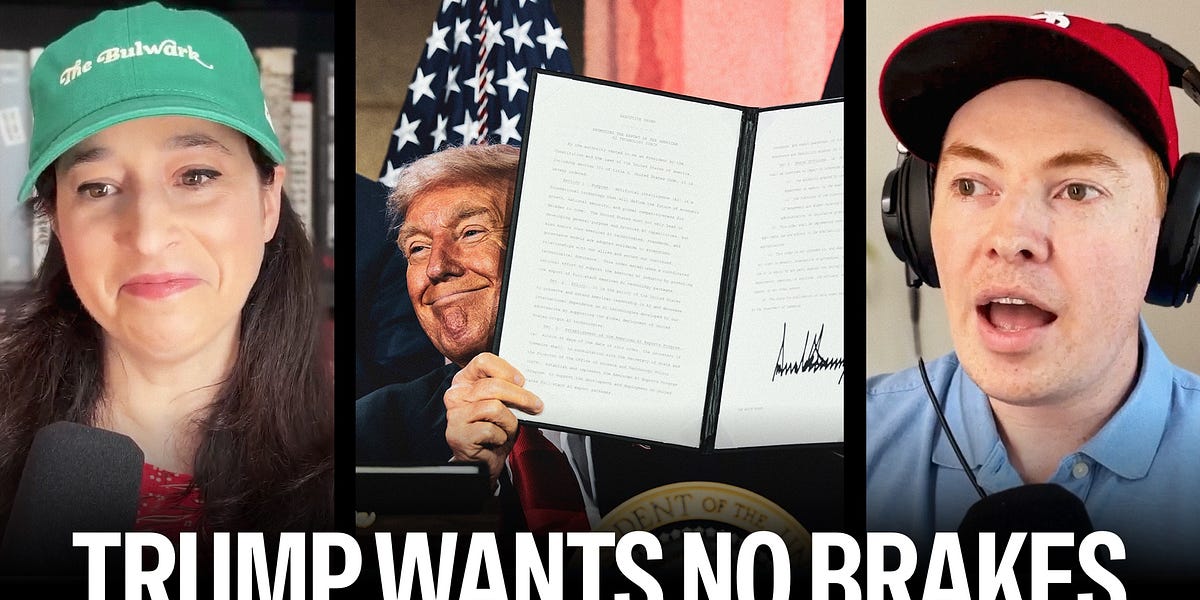
Former President Barack Obama is urging Democrats to make regulating artificial intelligence one of their “central agendas” in this year’s elections, but when it comes to what exactly he wants Democrats to do policy-wise, he appears to have no answers.
asserted
he → urge → answers
Not that Republicans seem to have much of an AI agenda either.
asserted
Republicans → seem → agenda
This Sunday, House Speaker Mike Johnson called for, “a meeting in Washington with AI platform providers and key experts to determine the right course forward and discuss the responsibility providers have to ensure the safety of their products.
asserted
providers → call → products
As politicians in Washington try to figure out how to regulate an industry they don’t understand, they may want to look back in time for a regulatory model.
uncertain
they → try → model
The Code of Hammurabi, promulgated in ancient Babylon around 1750 B.C., contained no modern building department, permitting bureaucracy, or hundreds of pages specifying approved construction materials.
asserted
Code → promulgate → materials
Instead, it placed responsibility for structural failure directly on the builder.
asserted
it → place → builder
“If a builder builds a house for someone, and does not construct it properly,” Law 229 provided, and the house collapsed and killed its owner, “that builder shall be put to death.”
asserted
builder → build → death
If the collapse destroyed property, the builder had to replace what was destroyed and rebuild the house at his own expense.
asserted
what → destroy → expense
Those punishments are barbaric by modern standards, but the underlying regulatory idea has a modern analog: strict liability.
asserted
idea → underlie → analog
Instead of the government trying to determine beforehand exactly how a possibly dangerous product should be regulated, the law can place the cost of failure on those who create and deploy it.
uncertain
who → try → it
University of Houston law professor Gabriel Weil argues that this approach is particularly well suited to AI.
asserted
approach → argue → AI
The problem with top-down government regulation is that regulators must decide before a product reaches the public which risks are acceptable, which precautions are adequate, and which products should be approved.
asserted
products → decide → public
That works better when regulators understand the technology, its risks are reasonably measurable, and methods for mitigating those risks are relatively stable.
asserted
methods → work → risks
AI satisfies none of those conditions.
AI capabilities can advance dramatically from one model generation to the next, often in ways even their developers did not anticipate.
asserted
developers → satisfy → ways
Researchers disagree enormously about the magnitude of the dangers.
asserted
Researchers → disagree → dangers
Developers themselves cannot always predict what behaviors will emerge from increasingly autonomous systems.
asserted
behaviors → predict → systems
An approval regime, therefore, asks government officials to answer questions even the people building the systems cannot confidently answer.
asserted
people → ask → systems
As Weil puts it, ex ante regulation forces policymakers to make early judgments about “capabilities, harms, and precautions” while all three are changing rapidly.
asserted
three → put → capabilities
A Food and Drug Administration-style regulator could therefore be simultaneously too restrictive toward beneficial innovations and too permissive toward dangers nobody anticipated.
uncertain
nobody → anticipate → dangers
Strict liability approaches the problem from the opposite direction.
asserted
liability → approach → direction
Government does not have to know which safety architecture an AI laboratory should use.
asserted
laboratory → have → architecture
Developers remain free to experiment.
asserted
Developers → remain → ?
But if an autonomous system causes legally cognizable harm, liability attaches even when the developer claims to have exercised reasonable care.
uncertain
developer → cause → care
That changes the economics of AI safety.
asserted
That → change → safety
A company deciding how much to spend on testing, monitoring, containment, cybersecurity, or human supervision would have to account for the expected costs its systems could impose on everyone else.
uncertain
systems → decide → everyone
Risks that might otherwise be externalized onto innocent victims become costs borne by the enterprise creating the risk.
uncertain
that → externalize → risk
Weil argues that this preserves incentives for innovation while giving developers powerful incentives to discover safety measures regulators could never anticipate.
uncertain
regulators → argue → measures
The more controversial question is where that liability should stop.
asserted
liability → stop → ?
Under ordinary corporate law, officers are not personally responsible for corporate torts merely because they hold senior positions.
asserted
they → hold → positions
They only become personally liable when they themselves participate in direct wrongful conduct.
asserted
they → become → conduct
Corporate office alone generally does not create vicarious liability.
asserted
office → create → liability
A far more aggressive AI liability regime could change that rule by statute.
uncertain
regime → change → statute
Congress could specify that, for designated autonomous systems, strict liability attaches not only to the corporation but also to executives, and perhaps even engineers with actual deployment authority, responsible for releasing them.
uncertain
liability → specify → them
Such a strict liability regime would most likely slow down AI advancement.
asserted
regime → slow → advancement
It could encourage excessive caution and deter talented people from working on advanced AI.
uncertain
It → encourage → AI
Those concerns would have to be weighed against the opposite problem: allowing the humans making possbily catastrophic decisions to capture the financial benefits while placing much of the downside risk on shareholders, insurers, victims, or society.
asserted
humans → have → shareholders
Hammurabi understood something Washington too often forgets: Accountability can regulate behavior more effectively than bureaucracy.
asserted
Accountability → understand → bureaucracy