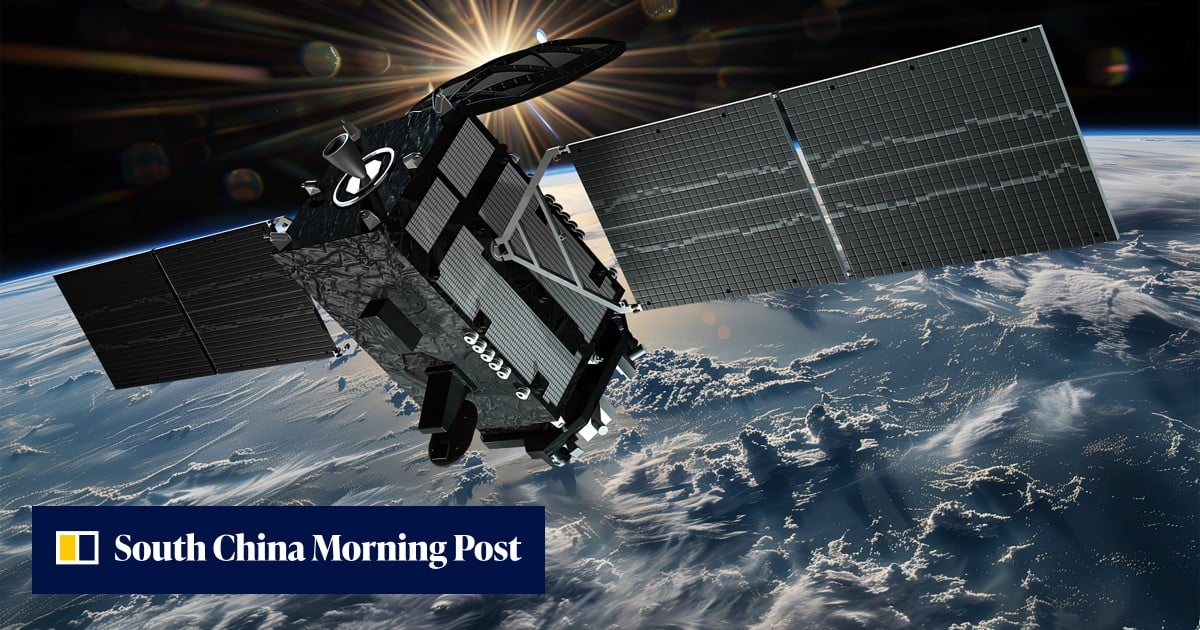
Japan’s AI satellites and other space ambitions ‘a serious threat’, China warns

South China Morning Post · collected 2026-09-10 · by Liu Zhen
Read the original at South China Morning Post ↗

Summary

China's state broadcaster CCTV warns that Japan's development of AI-equipped satellites is a serious threat, claiming it is part of Tokyo's broader strategy to militarize space. The planned satellites would enable quicker targeting decisions and strengthen Japan's counterstrike capability through missile guidance. Funding for the project has been included in Japan's draft defence budget request for 2027, although the exact amount is unknown. China views these AI-equipped satellites as a significant departure from traditional reconnaissance spacecraft that collect raw images to be processed on the ground.
Written by the local model on 2026-09-10, using this article's own text rather than the other coverage of the same event (that is the story summary below).

Signals How these are calculated →

Claims extracted
7
claim-shaped sentences
Uncertain
29%
2 of 7 hedged
Leaning
Centre
of the writing, not the subject
Publisher trust
93.5
red-flag proxy, not a credibility rating
Outlets on this story
1
World
Narrative spread
1
articles carrying this framing
Analyzed 2026-09-10 · how these are computed

AI analysis (generated at analysis time, not now)

Story summary

China has warned that Japan's plans to develop AI-equipped satellites are a "serious threat", with state broadcaster CCTV claiming they are a key part of Tokyo's broader strategy to militarize space. Japan's defense ministry plans to develop a prototype satellite with domestic companies and conduct ground tests in the coming years, with launches expected from 2030. The project aims to enable faster targeting decisions and strengthen Japan's "counterstrike capability", such as missile guidance, by allowing satellites to collect data from other satellites and process it in orbit. Funding for the project has been included in Japan's draft defense budget request for 2027, although the exact amount is not disclosed. The Japanese Nikkei newspaper reported that these AI-equipped satellites would be capable of analyzing surveillance intelligence in space, reducing communication time between satellites and the ground by sending only processed analysis results.
Written for “Japan-China Space Tensions” on 2026-09-10, grounded in this article and the 0 other(s) covering the same event.
Why this leaning score
The article's own words the score was based on. Each is quoted verbatim and was checked against the article text before being stored, so you can find it in the original.
Score -0.15 Confidence high
Leaning score -0.15 for article 7512 (high confidence, 1 verified quote) · logged 2026-09-10

Story

📰 Japan-China Space Tensions
World · 1 article(s) covering the same event. This is the one the site leads with.

How this is being covered How these are calculated →

Article leaning vs. publisher reliability
Source leaning vs. consistency

Compared with similar articles

This article reads centre and hedges 29% of its claims. Each row says how that neighbour differs.
Times of India
⚖️ leaning not scored 🔴 15% hedged 2 of 13 📰 publisher trust 94
“Article A discusses US allegations against China's AI firms, while Article B reports on China's warning about Japan's AI satellites, which are unrelated to each other”
South China Morning Post
⚖️ Leans strongly right further right than this 🔴 0% hedged 0 of 6 📰 publisher trust 94
“Article A mentions Victor Gao's statement in Penang, while Article B quotes CCTV on Japan's AI satellites as a threat to China”

Publisher

South China Morning Post · 186 article(s) · 0 correction(s) detected
No corrections detected for this publisher. That may mean careful reporting, or simply that nothing has been checked.

Who wrote this

Liu Zhen
3 article(s) here · 1 carrying a prediction
🔮 The Japanese Nikkei newspaper reported last week that the planned AI-equipped satellites would be capable of analysing surveillance intelligence in space.
🔮 Naval vessels homeported outside the United States are not strictly prohibited from receiving foreign MRO services and deployed US-homeported ships may also be serviced by foreign workers under specific conditions.
Also by Liu Zhen
Nothing else under this byline is closely related to this article, so these are simply their most recent.

Topics

CCTV China Japan Japanese Nikkei

Subjects

Japan GPE · 2× Japanese NORP · 2× Nikkei ORG · 2× CCTV ORG · 1× China GPE · 1× Tokyo GPE · 1×

Narrative

Japan’s AI satellites and other space ambitions ‘a serious threat’, China warns State broadcaster CCTV says satellite plan is a cornerstone of Tokyo’s broader space militarisation strategy
framing: mixed · carried by 1 article(s) · first seen 2026-09-10
🔮 The Japanese Nikkei newspaper reported last week that the planned AI-equipped satellites would be capable of analysing surveillance intelligence in space.
2026-09-10 · South China Morning Post
Japan’s AI satellites and other space ambitions ‘a serious threat’, China warns · mixed framing

Claims (7 extracted, 2 hedged)

Japan’s AI satellites and other space ambitions ‘a serious threat’, China warns State broadcaster CCTV says satellite plan is a cornerstone of Tokyo’s broader space militarisation strategy asserted
plan → warn → strategy
The Japanese Nikkei newspaper reported last week that the planned AI-equipped satellites would be capable of analysing surveillance intelligence in space. asserted
satellites → report → space
The aim is to speed up targeting decisions and strengthen the country’s “counterstrike capability”, such as missile guidance. asserted
aim → speed → guidance
According to the report, the defence ministry will develop a prototype satellite with domestic companies and conduct ground tests in the coming years, with space launches expected from the 2030 financial year. uncertain
launches → accord → year
Funding for the project has been included in Japan’s draft defence budget request for the 2027 financial year, although the exact amount has not been disclosed. asserted
amount → include → year
While traditional reconnaissance spacecraft send raw images to the ground for processing, these devices will collect data from other satellites and process the information in orbit. asserted
devices → send → orbit
By only sending the AI-generated analysis results, the Japanese project aims to significantly reduce the time for space-to-ground communication, according to the Nikkei report. uncertain
project → send → report
💬 Give feedback
🕘 History 🎫 Support