The article discusses how, unlike after the 1941 Pearl Harbor attack, there was a significant effort to condemn anti-Muslim bigotry in the aftermath of the September 11, 2001 attacks, with then-President George W. Bush and New York Mayor Rudy Giuliani both speaking out against it. Just three days after the 9/11 attacks, Bush delivered an address at the Islamic Center of Washington, stating that "Islam is peace" and calling for respect towards Muslims. According to the article, in the years following this initial response, anti-Muslim rhetoric has become a common feature of right-wing discourse. The article notes that about 120,000 Japanese-Americans were interned in camps after the Pearl Harbor attack, but does not provide specific numbers on anti-Muslim incidents since 2001.
Written by the local model on 2026-09-11,
using this article's own text rather than the other coverage of the
same event (that is the story summary below).
TWENTY-FIVE YEARS AGO, America’s overall response to the terrorist attacks of September 11, 2001 demonstrated the remarkable progress we had made as a society since the last comparable attack on American soil.
asserted
we → demonstrate → soil
After Imperial Japan launched a surprise attack on the U.S. base at Pearl Harbor in 1941, openly racist vitriol toward Japanese-Americans was the norm in mainstream discourse, including the press—and some 120,000 people, about two-thirds of them U.S. citizens born and raised in this country, were rounded up and incarcerated in internment camps.
asserted
thirds → launch → camps
It was a response fueled by fear and stereotype, and it went largely unchallenged by America’s leaders.
asserted
it → fuel → leaders
By contrast, in 2001, manifestations of anti-Muslim bigotry were roundly condemned by officeholders across the political spectrum, including Republican leaders—starting with President George W. Bush.
asserted
manifestations → condemn → Bush
In the years since then, though, anti-Muslim rhetoric has become a right-wing shibboleth.
asserted
rhetoric → become → years
Just three days after the 9/11 attack, President Bush spoke at an interfaith service at the National Cathedral in Washington, D.C., an event that included an imam, Muzammil Siddiqi, alongside Christian and Jewish religious figures.
asserted
that → speak → figures
Three days after that, he visited the Islamic Center of Washington, a major mosque in the nation’s capital, where he gave his famous “Islam is Peace” speech:
The face of terror is not the true faith of Islam.
asserted
face → visit → Islam
That’s not what Islam is all about.
asserted
Islam → ’ → ?
These terrorists don’t represent peace.
asserted
terrorists → represent → peace
They represent evil and war.
asserted
They → represent → evil
When we think of Islam, we think of a faith that brings comfort to a billion people around the world.
asserted
that → think → world
America counts millions of Muslims amongst our citizens, and Muslims make an incredibly valuable contribution to our country.
asserted
Muslims → count → country
And they need to be treated with respect.
asserted
they → need → respect
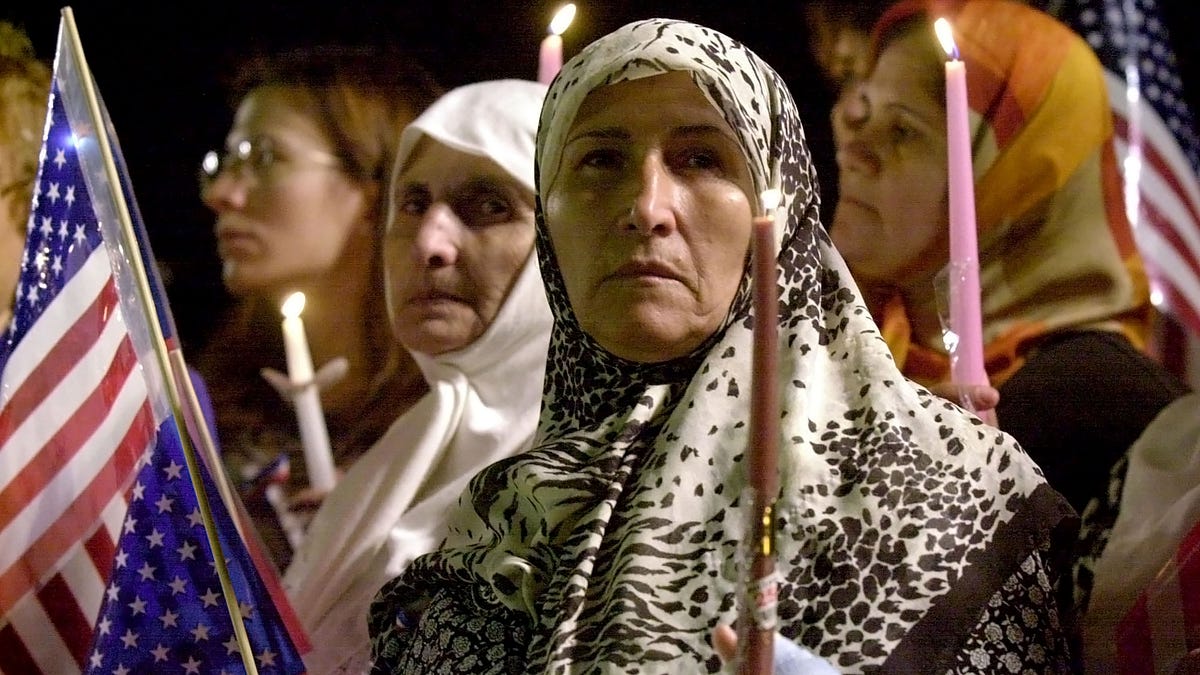
In our anger and emotion, our fellow Americans must treat each other with respect.
asserted
Americans → treat → respect
Women who cover their heads in this country must feel comfortable going outside their homes.
asserted
who → cover → homes
Moms who wear cover must not be intimidated in America.
asserted
who → wear → America
That’s not the America I know.
asserted
I → ’ → ?
That’s not the America I value.
asserted
I → ’ → ?
Those who feel like they can intimidate our fellow citizens to take out their anger don’t represent the best of America, they represent the worst of humankind, and they should be ashamed of that kind of behavior.
asserted
they → feel → behavior
New York Mayor Rudy Giuliani roundly condemned attacks on people perceived to be of Arab descent as early as September 13, making the obvious but necessary point that “nobody should attack anybody else.”
asserted
nobody → condemn → anybody
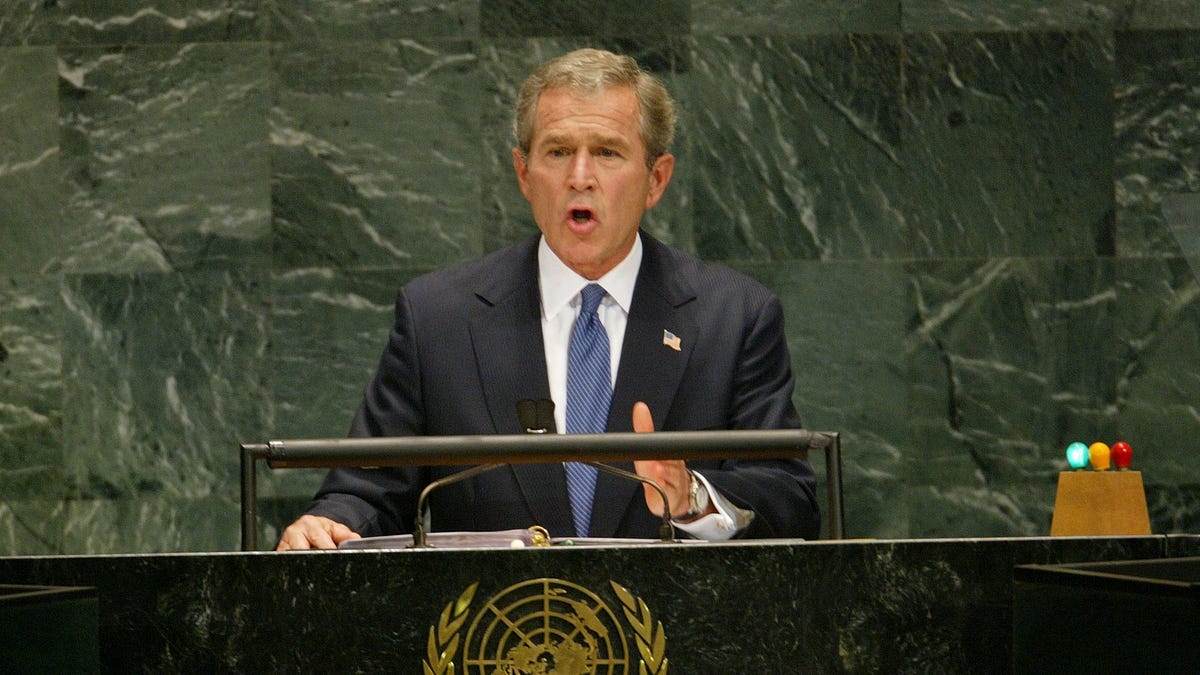
On October 1, Giuliani devoted a part of his speech to the United Nations to repudiating anti-Muslim and anti-Arab hate:
asserted
Giuliani → devote → hate
We have very strong and vibrant Muslim and Arab communities in New York City.
asserted
We → have → City
We respect their religious beliefs; we respect everyone’s religious beliefs.
asserted
we → respect → beliefs
That’s what America is about; that’s what New York City is all about.
asserted
City → ’ → what
I’ve urged New Yorkers not to engage in any form of group blame or group hatred.
asserted
I → urge → blame
This is exactly the evil that we’re confronting with these terrorists.
asserted
we → confront → terrorists
And if we’re going to prevail over them, over terror, then our ideals and principles and values must transcend all forms of prejudice.
asserted
ideals → go → prejudice
Despite this responsible leadership from prominent Republicans, not everyone on the right accepted the “blame terrorists, not Muslims” message; but even then those who engaged in blanket Muslim- or Islam-bashing typically found themselves marginalized.
asserted
themselves → accept → bashing
Ann Coulter, for example, was dropped by National Review after a column which infamously suggested, in her blunt style, that we should invade Muslim countries, “kill their leaders and convert them to Christianity.”
uncertain
we → drop → Christianity
(Coulter later claimed to have been referring to the “homicidal maniacs” celebrating the attacks, not to all Muslims; but her follow-up column, which the magazine refused to run, described “swarthy males” as natural suspects.
asserted
magazine → claim → suspects
Despite paranoid grumblings from some AM radio jocks, bloggers, and authors—like Michelle Malkin, who actually wrote a book touting the Japanese-American internment as a positive example—conservative political leaders like Bush and Giuliani undoubtedly set a tone of tolerance.
asserted
leaders → write → tolerance
There were and still are many critics on the left convinced that the humane rhetoric merely covered for anti-Muslim action—from America’s post-September 11th foreign wars to surveillance that singled out mosques and Muslim communities and heightened scrutiny of immigrants and travelers from some predominantly Muslim countries.
asserted
that → be → countries
This gets us into thorny questions about when preemptive counterterrorism measures based on broad risk assessments can be justified—especially in emergencies.
asserted
measures → get → emergencies
(Notably, the Bush administration policies assailed as Islamophobic largely continued under Barack Obama.)
asserted
policies → assail → Obama
In some cases, including the 1993 World Trade Center bombing, some mosques and certain clerics have been genuine enablers of terrorist and radical activities.
asserted
mosques → include → activities
But in other instances, informants who tried to conduct sting operations at mosques by talking about jihad got reported to the authorities by regular congregation members—and broad police surveillance over an extended period of time failed to produce a single lead.
asserted
surveillance → try → lead
The debates are complicated, and intelligence and counterterrorism work is ultimately prudential, with high-stakes decisions made under conditions of real ambiguity.
asserted
work → make → ambiguity
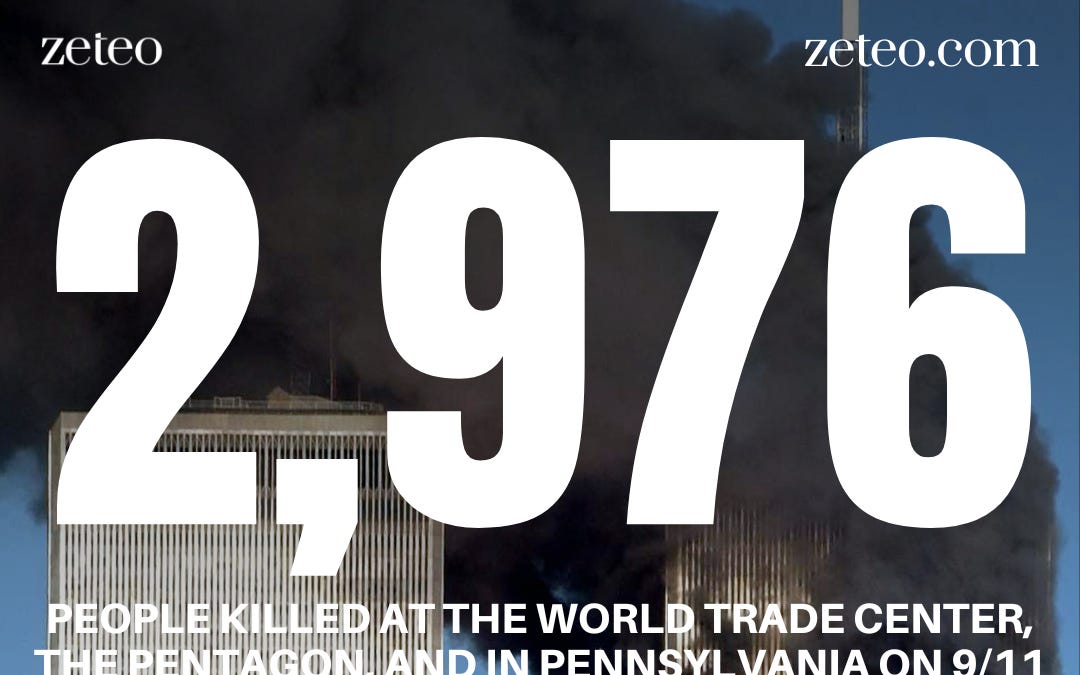
WHAT’S NOT IN QUESTION is that after radical Islamists killed nearly 3,000 Americans in one morning—a situation in which our human nature easily lends itself to collective blame and retaliation—the genuine decency of the American political class, informed by Bush’s example, averted a potentially vicious backlash against Muslims in America.
asserted
decency → ’ → America
For evidence of the impulses that the conservative leaders of that era kept in check, one need only look at what happened on the right after the end of the Bush presidency.
asserted
what → keep → presidency
Anti-Muslim vitriol became a favored talking point of populist fire-breathers in the Obama years—and, since then, has been nearly normalized as a plank of the MAGA coalition.
asserted
vitriol → become → coalition
…and 31 more, not listed.