HORROR STORIES FROM the Trump administration’s mass deportation regime—from deportees facing horrific conditions in “third countries” to suicides among refugees stripped of legal protection—have become depressingly routine.
asserted
STORIES → face → protection
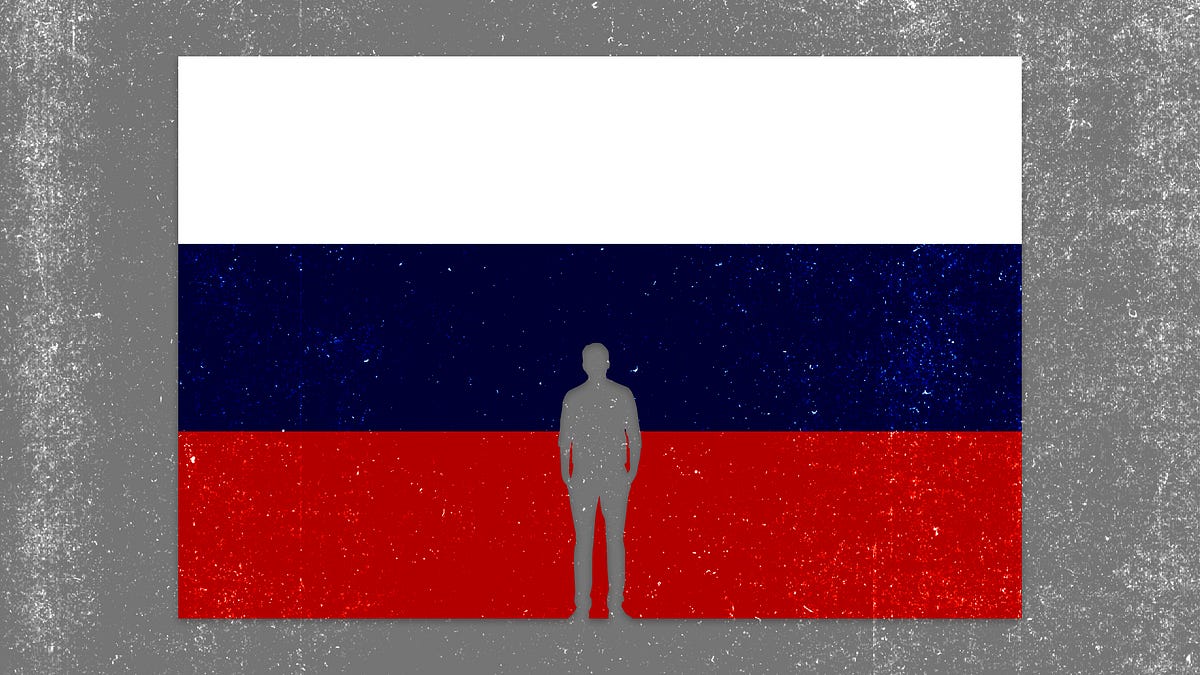
The latest such story comes from Russia, where, on Monday, an activist deported from the United States in July 2025 was issued a sentence of six years in a penal colony on absurd charges of “justifying terrorism.”
asserted
activist → come → terrorism
Leonid Melekhin, 35, fled Russia in late 2023 when it became clear that his political activism placed him in jeopardy.
asserted
activism → flee → jeopardy
Earlier that year, he had been detained and beaten by the police in his native city of Perm after a one-man protest in the city center with a poster that called for freedom for then-imprisoned (and later murdered) dissident Alexei Navalny.
asserted
that → detain → Navalny
This was not Melekhin’s first brush with Vladimir Putin’s police state: Melekhin had been previously arrested at a pro-Navalny protest in Perm in 2021 and had resisted pressure to testify against members of Navalny’s political organization.
asserted
Melekhin → arrest → organization
But by 2023, protest in Russia had become far more dangerous.
asserted
protest → become → Russia
When he was arrested that year, police threatened to have him conscripted to fight in Ukraine.
asserted
him → arrest → Ukraine
Melekhin made it to Mexico and used the Biden administration’s CBP One app to request an appointment to present himself at the U.S. border and seek asylum.
asserted
Melekhin → make → asylum
He did everything by the rules, waiting eight months to be notified of an appointment to present himself to U.S. immigration officers at an authorized crossing.
asserted
He → do → crossing
(His wife and two children, then aged five and one, had stayed behind in Russia; the plan was to get them out after receiving asylum.)
asserted
plan → stay → asylum
Just before crossing the border, on August 15, 2024, Melekhin took a selfie and sent it to another expatriate activist from Perm, Yuri Bobrov, with a request that it be posted to Bobrov’s Telegram blog along with another photo he had sent Bobrov earlier—one he had taken on his last night in Russia as a final act of protest.
asserted
he → cross → protest
That second image seems to depict a cardboard cutout of a human figure suspended from a bridge by a rope.
asserted
image → seem → rope
The cutout is rigged up with a photo of Vladimir Putin over its face and a poster that reads, “Putin V.V. is a murderer, a fascist, a usurper.
asserted
V.V. → rig → face
All that is needed for evil to triumph is for good people to do nothing.
asserted
people → need → nothing
Bobrov obliged and posted both images.
asserted
Bobrov → oblige → images
In the United States, Melekhin ended up in immigration detention, but he was confident he would be granted asylum.
asserted
he → end → asylum
In December 2024, his case was heard by Anne Kristina Perry, an immigration judge appointed under the first Trump administration.1
asserted
case → hear → administration.1
Another Russian asylum seeker whose case was adjudicated by Perry told Joshua Yaffa of the New Yorker—from whose reporting my account of Melekhin’s time in the United States is largely drawn—that Perry acted “like a prosecutor more than a judge,” subjecting applicants like himself to “a real interrogation.”
asserted
Perry → adjudicate → interrogation
Perry found that Melekhin was “a credible witness” and had presented “plausible, consistent, and detailed” evidence to support his claim.
uncertain
Melekhin → find → claim
This did not stop her from concluding that he did not have an “objectively reasonable well-founded fear” of being targeted for reprisals—the criterion being at least a one-in-ten chance that he would face persecution if deported to his home country.
asserted
he → stop → country
How such an estimate can be calculated is unclear, but Melekhin’s past arrests and the police search of his apartment back in Russia after Bobrov posted the photo of his anti-Putin poster would have seemed to put the risk much higher than 10 percent.
uncertain
Bobrov → calculate → risk
Nonetheless, Perry ruled against relief for Melekhin and ordered his removal; he appealed her decision.
asserted
he → rule → decision
While his appeal was pending, Melekhin was transferred from the Imperial Regional Detention Facility in Calexico, California to another detention center in Arizona with reportedly harsher conditions.
uncertain
Melekhin → pende → conditions
He also learned that criminal charges had been filed against him in Russia, apparently because of the Telegram photo.
asserted
charges → learn → photo
None of that mattered: In June 2025, his appeal was rejected without a new hearing.
asserted
appeal → matter → hearing
The appeals board—which may or may not have been aware of the charges he was now facing—agreed with Perry’s conclusion that Melekhin had failed to present convincing evidence of “clear probability of future persecution” and affirmed the deportation order.
uncertain
Melekhin → face → order
When activists face persecution, when governments punish dissent, when people seeking refuge find the doors closing, independent journalism has an obligation to pay attention.
To investigate.
asserted
journalism → face → attention
We can’t promise that telling stories like this will change everything.
asserted
telling → promise → everything
But we know that looking away won’t.
asserted
looking → know → ?
And we know there are people who still believe truth, decency, and democracy are worth defending.
asserted
truth → know → ?
You’re one of them.
asserted
You → ’re → them
Melekhin was transferred back to Imperial, where fellow inmates tried to persuade him to file another appeal—this one with the U.S. Court of Appeals.
asserted
inmates → transfer → Appeals
But, Yaffa reports, he had grown depressed and lost hope of a fair outcome.
asserted
he → report → outcome
Terrified of being repatriated, he clung to a small glimmer of hope: boarding a flight to a different country during a layover, since there are no direct deportation flights to Russia.
asserted
he → repatriate → Russia
According to the Moscow Times, such escapes had sometimes worked in the past but became essentially impossible in the summer of 2025 after Immigration and Customs Enforcement had “established a single route through Egypt and begun coordinating deportations with the Egyptian (and likely Russian) authorities.”
uncertain
Immigration → accord → authorities
Deportees trying to escape at Cairo International Airport, the Moscow Times says, “have been captured and beaten by Egyptian special services.”
Finally, in July 2025, Melekhin was flown to Moscow.
asserted
Melekhin → try → Moscow
His Russian court-appointed lawyer, Valery Kuznetsov, has said that he chose to “self-deport” voluntarily once he realized that his chances of staying in the United States were extremely slim.
asserted
chances → appoint → States
Some expatriate Russian activists doubt this scenario and suggest that he was likely pressured by ICE agents into agreeing to be deported—or even “tricked” by being told that a second appeal was useless.
asserted
appeal → doubt → agents
Be that as it may, Melekhin was arrested at the Sheremetyevo airport immediately on his return.
uncertain
Melekhin → arrest → return
On the same day, reports the independent Russian website Mediazona, the police searched his apartment and confiscated his wife’s phone, then returned it and allowed her to call her husband.
asserted
her → report → husband
…and 18 more, not listed.
 The Aporia