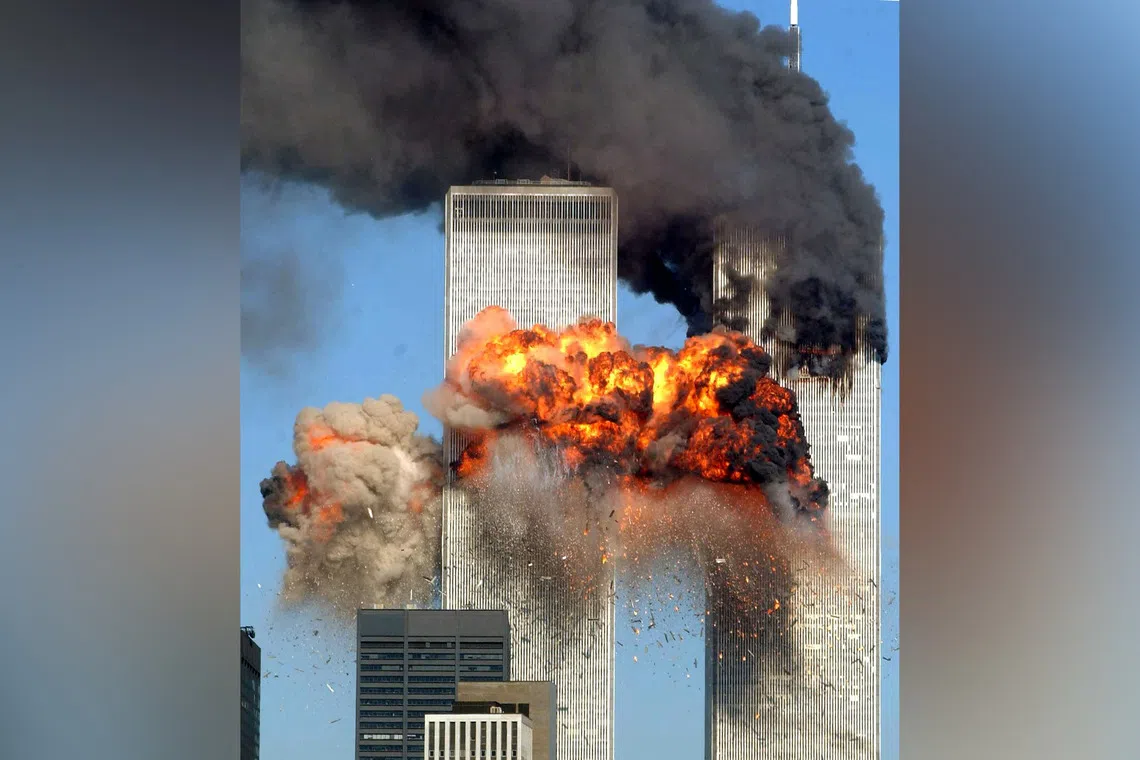
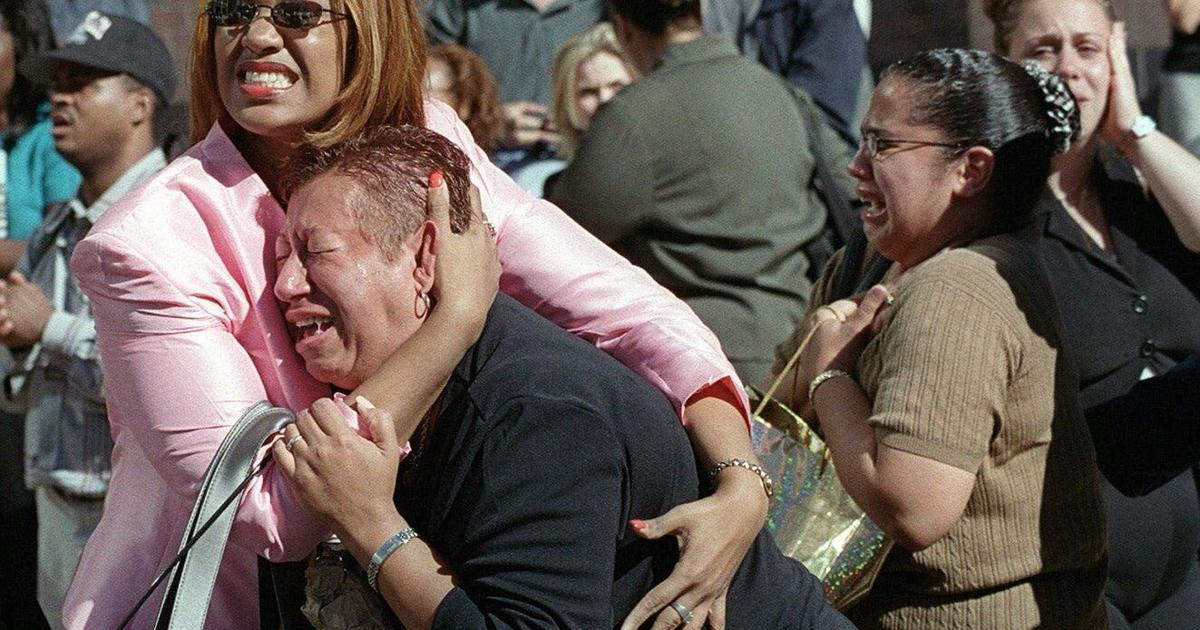
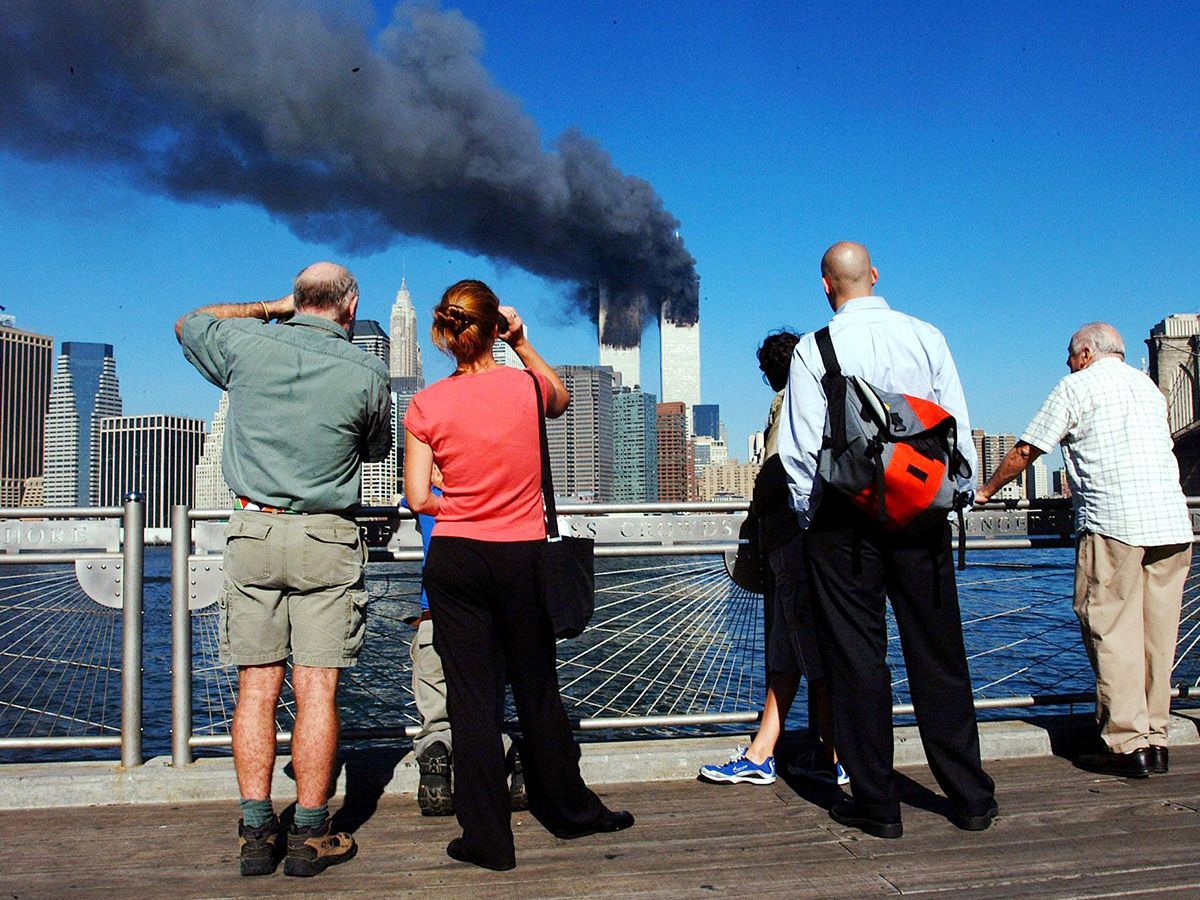
From the moment they occurred, the terror attacks of Sept. 11, 2001 were seen as inaugurating a new age of asymmetric violence and warfare.
asserted
attacks → occur → violence
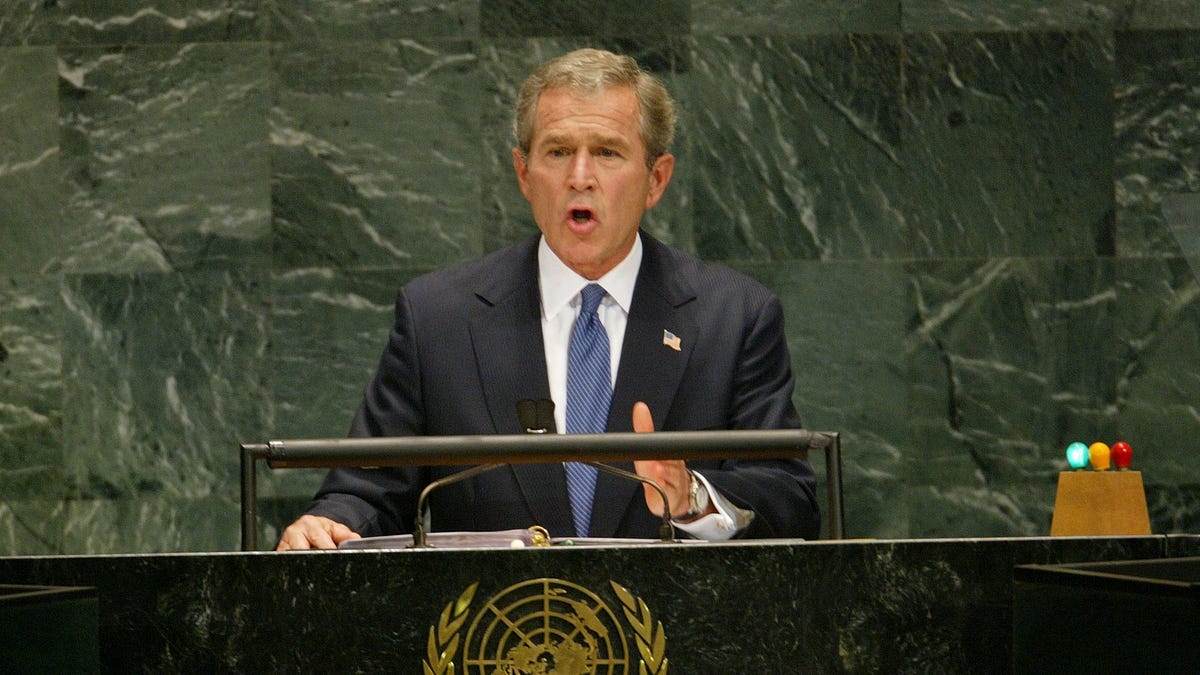
President George W. Bush described the war on terror that followed as a generational conflict.
asserted
that → describe → conflict
Yet, for all the transformations it produced, Al-Qaeda and Islamic militancy more broadly have, in my view, receded within a decade.
asserted
Qaeda → produce → decade
Not so much because it was defeated on the battlefield but because it was unable to gain much support among Muslims.
asserted
it → defeat → Muslims
When popular uprisings swept the Arab world in the early 2010s, protesters in Tunisia, Egypt, Syria, Bahrain, and elsewhere in the region took to the streets not in the name of Islam, but democracy.
asserted
protesters → sweep → Islam
The Arab Spring, more than any military victory, signaled the decline of militancy.
asserted
Spring → signal → militancy
Al Qaeda faced its greatest defeat at Tahrir Square.
asserted
Qaeda → face → Square
Islamic militancy flourished principally on the battlefields of war on terror, in countries such as Afghanistan and Iraq, a trajectory epitomized by the emergence of the Islamic State from within the American prison system in Iraq.
asserted
militancy → flourish → Iraq
While Islamic militancy still survives in pockets of weak or fractured states, elsewhere it has petered out into the province of petty criminals or psychologically disturbed individuals.
asserted
it → survive → criminals
What, then, does its brief and brutal career mean for world history?
asserted
career → mean → history
The End of the Cold War
The dramatic arrival of Al-Qaeda and Islamic militancy in the global public sphere in the early 2000s did not mark the beginning of a new chapter of global history.
asserted
arrival → mark → history
Perhaps that confrontation between Al-Qaeda and America signaled a historical ending: the true conclusion of the Cold War.
asserted
confrontation → signal → War
The Cold War survived in the institutions and practices it had created: NATO, the United Nations and its conventions, international courts and the multilateral institutions established to knit together a divided world through systems of deterrence, development and compromise born of the fear of an atomic holocaust.
asserted
it → survive → holocaust
For a while, these institutions appeared capable of operating without their founding cause, but that hope proved illusory.
asserted
hope → appear → cause
In the 1990s, wars swept across the Balkans, the Caucasus, the Middle East and Africa.
asserted
wars → sweep → Balkans
Al-Qaeda arose at the confluence of post-Cold War globalization and unipolar violence.
asserted
Qaeda → arise → globalization
With its emergence at the turn of the millennium, Al-Qaeda, I argue, brought the Cold War to a definitive close by overturning its central presuppositions.
asserted
I → argue → presuppositions
The war on terror rendered the familiar categories of the Cold War—the balance of power, deterrence, great-power rivalry, and hegemony—increasingly obsolete.
asserted
categories → render → power
Fought in civilian spaces against nonstate actors dispersed around the globe, the war on terror also ended up destroying most of the Cold War’s remaining ideological states in the Middle East, including the socialist republics of Iraq, Libya, and Syria.
asserted
war → fight → Iraq
Al-Qaeda's emergence also marked the end of Islamism, which was itself a Cold War movement dedicated to revolution and the creation of ideological states.
asserted
which → mark → states
Islamism’s only durable strongholds, Iran and Afghanistan, came to embody its takeover by clerical establishments of the kind it had once sought to displace.
asserted
it → come → kind
The war on terror also weakened the liberal state, another creature of the Cold War, whose animating purpose had been to pose capitalist liberty against Communist dictatorship.
asserted
purpose → weaken → dictatorship
Osama bin Laden used to claim that Westerners thought their interventions in the Middle East would remake the region’s states in the images of their own, but instead it was the Americans and Europeans who came to resemble their despotic and corrupt clients in the region.
uncertain
who → use → region
One of the goals of Al-Qaeda’s campaign of terror was to precisely achieve that by showing how even violence falling short of a conventional war and posing no genuine existential threat was sufficient in provoking Western democracies to dismantle the civil liberties of their own citizens, exposing their claims to freedom as hypocritical.
uncertain
violence → achieve → freedom
As the war on terror dragged on, Al-Qaeda’s leaders portrayed the anti-terror laws and the increasingly militarized conduct of the U.S. and its allies not as signs of resolve and strength but as displays of weakness and proof of the shallowness of Western liberalism.
asserted
leaders → drag → liberalism
Bin Laden might have been disappointed by Al-Qaeda’s inability to mobilize enough Muslims around the world to overthrow their dictatorships, but the U.S. and its European allies, which sustained those authoritarian regimes, sadly behaved much as he had predicted.
uncertain
he → disappoint → regimes
A sacrificial, if not nihilistic, movement whose iconic figure was the suicide bomber, Al-Qaeda had little interest in conquest and government.
asserted
Qaeda → have → conquest
One of its major objectives was to provoke Western states into attacking their own democracies, in a kind of auto-immune response to terrorism, in which the effort to defend the political body corroded it from within.
asserted
effort → provoke → within
In that particular sense, bin Laden was perversely successful in dragging America and its allies into expensive wars and weakening their liberal norms as they chose widespread use of emergency powers, surveillance, indefinite detention, torture, and rendition.
asserted
they → drag → powers
The war also brought suspicion of Muslims, hostility toward immigration, civilizational rhetoric, and border militarization from the political margins to the center of Western public discourse.
asserted
war → bring → discourse
America’s preoccupation with the war on terror did squander its unipolar decade.
asserted
preoccupation → squander → decade
It wasn’t a coincidence that the rise of China—and the China shock—came a few years after the Great Recession of 2008 and a decade after the 9/11 attacks.
asserted
rise → come → attacks
The cultural and political landscape of Europe and America today—characterized by polarization, populism, and a pervasive distrust of institutions—can be understood, at least in part, as the legacy of the response to the 9/11 attacks by Al-Qaeda.
asserted
landscape → characterize → Qaeda
By this measure, my assertion would be that bin Laden won the war on terror much as he had predicted he would.
asserted
he → win → terror
What sustained the liberal order
The rise of populism and far-right politics in America and Europe has generated great laments for the corrosion of a golden age of liberalism and progress following the victory of the Allied powers against fascism in World War II.
asserted
rise → sustain → II
The flowering of postwar liberal democracy owed less to the defeat of fascism than to the Cold War, when the existence of a socialist alternative compelled Europe and North America to emphasize social protections, greater equality, and meaningful political rights.
asserted
existence → owe → protections
Thus, the crisis of liberal democracy after 9/11 might be better understood not simply as a blowback from the war on terror, but as an aftershock of socialism’s collapse.
uncertain
crisis → understand → collapse
After the collapse of the Soviet bloc, that pressure disappeared.
asserted
pressure → disappear → bloc
Though liberal institutions survived formally, the social and economic settlement that sustained them had begun to erode.
asserted
that → survive → them
Several allied powers were colonial empires engaged in the violent suppression of nationalist movements in Asia and Africa even as they fought fascism.
asserted
they → engage → fascism
…and 47 more, not listed.
 The Aporia