Who were the key figures in the Bush administration on 9/11, and where are they now

Washington Examiner · collected 2026-09-09 · by Brady Knox and Joseph Nepomuceno
Read the original at Washington Examiner ↗

Summary

The article reports on the key figures from the Bush administration's response to the September 11 terrorist attacks and their current activities. The main focus is on President George W. Bush, whose approval rating soared to 90% after visiting Ground Zero, but later plummeted due to controversies surrounding the Iraq War. After leaving office, Bush largely recused himself from politics, although he publicly disagreed with Obama's troop withdrawal decision in 2011 and condemned the January 2021 Capitol riot. The article also mentions Vice President Dick Cheney, who was a well-known figure at the time of 9/11 but has not been mentioned as making any significant public statements or actions since his presidency.
Written by the local model on 2026-09-09, using this article's own text rather than the other coverage of the same event (that is the story summary below).

Signals How these are calculated →

Claims extracted
81
claim-shaped sentences
Uncertain
1%
1 of 81 hedged
Leaning
Leans right
of the writing, not the subject
Publisher trust
96.1
red-flag proxy, not a credibility rating
Outlets on this story
45
Politics
Narrative spread
1
articles carrying this framing
Analyzed 2026-09-09 · how these are computed

AI analysis (generated at analysis time, not now)

Story summary

September 11, 2001 is being remembered as the anniversary of the terrorist attacks that changed the world and people's lives 25 years ago. For Colin McShane, who was just 4½ years old at the time, his father's death on 9/11 is a significant event in his life. His father was a firefighter who had joined the FDNY for only 18 months, but had plans to continue serving.

In Canada, Sue Riccardelli and her wife Maureen Murray have been honoring the people of central Newfoundland who took care of them and over 6,500 other passengers after 38 planes were grounded in Gander, N.L. They are now returning to Gander for the anniversary and plan to bring their flag as a message of love and solidarity.

New Yorkers who worked at Windows on the World, the restaurant on the 107th floor of the North Tower, still carry memories of that day. One employee, Paulo Villela, immigrated from Brazil just to work there for its benefits, but lost his life in the attacks.

In recent years, many Americans have been scapegoating Muslims and eroding civil liberties through policies like warrantless wiretaps and racist deportation campaigns. This phenomenon of Islamophobia continues to play a major role in politics today.

9/11 responders, including Mia Farina, are still getting sick from their work at ground zero, despite promises of care through the World Trade Center Health Program. Many have died from complications related to their service on that day.

In addition to remembering those who lost their lives, it's also important for parents to share this historical event with their children and teach them about the impact of 9/11 on American society.

Written for “The Aftermath of 9/11” on 2026-09-09, grounded in this article and the 44 other(s) covering the same event.
Why this leaning score
The article's own words the score was based on. Each is quoted verbatim and was checked against the article text before being stored, so you can find it in the original.
Score +0.35 Confidence high
Leaning score +0.35 for article 7179 (high confidence, 1 verified quote) · logged 2026-09-09

Story

📰 The Aftermath of 9/11
Politics · 45 article(s) covering the same event.

How this is being covered How these are calculated →

Article leaning vs. publisher reliability
Source leaning vs. consistency

Compared with similar articles

This article reads leans right and hedges 1% of its claims. Each row says how that neighbour differs.
New York Post
⚖️ Leans strongly right further right than this 🔴 5% hedged 3 of 60 📰 publisher trust 58
“Both articles refer to the 9/11 terrorist attack on September 11, exactly 25 years prior to their publication dates.”
ABC News (AU)
⚖️ Leans left further left than this 🔴 5% hedged 8 of 171 📰 publisher trust 60
“Both articles describe the 9/11 terrorist attack on September 11, 2001, from different perspectives”
CBS News
⚖️ Leans left further left than this 🔴 5% hedged 1 of 20 📰 publisher trust 60
“Both articles mention the September 11 terrorist attacks as a significant event in US history, specifically referring to it as '25 years after' or '25 years later'”
CBS News
⚖️ leaning not scored 🔴 0% hedged 0 of 3 📰 publisher trust 60
“Both articles describe the same terrorist attack on September 11, 2001, and its impact on President George W. Bush's administration”
CBS News
⚖️ leaning not scored 🔴 2% hedged 1 of 53 📰 publisher trust 60
“Both articles mention the events of September 11, 2001, and specifically refer to an incident that occurred on that day involving President George W. Bush at Emma E. Booker Elementary School in Sarasota, Florida”
CBC News
⚖️ leaning not scored 🔴 0% hedged 0 of 2 📰 publisher trust 95
“Both articles mention and date the September 11th, 2001 terrorist attack, indicating they are reporting on the same specific incident.”
Toronto Star
⚖️ Leans left further left than this 🔴 4% hedged 2 of 53 📰 publisher trust 62
“Both articles mention the September 11 attacks as a shared historical reference point and use it to frame their narratives”
Zeteo
⚖️ leaning not scored 🔴 0% hedged 0 of 9
“Both articles describe the same occurrence (the September 11 terrorist attacks) and share the same anniversary date (25 years later)”
Zeteo
⚖️ Leans left further left than this 🔴 0% hedged 0 of 36
“Both articles mention the same date, September 11, 2001, and describe it as a significant terrorist attack in U.S. history”
CBS News
⚖️ Leans left further left than this 🔴 0% hedged 0 of 1 📰 publisher trust 60
“They cover a different aspect of the same incident, with Article A focusing on its legacy and societal impact, while Article B discusses the key figures in the Bush administration's response to the attack”

Publisher

Washington Examiner · 137 article(s) · 0 correction(s) detected
No corrections detected for this publisher. That may mean careful reporting, or simply that nothing has been checked.

Who wrote this

Brady Knox
1 article(s) here · 1 carrying a prediction
🔮 He was a leading figure in advocating for and leading the Iraq War, something that would lead to his widespread unpopularity by the time he left office.
The only article under this byline in the corpus.
Joseph Nepomuceno
1 article(s) here · 1 carrying a prediction
🔮 He was a leading figure in advocating for and leading the Iraq War, something that would lead to his widespread unpopularity by the time he left office.
The only article under this byline in the corpus.

Topics

CIA Iraq New York City The Sept. 11 terrorist attacks U.S.

Subjects

Bush PERSON · 11× Dick Cheney PERSON · 3× Trump PERSON · 3× U.S. GPE · 3× Cheney PERSON · 2× George H.W. Bush PERSON · 2× George W. Bush PERSON · 2× Iraq GPE · 2× Republican NORP · 2× Ronald Reagan PERSON · 1×

Narrative

Dick Cheney died on Nov. 3, 2025, at age 84, of complications from pneumonia and vascular disease. Secretary of State Colin Powell Powell was the subject of bipartisan respect at the time of 9/11, being the first black U.S. national security adviser under President Ronald Reagan, chairman of the Joint Chiefs of Staff under George H.W. Bush, and secretary of state under George W. Bush.
framing: assertive · carried by 1 article(s) · first seen 2026-09-09
🔮 He was a leading figure in advocating for and leading the Iraq War, something that would lead to his widespread unpopularity by the time he left office.
2026-09-09 · Washington Examiner
Who were the key figures in the Bush administration on 9/11, and where are they now · assertive framing

Claims (81 extracted, 1 hedged)

The worst terrorist attack in U.S. history represented one of its greatest leadership challenges, and the decisions made on that day still reverberate 25 years later. asserted
decisions → represent → day
President George W. Bush was elected in the contentious 2000 election largely on a domestic-focused platform. asserted
Bush → elect → platform
Several of the key figures in the administration remain well-known, for better or worse, while others have faded into relative obscurity. asserted
others → remain → obscurity
Unlike his father, President George H.W. Bush, who had served as President Ronald Reagan’s CIA director and took a special interest in foreign policy as president, the younger Bush campaigned on domestic issues and saw himself as the figurehead of “compassionate conservatism.” asserted
Bush → serve → conservatism
However, the Sept. 11 terrorist attacks threw his plans for his presidency into disarray. asserted
attacks → throw → disarray
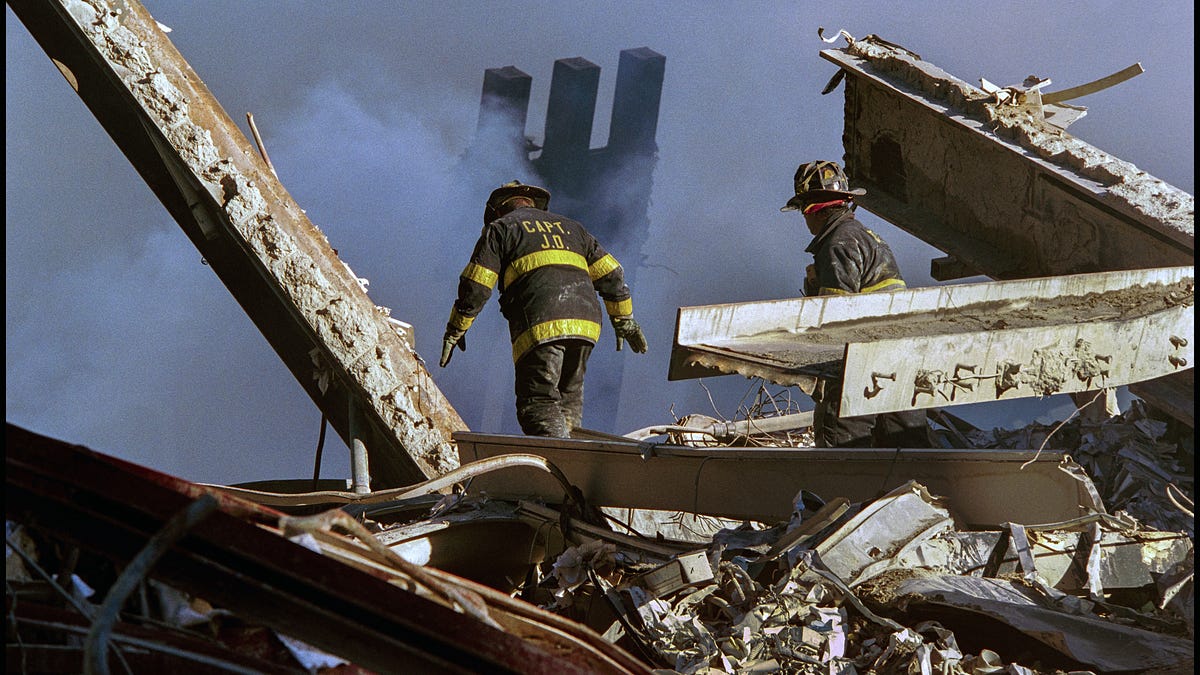
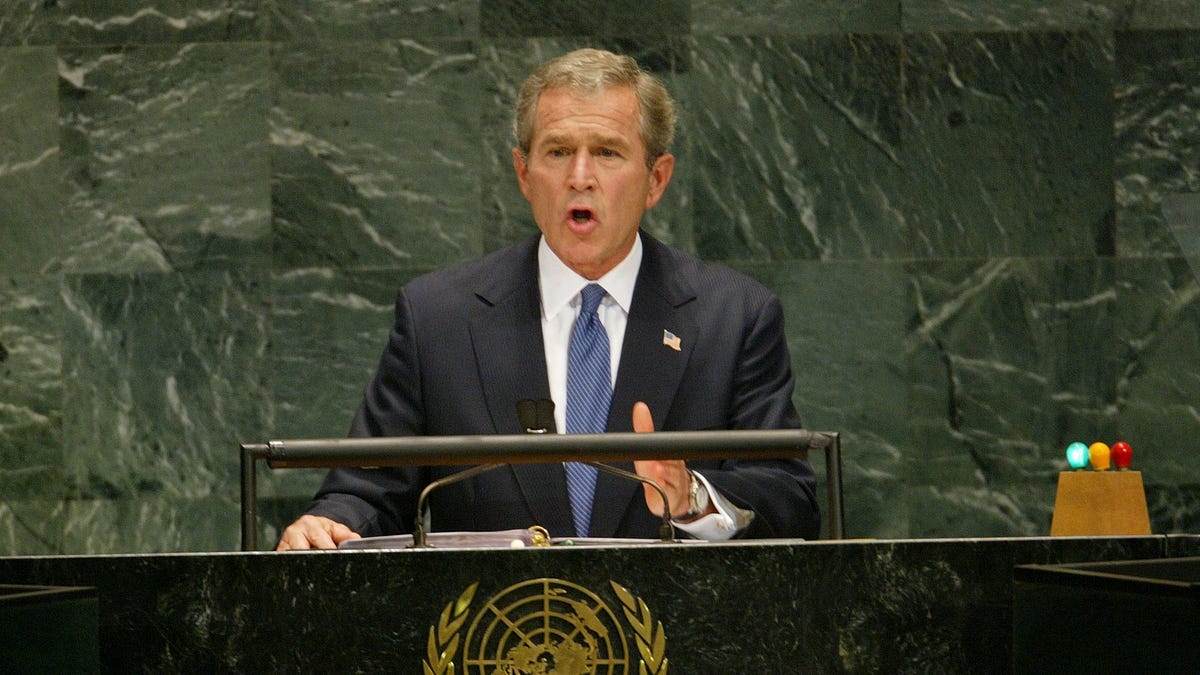
Bush’s approval rating skyrocketed to 90% in late September 2001, as the country rallied around its leader as he visited the site of Ground Zero in New York City and announced the beginning of the Global War on Terror. asserted
he → skyrocket → Terror
American troops entered Afghanistan to hunt down al Qaida terrorist cells in the country by October of that year, and Bush further escalated the GWOT by accusing Saddam Hussein’s Iraq of possessing weapons of mass destruction. asserted
Bush → enter → destruction
Though the Iraq War proved to be one of the most controversial parts of Bush’s presidency, the U.S. invasion boosted his approval rating from 57% to 71% in March 2003. asserted
invasion → prove → March
The subsequent years of an escalating insurgency, increased U.S. troop deployments and casualties, and the Great Recession led his approval rating to crumble to only 28% in November 2008. asserted
years → escalate → November
After President Barack Obama took office, Bush recused himself from the political stage like many of his predecessors. asserted
Bush → take → predecessors
While Bush publicly disagreed with Obama’s decision to withdraw troops from Iraq in 2011, calling it a “strategic blunder,” Bush also told late-night host Jay Leno, “I don’t think it’s good for the country to have a former president criticize his successor.” asserted
president → disagree → successor
The former president campaigned for his brother Jeb Bush as he battled for the Republican presidential nomination in 2016, and later refused to endorse President Donald Trump’s campaign. asserted
he → campaign → campaign
Bush again did not endorse any presidential candidates in 2020, but held a virtual fundraiser for Sens. Susan Collins (R-ME) and Thom Tillis (R-NC). asserted
Bush → endorse → Collins
The former president condemned the Jan. 6, 2021, Capitol riot and the attempted assassination of Trump in 2024. asserted
president → condemn → 2024
Bush also took up painting as a hobby after leaving the presidency, inspired by reading Winston Churchill’s essay “Painting as a Pastime.” asserted
Bush → take → Pastime
Arguably the most well-known figure in the Bush administration outside the president himself, Vice President Dick Cheney had decades of experience under his belt by the time of 9/11, but had not yet generated the controversy that dogged him post-Bush administration. asserted
that → know → administration
He served in the House from 1979–1989, then as secretary of defense under George H.W. Bush. asserted
He → serve → Bush
He was chosen as George W. Bush’s running mate in part to boost the president’s national defense credentials. asserted
He → choose → credentials
Cheney’s experience in foreign affairs and defense helped turn him into one of the most powerful vice presidents in history, as Bush delegated much of the handling of the Global War on Terror to him. asserted
Bush → help → him
He was a leading figure in advocating for and leading the Iraq War, something that would lead to his widespread unpopularity by the time he left office. asserted
he → advocate → office
The vice president ended his term polling at around 13%, and largely stayed out of the public eye after. asserted
president → end → eye
Cheney was one of the worst-hit Republicans by the Trump revolution, quickly fading into irrelevance after 2016. asserted
Cheney → hit → 2016
He backed his daughter, Liz Cheney, who was trying to position herself as a leading anti-Trump Republican, in an effort that met disaster when she lost to her Trump-backed challenger in 2022 by over 33 points. asserted
she → back → points
Dick Cheney died on Nov. 3, 2025, at age 84, of complications from pneumonia and vascular disease. Secretary of State Colin Powell Powell was the subject of bipartisan respect at the time of 9/11, being the first black U.S. national security adviser under President Ronald Reagan, chairman of the Joint Chiefs of Staff under George H.W. Bush, and secretary of state under George W. Bush. asserted
Powell → die → Bush
He was the first Bush Cabinet official to accept their post, doing so before the president’s inauguration. asserted
He → accept → inauguration
He played a key role in shoring up U.S. alliances to pursue the GWOT. asserted
He → play → GWOT
Powell’s most controversial moment came when he claimed Iraq possessed weapons of mass destruction in front of the United Nations Security Council in February 2003, an address he soon after admitted was filled with inaccuracies, and described it as a “blot” on his record. asserted
he → come → record
He soon was on the outs with Bush and was pushed to resign shortly after his reelection in 2004. asserted
He → push → 2004
As with several other Bush administration officials, Powell would distinguish himself as a major anti-Trump figure, even disavowing his Republican Party membership in 2021 after the Jan. 6 Capitol riot. asserted
Powell → distinguish → riot
He died on Oct. 18, 2021, at age 84 of complications related to COVID-19. asserted
He → die → COVID-19
Upon returning to the secretary of defense post under Bush after his service in the Ford administration, Rumsfeld held the unique distinction of being both the youngest and oldest man to serve in the position. asserted
Rumsfeld → return → position
Rumsfeld was praised as a heroic figure during the Sept. 11 attacks, as he was at his office in the Pentagon when one of the hijacked planes hit. asserted
one → praise → planes
The secretary of defense ran to the crash site and personally helped evacuate the wounded. asserted
secretary → run → wounded
His goodwill would run out in the years that followed, after he became the face of the administration’s defense of the Iraq War. asserted
he → run → War
He resigned in 2006 after sustained pressure from controversies surrounding the war, especially the Abu Ghraib prison torture scandal. asserted
He → resign → war
He died on June 29, 2021, at age 88 after battling a “long illness.” National security adviser Condoleezza Rice Rice, like Powell, set a number of civil rights-related records, including the first female national security adviser. asserted
Rice → die → adviser
Coming from an academic background specializing in Soviet and Russian affairs, she had previously served Bush’s father as a member of the National Security Council staff. asserted
she → come → staff
Rice would draw heavy scrutiny over the intelligence failures preceding 9/11, especially a now-famous Presidential Daily Briefing given just one month before the attacks in which she warned that Bin Laden was preparing to attack the United States. asserted
Laden → draw → States
She would draw even more controversy as a central advocate for the Iraq War. asserted
She → draw → War
When asked in September 2002 about evidence for Iraq possessing Weapons of Mass Destruction, “we don’t want the smoking gun to be a mushroom cloud.” asserted
gun → ask → Destruction
…and 41 more, not listed.

💬 Give feedback
🕘 History 🎫 Support