‘Unfounded accusations’: China rejects US claims of 'malicious' AI distillation by its firms

Times of India · collected 2026-09-09 · by Aashish Vashistha
Read the original at Times of India ↗

Summary

China's Ministry of Foreign Affairs has rejected US allegations that its artificial intelligence companies are engaged in "aggressive, malicious" efforts to extract capabilities from advanced American AI models. The allegations were made by the FBI, NSA, and CISA in a joint cybersecurity advisory issued on Tuesday, which named several Chinese companies, including DeepSeek, Alibaba, and Moonshot AI. According to the advisory, these companies had sought to extract capabilities from US models such as Anthropic's Claude and OpenAI's GPT. China's Foreign Ministry spokesperson, Mao Ning, urged the US to stop making "unfounded accusations" against China and instead promote open and inclusive AI development.
Written by the local model on 2026-09-09, using this article's own text rather than the other coverage of the same event (that is the story summary below).

Signals How these are calculated →

Claims extracted
13
claim-shaped sentences
Uncertain
15%
2 of 13 hedged
Leaning
withheld
no quote in the article backed the model's score
Publisher trust
94.3
red-flag proxy, not a credibility rating
Outlets on this story
4
Politics
Narrative spread
1
articles carrying this framing
Analyzed 2026-09-09 · how these are computed

AI analysis (generated at analysis time, not now)

Story summary

The US has accused China of stealing its artificial intelligence (AI) secrets, including a technique called "distillation", which allows smaller AI systems to be trained using outputs from larger models. The US Treasury secretary warned that if China wins the AI race, it will have a significant impact on global competition for technological supremacy. Meanwhile, the transportation secretary expressed concern about Ford's ties to Chinese firms that he believes are detrimental to the US automotive industry. In response, China has rejected the allegations, calling them "unfounded accusations" and urging the US to strengthen cooperation instead of making unfounded smears.

The US authorities have identified six Chinese entities involved in this alleged theft, including DeepSeek, Moonshot AI, and Alibaba, which they claim are tapping into American AI products to accelerate their own development. The technique of distillation allows these smaller systems to be trained using outputs from larger models, drastically lowering the cost of building new tools.

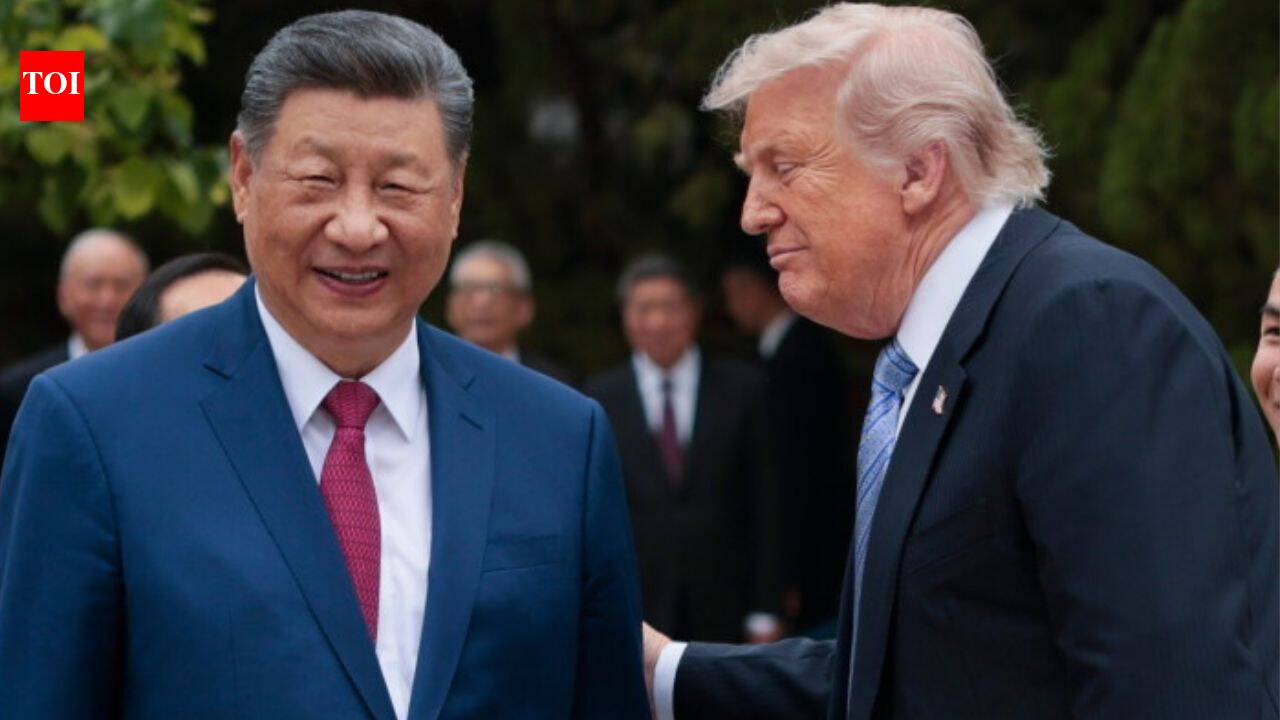
The issue is expected to be a major topic at a planned meeting between US President Donald Trump and Chinese President Xi Jinping later this month, where AI governance is expected to be discussed. China's foreign ministry spokesperson Mao Ning has said that China's progress in AI is driven by "achieving high-level science and technological self-reliance", and urged the US to earnestly implement agreements reached by leaders of both countries.

Written for “US vs China AI Theft Accusations” on 2026-09-09, grounded in this article and the 3 other(s) covering the same event.
Why this leaning score
The model judged this article politically coded and scored it -0.35, but every quote it verified points right, so the score is not published.
Written under an earlier scoring contract, which gave a paragraph rather than checkable quotes. Re-analysing this article replaces it.
Leaning score withheld for article 7290: score contradicts its own evidence · logged 2026-09-09

Story

📰 US vs China AI Theft Accusations
Politics · 4 article(s) covering the same event.

How this is being covered How these are calculated →

Article leaning vs. publisher reliability
Source leaning vs. consistency

Compared with similar articles

This article reads unscored and hedges 15% of its claims. Each row says how that neighbour differs.
The Independent · 0.86 cosine similarity
⚖️ leaning not scored 🔴 27% hedged 3 of 11 📰 publisher trust 59
“Both articles describe the exact same incident on the same date and time, with identical quotes from Foreign Ministry spokesperson Mao Ning.”
Semafor
⚖️ Leans right 🔴 20% hedged 1 of 5 📰 publisher trust 96
“Both articles report on the exact same statement and response made by China to the US allegations on September 9, 2026.”
South China Morning Post
⚖️ Leans right 🔴 0% hedged 0 of 18 📰 publisher trust 93
“Article A discusses the US government's investment portfolio and China's technological advancements, while Article B specifically addresses a dispute between China and the US over AI distillation allegations”
South China Morning Post
⚖️ leaning not scored 🔴 0% hedged 0 of 6 📰 publisher trust 93
“The two articles cover different topics related to AI and international relations between countries”
South China Morning Post
⚖️ Leans right 🔴 0% hedged 0 of 6 📰 publisher trust 93
“Article A discusses a proposal for AI course revision at a Chinese military university, while Article B is about China rejecting US allegations of 'malicious' AI distillation by its firms, indicating two separate incidents.”
South China Morning Post
⚖️ Centre 🔴 25% hedged 1 of 4 📰 publisher trust 93
“The articles cover related topics (AI industry in China) but describe distinct events, with one article discussing the economic advantage of Chinese AI firms and the other addressing a US accusation against China's AI companies.”
The Straits Times
⚖️ leaning not scored 🔴 12% hedged 3 of 24 📰 publisher trust 94
“The articles cover different topics and have distinct dates, suggesting they report on separate incidents”
How China Is Stealing America’s AI different event · 90%
The Free Press
⚖️ Leans right 🔴 0% hedged 0 of 10 📰 publisher trust 96
“Article A describes a specific response from China to US allegations, while Article B discusses a broader topic of Chinese AI companies 'stealing' American capabilities, without mentioning any specific incident or date”
ABC News (AU)
⚖️ Leans left 🔴 50% hedged 2 of 4 📰 publisher trust 60
“Article A refers to a rejection by China of US allegations, while Article B mentions AI developers' concerns and a researcher quitting due to those concerns”
Fox News
⚖️ leaning not scored 🔴 14% hedged 3 of 21 📰 publisher trust 95
“Article A mentions protests and data centers, while Article B is about US allegations against Chinese AI companies and their rejection of these claims”

Publisher

Times of India · 227 article(s) · 0 correction(s) detected
No corrections detected for this publisher. That may mean careful reporting, or simply that nothing has been checked.

Who wrote this

Aashish Vashistha
5 article(s) here · 1 carrying a prediction
🔮 The latest exchange comes ahead of planned talks later this month between US President Donald Trump and Chinese President Xi Jinping, where AI governance is expected to be among the issues discussed.
🔮 According to the Associated Press, federal authorities contacted the mother of Caleb Vazquez on May 14, warning her that her 18-year-old son had been making troubling remarks about school shootings online.
🔮 The judge noted that states were legally required to send millions of ballots within prescribed timelines and could not make major changes this late in the election cycle without risking the disenfranchisement of eligible voters.
🔮 The US State Department said about 90 US citizens may have been impacted by the disaster, while three Americans have been rescued.
Also by Aashish Vashistha
Nothing else under this byline is closely related to this article, so these are simply their most recent.

Topics

American China Chinese The Ministry of Foreign Affairs Washington

Subjects

Chinese NORP · 9× China GPE · 5× American NORP · 4× FBI ORG · 1× Foreign Ministry ORG · 1× Mao PERSON · 1× Mao Ning PERSON · 1× The Ministry of Foreign Affairs ORG · 1× Washington GPE · 1× the Associated Press ORG · 1×

Narrative

The advisory named Chinese companies including DeepSeek, Alibaba, Moonshot AI and Z.AI and said their activities were “likely” carried out with Chinese government awareness. US agencies alleged that the companies had sought to extract capabilities from models including Anthropic’s Claude, OpenAI’s GPT, Google’s Gemini and xAI’s Grok.
framing: assertive · carried by 1 article(s) · first seen 2026-09-09
🔮 The latest exchange comes ahead of planned talks later this month between US President Donald Trump and Chinese President Xi Jinping, where AI governance is expected to be among the issues discussed.

Claims (13 extracted, 2 hedged)

China on Wednesday rejected US allegations that its artificial intelligence companies are engaged in “aggressive, malicious” efforts to extract capabilities from advanced American AI models, calling on Washington to stop making what it described as unfounded accusations. asserted
it → reject → accusations
The Ministry of Foreign Affairs urged the US to “refrain from making unfounded accusations or smears” against China. asserted
Ministry → urge → China
It added that both China and the US are major AI powers and should strengthen cooperation. asserted
China → add → cooperation
According to the Associated Press, Foreign Ministry spokesperson Mao Ning said China’s AI development resulted from “high-level technological self-reliance and strength” and urged all sides to promote AI development that is open, inclusive and beneficial. uncertain
that → accord → development
Mao’s comments came a day after the FBI, National Security Agency (NSA) and Cybersecurity and Infrastructure Security Agency (CISA) issued a joint cybersecurity advisory accusing Chinese AI developers of “distilling” capabilities from leading US models since at least late 2024. asserted
FBI → come → 2024
The advisory named Chinese companies including DeepSeek, Alibaba, Moonshot AI and Z.AI and said their activities were “likely” carried out with Chinese government awareness. US agencies alleged that the companies had sought to extract capabilities from models including Anthropic’s Claude, OpenAI’s GPT, Google’s Gemini and xAI’s Grok. asserted
companies → name → Claude
The latest exchange comes ahead of planned talks later this month between US President Donald Trump and Chinese President Xi Jinping, where AI governance is expected to be among the issues discussed. asserted
governance → come → issues
What US agencies said about Chinese AI firms The US agencies alleged that Chinese AI companies routed distillation requests through multiple channels to obtain unauthorised access to American AI models, potentially violating their terms of use. asserted
companies → say → use
They also accused the companies of using shared premium subscriptions to reduce the cost of large-scale distillation efforts. asserted
They → accuse → efforts
The advisory described the activity as an industrial-scale effort to extract restricted capabilities from US frontier AI systems. asserted
advisory → describe → systems
The allegations add to earlier claims by American AI companies and officials that Chinese developers have used distillation to accelerate the development of their own models. uncertain
developers → add → models
US Treasury Secretary Scott Bessent on Tuesday said China would not overtake the US in AI, arguing that Chinese companies were distilling American models. asserted
companies → say → models
“The Chinese distill our models, and they can never get ahead of us,” Bessent said at an event at Southern Methodist University’s Cox School of Business in Dallas, Texas. asserted
Bessent → distill → Dallas
💬 Give feedback
🕘 History 🎫 Support