How China Is Stealing America’s AI

The Free Press · collected 2026-09-09 · by Matt Pottinger
Read the original at The Free Press ↗

Summary

A Chinese tech expert describes China's rapid advancements in artificial intelligence (AI) as being largely due to "stealing" from American companies, rather than solely through innovation. The article highlights that large US corporations are now using Chinese AI models such as DeepSeek and Qwen, which were previously unknown in the US business world. According to the expert, China's success is partly attributed to a technique called distillation, where a state-of-the-art American model is used to train a new one by asking millions of questions and recording its answers. This practice, done with permission from the original model owners, is considered acceptable research in some cases, such as Apple's use of Google's Gemini model to improve Siri.
Written by the local model on 2026-09-09, using this article's own text rather than the other coverage of the same event (that is the story summary below).

Signals How these are calculated →

Claims extracted
10
claim-shaped sentences
Uncertain
0%
0 of 10 hedged
Leaning
Leans right
of the writing, not the subject
Publisher trust
96.2
red-flag proxy, not a credibility rating
Outlets on this story
4
Politics
Narrative spread
1
articles carrying this framing
Analyzed 2026-09-09 · how these are computed

AI analysis (generated at analysis time, not now)

Story summary

The US has accused China of stealing its artificial intelligence (AI) secrets, including a technique called "distillation", which allows smaller AI systems to be trained using outputs from larger models. The US Treasury secretary warned that if China wins the AI race, it will have a significant impact on global competition for technological supremacy. Meanwhile, the transportation secretary expressed concern about Ford's ties to Chinese firms that he believes are detrimental to the US automotive industry. In response, China has rejected the allegations, calling them "unfounded accusations" and urging the US to strengthen cooperation instead of making unfounded smears.

The US authorities have identified six Chinese entities involved in this alleged theft, including DeepSeek, Moonshot AI, and Alibaba, which they claim are tapping into American AI products to accelerate their own development. The technique of distillation allows these smaller systems to be trained using outputs from larger models, drastically lowering the cost of building new tools.

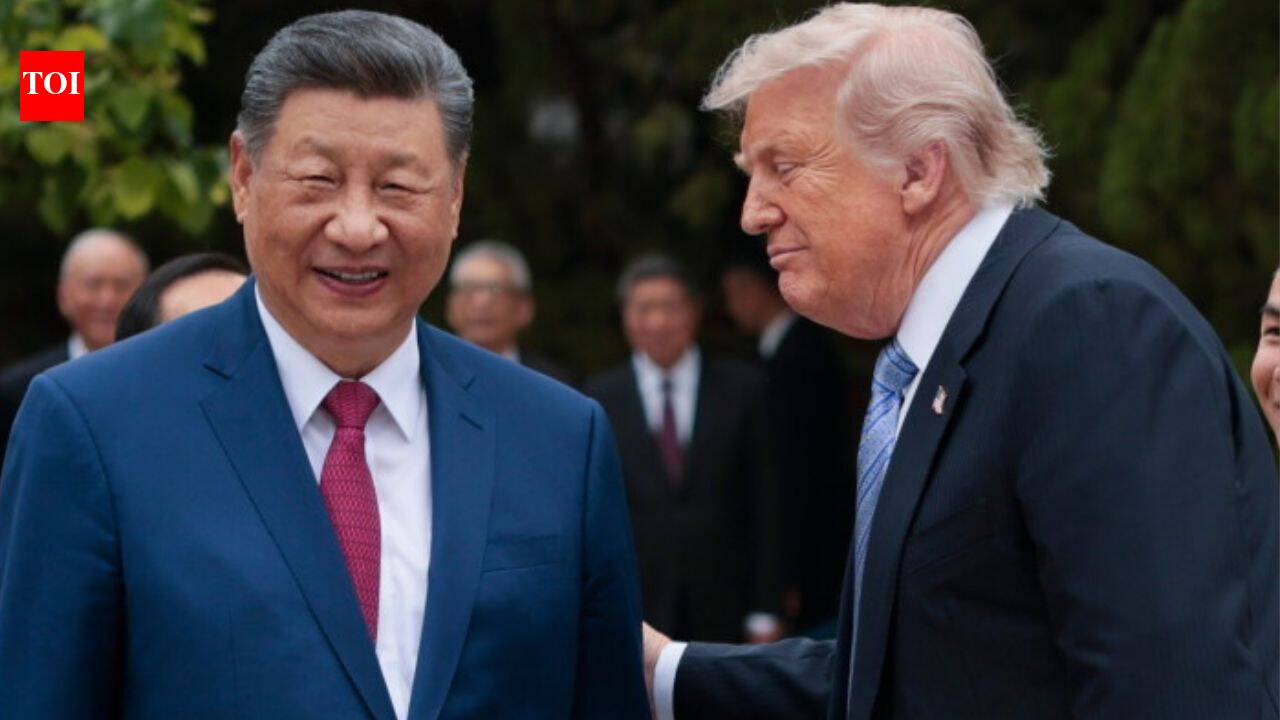
The issue is expected to be a major topic at a planned meeting between US President Donald Trump and Chinese President Xi Jinping later this month, where AI governance is expected to be discussed. China's foreign ministry spokesperson Mao Ning has said that China's progress in AI is driven by "achieving high-level science and technological self-reliance", and urged the US to earnestly implement agreements reached by leaders of both countries.


Written for “US vs China AI Theft Accusations” on 2026-09-09, grounded in this article and the 3 other(s) covering the same event.
Why this leaning score
The article's own words the score was based on. Each is quoted verbatim and was checked against the article text before being stored, so you can find it in the original.
Score +0.35 Confidence high 1 quote(s) discarded as not found in the article
Leaning score +0.35 for article 7303 (high confidence, 1 verified quote) · logged 2026-09-09

Story

📰 US vs China AI Theft Accusations
Politics · 4 article(s) covering the same event.

How this is being covered How these are calculated →

Article leaning vs. publisher reliability
Source leaning vs. consistency

Compared with similar articles

This article reads leans right and hedges 0% of its claims. Each row says how that neighbour differs.
The Independent
⚖️ leaning not scored 🔴 27% hedged 3 of 11 📰 publisher trust 59
“Both articles are dated September 9th, 2026 and mention a joint statement issued by U.S. intelligence and law enforcement officials accusing Chinese AI firms of industrial-scale theft of America's AI secrets.”
AI that works for Americans different event · 90%
Washington Examiner
⚖️ Leans left further left than this 🔴 5% hedged 3 of 55 📰 publisher trust 96
“Article A discusses the emergence of AI in general and Americans' trust issues with it, while Article B focuses on China's alleged theft of American companies' AI advancements”
Fox News
⚖️ leaning not scored 🔴 14% hedged 3 of 21 📰 publisher trust 95
“Article A refers to a protest network called 'No Kings' while Article B does not mention protests or specific events”
The Hindu
⚖️ leaning not scored 🔴 10% hedged 4 of 39 📰 publisher trust 96
“Article A reports on planned talks between U.S. and China about AI safety, while Article B discusses Chinese companies allegedly stealing American AI advancements, without mentioning any specific event or meeting”
Semafor
⚖️ Leans right 🔴 0% hedged 0 of 5 📰 publisher trust 96
“Article A discusses a new AI model called Astra, while Article B mentions Chinese AI models like DeepSeek, Moonshot's Kimi K3, and Alibaba Cloud's Qwen without referencing Astra”
South China Morning Post
⚖️ Centre further left than this 🔴 25% hedged 1 of 4 📰 publisher trust 93
“Article B mentions a general trend of China's open-weight AI models, while Article A discusses a specific economic analysis by Moody's on the cost savings of Chinese tech firms in the compute race”
Times of India
⚖️ leaning not scored 🔴 15% hedged 2 of 13 📰 publisher trust 94
“Article A describes a specific response from China to US allegations, while Article B discusses a broader topic of Chinese AI companies 'stealing' American capabilities, without mentioning any specific incident or date”
Semafor
⚖️ Leans strongly left further left than this 🔴 29% hedged 2 of 7 📰 publisher trust 96
“The articles cover different topics, with Article A discussing concerns about AI development and potential risks, while Article B discusses China's alleged theft of American AI”
South China Morning Post
⚖️ Leans right 🔴 0% hedged 0 of 18 📰 publisher trust 93
“Article A discusses the US's shift towards state capitalism in its economic policies, while Article B talks about China's AI advancements and alleged theft of American intellectual property, but does not directly mention a specific event related to Article A”
The Independent
⚖️ Leans strongly right further right than this 🔴 15% hedged 12 of 78 📰 publisher trust 59
“Article A focuses on President Trump's statement about data centers in midterms, while Article B discusses Chinese AI models and their impact on American capitalism”

Publisher

The Free Press · 69 article(s) · 0 correction(s) detected
No corrections detected for this publisher. That may mean careful reporting, or simply that nothing has been checked.

Who wrote this

Matt Pottinger
1 article(s) here · 1 carrying a prediction
🔮 American companies will spend roughly $700 billion this year on the physical build-out of artificial intelligence: data centers, chips, and computing power.
2026-09-09 · assertive framing · How China Is Stealing America’s AI
The only article under this byline in the corpus.

Topics

American Chinese DeepSeek Moonshot U.S.

Subjects

American NORP · 4× Chinese NORP · 2× Airbnb ORG · 1× Alibaba Cloud’s ORG · 1× Coinbase ORG · 1× DeepSeek ORG · 1× DoorDash ORG · 1× Kimi K3, PERSON · 1× Moonshot ORG · 1× U.S. GPE · 1×

Narrative

It also owes much to a technique called distillation, in which a state-of-the-art American model is asked millions of questions, its answers are recorded, and a new model is trained on them—inheriting much of the original’s capability without needing anything like the research and investment that produced it.
framing: assertive · carried by 1 article(s) · first seen 2026-09-09
🔮 American companies will spend roughly $700 billion this year on the physical build-out of artificial intelligence: data centers, chips, and computing power.
2026-09-09 · The Free Press
How China Is Stealing America’s AI · assertive framing

Claims (10 extracted, 0 hedged)

American companies will spend roughly $700 billion this year on the physical build-out of artificial intelligence: data centers, chips, and computing power. asserted
companies → spend → intelligence
Every dollar is a bet on American capitalism—that the advances those facilities help produce will earn enough to fund the next breakthrough. asserted
facilities → help → breakthrough
The advent of Chinese open-weight models is undermining that bet, not just by ordinary competition, but by theft. asserted
advent → undermine → theft
(Open-weight means its code is freely downloadable and customizable, unlike its proprietary U.S. rivals.) asserted
code → mean → rivals
Chinese AI models like DeepSeek, Moonshot’s Kimi K3, and Alibaba Cloud’s Qwen barely registered in American C-suites before last year. asserted
models → register → year
They now run inside Airbnb, Coinbase, DoorDash, and many others. asserted
They → run → Airbnb
It also owes much to a technique called distillation, in which a state-of-the-art American model is asked millions of questions, its answers are recorded, and a new model is trained on them—inheriting much of the original’s capability without needing anything like the research and investment that produced it. asserted
that → owe → it
Done with permission, it’s an acceptable research practice. asserted
it → do → permission
Apple pays Google to distill the latter’s Gemini model and make a smarter Siri. asserted
Apple → pay → Siri
University labs use the technique to study how models work. asserted
models → use → technique
💬 Give feedback
🕘 History 🎫 Support