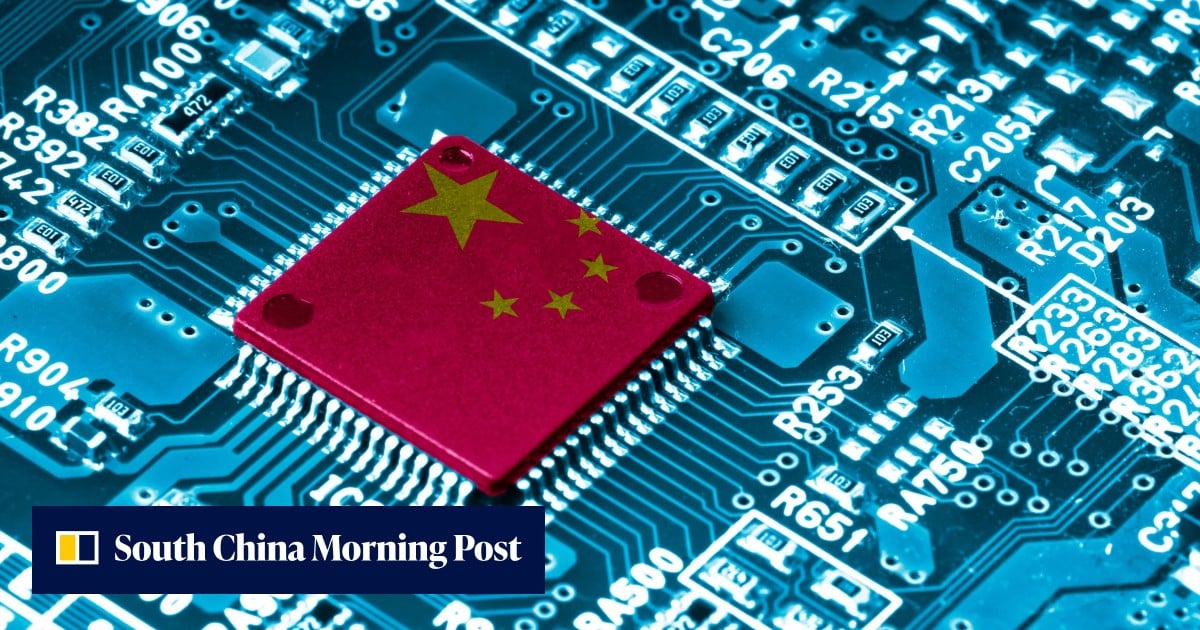
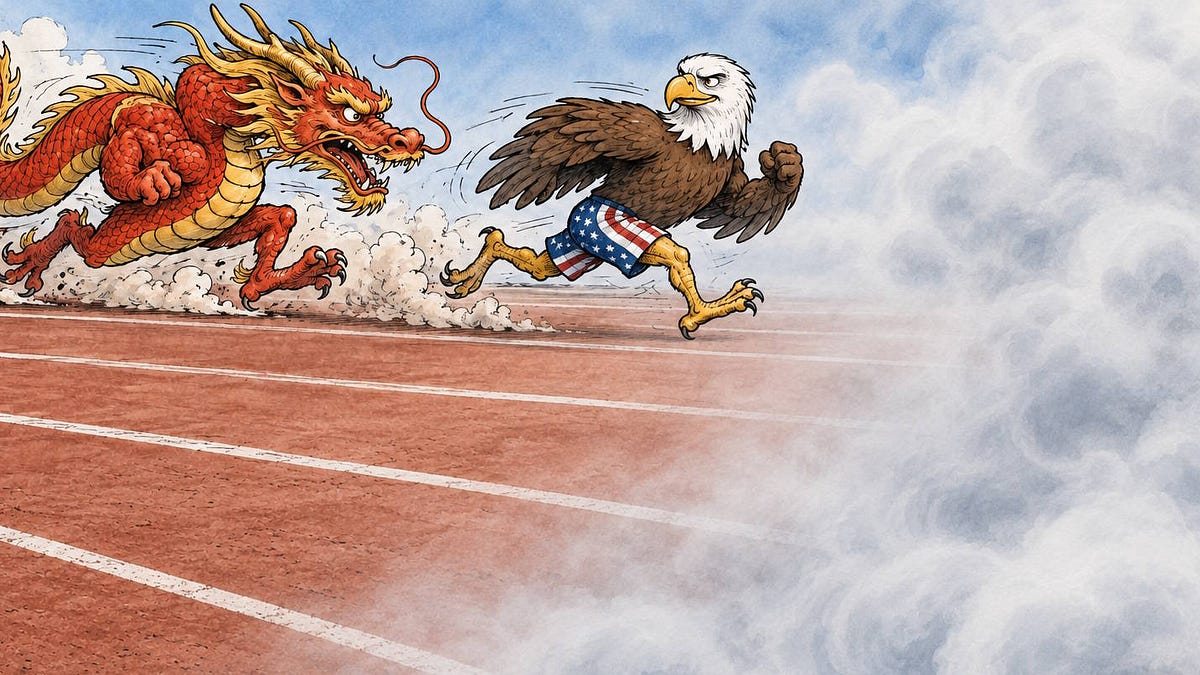
Punching above their weight: how China’s AI giants stretch each dollar in compute race

Read the original at South China Morning Post ↗
Cite

Liu, H. (2026, September 6). Punching above their weight: how China’s AI giants stretch each dollar in compute race. South China Morning Post. https://www.scmp.com/tech/big-tech/article/3366407/punching-above-their-weight-how-chinas-ai-giants-stretch-each-dollar-compute-race?utm_source=rss_feed

Dated when The Aporia collected the article, usually within hours of publication. Check the original for its exact date and byline.

South China Morning Post · collected 2026-09-06 · by Howard Liu

Quick Summary

Moody's reports that China's major tech companies are narrowing the spending gap with their American peers due to lower buildout costs and targeted policy incentives. The capital expenditure of these Chinese companies is set to more than double from $65 billion in 2025 to over $140 billion this year, and will reach $165 billion by 2027. This growth has allowed China's tech firms to invest in AI at a fraction of the cost compared to their US counterparts. Moody's suggests that the spending gap between US and Chinese tech giants may no longer be as significant a factor.
Written locally by qwen2.5:14b on 2026-09-06, using this article's own text rather than the other coverage of the same event (that is the story summary below).

AI analysis runs on qwen2.5:14b, locally

Story summary

China's tech firms are narrowing the gap with their American peers in terms of compute power, despite spending significantly less. According to Moody's, Chinese companies' capital expenditure is set to more than double this year to around $140 billion, up from $65 billion in 2025, and reach $165 billion by 2027. This rapid growth is due in part to lower buildout costs, targeted policy incentives, and access to cheaper green energy. As a result, Chinese tech firms are "punching above their financial weight", meaning they're achieving more with less money than their American counterparts. However, it's unclear whether the spending gap still matters, as China's AI giants continue to make significant strides in compute power.

Written for “Chinese AI Tech Advancements” on 2026-10-22, grounded in this article and the 0 other(s) covering the same event.

Story

📰 Chinese AI Tech Advancements
Technology · 1 article(s) covering the same event.

Compared with similar articles

This article reads leans left and hedges 25% of its claims. Each row says how that neighbour differs.
Google gets away with it different event · 90%
Platformer
⚖️ Leans left 🔴 0% hedged 0 of 3 📰 publisher trust 96
“The articles cover different topics, one about AI industry slowdown and automation, the other about China's AI giants' cost-effective strategies in the compute race”
The Hindu
⚖️ leaning not scored 🔴 10% hedged 4 of 39 📰 publisher trust 60
“Article A mentions a scheduled AI safety talks discussion in mid-September, while Article B discusses the competitive advantage of Chinese AI giants in compute costs, with no mention of any specific event or meeting”
Noahpinion
⚖️ Leans strongly right further right than this 🔴 25% hedged 9 of 36
“The articles discuss different perspectives on the AI race between the US and China, with no indication that they are reporting on a single, shared incident or event.”
Semafor
⚖️ Leans left 🔴 0% hedged 0 of 5 📰 publisher trust 60
“Article A discusses China's AI industry, while Article B talks about a financial injection into Chinese banks and insurers”
Times of India
⚖️ leaning not scored 🔴 15% hedged 2 of 13 📰 publisher trust 59
“The articles cover related topics (AI industry in China) but describe distinct events, with one article discussing the economic advantage of Chinese AI firms and the other addressing a US accusation against China's AI companies.”
How China Is Stealing America’s AI different event · 90%
The Free Press
⚖️ Leans right further right than this 🔴 0% hedged 0 of 10 📰 publisher trust 96
“Article B mentions a general trend of China's open-weight AI models, while Article A discusses a specific economic analysis by Moody's on the cost savings of Chinese tech firms in the compute race”
South China Morning Post
⚖️ leaning not scored 🔴 22% hedged 2 of 9 📰 publisher trust 64
“The articles cover different events: one discusses a general trend of Chinese tech firms narrowing the spending gap with American peers, while the other announces a new tool from Alibaba Cloud that allows users to create digital employees for rival apps.”
South China Morning Post
⚖️ Leans right further right than this 🔴 0% hedged 0 of 18 📰 publisher trust 64
“The articles discuss different topics, with one mentioning the US government's portfolio and state capitalism, while the other talks about China's AI giants and compute costs.”
The Sydney Morning Herald
⚖️ Leans strongly right further right than this 🔴 7% hedged 3 of 45 📰 publisher trust 61
“Article A discusses a general trend of AI boom and bust, while Article B focuses on the competitive dynamics between US and Chinese tech giants in terms of compute costs”
The Independent
⚖️ Leans left 🔴 15% hedged 12 of 78 📰 publisher trust 59
“Article A discusses President Trump's comments on data centers and their potential impact on midterms, while Article B is about China's AI giants' efficiency in compute spending”
How this article was measured signals, leaning charts, publisher record, byline, topics and claims

Signals How these are calculated →

Claims extracted
4
sentences that state something as happening or true
Uncertain
25%
1 of 4 hedged ("reportedly", "may", "according to")
Leaning
Leans left
of the writing, not the subject · beta estimate
Publisher signals
64/100
South China Morning Post's corrections and hedging, across everything collected from it. Not a measure of accuracy.
Outlets on this story
1
Technology
Same framing elsewhere
1
articles that frame the event the way this one does
Analyzed 2026-09-06 · how these are computed

How this is being covered How these are calculated →

Article leaning vs. publisher reliability
Source leaning vs. consistency

Publisher

South China Morning Post · 2870 article(s) · 6 correction(s) detected
Running correction rate · 6 correction(s)

Who wrote this

Howard Liu
8 article(s) here · 1 carrying a prediction
🔮 TSMC confirms talks with Elon Musk over Texas ‘Terafab’ but insists on operational control The negotiations underscore TSMC’s push to expand production and satisfy insatiable demand for AI chips from key clients like Nvidia Taiwan Semiconductor Manufacturing Co (TSMC) is in discussions regarding a potential role in Elon Musk’s proposed Terafab project in Texas, according to company chairman and CEO C.C. Wei, although he stressed that TSMC would retain operational control of any partner factory. The plant “has got to be run by TSMC”, Wei said during the third-quarter earnings call on Thursday.
🔮 Chinese memory giant YMTC to grow revenue 6 times faster than peers as IPO nears: report Country’s top NAND maker bets on enterprise SSDs and AI infrastructure to drive next phase of growth, Counterpoint says Yangtze Memory Technologies Corporation (YMTC), China’s leading flash-memory maker, is set to grow revenue six times faster than its industry peers this year as it expands into server-related business ahead of a planned initial public offering (IPO), according to Counterpoint Research. The company’s server-related revenue was effectively zero in 2024, but could account for nearly 39 per cent of its revenue by 2028, according to the market intelligence firm on Tuesday.
🔮 As it begins massive output increase, China’s top memory supplier sets ‘aggressive’ target for local chipmaking equipment, source says The firm, listed on the Shanghai Stock Exchange’s Star Market, would spend 24.1 billion yuan on a new technology research and development project and another 10.8 billion yuan on the second phase of a wafer testing base, according to a Monday stock filing.
🔮 The sum, which Shanghai-listed Biwin Storage Technology will pour into the third phase of its advanced packaging and testing project in Dongguan, in southern China’s Guangdong province, will exceed the 3.09 billion yuan it put into the first two phases combined.
🔮 Capital expenditure by China’s major tech companies was set to more than double to around US$140 billion this year – up from US$65 billion in 2025 – and reach US$165 billion by 2027, according to Moody’s.
Also by Howard Liu
Nothing else under this byline is closely related to this article, so these are simply their most recent.
All 8 articles by Howard Liu →

Topics

American China Chinese Moody’s

Subjects

China GPE · 3× Chinese NORP · 2× Moody’s ORG · 2× American NORP · 1×

Narrative

Lower buildout costs, targeted policy incentives and access to cheaper green energy meant Chinese tech firms were punching above their financial weight, narrowing the compute divide with American peers at a fraction of the price, Moody’s noted.
framing: mixed · carried by 1 article(s) · first seen 2026-09-06
🔮 Capital expenditure by China’s major tech companies was set to more than double to around US$140 billion this year – up from US$65 billion in 2025 – and reach US$165 billion by 2027, according to Moody’s.

Claims (4 extracted, 1 hedged)

Punching above their weight: how China’s AI giants stretch each dollar in compute race asserted
giants → punch → race
Lower costs and faster growth rates let China’s AI firms narrow the divide, raising the question: does the spending gap still matter? asserted
gap → let → question
Lower buildout costs, targeted policy incentives and access to cheaper green energy meant Chinese tech firms were punching above their financial weight, narrowing the compute divide with American peers at a fraction of the price, Moody’s noted. asserted
Moody → target → price
Capital expenditure by China’s major tech companies was set to more than double to around US$140 billion this year – up from US$65 billion in 2025 – and reach US$165 billion by 2027, according to Moody’s. uncertain
expenditure → set → Moody
💬Give feedback
🕘History 🎫Support