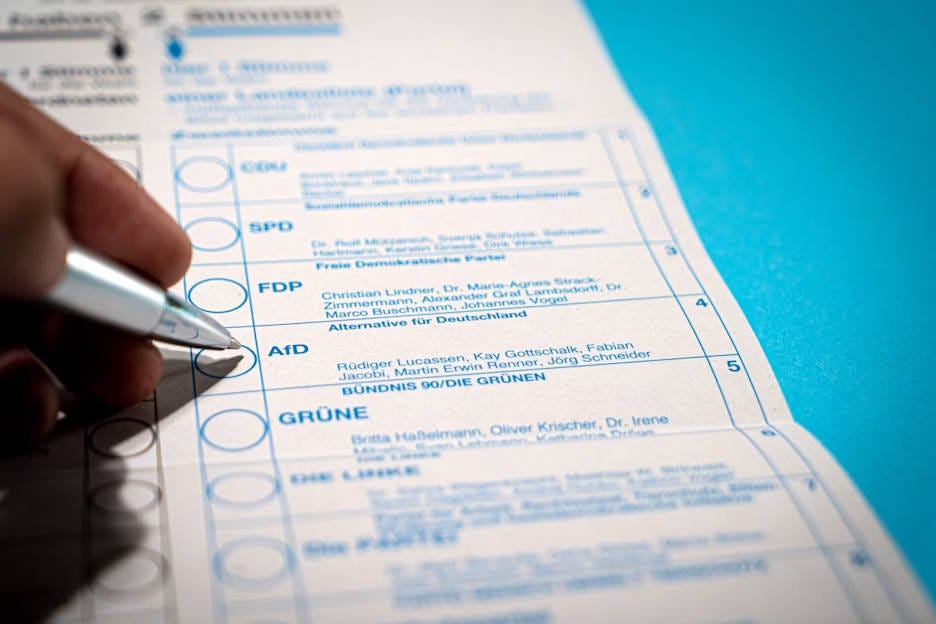
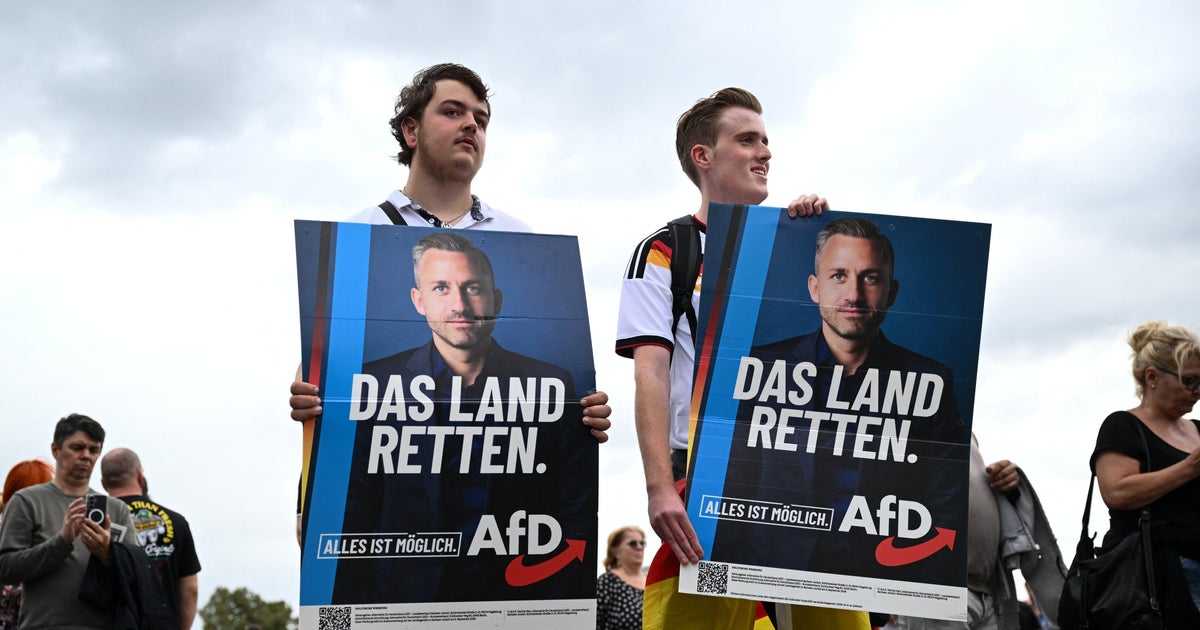
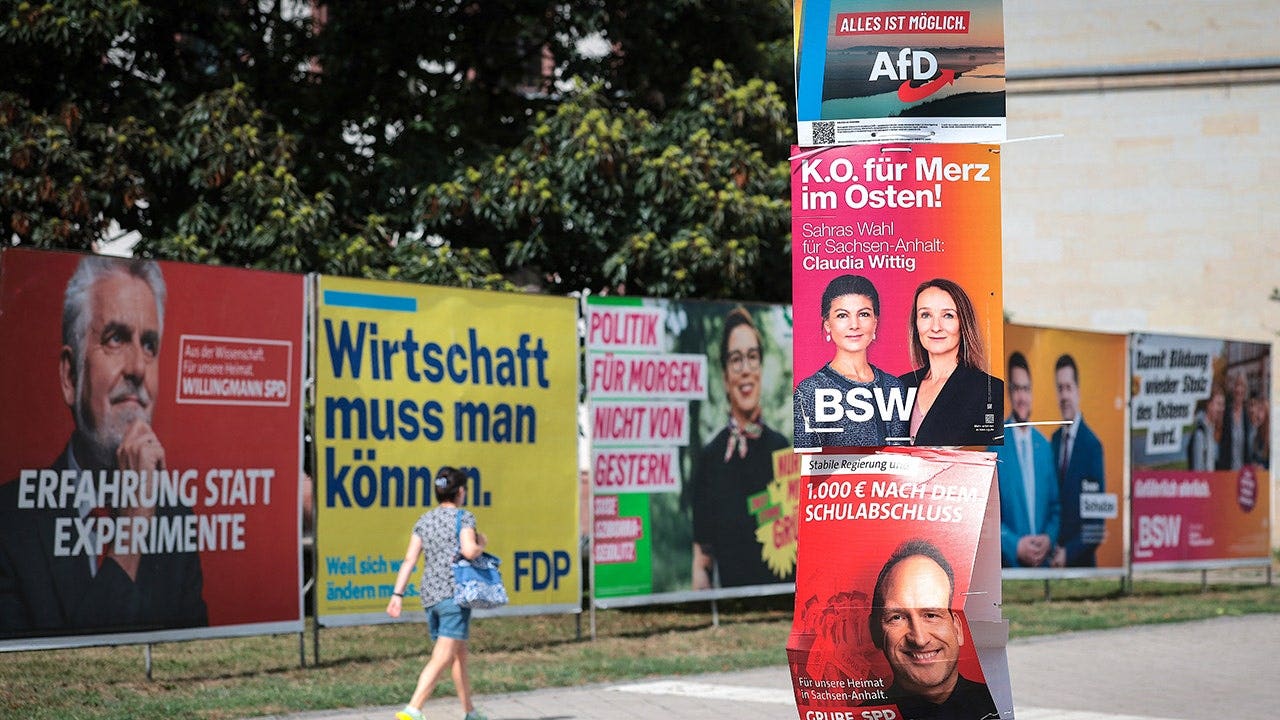
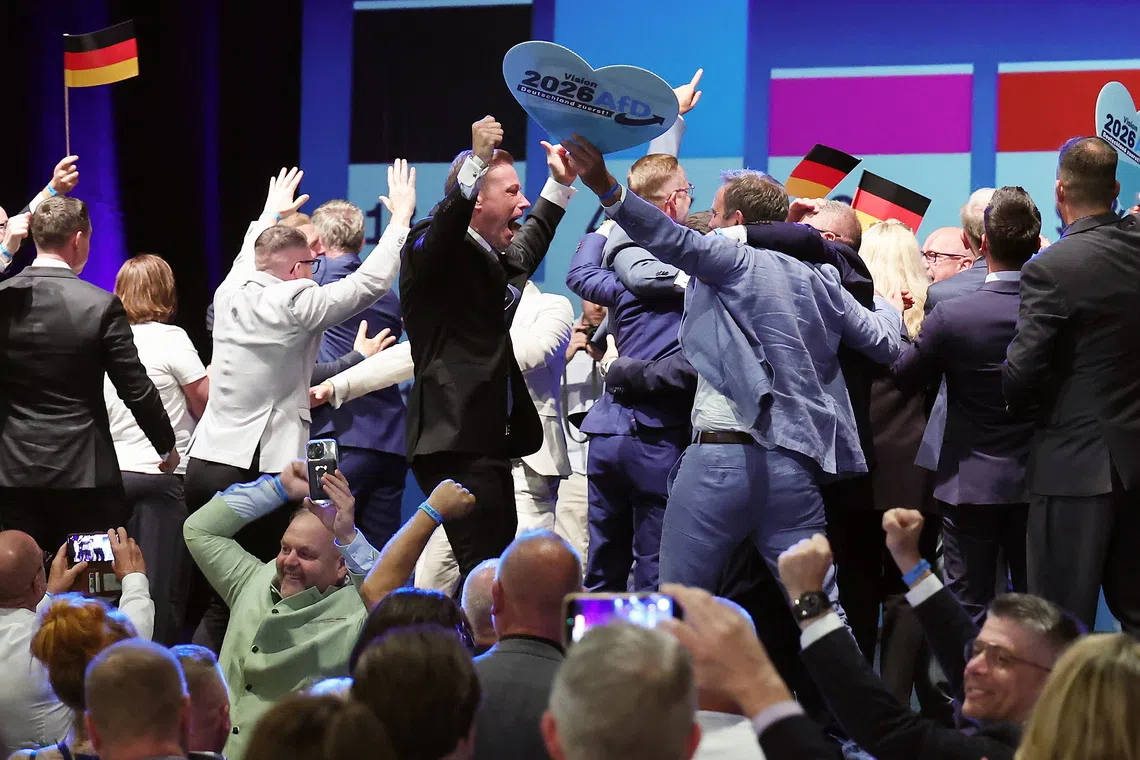
So, Germany’s far-right party, the AfD, just won a huge landslide election victory in the eastern state of Saxony-Anhalt.
asserted
party → win → Anhalt
This doesn’t mean AfD is taking over Germany — the far right is much more popular in the post-communist east than in the more populated western regions.
asserted
right → mean → regions
Germany is also a parliamentary democracy, and almost everyone else hates and fears the AfD.
asserted
everyone → hat → AfD.
But the statewide victory is a warning shot, and everyone in Germany — and in Europe — is taking it seriously.
asserted
everyone → take → it
AfD’s surge means two things.
asserted
surge → mean → things
First, it means that the rise of far-right parties was not simply a reaction to the pandemic.
asserted
rise → mean → pandemic
Back in 2024-25, a number of pundits I respect argued that voters in the U.S. and Europe were backing rightist leaders out of anger at incumbents over Covid.
asserted
voters → respect → Covid
That thesis now looks dead.
asserted
thesis → look → ?
Second, it means that something is making many German voters so angry that they’re finally willing to overlook all of the AfD’s catastrophic flaws — its obvious ties to Vladimir Putin, the fact that the party is filled with crooks, its extreme rhetoric, its lack of governing experience, and so on.
asserted
party → mean → experience
A number of socialist types have tried to claim that AfD’s new voters are responding to economic despair, and can be won back with more socialism.
uncertain
voters → try → socialism
But more sober voices agree that the “something” is immigration.
asserted
something → agree → ?
Adam Tooze, who strongly leans to the left, tries to be gentle as he explains that there’s no getting around the immigration issue:
asserted
he → lean → issue
If you ask AfD voters what they worry about, along with their xenophobic concerns about “too many foreigners”, they will mention the cost of living and their concerns for their standard of living.
asserted
they → ask → living
They also mention climate change and the threat of external war…
asserted
They → mention → war
But if you ask them what they think about the AfD and why they voted for it, economic issues are barely mentioned.
asserted
issues → ask → it
What comes first is security, foreigners, woke politics, remoteness etc…
asserted
comes → come → ?
If you are hard up and working-class it would after all be nothing short of bizarre to vote for the AfD in the hope of improved social protection…Voting for the AfD in the current landscape, whatever your economic issues, in short, is not a vote to have your economic issues addressed by social democracy, or welfare or government intervention.
asserted
issues → vote → democracy
It is a vote to crackdown on foreigners[.] [emphasis mine]
Robin Brooks is more blunt:
There’s lots going on in Germany at the moment, but - when it comes to the surge in AfD popularity - you don’t need to overthink it.
asserted
you → crackdown → it
The AfD is relentlessly campaigning on immigration, which tells you that this is what resonates most with voters…
asserted
what → campaign → voters
A key driver of the recent surge in AfD popularity is that the CDU - SPD grand coalition is proving itself incapable of confronting immigration with the urgency many voters want.
asserted
voters → prove → urgency
In fact, anger over immigration is probably the main reason that the right is surging everywhere in Europe.
asserted
right → surge → Europe
We use regional data spanning over 4500 electoral outcomes…between 2000 and 2017 to assess the impact of immigration on Western European Far-Right voting.
asserted
We → use → voting
To deal with potential reverse causation, we use immigration in neighboring countries as an instrument for domestic immigration.
asserted
we → deal → immigration
The estimated effects of immigration are positive, significant and larger compared to those obtained by simple OLS and fixed effects regressions.
asserted
effects → estimate → OLS
Depending on the measure of immigration used, we find that a 1% increase in immigration stocks leads to a between 1.78% and 2.97% in Far-Right voting…
asserted
increase → depend → voting
Our estimated effects explain a large part of the observed rise in Far-Right in Western European countries that experienced high levels of immigration during the span of our sample.
2026 is hardly the beginning of the trend.
asserted
2026 → estimate → trend
Here’s Brookings in 2024:
asserted
Brookings → ’ → 2024
In the European Union (EU), one election after another has demonstrated the centrality of irregular migration and border security in public discussions and forced mainstream parties to take more restrictive approaches…
asserted
election → demonstrate → approaches
The results of the European Parliament election, France’s snap election, three German state elections, and the Austrian election all showed a strong rightward drift and signaled voters’ distrust in their national governments, confirming the notable shift in tone on migration in Europe toward a more securitized, hardline approach, even among mainstream parties.
asserted
results → show → parties
Trump voters rated it as one of their top issues, along with inflation.
asserted
voters → rat → inflation
It was the issue where Trump had the strongest lead over Kamala Harris in polls.
asserted
Trump → have → polls
American voters clearly soured on immigration in 2023-24.
asserted
voters → sour → 2023
Progressives in America and socialists in Europe still desperately claim that what angry working-class voters really want is more economic support.
uncertain
want → claim → what
They keep offering more and more lavish promises of welfare supports and price controls, while staunchly opposing restrictions on immigration.
asserted
They → offer → immigration
The approach keeps failing, and the far right keeps rising.
asserted
right → keep → ?
Center-right and center-left politicians, on the other hand, realize the source of their voters’ anger very clearly, and are taking steps to reduce immigration.
asserted
politicians → realize → immigration
Germany’s center-right CDU has already stanched the flow with restrictive policies:
And Chancellor Friedrich Merz is responding to AfD’s gains by making it harder to get citizenship.
asserted
it → stanch → citizenship
Meanwhile, France and Italy are tightening border controls.
asserted
France → tighten → controls
France is making it harder to become a citizen.
asserted
it → make → ?
The EU is toughening up its asylum rules.
asserted
EU → toughen → rules
…and 81 more, not listed.
 The Aporia