I’m writing about this a little bit late, but France has been having some pretty bad riots:
asserted
France → write → riots
After widespread rioting at the weekend – estimated to have cost several hundred million dollars in property damage and theft – France faces a toxic mix of urban rebellion, political drift and economic crisis…
asserted
France → estimate → rebellion
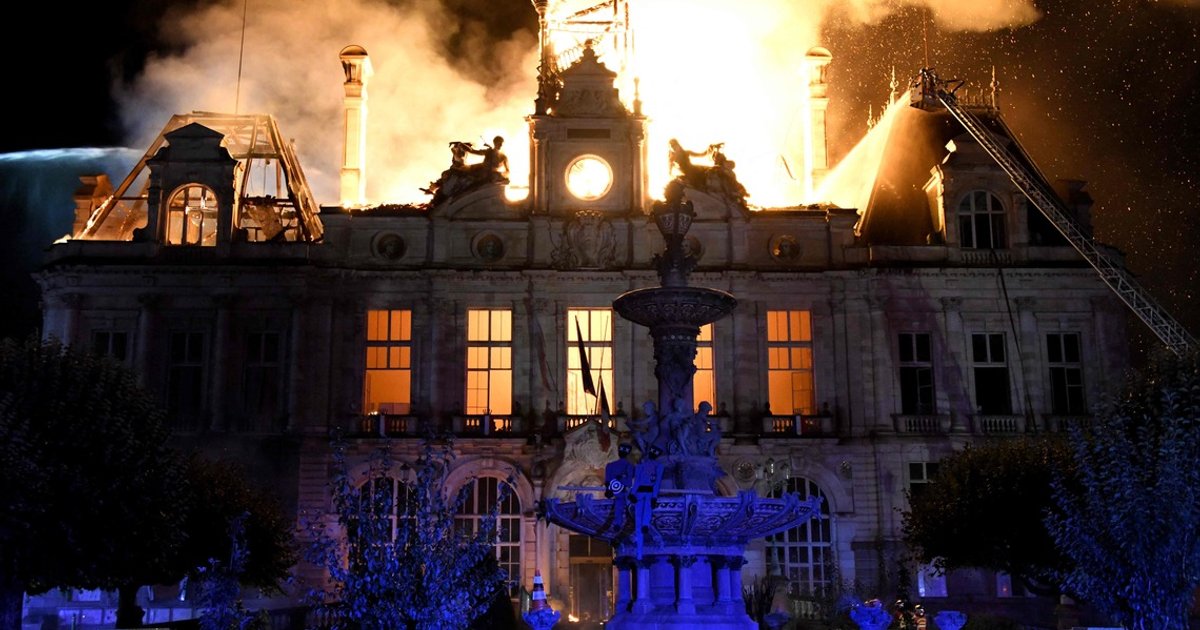
There was rampant looting in Paris, Marseille, Bordeaux and other cities, while the city hall in Limoges, which survived two world wars, was badly damaged by fire and its clock spire collapsed.
asserted
spire → be → fire
The violence at the weekend, which led to some 2,400 arrests, followed weeks of protests by French students angry about crumbling schools, a lack of teachers and dismal job prospects.
asserted
which → lead → teachers
If there’s a reason I’m writing about this a bit late, it’s because “rioting in France” is a little like “rain in Seattle” — it’s not exactly an unusual occurrence.
asserted
it → ’ → Seattle
In 2023, France had a week of nationwide riots over a police killing.
asserted
France → have → killing
From 2018 to 2020, France was rocked by over a year and a half of near-continuous “Yellow Vest” protests and riots over economic issues.
asserted
France → rock → issues
I remember two decades ago, reading about weeks of rioting in the French suburbs, accompanied by endless photos of burning cars.
asserted
I → remember → cars
French people like to riot.
asserted
people → like → ?
First of all, this wave of unrest is accompanied by serious economic troubles.
asserted
wave → accompany → troubles
France’s long-term interest rates, like rates throughout the world, are surging:
asserted
rates → surge → world
But unlike some countries whose rates have also risen, investors have serious doubts that France’s government will take the necessary steps to pay back what it owes.
asserted
it → rise → what
The price that investors have to pay to insure against a French sovereign default has shot up even more abruptly than interest rates:
asserted
investors → have → rates
Basically, investors are starting to think that France won’t pay back its debt — that instead of raising taxes or cutting spending, the country will simply pay the cost of rising interest rates by borrowing even more money.
asserted
country → start → money
Instead, investors are starting to worry that France will simply default on its bonds.
asserted
France → start → bonds
In a widely read post a couple of weeks ago, Paul Krugman argued that the problem lies with France’s old-age pensions, which are eating an increasingly enormous amount of the country’s GDP and seem politically immune to any cuts:
asserted
which → read → cuts
The rise in interest rates on French government bonds is largely driven by heightened perceptions of the risk that France could default on its national debt…
uncertain
France → drive → debt
Debt is already very high as a percentage of GDP, and the French government is adding to that debt by running large budget deficits even though there is no emergency like a war, a severe recession, or a pandemic to justify such deficits.
asserted
government → add → deficits
Furthermore, France has an aging population, which means that pension costs will, other things equal, grow much faster than revenue…
asserted
things → have → revenue
France does stand out, even among fiscally troubled nations, in one main way: its persistent inability to get realistic about retirement…
asserted
France → stand → retirement
Macron’s center-right government was on track to gradually raise the retirement age to 64, still low by the standards of other advanced nations.
asserted
government → raise → nations
But due to opposition by the extreme right and the extreme left parties in France, this rise has been frozen until after next year’s election.
asserted
rise → freeze → election
In other words, France needs austerity, but it can’t get it, because the French people demand ever-increasing spending.
asserted
people → need → spending
France’s government already takes up a larger share of GDP than almost any other rich country — significantly more than Sweden or Denmark:
asserted
government → take → Sweden
And indeed, a very hefty chunk of that social spending goes to either old-age pensions or to health (which is heavily weighted toward the old):
asserted
which → go → old
Of course, there’s another way to do austerity besides cutting spending — France could raise taxes.
uncertain
France → ’ → taxes
France’s taxes are already higher as a share of its GDP than any other rich country, including the famously high-tax Scandinavian countries:
asserted
taxes → include → countries
Could taxes go up even more?
uncertain
taxes → go → ?
In 2019, I wrote about the underwhelming results of France’s previous experiments:
asserted
I → write → experiments
The wealth tax might have generated social solidarity, but as a practical matter it was a disappointment.
uncertain
it → generate → matter
The revenue it raised was rather paltry; only a few billion euros at its peak, or about 1% of France’s total revenue from all taxes.
asserted
it → raise → taxes
At least 10,000 wealthy people left the country to avoid paying the tax; most moved to neighboring Belgium, which has a large French-speaking population.
asserted
which → leave → population
When these individuals left, France lost not only their wealth tax revenue but their income taxes and other taxes as well.
asserted
France → leave → revenue
French economist Eric Pichet estimates that this ended up costing the French government almost twice as much revenue as the total yielded by the wealth tax…
asserted
this → estimate → tax
Another French experiment was the so-called supertax, a 75% levy on incomes of more than 1 million euros.
asserted
experiment → call → euros
Introduced by socialist President François Hollande in 2012, the supertax added to the exodus of wealthy individuals, most notably actor Gerard Depardieu and Bernard Arnault, chairman of LVMH Moet Hennessy Louis Vuitton.
asserted
supertax → introduce → Vuitton
Star soccer players threatened to go on strike, and there was fear that France would become a wasteland for entrepreneurs.
asserted
France → threaten → entrepreneurs
Meanwhile, the supertax raised much less money than even the wealth tax had -- only 160 million euros in 2014.
asserted
tax → raise → 2014
The unpopular tax was repealed two years after its adoption.
asserted
tax → repeal → adoption
Its membership in the EU, and its location near to other French-speaking countries like Belgium, Switzerland, and Luxembourg, make it trivially easy for rich French people to pick up and move to other countries if they see their fortunes under threat of confiscation.
asserted
fortunes → speak → confiscation
…and 50 more, not listed.
 The Aporia