WHO officials say unclear how Russia plague lab worker died

Read the original at ABC News (US) ↗
ABC News (US) · collected 2026-10-08 · by Othon Leyva, Mary Kekatos

Quick Summary

WHO officials announced they lack sufficient information from Russian authorities regarding the death of a plague laboratory worker in Siberia. Over 200 individuals have been placed under quarantine by Russia's health ministry. Dr. Tedros Adhanom Ghebreyesus, WHO director-general, emphasized the need for timely and transparent data sharing to assess potential public health risks accurately. The WHO has requested further details on the deceased worker’s tests, contact tracing results, and other relevant information from Russian officials.
Written locally by qwen2.5:14b on 2026-10-08, using this article's own text rather than the other coverage of the same event (that is the story summary below).

AI analysis runs on qwen2.5:14b, locally

Story summary

A 28-year-old lab technician named Darya Shipilova died of pneumonic plague in Siberia after breaking a test tube containing live bacteria at the Irkutsk Anti-Plague Institute on September 30. As many as 200 people who were potentially exposed to her are under quarantine, and three hospitals have been placed under secure measures. Russia’s Chief State Sanitary Doctor Anna Popova rushed to Siberia to manage the outbreak personally. Concerns about a government cover-up have arisen due to limited information from official sources, while residents remain anxious over potential spread of the disease.

Written for “Plague Outbreak in Siberia” on 2026-10-08, grounded in this article and the 87 other(s) covering the same event.
Why this leaning score
This article does not take a side on a contested political question, so it has no leaning score. That is an answer rather than a gap: a match report or a rescue can be warmly or critically written without being left or right, and scoring it anyway is how approval of a subject gets recorded as a political position.
No political leaning scored for article 64400 · logged 2026-10-08

Signals How these are calculated →

Claims extracted
21
claim-shaped sentences
Uncertain
24%
5 of 21 hedged
Leaning
not political
takes no side on a contested political question
Correction & hedging signals
58.5
corrections and hedging in what we collected; not a measure of accuracy
Outlets on this story
88
Health
Narrative spread
1
articles carrying this framing
Analyzed 2026-10-08 · how these are computed

Story

📰 Plague Outbreak in Siberia
Health · 88 article(s) covering the same event. See how they differ ↓

How this is being covered How these are calculated →

Article leaning vs. publisher reliability
Source leaning vs. consistency

Compared with similar articles

This article reads unscored and hedges 24% of its claims. Each row says how that neighbour differs.
The Guardian · 0.90 cosine similarity
⚖️ leaning not scored 🔴 11% hedged 4 of 37 📰 publisher trust 68
“Both articles discuss the World Health Organization's lack of full information regarding the death of a plague lab worker in Siberia and their request for more details from Russian authorities.”
The Straits Times
⚖️ leaning not scored 🔴 11% hedged 5 of 44 📰 publisher trust 59
“Both articles discuss the same specific incident involving a lab worker's death at a plague research institute in Siberia on October 2, leading to quarantine measures and public concern.”
TIME
⚖️ leaning not scored 🔴 10% hedged 6 of 62 📰 publisher trust 60
“Both articles discuss the death of a plague lab worker in Siberia and the subsequent quarantine and investigation by Russian authorities and the WHO.”
The Straits Times · 0.93 cosine similarity
⚖️ leaning not scored 🔴 7% hedged 1 of 14 📰 publisher trust 59
“Both articles discuss WHO's inability to conduct a full risk assessment due to lack of information from Russia regarding the suspected plague death of a laboratory technician in Irkutsk, Siberia.”
The Hindu · 0.90 cosine similarity
⚖️ leaning not scored 🔴 22% hedged 2 of 9 📰 publisher trust 60
“Both articles discuss a single incident where a WHO official is requesting further information from Russia about a lab worker's death linked to plague concerns in Siberia.”
CBS News · 0.89 cosine similarity
⚖️ leaning not scored 🔴 0% hedged 0 of 2 📰 publisher trust 66
“Both articles discuss the death of a plague lab worker in Russia and involve comments from WHO about the need for further information to assess risk.”
CBC News · 0.89 cosine similarity
⚖️ leaning not scored 🔴 19% hedged 6 of 32 📰 publisher trust 60
“Both articles discuss a single incident where a WHO official is urging Russia to provide more information about the death of a plague lab worker in Siberia.”
New York Post · 0.88 cosine similarity
⚖️ Leans right 🔴 17% hedged 1 of 6 📰 publisher trust 67
“Both articles discuss Russia informing the World Health Organization about a laboratory worker's death at a Siberian plague research institute on the same day.”
The Independent
⚖️ leaning not scored 🔴 47% hedged 7 of 15 📰 publisher trust 59
“Both articles describe the death of a laboratory worker exposed to an unknown virus at the Anti-Plague Research Institute in Siberia, leading to hundreds being placed in quarantine.”
The Sydney Morning Herald
⚖️ leaning not scored 🔴 35% hedged 7 of 20 📰 publisher trust 61
“Both articles discuss the same incident involving a researcher who died at an antiplague research institute in Siberia due to a suspected plague outbreak from a lab accident.”

Publisher

ABC News (US) · 721 article(s) · 2 correction(s) detected
Running correction rate · 2 correction(s)
2026-10-04
Tennessee Corrections commissioner resigns days after failed Christa Pike execution
2026-09-25
'Like a horror movie': Ukraine's Oleshky faces 'catastrophe' under Russian occupation

Who wrote this

Mary Kekatos
9 article(s) here · 1 carrying a prediction
🔮 It appears that the WHO may have leaned heavily on local media reports to better understand what may have occurred.
🔮 "It is potentially possible that some of the medications that he was taking could be able to mask some of the symptoms and therefore give a false positive screening, meaning you could pass through the [airport screening system] because you have taken a medicine, say for example to lower your temperature," Amoth said.
🔮 This may include fever, rash, nausea, vomiting, muscle pain, joint pain and bone pain.
🔮 Here's what it may mean It comes two weeks after guidelines for screening were "temporarily rescinded."
🔮 Kennedy also said he wanted to make more sweeping changes on "day one" but couldn't do so due to "procedures."
🔮 Wilson replied that he was heading to the Williamsburg Bridge.
Also by Mary Kekatos
Nothing else under this byline is closely related to this article, so these are simply their most recent.
All 9 articles by Mary Kekatos →
Othon Leyva
1 article(s) here · 1 carrying a prediction
🔮 It appears that the WHO may have leaned heavily on local media reports to better understand what may have occurred.
The only article under this byline in the corpus.

Topics

Russia Russian WHO the International Health Regulations the Russian Federation

Subjects

WHO ORG · 9× CDC ORG · 3× Russia GPE · 3× Russian NORP · 3× Tedros PERSON · 3× U.S. GPE · 2× Van Kerkhove PERSON · 2× the Russian Federation GPE · 2× Tedros Adhanom Ghebreyesus PERSON · 1× The World Health Organization ORG · 1×

Narrative

Tedros said the WHO has requested more information surrounding the death of the lab worker, the tests being conducted on the individual who died, contact tracing of other individuals close to the worker, and other information.
framing: mixed · carried by 1 article(s) · first seen 2026-10-08
🔮 It appears that the WHO may have leaned heavily on local media reports to better understand what may have occurred.
2026-10-08 · ABC News (US)
WHO officials say unclear how Russia plague lab worker died · mixed framing

Claims (21 extracted, 5 hedged)

WHO officials say unclear how Russia plague lab worker died, call for more information Russia said over 200 people had been placed in quarantine. The World Health Organization (WHO) said on Wednesday it does not currently have enough information from Russian authorities to conduct a full risk assessment after the death of a plague laboratory worker in Siberia. Dr. Tedros Adhanom Ghebreyesus, WHO director-general, said during a press conference that following media reports of the worker's death, the WHO asked the Russian Federation on Saturday for more information, in accordance with the International Health Regulations (IHR). The Russian Federation replied on Tuesday, saying no case of plague had recently been reported in the Irkutsk oblast, in southeastern Siberia, and that about 200 contacts had been placed in quarantine. "As we don't yet have the full picture of this event, we are not able to conduct a full risk assessment," Tedros said in his opening remarks. uncertain
Tedros → say → remarks
"Timely, complete and transparent information sharing under the International Health Regulations is essential to clarify conflicting reports and enable an accurate assessment of potential public health risks." asserted
sharing → clarify → risks
Initial media reports suggested a lab worker at Irkutsk Antiplague Research Institute died of the plague, but Russian officials later disputed this, saying the worker died of pneumonia and that the illness was not linked to work in the lab. uncertain
illness → suggest → lab
Tedros said the WHO has requested more information surrounding the death of the lab worker, the tests being conducted on the individual who died, contact tracing of other individuals close to the worker, and other information. asserted
who → say → worker
"We don't know exactly how this person died," Dr. Maria Van Kerkhove, director of the department of epidemic and pandemic management of the WHO Health Emergencies Program, told reporters on Wednesday. asserted
Kerkhove → know → Wednesday
"We know that she had pneumonia. asserted
she → know → pneumonia
We know it was a fatal case. asserted
it → know → ?
We understand that some laboratory tests have been done. asserted
tests → understand → ?
They haven't found the causative agent, that we know, and so this is why we need more information. asserted
we → find → information
It appears that the WHO may have leaned heavily on local media reports to better understand what may have occurred. uncertain
what → appear → reports
In response to a reporter's question about a potential incident in the lab, Kerkhove noted, "I know what you know from the media. asserted
you → note → media
" The WHO is awaiting more information from Russian officials regarding the incident, Van Kerkhove said. asserted
Kerkhove → await → incident
"We expect further answers from Russia. asserted
We → expect → Russia
We did get some reports back from them following the IHR verification request, but not yet everything has been provided to us," Van Kerkhove said. asserted
Kerkhove → get → us
Tedros added that the WHO has offered technical support related to plague and lab biosafety and biosecurity. asserted
WHO → add → plague
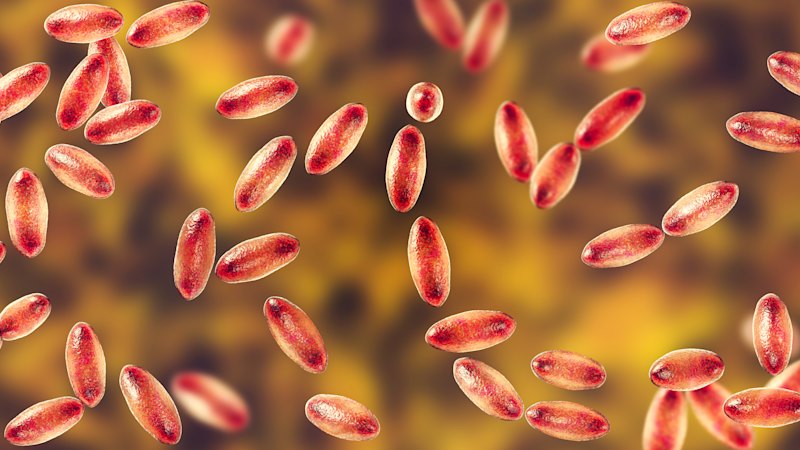
On Tuesday, the Centers for Disease Control and Prevention said in a statement, in part, that "at this time, there is no indication of a broader threat to the United States, but CDC and our interagency partners are prepared and will continue to monitor the situation closely." Plague is a disease caused by the bacterium Yersinia pestis, according to the CDC. uncertain
Plague → say → CDC
Symptoms often include fever, chills and weakness. asserted
Symptoms → include → fever
Plague can be treated with antibiotics. asserted
Plague → treat → antibiotics
The earlier antibiotics are received, the higher the chances of a full recovery. asserted
antibiotics → receive → recovery
The U.S. averages about seven cases of plague each year, mostly in Western states, according to the CDC, which notes it has been more than a century since the U.S. has seen a documented case of person-to-person spread of plague. uncertain
U.S. → average → plague
ABC News' Youri Benadjaoud contributed to this report. asserted
Benadjaoud → contribute → report

💬Give feedback
🕘History 🎫Support