TIME
· collected 2026-10-07 · by Veronique Greenwood and Dominique Mosbergen
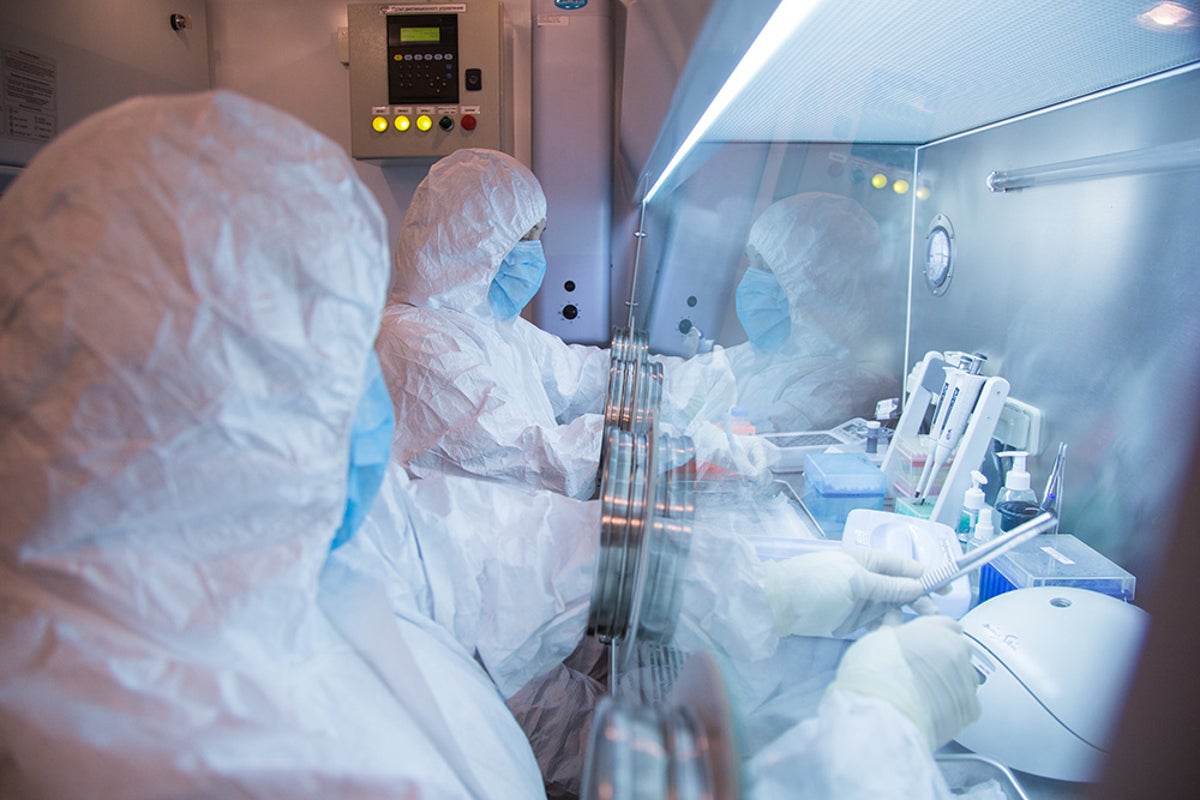
A laboratory worker in a plague research institute in Siberia died last week after developing pneumonia.
asserted
worker → die → pneumonia
Since then, local reports suggesting that she broke a test tube containing plague bacteria have fueled speculation about how she became ill.
asserted
she → suggest → speculation
Russian authorities disputed that account and told the World Health Organization (WHO) that plague had not been detected in her tests nor in those of her close contacts.
asserted
plague → dispute → contacts
At the same time, Russian authorities have reportedly quarantined as many as 200 people, which public-health experts say would be an unusual response to an isolated case of pneumonia.
uncertain
experts → quarantine → pneumonia
On Tuesday evening, the WHO asked Russia for more information following media reports of a second case of pneumonia of unknown cause.
asserted
WHO → ask → cause
Researchers who work in public-health policy and infectious diseases have been watching this rapidly evolving and opaque situation with concern.
asserted
who → work → concern
Here’s what worries them.
asserted
worries → ’ → them
This doesn’t look like the average lab accident
The pattern of events doesn’t fit neatly with the explanation that a lab accident with a known bacterium sickened the worker, says Jennifer Nuzzo, director of the Pandemic Center at the Brown University School of Public Health.
asserted
Nuzzo → look → Health
In labs that study Yersinia pestis, the bacterium that causes plague, protocols are in place to deal with accidental exposure.
asserted
protocols → study → exposure
Wearing personal protective equipment and working under a fume hood provides some protection.
asserted
Wearing → wear → protection
But if someone finds they’ve been exposed, they would take antibiotics, which is an effective treatment for naturally occurring plaque bacteria.
asserted
which → find → bacteria
You don't die, typically,” says Nuzzo.
asserted
Nuzzo → die → ?
A lab exposure “would be a regrettable accident that sometimes occurs.”
asserted
that → occur → ?
That seems out of sync with the substantial response on the part of Russian authorities.
asserted
That → seem → authorities
“The magnitude and severity of that response is also worth looking at,” she says, referring to reports that up to 200 people are under observation and that local hospitals have been closed.
asserted
hospitals → look → observation
But I would feel more confident in what was going on if I knew specifically what she was tested for and what came back negative.”
asserted
what → feel → what
By this time, Nuzzo continues, “they should have a full sequence”—meaning the pathogen that killed the lab worker should be identified.
asserted
that → continue → worker
Much is unknown about the situation, and some experts have said it’s worth considering the possibility that an engineered pathogen, rather than a naturally occurring one, could be involved.
uncertain
pathogen → say → possibility
Dr. Ashish K. Jha, who coordinated the White House’s COVID response under President Joe Biden, wrote on X on Oct. 4 that “an accidental release from a deliberate program” was a scenario he had long worried about.
asserted
he → coordinate → program
Russia has a long history of bioengineering pathogens.
asserted
Russia → have → pathogens
After the fall of the Soviet Union, that nation’s programs were officially shuttered, but the current situation is unclear.
uncertain
situation → shutter → Union
“You can't help but worry that there is something more here than meets the eye,” Jha tells TIME.
asserted
Jha → help → TIME
“What I will say from my conversations with friends in the [Trump] Administration is that they've been very worried about this…
asserted
they → say → this
[But] they're not getting a lot of information and data.”
asserted
they → get → information
”I'm going to say something that's going to sound incredibly naive, but I'll say it:
asserted
I → go → it
What I hope is that the Russians will be very forthcoming and transparent about what was going on in this lab, but one can imagine that they may not be,” Jha says.
uncertain
Jha → hope → lab
“If it's plague, breathe a sigh of relief, because we know what to do about plague,” says Nuzzo.
asserted
Nuzzo → breathe → plague
“We have a clear solution…
asserted
We → have → solution
The worry is it's not that, it is something different, something for which we don't have easy solutions.
asserted
we → have → solutions
No, Nuzzo and Jha agree.
asserted
Nuzzo → agree → ?
We are in a worse situation now compared to pre-COVID times, Nuzzo says.
asserted
Nuzzo → compare → times
“The protections we had in 2019, early 2020–there are now fewer of them, and we are more vulnerable now than we were then,” Nuzzo says, pointing to reduced monitoring and less information flow between countries.
asserted
Nuzzo → have → countries
“This is why countries need to fund and maintain overseas scientific engagements, because then they know the actors, they know their motivations, they know what's normal.
asserted
what → need → motivations
It's also why you want to have a strong, capable, and relied-upon WHO, because sometimes they're the best entity to have the conversations to surface the information.”
asserted
they → want → information
Jha also flags the lack of monitoring: “The biggest weakness we have is we have almost no biodetection system in our own country.”
asserted
we → flag → country
If someone in Siberia was infected, got on a plane, and flew to New York City, “we would not know.
asserted
we → infect → City
We just need a much better global monitoring system on this.”
asserted
We → need → this
Jha and a colleague from the Biden White House, Nikki Romanik, have started a public benefit corporation to build a monitoring system that draws on search and social media information, clinical information from hospitals, and wastewater sequencing.
asserted
that → start → hospitals
Wastewater monitoring typically looks for hand-picked pathogens, such as RSV or COVID-19.
asserted
monitoring → look → RSV
“Our strategy is you flip it, you sequence everything in the wastewater and you look for anything that doesn't belong.
asserted
that → flip → anything
…and 22 more, not listed.
 The Aporia