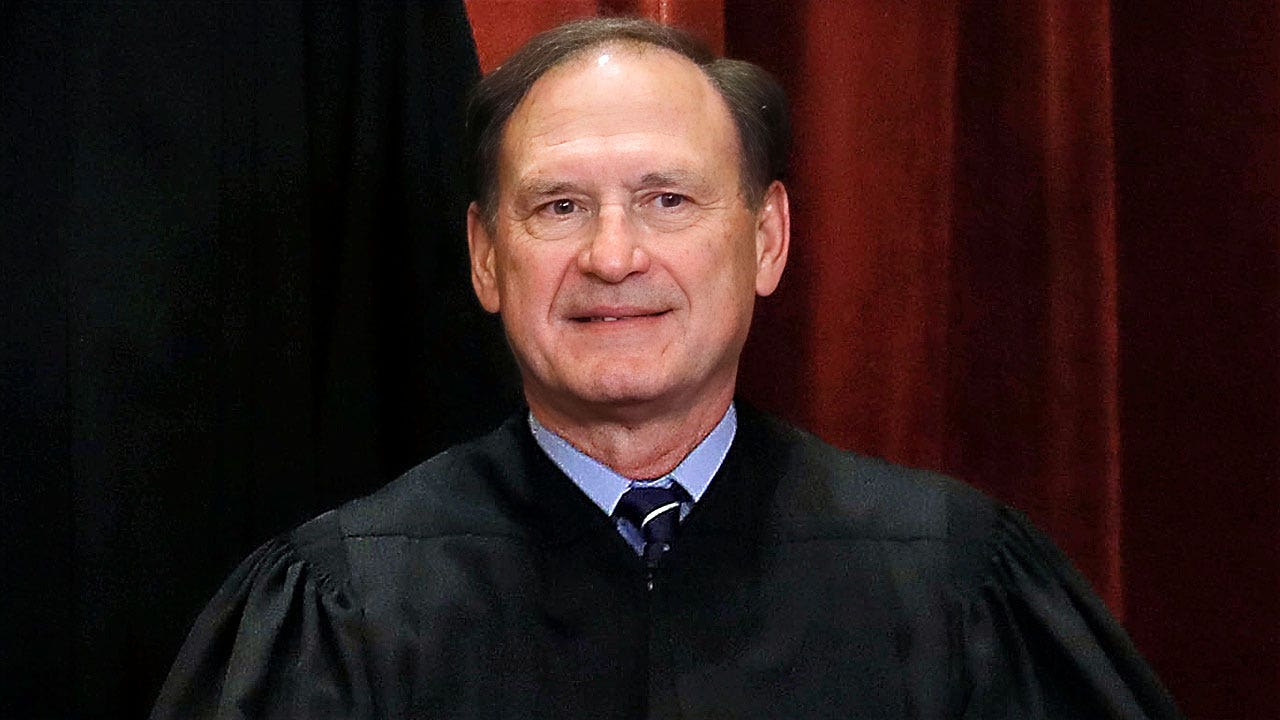
Justice Alito Gives a Fuller Explanation of His Suncor Recusal

Read the original at Reason ↗
Reason · collected 2026-10-07 · by Jonathan H. Adler

Quick Summary

Justice Samuel Alito provided additional insight into his decision to recuse from the Suncor Energy v. Boulder County case during an interview with the Wall Street Journal’s Potomac Watch podcast. Alito explained that although he and his spouse do not own stock in any company involved in the case, concerns raised by petitioners about potential catastrophic effects on the oil and gas industry if they lost influenced his decision to recuse. This move reduces the number of justices likely to favor preemption arguments present in Suncor.
Written locally by qwen2.5:14b on 2026-10-07, using this article's own text rather than the other coverage of the same event (that is the story summary below).

AI analysis runs on qwen2.5:14b, locally

Story summary

In an interview with the Wall Street Journal’s Potomac Watch podcast, Justice Samuel Alito provided more context for his recusal in the case of Suncor Energy v. Boulder County. Unlike a typical appeals court scenario where a judge's recusal doesn't affect the number of judges hearing the matter, Justice Alito noted that such an action can significantly impact the Supreme Court’s composition on a particular issue. He mentioned concerns raised by the petitioners and their allies about potential catastrophic effects on the oil and gas industry if Suncor lost the case, which may have influenced his decision to recuse despite not owning stocks in any of the companies involved. This move has led to one less justice inclined toward preemptive arguments being present for the deliberation.

Written for “Supreme Court Recusal Explanation” on 2026-10-07, grounded in this article and the 0 other(s) covering the same event.
Why this leaning score
This article does not take a side on a contested political question, so it has no leaning score. That is an answer rather than a gap: a match report or a rescue can be warmly or critically written without being left or right, and scoring it anyway is how approval of a subject gets recorded as a political position.
No political leaning scored for article 61880 · logged 2026-10-07

Signals How these are calculated →

Claims extracted
32
claim-shaped sentences
Uncertain
28%
9 of 32 hedged
Leaning
not political
takes no side on a contested political question
Correction & hedging signals
66.0
corrections and hedging in what we collected; not a measure of accuracy
Outlets on this story
1
Politics
Narrative spread
1
articles carrying this framing
Analyzed 2026-10-07 · how these are computed

Story

📰 Supreme Court Recusal Explanation
Politics · 1 article(s) covering the same event.

How this is being covered How these are calculated →

Article leaning vs. publisher reliability
Source leaning vs. consistency

Compared with similar articles

This article reads unscored and hedges 28% of its claims. Each row says how that neighbour differs.
Washington Examiner
⚖️ leaning not scored 🔴 0% hedged 0 of 18 📰 publisher trust 72
“The articles cover different interviews or discussions by Justice Alito on separate occasions.”
The Independent
⚖️ leaning not scored 🔴 0% hedged 0 of 29 📰 publisher trust 59
“The articles cover different interviews with Justice Alito on distinct topics, one regarding rhetoric against the Supreme Court and another about his recusal in a specific case.”
Reason
⚖️ Leans right 🔴 9% hedged 6 of 65 📰 publisher trust 66
“The articles describe different interviews with Justice Alito, not the same specific incident.”
Washington Examiner
⚖️ Leans left 🔴 6% hedged 1 of 18 📰 publisher trust 72
“Article A discusses oral arguments at the Supreme Court regarding Boulder's climate lawsuit against oil companies, while Article B focuses on Justice Alito's recusal explanation in a separate interview.”
CBS News
⚖️ leaning not scored 🔴 0% hedged 0 of 2 📰 publisher trust 66
“The articles discuss different interviews with Justice Alito on separate dates.”
CBS News
⚖️ leaning not scored 🔴 0% hedged 0 of 2 📰 publisher trust 66
“The articles describe different interviews with Justice Alito on distinct topics.”
Justice Alito on Originalism different event · 90%
Reason
⚖️ leaning not scored 🔴 16% hedged 11 of 70 📰 publisher trust 66
“Article A discusses Justice Alito's views on constitutional originalism, while Article B covers an interview where he explains his recusal in Suncor Energy v. Boulder County.”
Fox News
⚖️ Leans left 🔴 19% hedged 7 of 36 📰 publisher trust 69
“Article A discusses Justice Alito's initial recusal from the case, while Article B covers an interview where he gives further explanation about his recusal.”

Publisher

Reason · 577 article(s) · 4 correction(s) detected
Running correction rate · 4 correction(s)
2026-10-02
Would a Firing Squad Have Been More 'Humane' for Christa Pike?
2026-09-26
"I Will Not Stand for Being Jerked Around … by Any Lawyer Who Practices Before Me"
2026-09-18
New Article: Landor v. Louisiana Department of Corrections: Bringing Clarity To The Necessary and Proper Clause
2026-09-05
Lawyers' Responsibility for Hallucinations in Briefs That They Sign

Who wrote this

Jonathan H. Adler
15 article(s) here · 1 carrying a prediction
🔮 It seems to suggest that the claims made by the petitioners (and their allies) about the potentially catastrophic effects on the oil and gas industry of an adverse ruling in Suncor may have convinced Justice Alito that he needed to recuse, even though he does not own stock in any of the companies that are part of the case.
🔮 Mostly law professors | Sometimes contrarian | Often libertarian | Always independent This morning, the Supreme Court will hear oral argument in Suncor Energy v. Boulder County, in which fossil fuel energy companies are asking the Supreme Court to conclude that all state-law-based tort suits over damages allegedly caused by climate change are preempted.
2026-10-05 · assertive framing · Unpacking the Suncor Oral Argument
🔮 That may seem a contradiction: The justice often publicly portrayed as unyielding and inflexible is, behind the scenes, the conservative who is uniquely adept at finding common ground on the most divisive issues.
🔮 On Monday the Supreme Court will hear oral argument in Suncor Energy v. Boulder County.
🔮 Greg Stohr of Bloomberg reports on an interview with Justice Alito explaining the justice's last-minute decision to recuse in Suncor Energy v. Boulder County, the major climate change preemption case the Supreme Court will hear on Monday.
🔮 In 2025, after twenty-five years at Case Western Reserve University, I moved to William & Mary.
🔮 One week from today, the Supreme Court will open its term with oral argument in Suncor Energy v. Boulder County.
2026-09-28 · mixed framing · As Suncor Approaches, Justice Alito Recuses
🔮 Zycher's claim here that "in the context of Section 202(a), 'cause or contribute significantly' is replaced with 'reasonably be anticipated to endanger public health or welfare'" is simply wrong, as a moment's review of the relevant statutory text would have demonstrated.
🔮 My essay begins: It is a "well-established principle" that the Supreme Court "will not decide a constitutional question if there is some other ground upon which to dispose of the case."
2026-09-26 · assertive framing · The Road Not Taken in Trump v. Barbara
🔮 The People of the State of Michigan (Michigan) filed this antitrust action alleging that in the 1970s, the Fossil Fuel Defendants realized that renewable energies would replace fossil fuels under normal market conditions.
Also by Jonathan H. Adler
Nothing else under this byline is closely related to this article, so these are simply their most recent.
All 15 articles by Jonathan H. Adler →

Topics

Boulder County CBS News Suncor Suncor Energy the Wall Street Journal's

Subjects

Alito PERSON · 5× Suncor ORG · 3× Boulder County GPE · 1× CBS News ORG · 1× Court ORG · 1× Jan Crawford's PERSON · 1× Samuel Alito PERSON · 1× Suncor Energy ORG · 1× YouTube ORG · 1× the Wall Street Journal's ORG · 1×

Narrative

We have an obligation to sit unless we are disqualified because unlike a court of appeals where the recusal of a judge doesn't change the number of jurists who were sitting on the matter, here it does and it's unfortunate . . . Now why did I do it in the Suncor case?
framing: mixed · carried by 1 article(s) · first seen 2026-10-07
🔮 It seems to suggest that the claims made by the petitioners (and their allies) about the potentially catastrophic effects on the oil and gas industry of an adverse ruling in Suncor may have convinced Justice Alito that he needed to recuse, even though he does not own stock in any of the companies that are part of the case.

Claims (32 extracted, 9 hedged)

The latest edition of the Wall Street Journal's Potomac Watch podcast is an interview with Justice Samuel Alito (who, if you have not noticed, has a new book to promote). asserted
you → notice → book
There are quite a few interesting tidbits in the interview, and it covers some ground not included in Jan Crawford's CBS News interview (and vice versa). asserted
it → be → interview
One part of the interview of particular interest to me was Justice Alito's discussion of how he came to recuse in Suncor Energy v. Boulder County. asserted
he → come → County
It seems to suggest that the claims made by the petitioners (and their allies) about the potentially catastrophic effects on the oil and gas industry of an adverse ruling in Suncor may have convinced Justice Alito that he needed to recuse, even though he does not own stock in any of the companies that are part of the case. uncertain
that → seem → case
I think such claims are overstated, but they have resulted there being one less justice sitting who is inclined toward preemption arguments of the sort in play here. uncertain
who → think → play
From the YouTube transcript (cleaned up only a wee bit): Well, I I don't think it's something that should be done routinely, and I could go into that, but I'll I'll skip over that. uncertain
I → clean → that
But there are instances where I think it's appropriate and wise for a justice to explainwhy the justice is not recusing in a case and I have done that on a number of prior occasions. asserted
I → be → occasions
Determining whether to recuse is a very serious responsibility. asserted
Determining → determine → ?
We have an obligation to sit unless we are disqualified because unlike a court of appeals where the recusal of a judge doesn't change the number of jurists who were sitting on the matter, here it does and it's unfortunate . . . Now why did I do it in the Suncor case? asserted
I → have → case
There are two provisions of our code of conduct--which I support and actually helped to draft--that apply in the situation where the recusal question involves a justice's ownership of stock. asserted
question → be → stock
The first question that has to be asked is does the justice own or the justice's spouse own stock in a party to the case? asserted
justice → have → case
Does the justice have an interest in the outcome of this particular case? asserted
justice → have → case
We do not own any stock in any party or affiliate of any party in the case. asserted
We → own → case
Usually that's the end of the matter in cases involving stock ownership. asserted
that → involve → ownership
However, there is a second question and that is whether the the justice's financial interest might be substantially affected by the outcome of the case. uncertain
interest → be → case
Usually when it is, as I said, when it involves the ownership of stock, that's a pretty easy question to say to answer no because it's very very rare for one of our decisions to have an effect on the price of publicly traded stock. asserted
one → say → stock
And that's why I did not recuse when we decided to take the case. asserted
we → recuse → case
However, as the date of the argument approaches and I immersed myself in the arguments that were were being made on both sides, I thought through the question again. asserted
I → approach → question
The question is what would a reasonable person aware of all the relevant circumstances think? asserted
person → think → circumstances
And ultimately I came to the conclusion that a reasonable person aware of the fact that my wife and I have a substantial investment in some companies in the oil and gas field. asserted
wife → come → field
And this is a case in which the the petitioner and the petitioners' amici are arguing that a decision against them would start a snowball rolling down a hill which could ultimately lead to devastating consequences for the oil and gas industry. uncertain
which → argue → industry
That under those circumstances, the particular circumstances here, the arguments that were being made, I should recuse. asserted
I → make → circumstances
I did it reluctantly, but I thought that was what I ought to do under those particular circumstances. asserted
I → do → circumstances
One consequence of Justice Alito's recusal is that the Court could split 4-4 on one more more of the issues in the case. uncertain
Court → split → case
If so, the petitioners could well come to regret Alito's recusal. uncertain
petitioners → come → recusal
Note further that insofar as Justice Alito concluded he needed to recuse in this case, the same rationale would apply in any subsequent case raising the same issues, so long as the Alito stock holdings remain unchanged. asserted
holdings → note → issues
So a 4-4 split here could mean the Court is split 4-4 on these issues for the foreseeable future. uncertain
Court → mean → future
For what it's worth, the fact that a 4-4 split would generate a stalemate that could not soon be resolved--and that climate tort litigation would continue unabated so long as the 4-4 split persists--suggests to me that at least some of those justices inclined toward finding preemption will (if faced with the prospect of a 4-4 split) seek a compromise, whereby Boulder County's suit would be narrowed, but not preempted. uncertain
suit → generate → compromise
Of course, should either side command five votes at conference, there would be less need for such a compromise. asserted
side → command → compromise
For more on Suncor, here are (some of) my posts on the subject (with more to come): - Climate Change Goes Back to the Supreme Court -- Colorado Edition, Feb. 23, 2026. asserted
Goes → come → Court
- As Suncor Approaches, Justice Alito Recuses, Sept. 28, 2026. asserted
Alito → approach → ?
- Buschbacher: Did Prof. Adler File His Amicus Brief for the Wrong Side in Suncor?, Oct. 1, 2026. asserted
Adler → file → Suncor

💬Give feedback
🕘History 🎫Support