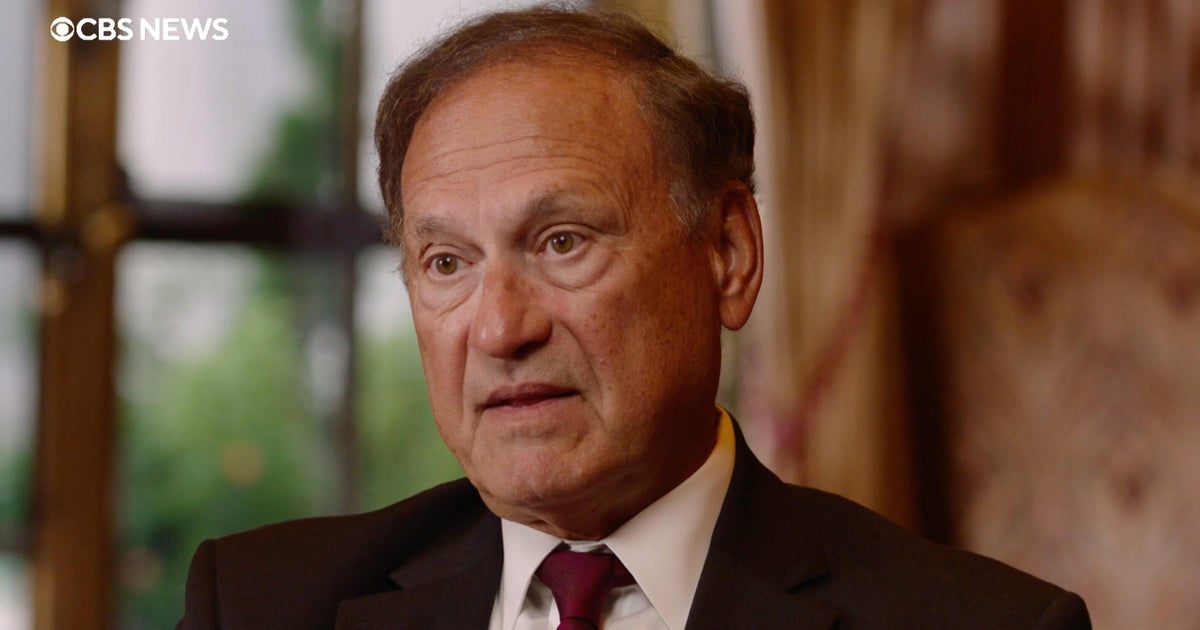
In a recent Wall Street Journal article, based on his forthcoming book on the same subject, Supreme Court Justice Samuel Alito offers his take on constitutional originalism.
asserted
Alito → base → originalism
But in so doing, he raises more questions than compelling answers.
asserted
he → do → answers
Nonetheless, he makes a number of interesting points, about how to do originalism generally, and about specific constitutional issues.
asserted
he → make → issues
Here, I note a few of particular interest.
asserted
I → note → interest
There is a longstanding debate among originalists as to whether the proper original meaning courts should apply is that understood by ordinary people at the time of ratification, that understood by lawyers and other well-informed experts, or that understood by hypothetical "reasonable" readers (many advocates of the latter approach assume the "reasonable" reader is highly knowledgeable about legal doctrine and methodology).
asserted
reader → be → doctrine
I call this the divide between "elitist" and "populist" versions of originalism.
asserted
I → call → originalism
Alito clearly comes down on the populist side
asserted
Alito → come → side
:
When I think about the original public meaning of constitutional provisions, I sometimes envision a scene at a colonial-era tavern.
asserted
I → think → tavern
After dinner, travelers and area residents gather around the fireplace and read newspapers that discuss the Bill of Rights.
asserted
that → gather → Rights
They read the text of the First Amendment and see that it prohibits Congress from making any law that impairs the free exercise of religion.
asserted
that → read → religion
What would they make of that language?
asserted
they → make → language
How likely is it that these men had read John Locke's writing on church-state issues?
asserted
men → read → issues
Even if they had some rough awareness of his ideas, how likely is it that they would assume that Congress had incorporated those ideas in the First Amendment?
asserted
Congress → have → Amendment
Originalism looks for the original public meaning, not the meaning that the most well-read and philosophically minded men of the day might have adduced.
uncertain
men → look → day
In taking this position Alito seems to ignore the potential downsides of the populist approach.
asserted
Alito → take → approach
Among other things, ordinary people may be ignorant about a variety of constitutional issues, and may have particular difficulty interpreting technical legal terms embedded in the Constitution, such as "writ of habeas corpus" or "bill of attainder."
uncertain
people → have → attainder
Populist approaches to original meaning are also less likely than elitist ones to offer insight on how to deal with issues unanticipated at the time of enactment, such as new technologies, and new information.
asserted
approaches → offer → technologies
Elitist approaches have their own downsides, of course.
asserted
approaches → have → course
But those who advocate one or the other should grapple with these issues.
asserted
who → advocate → issues
I go into the relevant tradeoffs in more detail in my 2012 law review article "Originalism and Political Ignorance" and also in my earlier blog post on this topic.
asserted
I → go → topic
My own view is that it may be best to adopt a hybrid approach, balancing elite and popular understandings.
uncertain
it → adopt → understandings
Elite understandings are preferable when it comes to terms that ordinary people are likely to recognize as technical legal phrases that require a lawyer or other expert to understand.
asserted
lawyer → come → phrases
But the issue is a difficult one, and originalists need to consider it more.
asserted
originalists → need → it
Maybe Alito's book will stimulate new analysis of this crucial issue.
asserted
book → stimulate → issue
Alito's analysis also elides the distinction, emphasized by many originalists, between original public and original "expected applications."
asserted
analysis → elide → public
The former is the linguistic meaning of the words, and the latter how they are expected to apply to particular issues.
asserted
they → expect → issues
Expected applications depend in part on factual understandings, distinct from the meaning of the words.
asserted
applications → depend → words
As facts or our understanding of them change, the same words may have different implications for particular cases, including some that were not and could not be expected at the time of drafting and ratification.
uncertain
that → change → drafting
For example, Alito assumes it is obvious that originalism rejects a constitutional right to same-sex marriage, because almost no one expected such a thing back when the Fourteenth Amendment was ratified in 1868.
asserted
Amendment → assume → 1868
Thus, he doubles down on his view that Obergfell v. Hodges, the 2015 ruling striking down laws banning same-sex marriage, is wrong.
asserted
Obergfell → double → marriage
But, as discussed in the amicus brief I filed in that case (together with Andrew Koppelman), there is a strong originalist case for Obergefell once you combine the original linguistic understanding of the words with new knowledge about the nature of same-sex relationships.
asserted
you → discuss → relationships
This is particularly true if you accept (as many originalists now do) that the the Fourteenth Amendment bans most, if not all, forms of sex discrimination.
asserted
Amendment → accept → discrimination
On another Fourteenth Amendment issue, Alito also reiterates his longstanding view that the Due Process Clause, not the Privileges or Immunities Clause, is the proper source of various "unenumerated" rights, including "incorporation" of the Bill of Rights against state governments:
asserted
Clause → reiterate → governments
If we simply read the text of the 14th Amendment, the Due Process Clause seems an unlikely home for substantive rights.
asserted
Clause → read → rights
Another provision, the Privileges or Immunities Clause, declares that no state "shall make or enforce any law which shall abridge the privileges or immunities of citizens of the United States."
asserted
which → declare → States
But in the Slaughter- House Cases (1873), the Supreme Court reduced that clause to minor importance.
asserted
Court → reduce → importance
In McDonald [v. City of Chicago], prominent scholars filed a brief urging the court to jettison Due Process incorporation and revive Privileges or Immunities.
asserted
scholars → file → Privileges
During oral arguments, the attorney representing Otis McDonald latched onto this argument.
asserted
attorney → represent → argument
He didn't get far.
asserted
He → get → ?
Justice Scalia interrupted him and said that while the Privileges or Immunities argument was "the darling of the professoriate," it was contrary to a century of case law.
asserted
it → interrupt → law
…and 30 more, not listed.
 The Aporia