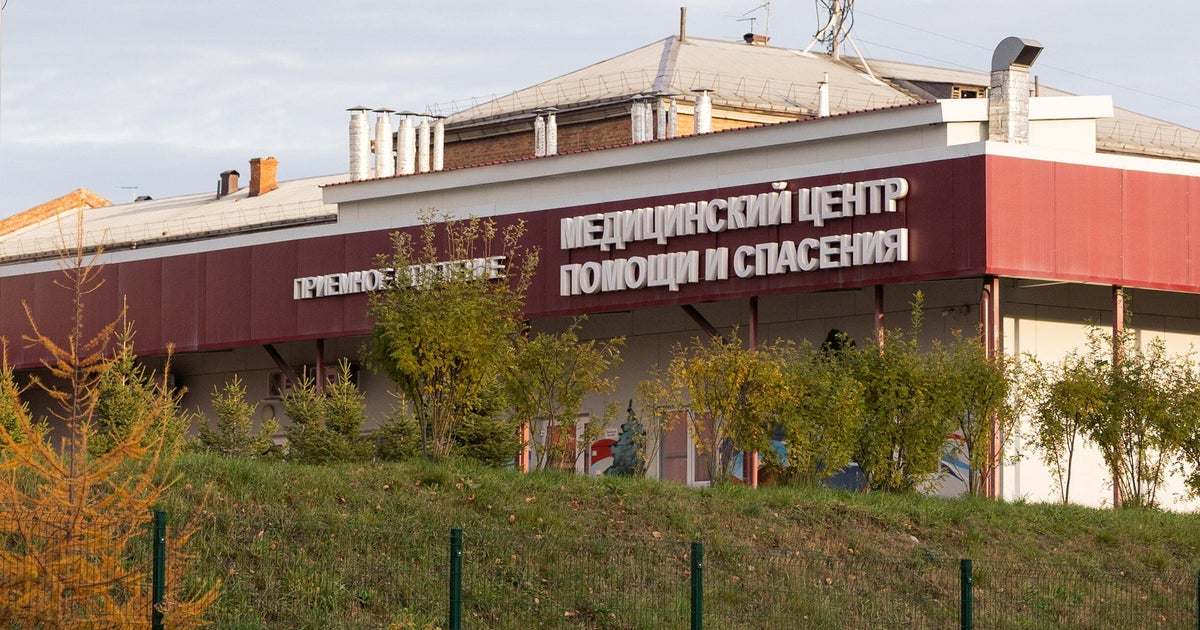
A lab technician at a Russian plague research facility in Siberia died from pneumonia, raising concerns among U.S. officials who are calling for more transparency from Moscow. Secretary of State Marco Rubio urged Russia to disclose more information about the incident, while details remain unclear regarding the pathogen and how the worker was infected. The World Health Organization (WHO) has assessed the risk as moderate to low in Irkutsk but very low for Europe overall, though uncertainty persists given conflicting reports from Russian media and officials.
Written locally by qwen2.5:14b on 2026-10-06,
using this article's own text rather than the other coverage of the
same event (that is the story summary below).
Story summary
A 28-year-old lab technician named Darya Shipilova died after breaking a test tube containing plague bacteria at the Irkutsk Anti-Plague Institute in Siberia on September 29, leading to her hospitalization and death two days later. As many as 200 people who had contact with Shipilova were put into quarantine due to fears of an outbreak. Three hospitals in the region have also been placed under secure measures, and a mask mandate has been implemented.
Russian authorities initially did not provide official statements about the incident but later confirmed it was pneumonic plague after Shipilova's death. The situation prompted concern over potential misinformation, with some experts drawing parallels to the early days of the COVID-19 pandemic in Wuhan, China. In response, the U.S. State Department is monitoring the situation closely and urging Russian authorities for prompt and accurate information sharing.
The White House and other federal agencies are assessing options regarding the outbreak, indicating a high level of alertness given the historical significance and potential dangers of plague outbreaks. Despite concerns, health officials assert that pneumonic plague can be effectively treated with common antibiotics if intervention begins early. The broader situation in the Irkutsk region is currently described as stable by Rospotrebnadzor, but strict quarantine measures remain in place to prevent any spread.
Written for “Plague Outbreak in Siberia” on 2026-10-06,
grounded in this article and the 56 other(s) covering the same event.
Why this leaning score
This article does not take a side on a contested political
question, so it has no leaning score. That is an
answer rather than a gap: a match report or a rescue can be warmly
or critically written without being left or right, and scoring it
anyway is how approval of a subject gets recorded as a political
position.
No political leaning scored for article 60616 · logged 2026-10-06
The pneumonia death of a lab technician at a plague research facility in Russia is raising crucial questions for American officials — with Secretary of State Marco Rubio calling Tuesday for greater transparency from Moscow.
asserted
Rubio → raise → Moscow
“I think it's incumbent upon Russia to share more information with the world,” Rubio told reporters after arriving in Reykjavik, Iceland, for an official visit.
asserted
Rubio → think → visit
Rubio also said U.S. officials were monitoring the situation “very closely, hour by hour.”
asserted
officials → say → hour
The scarcity of details surrounding the death of the worker, identified by Russian media as 28-year-old Darya Shipilova, leaves unanswered why she fell ill and whether others have been infected by whatever sickened her.
asserted
whatever → surround → her
“It's really critical to get the diagnosis right.
asserted
diagnosis → get → ?
There are conflicting stories around it,” Tom Inglesby, director of the Johns Hopkins Center for Health Security, told Axios.
asserted
Inglesby → be → Axios
“Getting the real story, the true facts of the situation out in the open is critical to everything else that follows in the response.
asserted
that → get → response
Russian officials haven’t publicly identified the pathogen that sickened Shipilova, who worked at the Anti-Plague Research Institute of Siberia and the Far East in Irkutsk.
asserted
who → identify → Irkutsk
It's also unclear where and how she was infected, with Russia's national health agency, Rospotrebnadzor, disputing social media rumors that she dropped a laboratory test tube containing live bacteria.
uncertain
she → infect → bacteria
The available information has raised fears that she contracted pneumonic plague, the most virulent form of the disease that killed an estimated 50 million people during Europe's infamous Black Death during the 14th century.
asserted
that → raise → century
Russian health officials said in a memo Tuesday that they had tested the dead woman's contacts and found “no presence of dangerous infectious disease pathogens,” according to The Associated Press, which said it got the note from the World Health Organization.
“Based on available data, laboratory test results, and health status, medical monitoring for 100% of the contacts has now been concluded,” the memo said.
uncertain
memo → say → contacts
“The epidemiological situation is stable and remains under monitoring.”
asserted
situation → remain → monitoring
A WHO spokesperson said Tuesday that the research facility in Irkutsk “studies dangerous pathogens, including plague, in a part of Siberia where plague occurs naturally in wild animals.”
asserted
plague → say → animals
Russia hasn't asked the WHO to send experts to help determine whether the lab worker died of pneumonic plague, spokesperson Christian Lindmeier said during a video briefing to the United Nations.
asserted
Lindmeier → ask → Nations
“The WHO initial risk assessment, from the information available, estimates the risk to be moderate to low for Irkutsk, a low risk for the Russian Federation as a whole, and very low for the WHO European region,” Lindmeier said.
asserted
Lindmeier → estimate → region
On Monday, President Donald Trump called the situation a “big problem for Russia” but said he hadn't spoken to Russian President Vladimir Putin about it.
asserted
he → call → it
Trump also told reporters that the U.S. would “help anybody that has that kind of a problem.”
asserted
that → tell → problem
“It's a rough disease, you know,” he said.
asserted
he → know → ?
“That's a disease we used to be able to control, but somehow those microbes have gotten stronger and smarter.
asserted
microbes → use → ?
They're like an army ... and things that used to work on pneumonia don't work as well anymore.”
asserted
that → use → pneumonia
Dr. Glenn Wortmann, the section director of infectious diseases at MedStar Washington Hospital Center, said Tuesday that the bacteria that cause plague don’t “travel very far” and that a person would “really need to be face-to-face” with an infected person to get pneumonic plague.
asserted
person → say → plague
“The chance of this spreading widely in Russia and then extending here to the U.S. will not happen, not with this type of bacteria, because it’s not spread easily and we have antibiotics to stop it from spreading,” Wortmann told the AP.
asserted
Wortmann → spread → AP
 The Aporia