U.S. Secretary of State Marco Rubio has urged Russia to provide more information about a recent incident involving a plague lab worker in Siberia who died under mysterious circumstances. Russian authorities have offered conflicting details regarding 28-year-old Darya Shipilova's death, initially suggesting she might have contracted plague from an accident at the Irkutsk Anti-Plague Institute but later stating that her cause of death was undetermined pneumonia. The World Health Organization has assessed the public health risk as low both in Russia and Europe, emphasizing transparency from Russian officials to clarify the situation further.
Written locally by qwen2.5:14b on 2026-10-06,
using this article's own text rather than the other coverage of the
same event (that is the story summary below).
Story summary
In September 2023, a 28-year-old female lab technician named Darya Shipilova died in Siberia after breaking a test tube at the Irkutsk Anti-Plague Institute and contracting pneumonic plague. The incident led to around 200 people being placed under quarantine in Shelekhov town, with three hospitals also closed down for secure measures. Despite local authorities claiming that the situation remains stable, concerns have risen about a possible cover-up by Russian officials regarding the extent of the outbreak. Russia's Chief State Sanitary Doctor Anna Popova traveled to Siberia to oversee containment efforts, while mask mandates were imposed in affected areas. The U.S. State Department and CDC are monitoring the situation closely, urging Russia to provide accurate information promptly. Reports suggest Shipilova's colleagues have tested negative so far, but fears persist about potential wider spread due to cooler seasonal temperatures aiding disease transmission. Former Rospotrebnadzor head Gennady Onishchenko downplayed the threat, stating widespread transmission remains unlikely even if plague is confirmed. The White House and CDC are assessing options for possible intervention or monitoring. Governor Igor Kobzev urged residents to stay calm while addressing an epidemic prevention commission meeting without explicitly acknowledging Shipilova's death. International health officials remain vigilant about potential risks posed by this incident.
Written for “Pneumonic Plague Outbreak Siberia” on 2026-10-06,
grounded in this article and the 48 other(s) covering the same event.
Why this leaning score
This article does not take a side on a contested political
question, so it has no leaning score. That is an
answer rather than a gap: a match report or a rescue can be warmly
or critically written without being left or right, and scoring it
anyway is how approval of a subject gets recorded as a political
position.
No political leaning scored for article 59983 · logged 2026-10-06
U.S. Secretary of State Marco Rubio called on Russia to be more "transparent" about the recent
and any risks associated with the incident, which Russian authorities have offered conflicting information about this week.
asserted
authorities → call → information
"I think it's incumbent upon Russia to obviously share more information with the world," Rubio said Tuesday after arriving in Iceland's capital Reykjavik for a visit.
asserted
Rubio → think → visit
He called on Moscow to be "transparent" a day after Russia's primary national health agency denied earlier reports by local officials that the Siberian lab worker might have died of
after a lab accident and that anti-plague measures were imposed at multiple health facilities in the wake of her death on Oct. 1 or 2.The World Health Organization said Tuesday that the public health risk in Russia and Europe was considered low after the incident in Russia's far-eastern Siberia region.
uncertain
risk → call → region
"The WHO initial risk assessment from the information available estimates the risk to be moderate to low for Irkutsk, a low risk for the Russian Federation as a whole, and very low for the WHO European region," the United Nations health agency's spokesman Christian Lindmeier told reporters at the agency's Geneva headquarters.
asserted
spokesman → estimate → headquarters
Lindmeier said Russian authorities had identified all people who came into contact with the worker from the Irkutsk Anti-Plague Institute, who has been identified as 28-year-old Darya Shipilova, before she died and that none had symptoms associated with plague.
asserted
none → say → plague
The center where Shipilova worked is situated in a part of Siberia where plague is found naturally in wild animal populations, the WHO spokesman confirmed.
asserted
spokesman → work → populations
Lindmeier said her "illness initially presented as a typical acute respiratory viral infection," but that Russian authorities "are looking into whether pneumonic plague caused her death."
"WHO is following the situation closely, working with headquarters to keep other countries informed," he said, and is ready to help Russian authorities if they seek assistance.
asserted
they → say → assistance
Russia's national health agency, Rospotrebnadzor, played down reports Monday by some officials in the Siberian region — some of which were quickly removed from online platforms — indicating that Shipilova had died after contracting plague in a lab accident.
asserted
Shipilova → play → accident
The agency said she was not diagnosed with plague, but died of "pneumonia of unknown etiology," suggesting doctors didn't know the exact germ that made her sick.
asserted
her → say → germ
She died in an Irkutsk hospital two days after contracting the illness.
asserted
She → die → illness
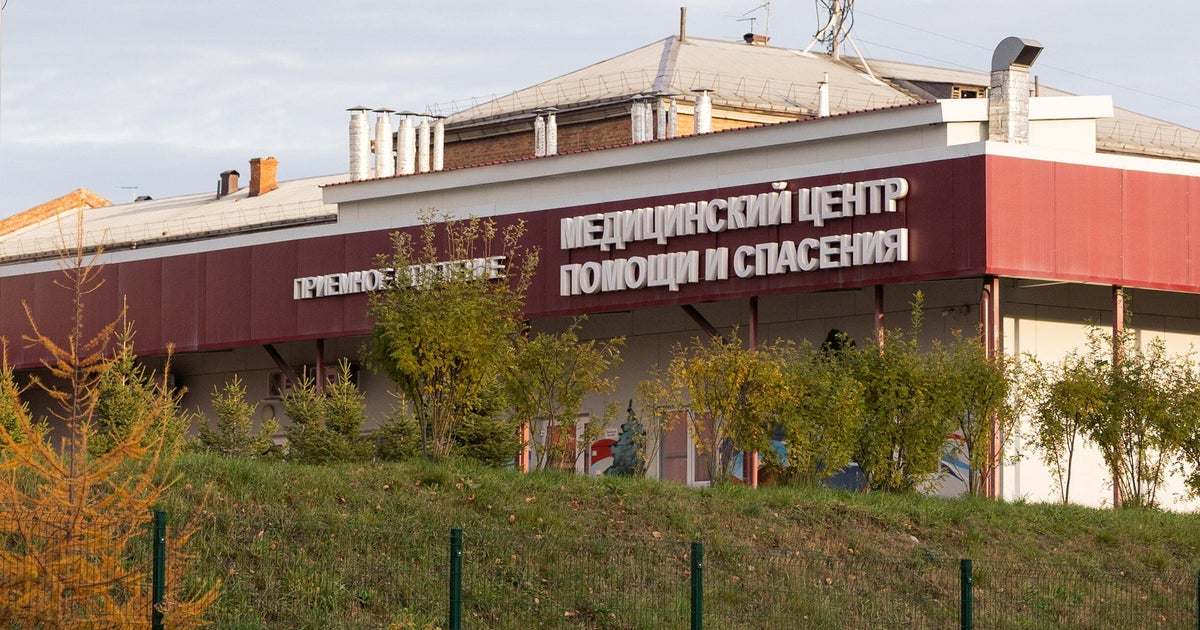
The hospital where she was treated, and where her roughly 200 close recent contacts were evaluated, was then partially shut down under quarantine conditions, Russian authorities said.
asserted
authorities → treat → conditions
They rejected reports that several other health facilities in the region were also put under restrictions as a precaution.
asserted
facilities → reject → precaution
Rospotrebnadzor said Monday that an analysis of samples from Shipilova revealed no microorganisms associated with her work, which involved handling dangerous pathogens at the lab.
asserted
which → say → lab
The agency said Tuesday that many of her close contacts, having been brought in for screening, were allowed to go back home.
asserted
many → say → screening
It said some cold and flu infections, including several COVID-19 cases, were discovered, but nothing more sinister.
asserted
infections → say → COVID-19
President Trump assured reporters on Monday that U.S. officials were watching the case closely and stood ready to help.
asserted
officials → assure → case
"We're looking at it very strongly, we just heard about it," he said.
asserted
he → look → it
"They call it pneumonia, and pneumonia, you know, years ago you could treat pneumonia easier, and the microbes and the germs have gotten stronger disproportionately.
uncertain
microbes → call → pneumonia
But we'll help them."
asserted
we → help → them
 The Aporia