That is 0 articles you have read today.
The Aporia is free and carries no advertising, so readers are the only
thing paying for it. If you are getting this much out of it, a small
donation is what keeps it independent.
Daily limit reached
You have read 0 articles today.
That is more than the 15 a day The Aporia gives away,
and well past what it can carry on nothing. Your allowance resets at
midnight.
There is no advertising here and nothing about you is sold, so readers
are the only thing paying for it. If the site is worth this much of
your day, it is worth a few dollars.
Everything else stays open: the
maps, the
directory and
search do
not count against this, and neither does re-opening something you have
already read today.
US Secretary of State Marco Rubio stated that the United States is closely monitoring a case in Siberia where a female lab technician died at a Russian plague research center. Reports suggest she may have been exposed while working or during a field trip to an area with naturally occurring plague among rodents. However, Russia's health watchdog Rospotrebnadzor reported no signs of dangerous micro-organisms linked to her work and conducted inspections that found no emergency situation at the lab. Kremlin spokesman Dmitry Peskov urged reliance on official statements rather than rumors.
Written locally by qwen2.5:14b on 2026-10-05,
using this article's own text rather than the other coverage of the
same event (that is the story summary below).
Story summary
In September 2023, a lab technician named Darya Shipilova, aged 28, died in Siberia after contracting pneumonic plague from breaking a test tube at the Irkutsk Anti-Plague Institute. As many as 200 people who had contact with her were placed under quarantine to prevent potential spread. Governor Alexei Tsydenov confirmed the woman's death on social media, though Russia’s health ministry did not immediately issue an official statement.
Russia's Chief State Sanitary Doctor Anna Popova traveled over 2,600 miles from Moscow to Irkutsk to manage the outbreak personally. Local authorities have instituted strict quarantine measures across Shelekhov District Hospital and a nearby maternity facility, with additional safety protocols implemented at a local aluminum plant. Despite these measures, fears of another "Wuhan situation" emerged due to limited transparency from Russian officials.
The U.S. State Department is monitoring developments closely alongside the CDC, urging Russia for more information on the incident. The outbreak raised international concern and prompted discussions about potential risks to American citizens in Russia. While pneumonic plague can be treated effectively with antibiotics if diagnosed early, proper public health measures are crucial to contain its spread.
Written for “Plague Outbreak in Siberia” on 2026-10-06,
grounded in this article and the 36 other(s) covering the same event.
Why this leaning score
This article does not take a side on a contested political
question, so it has no leaning score. That is an
answer rather than a gap: a match report or a rescue can be warmly
or critically written without being left or right, and scoring it
anyway is how approval of a subject gets recorded as a political
position.
No political leaning scored for article 58410 · logged 2026-10-05
- Published
The US says it is closely monitoring the case of a Russian lab technician who died at a plague research centre in Siberia.
asserted
who → publish → Siberia
Secretary of State Marco Rubio said there was concern the incident could have led to the spread of pneumonic plague, but that there was no cause for alarm.
Announcing the cause of death as "pneumonia of undetermined etiology", Irkutsk's governor said that "no micro-organisms" linked to the woman's work had been found "in her biological samples".
Unconfirmed reports had suggested the woman fell ill either after breaking a test tube containing the pathogen or following a field trip to a region where plague is found naturally among wild rodents.
No other cases of staff from the plague institute seeking medical attention since her death had been reported, Irkutsk governor Igor Kobzev said, quoting Russia's consumer and health watchdog, Rospotrebnadzor.
uncertain
Kobzev → say → watchdog
The watchdog said a biological safety team had inspected the Anti-Plague Institute of Siberia and the Far East in Irkutsk and found no emergency situation there.
asserted
team → say → situation
Kremlin spokesman Dmitry Peskov urged people not to "listen to various rumours" but "rely on Rospotrebnadzor's official statements" instead.
asserted
Peskov → urge → statements
Russian media reported last week that nearly 200 people known to have had contact with the dead woman were under medical observation as a precaution.
asserted
people → report → precaution
Asked by a reporter for an "update on the suspected plague case in Russia", Rubio said: "It seems that there was a worker at the lab that was infected and there's concern that that, you know, could have spread, at least internally - you've seen them do quarantine of this and that nature.
"
uncertain
them → ask → this
If something like that gets out, it can quickly spread.
asserted
it → get → that
So we're watching and monitoring it closely.
asserted
we → watch → it
I don't think it's cause for alarm, but it is cause for focus and the cause to just keep an eye on it and we're doing that."
asserted
we → think → that
The woman who died, whose first name was given by Russian media as Daria and who was in her late twenties, had recently visited the Buryatia region on the border with Mongolia.
asserted
who → die → Mongolia
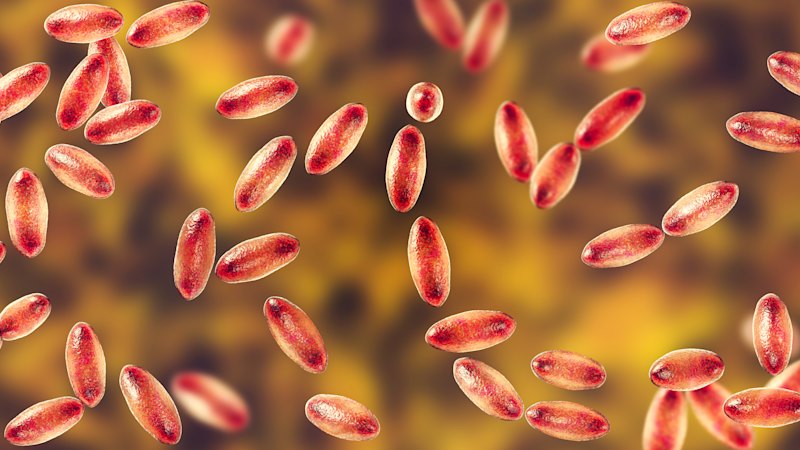
The plague bacterium or Yersinia pestis, external, which killed up to half the population of Europe in the 14th Century when it was known as the Black Death, is found among rodents such as marmots in the area.
asserted
it → kill → area
It was in response to an outbreak in the 1920s that the Anti-Plague Institute of Siberia and the Far East, external was founded just over 100 years ago.
asserted
Institute → found → Siberia
Dr Simon Clarke, an associate professor in cellular microbiology at the University of Reading, told BBC Radio 4's PM programme that the pneumonic version of Yersinia pestis was nearly always fatal if left untreated, but could be overcome with antibiotics.
uncertain
version → tell → antibiotics
"Pneumonic plague can transmit from person to person and that is why there is the concern around this," he said.
asserted
he → transmit → this
He added: "But of course people's thought with any outbreak of infectious disease at all runs to... lockdowns and Covid and that is just not what's going to happen here."
asserted
what → add → lockdowns
"People think, 'Oh the plague, that's gone, that went hundreds of years ago,' but it hasn't," Clarke said.
"
asserted
Clarke → think → years
It's still around and in certain parts of the world, it's a threat to human health and that's why they need to study it."
asserted
they → need → it
Asked if the pathogen might have been studied for potential use as a bio-weapon, the scientist agreed it was possible.
uncertain
it → ask → weapon
"Because this is Russia people's thoughts are running to that, but I think my earlier explanation is probably more likely," Clarke said.
asserted
Clarke → run → that
 The Aporia