Toronto Star
· collected 2026-10-02 · by Rebecca Boone The Associated Press
Long before Christa Pike was brought into Tennessee’s execution chamber, prison leaders reviewed and approved a backup plan detailing exactly what to do if the first attempt at lethal injection failed.
asserted
attempt → bring → injection
But the backup plan also failed, and Thursday — 24 hours later — Pike was still alive but in critical condition at a Tennessee hospital, though her prognosis remained uncertain.
asserted
prognosis → fail → hospital
It’s not yet clear what went wrong.
asserted
what → ’ → ?
Twenty-seven states have capital punishment, and they vary widely in how they administer the death penalty and just how much of that lethal process they keep hidden from public view, according to the nonprofit Death Penalty Information Center, a clearinghouse for information on U.S. executions.
uncertain
they → have → executions
Some states have extensive backup plans.
asserted
states → have → plans
Others don’t
Tennessee falls somewhere in the middle of the pack when it comes to contingency plans, with two redundancies built into its execution process.
asserted
it → do → process
First, inmates are supposed to have two intravenous lines placed.
asserted
lines → suppose → ?
Thus, if the first IV site fails, the execution team can switch to the second one.
asserted
team → fail → one
A physician on the execution team can even insert a central line — which typically involves making an incision in a major blood vessel in the groin, neck or armpit in order to thread a catheter into the body to a spot near the heart — if needed.
asserted
which → insert → heart
Intravenous lines can fail for several reasons, like a needle and catheter not being properly placed in a vein or wiggling out of place — or a vein rupturing and letting blood and IV fluid leak into tissue surrounding the IV site.
asserted
blood → fail → site
Tennessee also allows for a second 100 mg dose of pentobarbital to be administered if the condemned person is still alive five minutes after the first dose was given.
asserted
dose → allow → pentobarbital
Tennessee prison officials gave Pike a second dose, but it’s not clear if they used the primary IV site or the backup site to do so.
asserted
they → give → site
Little backup in Alabama, a lot in Idaho
Alabama has a three-drug lethal injection protocol.
asserted
Alabama → have → protocol
It allows for a backup dose of the first drug, the sedative midazolam, to be given if the inmate isn’t unconscious from the first dose.
asserted
inmate → allow → dose
But the protocol doesn’t include additional instructions for what to do if the condemned person is still alive after the first dose of the next two drugs, rocuronium bromide and potassium chloride.
asserted
person → include → drugs
Idaho, meanwhile, has contingency plans for nearly every step of the execution process, with backup IV sites, allowances for administering a central IV line, and up to three full doses of any of the state’s four approved lethal injection drug cocktails.
asserted
Idaho → have → cocktails
Idaho recently made firing squad its primary execution method, though it has yet to kill someone by that method.
asserted
it → make → method
Still, the state’s firing squad protocol also has a backup plan, with the prison director able to order a second volley of shots within a two-minute time span if she determines it is necessary to complete the execution.
asserted
it → have → execution
Despite contingency plans, executions are still botched at times
Idaho called off the execution of Thomas Eugene Creech in 2024 after execution team members could not place a viable IV after eight attempts.
uncertain
members → botch → attempts
Tennessee also called off an execution earlier this year after failing to find a suitable vein for a secondary IV line.
asserted
Tennessee → call → line
In 2014, Arizona executioners injected Joseph Rudolph Wood with a lethal combination of drugs 15 times during the nearly two hours it took him to die.
asserted
it → inject → him
He gasped more than 600 times while he lay on the table.
asserted
he → gasp → table
Witnesses keep the public informed when executions succeed or fail
In many ways, executions are shrouded in secrecy.
asserted
executions → keep → secrecy
The identity of execution team members, the details about where and how lethal drugs are procured, and in some states even what happens in the death chamber is hidden from public view.
But executions, like all criminal sentences, are conducted by the state on behalf of its citizens, so it’s critical that members of the public understand exactly how that ultimate punishment is carried out.
asserted
punishment → procure → public
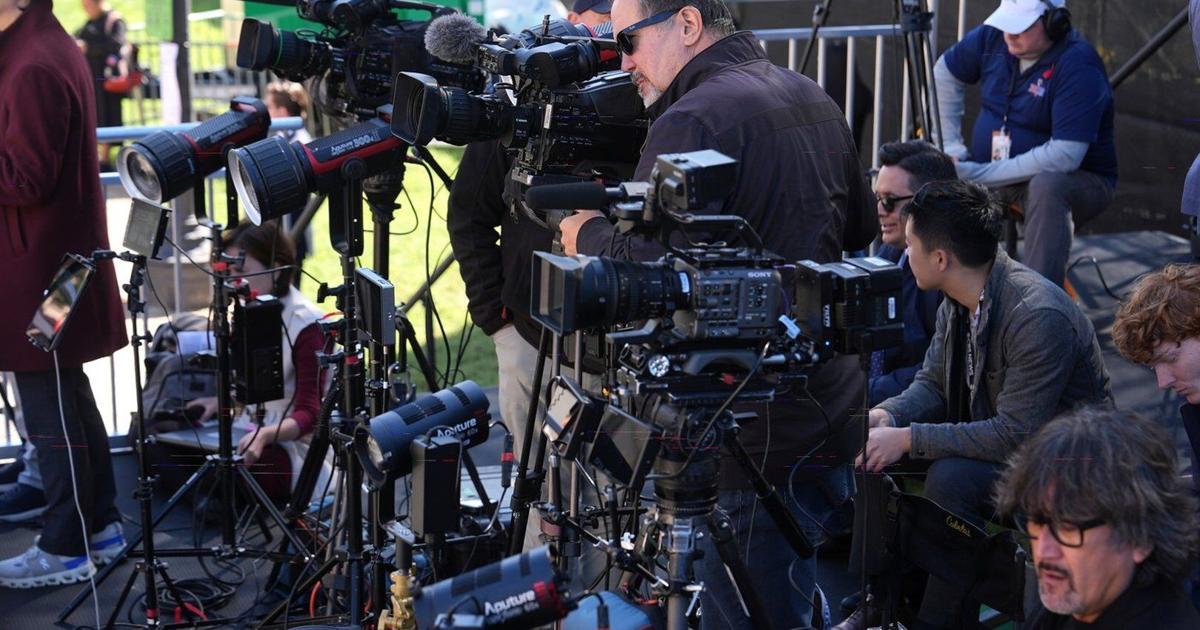
Most death penalty states allow a few members of the media to witness executions on behalf of the public.
asserted
members → allow → public
Once the execution is over, those news representatives typically take part in a news conference, sharing exactly what they saw and heard with the rest of the world.
asserted
they → take → world
Access to executions varies by state, and limitations often lead to court battles
Only two states, Indiana and Wyoming, explicitly ban members of the press from witnessing executions.
asserted
states → vary → executions
Wyoming, with no one currently on death row, hasn’t carried out an execution since 1992, according to the Death Penalty Information Center.
uncertain
Wyoming → carry → Center
A coalition of news organizations including The Associated Press sued Indiana last year for a seat in the witness room, but in June a federal appellate court upheld the state’s law barring media access.
asserted
court → include → access
In Idaho, media witnesses are allowed to watch as a condemned person is placed on a gurney, has IVs inserted and is put to death.
asserted
IVs → allow → death
Yet AP and other news organizations have sued for increased access.
asserted
AP → sue → access
The news organizations asked a judge to allow them to watch via closed-circuit monitors as the drugs are pushed into the IV lines, which is currently shielded from public view in a private room beside the death chamber.
asserted
which → ask → chamber
A federal judge ordered the state to provide that access, citing a 9th U.S. Circuit Court ruling that said the public should be able to view all critical parts of an execution via the press.
asserted
public → order → press
But the state appealed, and the appellate court hasn’t yet ruled on the matter.
asserted
court → appeal → matter
Media witnesses provided crucial details about Pike’s failed execution
When Pike’s first lethal injection dose failed to end her life, officials closed the curtains and administered a second dose of pentobarbital.
asserted
officials → provide → pentobarbital
When the curtains reopened, Pike was making snoring sounds and was clearly alive, according to AP reporter Kim Chandler, who was one of the witnesses.
uncertain
who → reopen → witnesses
Eventually the curtain was closed again and the microphone in the room was turned off, but Pike could still be heard making gasping or snoring sounds.
uncertain
Pike → close → sounds
Nearly two hours after the execution began, media witnesses were escorted out, and Pike was taken to a hospital for treatment.
asserted
Pike → begin → treatment
Many states, including Tennessee, keep the IV insertion hidden from public view, but allow witnesses to watch through a viewing window as the condemned person dies.
asserted
person → include → window
AP was part of a media coalition that previously sued Tennessee to see the IV insertion and to keep the viewing room curtains open until the pronouncement of death.
asserted
that → sue → death
…and 3 more, not listed.
 The Aporia