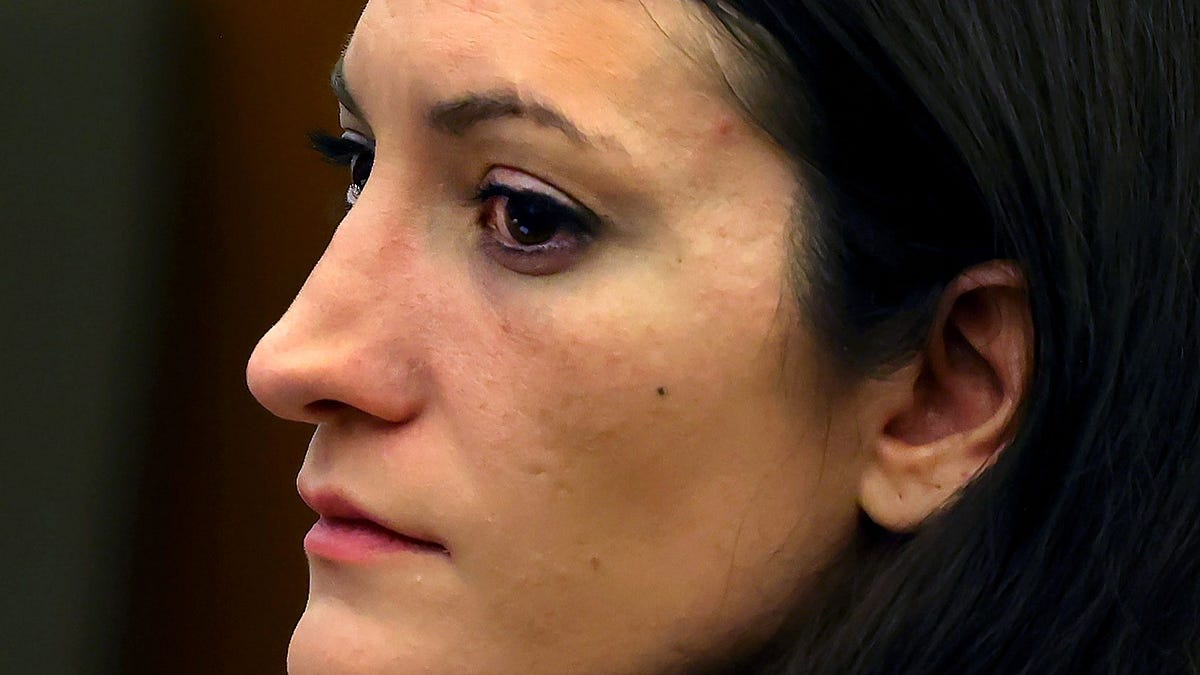
Canada’s state broadcaster recently published an article on Lindsay Clancy, the Massachusetts mother accused of strangling her three children, ages 5, 3, and 8 months.
asserted
broadcaster → publish → children
In its Sept. 1 article, CBC News does not ask how a just and humane society should treat the killing of children.
asserted
society → ask → children
It gives the dead almost none of the moral weight normally due to victims of a horrific crime.
asserted
It → give → crime
Instead, CBC highlights how differently the case would proceed if the killings had happened in Canada and the trial were heard here.
asserted
trial → highlight → Canada
The headline says it all: “How different would Lindsay Clancy’s murder trial look if it happened in Canada?
asserted
it → say → Canada
Because Canada has an infanticide law and the U.S. does not.
asserted
U.S. → have → law
Section 233 of the Criminal Code states that if a mother kills her newly born child — defined as less than one year of age — while her mind is “disturbed” because she has not “fully recovered from the effects of giving birth” or because “of the effect of lactation,” she commits “infanticide.”
asserted
she → state → infanticide
The law was enacted in 1948, largely to spare mothers from a murder conviction and the death penalty then attached to it that often made juries unwilling to convict.
asserted
juries → enact → it
This law has its critics.
asserted
law → have → critics
In 2016, the Alberta Crown asked the Supreme Court to tighten the law, arguing that what was first created to save vulnerable women from the death penalty has become a “blanket” excuse for mothers who kill their newborns, “regardless of their true moral blameworthiness.”
asserted
who → ask → blameworthiness
The Supreme Court declined to raise the threshold and upheld a broad, low bar for a “disturbed” mind.
asserted
Court → decline → mind
What’s alarming about the CBC article is not that it quotes an expert who outlines how the Clancy case would have been treated differently in Canada, but that the expert names what she regards as the real problem: Clancy’s two older children were past their first birthday, so the lesser charge of infanticide would not apply.
asserted
charge → ’ → infanticide
“That is a shortcoming in the Canadian law,” said University of British Columbia law professor Isabel Grant.
asserted
Grant → say → Columbia
And what does our state broadcaster do?
asserted
broadcaster → do → what
It platforms the idea that the problem from a Canadian perspective is not the killings: it’s that Canadian law would not reduce the charge for a mother killing her two older children.
asserted
law → platform → children
With this declaration, the Canadian public has been subtly introduced to a horrifying idea that, if taken up, would inflict injustices on young human lives.
asserted
that → introduce → lives
The perverse idea is simply this: mothers who kill their older children — even five-year-olds, who run, laugh, and talk — should receive reduced culpability.
asserted
who → kill → culpability
Such a morally inverted proposal can only be made today because of a process of dehumanization of the child that has rapidly taken place since the 1960s.
asserted
that → make → 1960s
First, the child in the womb was dehumanized as a “blob of tissue” or a “product of conception,” thus paving the way for wide acceptance of abortion, first decriminalized with restriction in 1969 and then left without any criminal restrictions after 1988.
asserted
child → dehumanize → 1988
Every year about 100,000 Canadian children are lost to abortion.
asserted
children → lose → abortion
But children who are an inconvenience inside the womb can certainly become more of an inconvenience outside the womb, especially if they are sick or disabled.
asserted
they → become → womb
It’s always the hard cases that push for new laws.
asserted
that → ’ → laws
For example, in 2022 the Quebec College of Physicians called for euthanasia (MAiD) to be extended to already born children under age one with “severe deformations” and “grave and severe syndromes.
asserted
euthanasia → call → deformations
Now we have a legal expert in a CBC article describing it as a “shortcoming” that our infanticide law does not apply to older children.
asserted
law → have → children
Yes, as the CBC article shamelessly highlighted, Canada’s “shortcoming” in its infanticide law is that five-year-olds are still treated as victims of murder.
asserted
olds → highlight → murder
The CBC article did not say “killing a three-year-old and a five-year-old should carry a lesser charge.”
asserted
killing → say → charge
It did not have to.
asserted
It → have → ?
It treated leniency towards mothers who kill their older children as the civilized position — and the age limit as the thing that needs fixing.
The question every Canadian should ask is this: when our taxpayer-funded broadcaster platforms experts who speak this way, is it just covering the news, or is it softening the public for what comes next — greater tolerance for killing children of any age?
Pete Baklinski is the communications director for Campaign Life Coalition.
asserted
Baklinski → treat → Coalition
He holds a Master’s degree in Theology and lives in Ontario with his family.
asserted
He → hold → family
He can be found on X at @petebaklinski, AKA Pro-life Canadian Man.
asserted
He → find → @petebaklinski
 The Aporia